TL;DR

Get business pricing on garage and car supplies
- Business-only prices and quantity discounts
- Tax-exempt purchasing
- Multiple users, one account, clear invoices
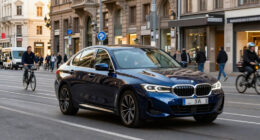
In a road test reported by InsideEVs, a BMW X3 M50 reached Byron Bay from Sydney with an estimated 332 km of fuel range remaining. The electric BMW iX3 50 xDrive traveled 747 km on one charge, 23 km short of the 770-km route, despite exceeding its EPA-rated range in the test.
A BMW X3 M50 completed a road trip from Sydney to Byron Bay with an estimated 332 km (206 miles) of fuel range remaining, while the electric BMW iX3 50 xDrive traveled 747 km (464 miles) before its charge was exhausted, stopping 23 km (14.2 miles) short of the route. The comparison, conducted by Chasing Cars and reported by InsideEVs, tested how far each SUV could go without refueling or recharging on a 740-km (459.8-mile) drive.
The two vehicles followed normal roads and speed limits, with both set to Eco mode and their climate controls adjusted for efficiency. The drivers also stopped when needed, making the comparison a road-trip test rather than a laboratory measurement. The source does not specify every stop or provide a full breakdown of driving conditions.
At the start, the iX3 displayed an estimated 692 km (430 miles) of range, less than the planned route. After roughly 30 km, the X3 M50’s estimate was 784 km (487 miles). InsideEVs reported that the electric BMW’s early efficiency suggested it might complete the drive, but it ultimately covered 747 km on one charge. The outlet said that was above the model’s EPA-rated 434 miles; the test was conducted in Australia, and its route and conditions may differ from the EPA test cycle.
The X3 M50 reached Byron Bay and showed 332 km of estimated range left. Its 3.0-liter turbocharged inline-six engine is paired with a mild-hybrid system and produces 393 horsepower and 428 lb-ft of torque, according to the source. The iX3 M50 is rated at 463 horsepower and 476 lb-ft, but the comparison was between the iX3 50 xDrive and the gasoline X3 M50 xDrive, not the two M50 versions.
What the Road-Test Result Shows
For drivers weighing an electric SUV against a gasoline model, the result separates distance per stop from other measures of vehicle performance. On this particular 740-km route, the gasoline X3 completed the trip without stopping for fuel, while the iX3 fell short of the destination on its initial charge. That may matter to travelers planning long drives where charging access, time, or route options are concerns.
The figures do not establish that gasoline BMWs always travel farther than electric BMWs, or that either vehicle will deliver the same distance on another route. Real-world range changes with speed, weather, terrain, load, and driving style. The iX3’s 747-km test distance also shows why a single comparison should not be reduced to its starting estimate: it drove substantially farther than its initial displayed range suggested, and beyond the EPA-rated figure cited by InsideEVs.
Products Worth Considering

Chemical Guys 17-Piece Car Detailing Kit

Chemical Guys 16-Piece Arsenal Builder Car Wash Kit with Foam Cannon & Bucket

DEWALT 20V MAX XR Hammer Drill and Impact Driver Combo Kit with Two 4Ah Batteries and Charger
As an affiliate, we earn on qualifying purchases.
How the Two BMWs Were Compared
Chasing Cars drove the iX3 50 xDrive and X3 M50 xDrive from Sydney to Byron Bay. The reported route covered 740 km (459.8 miles). Both vehicles were operated in Eco settings, and the drivers kept to speed limits. The source describes the test as reflecting an ordinary road trip, but it does not provide enough detail to independently reproduce the result or account for every difference between the vehicles.
Range estimates shown by a vehicle are projections, not guarantees of how far it will travel. The reported result is also a comparison of these specific versions under the test’s conditions; it should not be read as a direct verdict on every BMW electric and gasoline model. The X3 M50’s remaining-range figure is an estimate, while the reported iX3 distance is the distance traveled before its charge ran out.
“The iX3 was able to do 747 km (464 miles) on one charge.”
— InsideEVs, reporting on the Chasing Cars test
Limits of the Range Comparison
The source does not give the test date, weather, traffic conditions, passenger and cargo loads, exact charging or fuel levels at departure, or detailed energy and fuel consumption figures. It also does not explain how the X3’s remaining range was calculated or whether either vehicle made intermediate stops for reasons unrelated to refueling or charging. Those gaps limit how precisely readers can compare efficiency.
The test’s 747-km iX3 result is not a promise of that range for every owner or trip. The route was in Australia, while the cited EPA figure comes from a different rating system. The available report also does not say whether the iX3 could have completed the remaining 23 km with a different pace, conditions, or charging plan.
What Buyers Should Compare Next
No follow-up test or additional result is specified in the source. Buyers considering either model should compare the versions available in their market and check official range ratings alongside independent tests on routes similar to their own. For an electric road trip, planned charging locations and charging time matter alongside the distance possible on one charge; for a gasoline model, fuel stops and actual consumption matter alongside its estimated range.
Key Questions
Which BMW went farther without stopping?
The gasoline BMW X3 M50 xDrive completed the 740-km route and displayed an estimated 332 km of fuel range remaining. The electric iX3 traveled 747 km on one charge but stopped 23 km short of Byron Bay.
How far did the BMW iX3 travel on one charge?
The Chasing Cars test, as reported by InsideEVs, put the iX3 50 xDrive at 747 km (464 miles) before it ran out of charge. The report says that exceeded its cited EPA rating of 434 miles, although the test took place in Australia.
Did the BMW iX3 complete the Sydney-to-Byron Bay trip?
No. The route was reported as 740 km, and the iX3 traveled 747 km according to the test’s reported distance? The source states it fell 23 km short of Byron Bay; that reported shortfall conflicts with the stated total route and distance traveled, so the exact figures cannot be reconciled from the account.
Were the vehicles tested under the same conditions?
The source says both used Eco settings, efficient climate-control settings, normal routes, and posted speed limits. It does not provide a full record of weather, traffic, load, or other conditions, so the comparison cannot establish identical conditions in every respect.
Source: insideevs.com