TL;DR

Get garage and car supplies delivered free — and shop member deals
- Fast, free delivery on millions of items
- Access to Prime Big Deal Days deals on October 6–7
- Prime Video, Amazon Music and more included
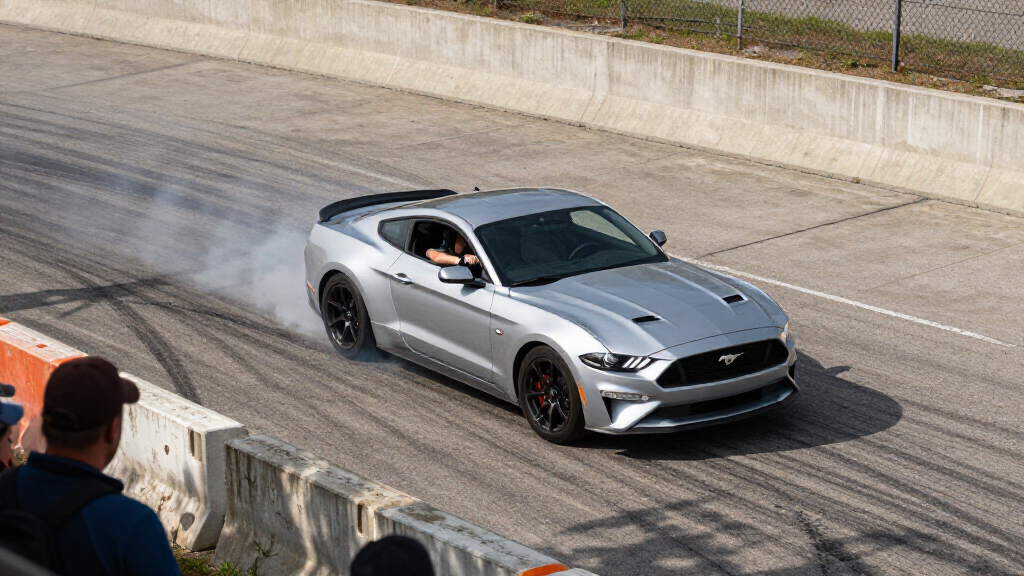
A review by The Drive describes taking the 2026 Ford Mustang RTR to Thunderhill’s West circuit and testing its drift-focused setup. The reviewer singles out its manual handbrake, which is dedicated to breaking rear traction, alongside increased steering angle and a calibration that allows more rear-end movement before electronic intervention. The RTR is not presented as a dedicated drift car, and the source does not provide a full price breakdown or performance measurements.
The Drive has reviewed the 2026 Ford Mustang RTR on Thunderhill’s West circuit, highlighting its hand-operated drift brake as the clearest expression of a package designed to let drivers rotate the rear-wheel-drive Mustang. The review describes an EcoBoost-powered car with chassis and software changes aimed at playful driving, while stressing that the RTR is not a dedicated drift car.
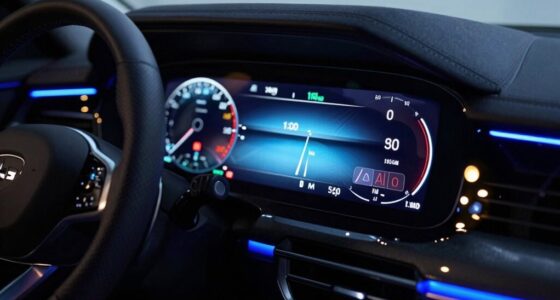
The RTR is based on the Mustang EcoBoost, but it adds more than styling. According to The Drive, the package includes a Torsen limited-slip differential with a 3.55:1 ratio, Brembo brakes, an active exhaust, a custom suspension, wider wheels and a unique spoiler. It also has a distinct calibration for optional MagneRide adaptive dampers and nearly 20% more maximum steering angle than a standard EcoBoost.
The review puts the package’s added cost at $6,520 and says the RTR weighs about 200 pounds more than a base EcoBoost. Some of that weight comes from the Dark Horse rear subframe. The car also uses the Dark Horse Handling Pack’s front and rear sway bars and adjustable strut-top mounts. The test cars had the optional MagneRide suspension, which The Drive lists at $1,750.
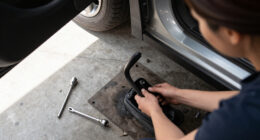
The standout hardware is a manual handbrake used to break rear traction, rather than to serve as the parking brake. The reviewer describes it as a physical addition to a setup that combines extra steering angle with drive-mode software that permits more rear-end movement before stability control steps in. The supplied report says the RTR is paired with a 10-speed automatic; it does not provide timed lap results or quantified drift-performance data.
A Mechanical Brake for Controlled Slides
The handbrake gives the RTR a feature that has become uncommon in modern cars: a direct, driver-operated way to unsettle the rear wheels. In this car, it is not simply a period-style detail. The Drive frames it as part of a broader package that includes a limited-slip differential, additional steering angle and less restrictive behavior in the relevant drive-mode calibration.
That combination matters to buyers weighing a performance Mustang below the V8-powered GT. The RTR uses a turbocharged four-cylinder rather than the GT’s 5.0-liter V8, while adding hardware intended to make the chassis more responsive and entertaining. The review says the smaller engine’s lower front-end mass helps the car rotate more readily than a V8 Mustang, though that is the reviewer’s driving impression, not a measured comparison.
The car also points to a different idea of performance value: a buyer may pay for handling parts and a distinctive driving experience rather than choosing the largest engine. The added price and roughly 200-pound increase over the base EcoBoost are part of that trade-off. The source does not establish long-term costs, track durability or comparative lap times.
As an affiliate, we earn on qualifying purchases.
EcoBoost Mustang, Reworked for Rotation
The RTR name is associated with Vaughn Gittin Jr. and his company. The supplied review explains that RTR stands for “Ready to Rock,” not “Ready to Race,” and describes the car’s broad aim as fun rather than a narrow focus on circuit competition. The reviewer says the RTR could be developed into a race car, but does not characterize the production model as one.
Ford’s Mustang EcoBoost has previously received performance-oriented treatments, including the EcoBoost High Performance Package, while earlier non-V8 Mustangs have included the SVO and a V6 model called “Mayhem,” according to The Drive. The RTR follows a familiar approach: pair a smaller engine with selected chassis upgrades instead of moving to the V8. The review also compares its loose, rear-drive character with the Focus RS’s drift mode, while noting that the Mustang is a longer and more natural platform for sliding.
On the road, the reviewer found the RTR relatively civil outside Sport mode. Sport adds firmness, but the review says the ride remained comfortable in the test cars equipped with MagneRide. The exhaust note, by contrast, was described as becoming rougher as the driving settings grew more aggressive without sounding especially distinctive.
““Its sole job is to temporarily break rear traction.””
— The Drive, on the handbrake
As an affiliate, we earn on qualifying purchases.
Performance Data Still Missing
The supplied report does not state the review’s publication date, the RTR’s full starting price, or whether the stated $6,520 increase applies across all configurations. It also gives no measured lap times, drift-angle figures, braking distances, fuel-economy data or direct back-to-back comparison with a Mustang GT.
The source describes the test cars as equipped with optional MagneRide and identifies a 10-speed automatic, but does not lay out a full configuration sheet or explain whether other equipment changes the price and weight figures. The review’s judgments about ride, rotation and the handbrake are driving impressions; they are not independent durability or safety findings. It is also unclear from the supplied material how the RTR’s stability-control behavior varies by setting or what limits remain active during track use.
As an affiliate, we earn on qualifying purchases.
Buyer Details and Testing Ahead
The immediate next step for prospective buyers is to confirm pricing, available configurations and equipment with Ford or an authorized dealer. The review gives key package details, but not a complete ordering guide or delivery schedule.
Further testing would help establish how the RTR performs against other Mustang versions and how the drift brake and chassis components hold up with repeated track use. The supplied source reports a session at Thunderhill’s West circuit but does not include quantified results. Until those are available, the most specific takeaway remains the review’s account of a performance EcoBoost whose hardware and calibration give the driver more room to rotate the car, with its dedicated handbrake as the defining feature.
limited-slip differential for Mustang
As an affiliate, we earn on qualifying purchases.
As an affiliate, we earn on qualifying purchases.
Key Questions
What is the 2026 Ford Mustang RTR?
It is an EcoBoost-based Mustang with performance upgrades including a limited-slip differential, Brembo brakes, revised suspension, wider wheels and increased steering angle, according to The Drive’s review.
What makes the RTR’s handbrake unusual?
The review says it is a manual lever dedicated to breaking rear traction, rather than a conventional parking brake. The report identifies it as the car’s standout feature for drivers who want to initiate a slide.
Is the Mustang RTR a dedicated drift car?
No. The Drive explicitly says the RTR is not a drift car, while describing its handbrake, steering angle and drive-mode calibration as features that support playful, sideways driving.
How much does the RTR cost?
The supplied review cites a $6,520 increase over a base EcoBoost, but does not provide a full starting price or clarify all configuration effects. It lists optional MagneRide at $1,750 on the test cars.
What engine and transmission does the reviewed RTR use?
The car is based on the turbocharged EcoBoost Mustang. The supplied report says the RTR comes with a 10-speed automatic; it does not provide a complete specification sheet for every available configuration.
Source: rss
Fall Picks
fall essentials
As an affiliate, we earn on qualifying purchases.