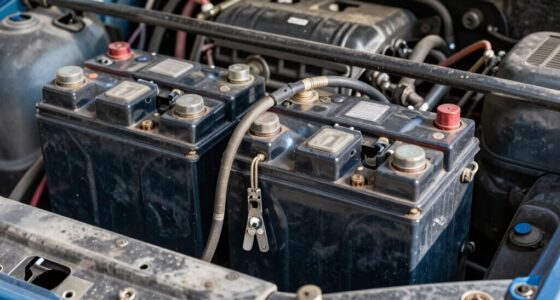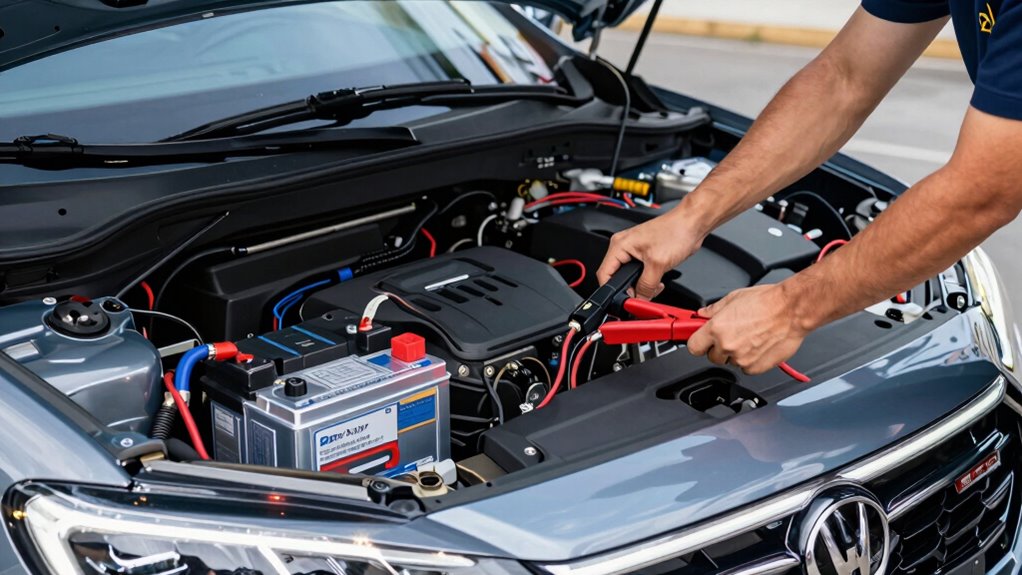

When jump-starting hybrids and EVs, you need to be aware that their 12V batteries are separate from the high-voltage system, which is isolated for safety. Unlike traditional cars, you should follow manufacturer-specific procedures, avoid contact with high-voltage parts, and use proper safety gear. The 12V system powers essential electronics and starts the vehicle, but understanding how these components differ can help you prevent damaging the vehicle or risking injury. Exploring these safety details can ensure a smoother, safer process.

Get business pricing on garage and car supplies
- Business-only prices and quantity discounts
- Tax-exempt purchasing
- Multiple users, one account, clear invoices
Key Takeaways
- Hybrids and EVs have high-voltage systems isolated from the 12V battery to ensure safety.
- The 12V battery in hybrids/EVs powers essential electronics and assists with vehicle startup.
- Jump-starting requires specific procedures to avoid contact with high-voltage components.
- The high-voltage system must be kept separate and protected during 12V jump-starts.
- Proper safety precautions and manufacturer guidelines are critical due to the unique electrical architecture.
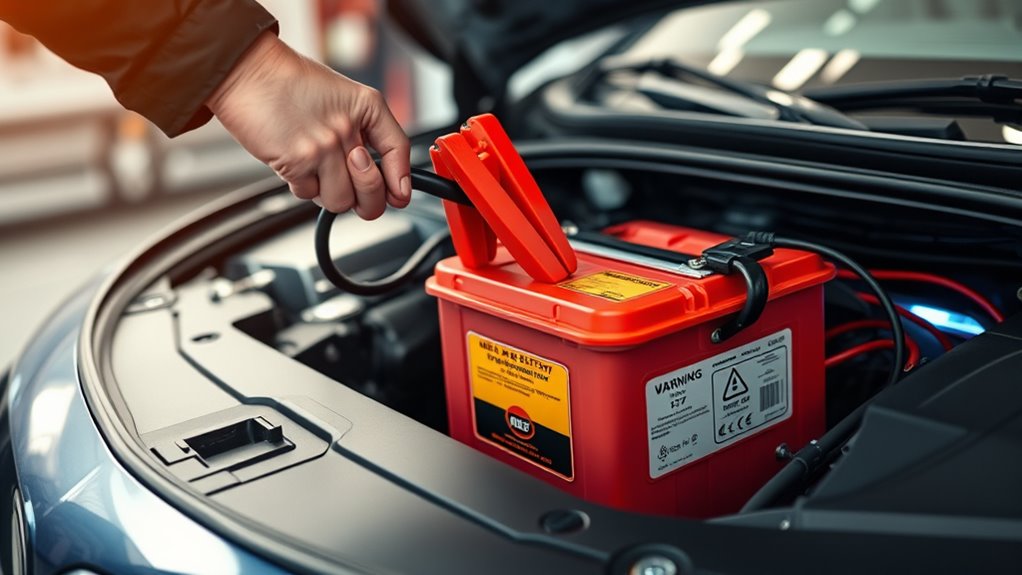
Jump-starting hybrids and electric vehicles can seem intimidating, but with the right knowledge, it’s a straightforward process. These vehicles have unique systems, especially their 12V batteries, that require a different approach compared to traditional cars. Understanding battery safety is key to avoiding damage or injury. Unlike conventional vehicles, hybrid and EV batteries are high-voltage systems that are carefully isolated from the 12V battery, which powers essential electronics and supports the vehicle’s startup process. When jump-starting, your focus should be on the 12V system, but you must still exercise caution to prevent accidental contact with high-voltage components. Always consult the manufacturer’s guidelines before attempting to jump-start, as procedures can vary between models.
The first step in dealing with a dead battery is to ensure safety. Wear gloves and eye protection, and verify that you’re working in a dry, well-ventilated area. Check the owner’s manual for specific instructions related to your hybrid or EV model. When connecting jumper cables, you typically connect the positive (red) cable to the positive terminal of the dead battery and the donor vehicle’s positive terminal. Then, connect the negative (black) cable to the negative terminal of the donor vehicle and to a solid, unpainted metal surface on the disabled vehicle’s frame or engine block. This grounding prevents sparks near the battery, reducing fire risk.
Charging procedures for hybrid and EV batteries are different from traditional cars. The 12V system is designed to be recharged automatically once the vehicle is running or connected to a charger, but if the 12V battery is dead, you need to jump-start it to get the vehicle operational again. It’s essential to follow the proper procedures to avoid damaging the battery or other electronic components. Once the cables are connected, start the donor vehicle and let it run for a few minutes before attempting to start your hybrid or EV. If it starts successfully, keep the vehicle running for at least 15 minutes to allow the 12V battery to recharge. Additionally, understanding high-voltage systems helps in recognizing the safety precautions needed when working around electric vehicle components.
hybrid and EV jump starter cables
As an affiliate, we earn on qualifying purchases.
As an affiliate, we earn on qualifying purchases.
Frequently Asked Questions
Can I Use a Standard Jumper Cable on Hybrid or EV 12V Systems?
You shouldn’t use standard jumper cables on hybrid or EV 12V systems because it can compromise hybrid safety. These vehicles have complex electronics and high-voltage components that require caution. Using regular jumper cables might cause damage or pose safety risks. Instead, follow manufacturer guidelines or seek professional assistance. Always prioritize hybrid safety to prevent harm to yourself and the vehicle’s sensitive systems.
Are Hybrid and EV 12V Batteries Maintenance-Free?
Imagine your hybrid or EV battery as a silent guardian, quietly working behind the scenes. These batteries are typically maintenance-free, meaning you don’t need to worry about regular checks or fluid levels. However, their lifespan depends on proper charging procedures and overall usage. While they don’t require constant upkeep, keeping an eye on their health guarantees they perform at their best when needed.
How Long Does It Take to Fully Charge a Hybrid or EV 12V Battery?
It typically takes about 1 to 4 hours to fully charge a hybrid or EV 12V battery, depending on its capacity and the charging method used. Charging duration varies based on the battery’s size and whether you’re using a standard or fast charger. Keep in mind, smaller batteries restore quicker, while larger ones may take longer. Regular charging guarantees your vehicle stays ready to go when you need it.
What Are the Signs of a Failing 12V Battery in Hybrids and EVS?
You’ll notice warning lights or error messages on your dashboard, indicating a failing 12V battery. You might also experience difficulty starting your hybrid or EV, or notice dimming lights and weak electrical performance. Conduct battery diagnostics to confirm issues, and if necessary, follow proper charging procedures to maintain or replace the battery. Addressing these signs early helps prevent breakdowns and keeps your vehicle running smoothly.
Do Hybrid and EV 12V Batteries Need Regular Replacement?
Your hybrid or EV’s 12V battery generally doesn’t need regular replacement if you maintain it well. Like a steady heartbeat, its lifespan varies based on usage, climate, and maintenance. Typically, replacement happens every 3 to 5 years, but if you notice signs like slow cranking or warning lights, it might be time sooner. Stay attentive, check it regularly, and replace it as needed to keep your vehicle running smoothly.
12V battery charger for hybrid EVs
As an affiliate, we earn on qualifying purchases.
As an affiliate, we earn on qualifying purchases.
Conclusion
Jump-starting hybrids and EVs is like steering a delicate dance—knowing the right steps keeps everything in harmony. Their unique 12V systems require careful attention, but with the right knowledge, you can keep your vehicle humming smoothly. Think of the 12V battery as the heartbeat of your car’s electrical rhythm. Handle it with care, and you’ll keep your hybrid or EV energized, ready to hit the road without missing a beat.
safety gloves for car battery jump start
As an affiliate, we earn on qualifying purchases.
As an affiliate, we earn on qualifying purchases.
high-voltage vehicle safety gear
As an affiliate, we earn on qualifying purchases.
As an affiliate, we earn on qualifying purchases.
Halloween Picks
halloween
As an affiliate, we earn on qualifying purchases.