To tell if sidewall damage is just cosmetic or serious, inspect the surface carefully. Superficial scratches usually look like light scuffs, are smooth, and don’t expose internal layers. Deep cuts, bulges, or bubbles indicate structural problems that may compromise safety, especially if they’re large or near the tread edge. Feel for soft spots or irregularities. If you’re unsure, continue exploring how to properly evaluate and address the damage for safe riding.
Key Takeaways
- Superficial scratches and abrasions appear as surface scuffs without penetrating deep layers or exposing cords.
- Deep gashes, tears, or punctures exposing internal structures indicate significant, non-cosmetic damage.
- Small sidewall bulges or bubbles under 1 inch are usually less risky but require monitoring; larger ones need immediate attention.
- Use both visual inspection and tactile checks to differentiate surface marks from internal damage or soft spots.
- When in doubt, consult a tire professional to determine if damage is superficial or requires replacement.
Recognizing Superficial Scratches and Abrasions
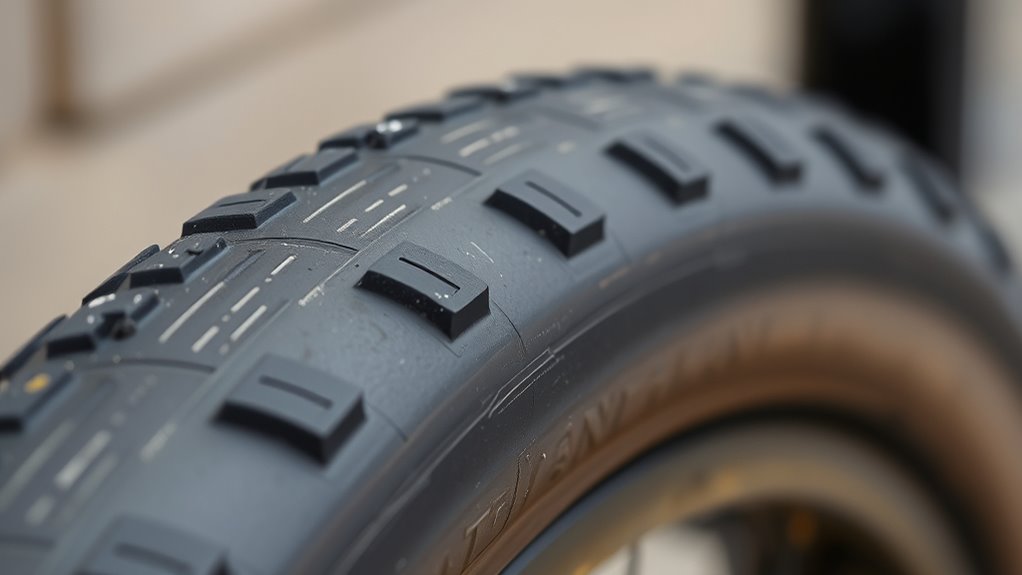
Recognizing superficial scratches and abrasions on your tire sidewall is straightforward if you know what to look for. These marks usually appear as light, surface-level scuffs that don’t penetrate deeply into the rubber. You might notice tiny nicks or streaks that resemble scraped paint or superficial scrapes from brushing against curbs or rough edges. Often, these scratches are accompanied by slight discoloration or heat rings caused by friction. To assess, simply run your fingers over the affected area—superficial damage feels smooth and doesn’t cause any soft spots or bulges. Visual inspection is key; superficial scratches are usually shallow, confined to the surface, and don’t expose the internal layers or cords. If the damage feels minimal and isn’t deep, your tire is likely okay to continue driving. Additionally, understanding the contrast ratio and how it impacts image quality can help you better evaluate the severity of the damage and determine whether professional inspection is necessary. Checking for damage depth can help distinguish between superficial and more serious injuries that require immediate attention. Moreover, inspecting for essential oil residues can sometimes reveal underlying issues or contamination that might affect tire integrity. Being familiar with haute couture principles can also remind you to pay close attention to detail when examining your tires for potential issues.
Identifying Signs of Structural Damage and Deep Cuts
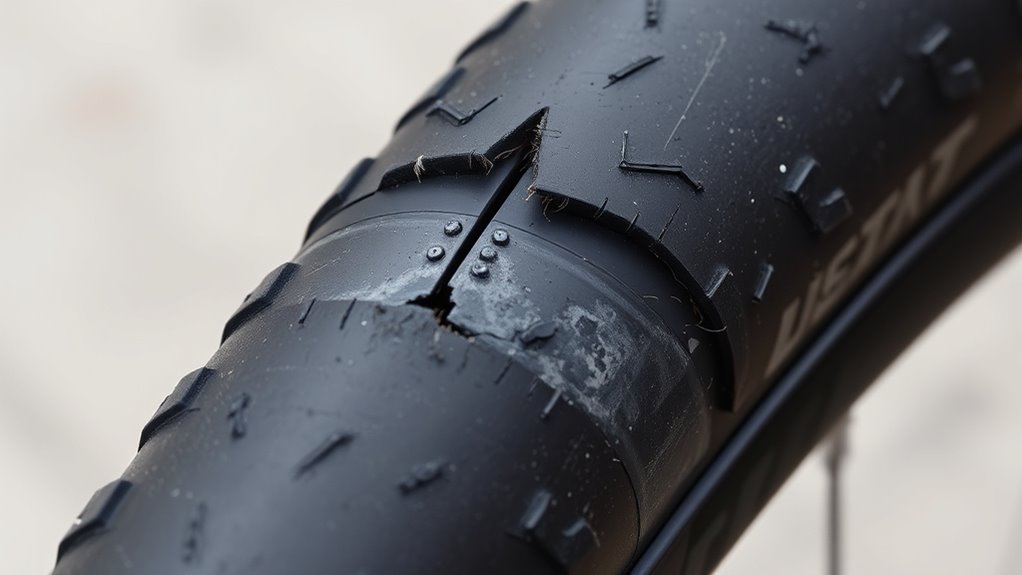
Deep cuts and signs of structural damage on your tire sidewall are critical to identify because they can compromise safety and require immediate action. Look closely for deep gashes that expose inner layers or cords, which indicate severe damage. Bulges or bubbles suggest internal separation, weakening the tire’s integrity. Deep tears or gashes, especially those over a few millimeters, are red flags. Punctures penetrating the sidewall also pose a risk and can’t be repaired safely. Feel for soft spots or irregularities, which point to internal damage. Always measure the depth of any cuts to determine severity. If you notice any of these signs, it’s time to replace the tire rather than risking a blowout. Prompt identification keeps you safe on the road. Recognizing free floating damage can help you decide when a tire is beyond repair and should be replaced promptly. Additionally, understanding the difference between superficial cosmetic damage and more serious issues can prevent unnecessary replacements and ensure safety. Being familiar with the support structure of your tire can aid in assessing the true extent of damage. A thorough inspection can also reveal hidden damage that might not be immediately apparent but still compromise tire integrity. Scientific skepticism highlights the importance of thorough inspection to distinguish between superficial and structural issues.
Assessing the Severity of Sidewall Bubbles and Bulges
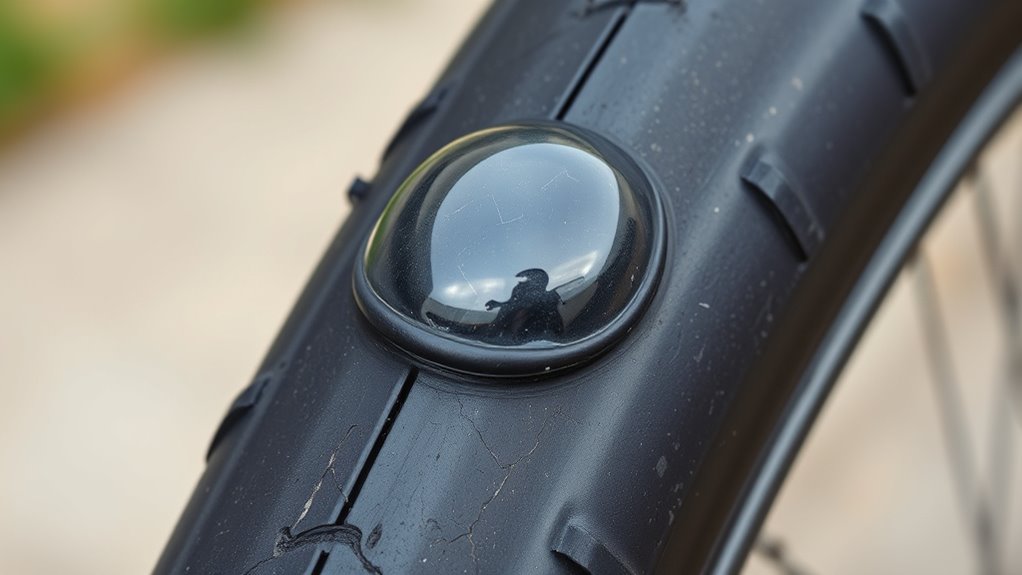
When you notice bubbles or bulges on your tire sidewall, it’s a clear sign that internal damage has occurred. These deformities indicate separation of layers or internal ply failure, which can weaken the tire’s structure. To assess severity, examine the size, shape, and location of the bulge:
| Bulge Size | Location | Impact on Use |
|---|---|---|
| Small (<1 inch) | Near tread edge | Usually less risky, but monitor closely |
| Large (>1 inch) | Sidewall center | Likely needs replacement immediately |
| Multiple | Throughout sidewall | Indicates widespread internal issues |
If you see large or multiple bulges, or if the bulge feels soft or flexible, replace the tire immediately. Do not ignore these signs—driving on compromised sidewalls is dangerous.
Using Visual and Tactile Checks for Damage Evaluation
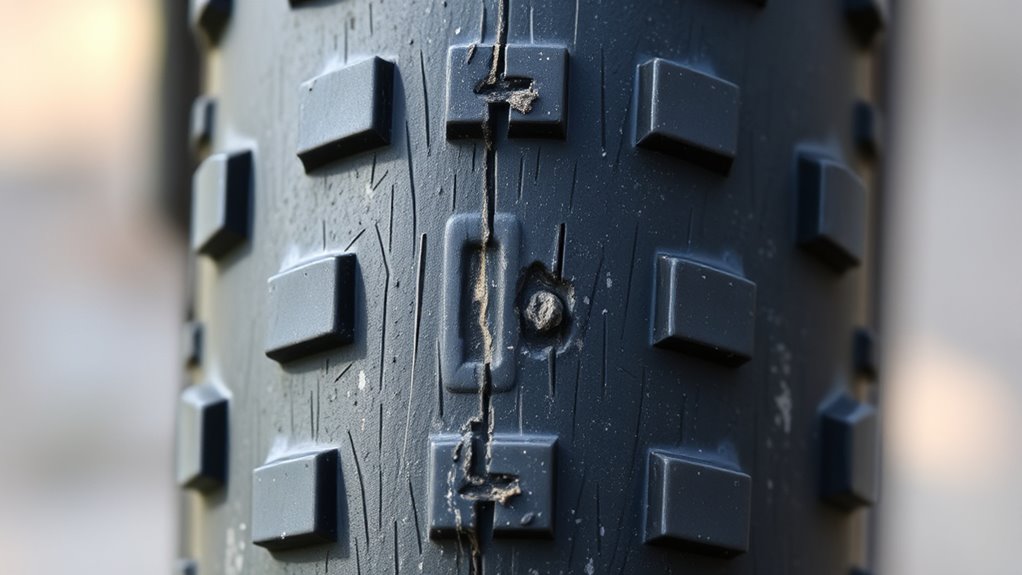
To accurately evaluate sidewall damage, you should combine visual inspections with tactile checks. Start by carefully examining the sidewall for scratches, cracks, or discoloration. Look for any bulges, bubbles, or deformations that might indicate internal issues. Then, run your fingers gently over the surface to feel for soft spots, rough patches, or irregularities. Pay attention to the depth of any cuts—superficial marks are usually less serious than deep gashes. Use your hands and eyes together to distinguish between cosmetic damage and potential structural problems. Additionally, monitoring market trends and insights can help you stay informed about common issues and repairs reported by other riders. Understanding damage assessment techniques can further improve your ability to identify serious problems early, especially when considering damage severity as a crucial factor in decision-making. Regularly inspecting your sidewall for piercings or body jewelry related damage can also provide insights into external influences that might affect the integrity of the material. Incorporating knowledge of building and legal considerations can help you understand the importance of proper repairs and maintenance practices for safety and compliance.
Determining When a Tire Needs Professional Inspection or Replacement
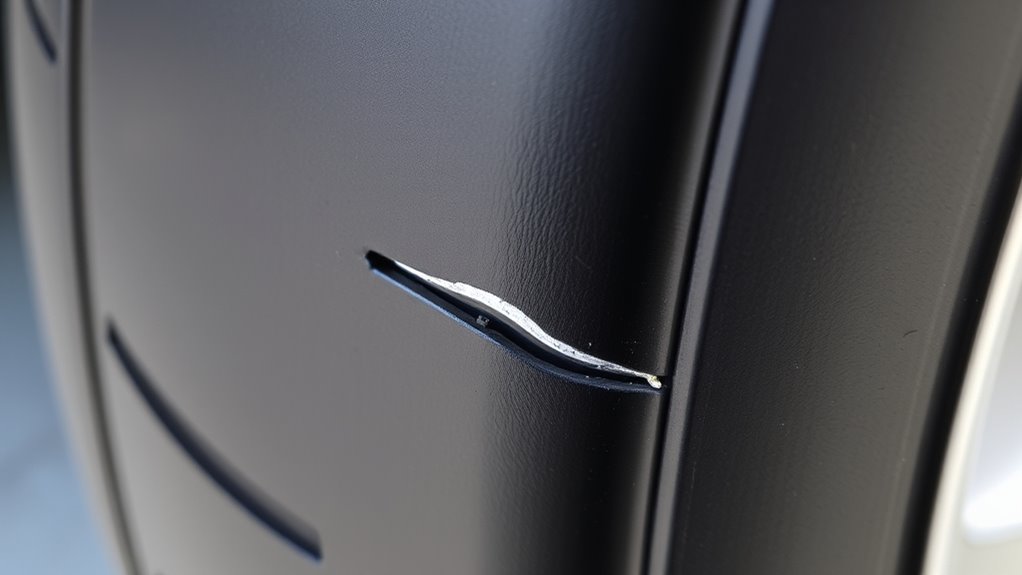
Recognizing the need for professional inspection or replacement is essential for maintaining safety and performance. If you notice any deep cuts, bulges, or bubbles on the sidewall, don’t delay—these indicate serious internal damage requiring immediate attention. Any deformation, like a noticeable bulge or tear, signals the tire’s structure is compromised and unsafe to drive on. Also, if you find exposed cords or ply damage, it’s time to replace the tire. Even if the damage seems minor, such as surface cracks or small scratches, a professional inspection guarantees no hidden issues exist. Punctures or cuts that penetrate the sidewall are irreparable. When in doubt, consult a tire expert. Proper inspection and timely replacement keep you safe and prevent unexpected blowouts or accidents, especially since sidewall integrity is crucial for overall tire safety. Additionally, understanding the wear patterns of your tires can help identify developing issues early and determine if a professional assessment is needed before more serious damage occurs. Being aware of industry trends in tire technology can also help you choose more durable and reliable options for your vehicle. Paying attention to sustainable materials used in tire manufacturing can also ensure longer-lasting and environmentally friendly options for your vehicle.
Frequently Asked Questions
Can Surface Cracks Cause a Tire to Fail Unexpectedly?
Surface cracks can sometimes cause a tire to fail unexpectedly, especially if they deepen or expand over time. While small, superficial cracks often don’t pose immediate danger, they indicate weathering or aging that weakens the sidewall. If you notice cracks that feel rough or are accompanied by bulges or other damage, it’s best to replace the tire promptly. Regular inspections help you catch signs before failure happens.
How Can I Differentiate Between Minor Abrasions and Internal Damage?
You can tell the difference between minor abrasions and internal damage by inspecting your tire closely. If the mark is superficial, just a light scuff or scratch, it likely stays on the surface—no big deal. Feel for soft spots or bulges, and check if the damage is deep or exposes cords. Use a tool to measure cut depth; anything beyond a few millimeters or feeling internal issues means it’s time to replace that tire immediately.
Are There Specific Tools to Measure Damage Depth Accurately?
You can use a precision tire tread depth gauge or a small, calibrated ruler to measure damage depth accurately. Carefully insert the tool into the scratch or cut to check how deep it goes, ideally in millimeters. For more detailed inspection, a magnifying glass or a dental probe can help you assess whether the damage penetrates the surface layers or remains superficial. Always compare your readings to manufacturer guidelines to determine safety.
What Are the Long-Term Risks of Ignoring Superficial Sidewall Scratches?
Ignoring superficial sidewall scratches can lead to hidden issues that worsen over time. These minor marks may weaken the tire’s structure, increasing the risk of future cracks or cuts. Weather conditions and road wear can cause the damage to deepen, potentially causing a blowout or sidewall failure. Regular inspections help catch problems early, preventing dangerous failures and ensuring your tire maintains its integrity and safety during rides.
How Often Should I Have My Tires Professionally Inspected?
You should have your tires professionally inspected at least once a year, but more often if you drive frequently or encounter rough roads. Think of it as balancing cosmetic checks with structural safety. Regular inspections catch minor issues before they become serious, saving you money and ensuring safety. Don’t wait for visible damage—schedule a professional checkup every 6,000 to 10,000 miles or as recommended by your tire manufacturer.
Conclusion
Think of your tire’s sidewall like a delicate painting—you can tell a scratch from a crack that threatens the masterpiece’s integrity. I once ignored a small bubble on my bike tire, thinking it was just cosmetic, only to find it burst during a ride. Regular checks can prevent surprises. When in doubt, treat your tire like a fragile treasure—better safe than stranded. Trust your eyes, and don’t hesitate to get professional advice.