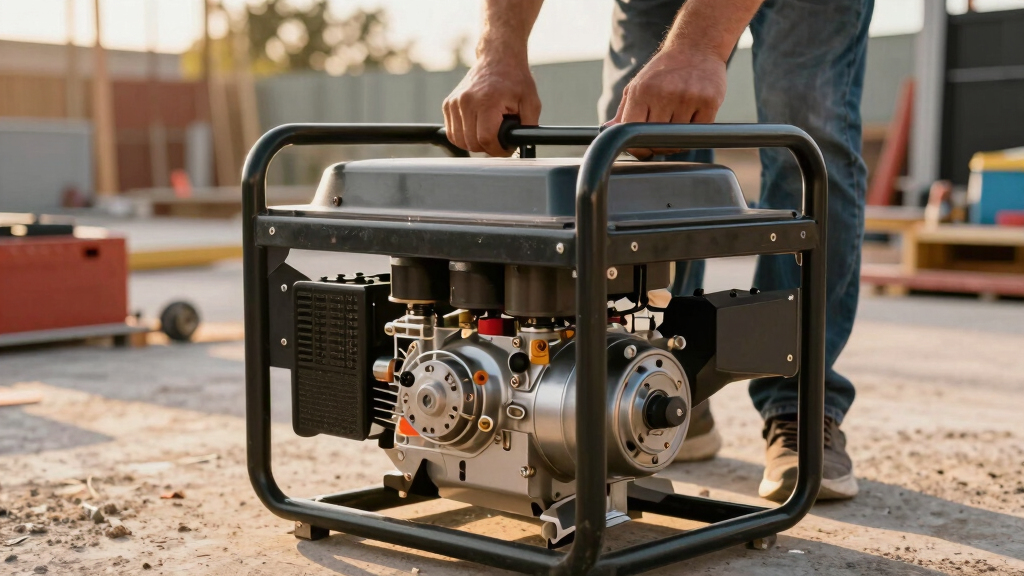

Finding the best portable generator for jobsite power involves balancing power output, portability, and durability. The DeWalt 10,000 Starting Watt Generator stands out for its robust performance, ideal for heavy-duty tasks. Meanwhile, the PowerSmart 4400W Dual Fuel Generator offers flexibility with gas and LPG options for versatility on the go. A key challenge in this category is choosing a unit that provides enough power without sacrificing portability or wasting energy on unnecessary features. Continue reading for a detailed breakdown of the top options and what makes each suitable for different jobsite demands.
Key Takeaways
- Top picks balance high power output with ease of transport, ensuring they’re practical for diverse jobsite conditions.
- Dual-fuel and tri-fuel models provide added flexibility, especially useful for remote locations with limited fuel options.
- Quiet operation and advanced safety features like CO sensors are increasingly common, improving user experience and safety.
- Inverter technology is favored for sensitive equipment, but often comes at a higher cost compared to traditional generators.
- Durability and build quality are critical; units with weather-resistant features tend to last longer in tough jobsite environments.


More Details on Our Top Picks
DeWalt 10,000 Starting Watt Portable Gas Generator with Electric Start
This DeWalt generator stands out for its robust 420cc engine capable of delivering a hefty 10,000 starting watts, making it ideal for demanding jobsite applications. Compared with the Westinghouse tri-fuel model, it offers a more straightforward gas-powered setup without the added complexity of multiple fuel options, but it sacrifices some versatility. Its electric start simplifies operation, especially in cold or emergency situations, and smart meters help monitor fuel and wattage, which enhances efficiency and safety. However, the unit’s weight and bulkiness can be a challenge to move around, and its price is higher than smaller, less powerful options. This generator suits professionals who need high power and reliability on rugged sites but don’t mind the heft and cost.“
Pros:- Powerful 420cc engine delivers high wattage for large tools
- Electric start makes operation quick and effortless
- Includes smart runtime and wattage meters for monitoring
- Built-in safety features like CO protect and idle control
Cons:- Heavy and bulky, difficult to transport without assistance
- Higher price point compared to smaller generators
Best for: Heavy-duty contractors and professionals needing reliable, high-wattage power for large tools and equipment
Not ideal for: DIY homeowners or weekend campers who require portability and lower power levels, due to its weight and size
- Engine:420cc DeWalt engine
- Starting Wattage:10,000W
- Fuel Tank Capacity:7.5 gallons
- Features:Electric start, smart runtime meter, wattage monitoring, CO protect, idle control
- Includes:Rechargeable battery, charger cable, spark plug wrench, owner’s manual
Bottom line: This generator is best suited for professionals who prioritize high power and durability over portability and cost.
Generac 1086Wh Portable Power Station with Lithium-Ion Battery, Wireless Charging, Compact Design for Camping and Indoor/Outdoor Use
Compared with the gas-powered options like the DeWalt or PowerSmart generators, this Generac power station emphasizes portability and clean energy, making it perfect for indoor use, camping, or light outdoor jobs. Its 1086Wh battery ensures quiet, emission-free power, and the fast recharging options—solar, wall, car, or generator—add to its convenience. The wireless charging pad is a thoughtful feature for quick device topping-up, but limited total wattage output may restrict its use with high-demand tools. It’s less suited for powering heavy, sustained loads like large construction tools or multiple high-wattage devices, unlike the gas-powered models that deliver continuous power. This pick makes the most sense for users prioritizing mobility and clean energy, especially in sensitive environments.“
Pros:- Emits clean, emission-free energy suitable for indoor and outdoor use
- Fast recharging via multiple methods, including solar
- Wireless charging pad adds quick device access
- Compact and durable for easy transport
Cons:- Limited total output wattage restricts high-demand use
- Potentially high cost compared to traditional portable generators
Best for: Campers, outdoor event organizers, or homeowners needing portable backup power for electronics and small tools
Not ideal for: Construction crews or contractors requiring sustained high wattage for large tools, due to limited power output
- Battery Capacity:1086Wh
- Charging Time:2.1 hours to 80% (wall outlet)
- Wireless Charging Power:15W
- Display:4.7-inch multi-color
- Color:Orange/Black
Bottom line: This power station excels for portability and clean power needs but isn’t suitable for heavy-duty, continuous powering tasks.
PowerSmart 4400W Dual Fuel Portable Generator, 223cc 4-Stroke OHV Gas/LPG Powered, 3600W Rated, 30A RV Ready & 120V Outlet, Recoil Start Backup Power for Home, RV and Jobsites
The PowerSmart 4400W generator offers a versatile solution for various needs, especially with its dual fuel capability—gasoline or LPG—making it a flexible choice for job sites or backup power. Its 223cc engine provides solid power output suitable for most jobsite tools, and the RV-ready outlets add convenience for mobile setups. Compared to the DeWalt or Westinghouse units, this generator is more portable, at 65 lbs, but it’s noisier at 76dB, which could be disruptive in quieter environments. Its runtime of just over 5 hours at half load limits continuous use without refueling, which might be a concern for extended jobs. This model is ideal for users needing portability and fuel flexibility for moderate power demands.“
Pros:- Dual fuel capability offers flexibility and convenience
- Portable design for easy transport around job sites
- RV-ready outlets for mobile use
- Reliable 223cc engine for consistent power
Cons:- Relatively loud operation at 76dB
- Limited runtime of about 5 hours at half load
- Heavy for some users at 65 lbs
Best for: Contractors or mobile workers needing a portable, versatile, dual-fuel generator for light to medium loads
Not ideal for: Users requiring all-day runtime or very quiet operation, due to noise levels and runtime limits
- Power:4400W (Surge), 3600W (Rated)
- Fuel Type:Gasoline and LPG
- Engine:223cc 4-Stroke OHV
- Runtime:Up to 5.1 hours at 50% load
- Outlets:120V AC, 30A RV, 12V DC
- Weight:65 lbs
Bottom line: This generator suits mobile professionals seeking flexible fuel options and portability over extended runtime or ultra-quiet operation.
Westinghouse 14500 Peak Watt Tri-Fuel Portable Generator with Remote Electric Start
This Westinghouse generator offers an impressive 14,500 peak watts and 11,500 running watts, making it suitable for powering multiple heavy tools or appliances simultaneously. Its tri-fuel capability—gasoline, propane, and natural gas—adds significant flexibility, especially for long-term jobsite or backup scenarios. Compared to the DeWalt or PowerSmart units, it provides longer runtime up to 19 hours on gasoline, ideal for extended outages or large-scale projects. The remote electric start enhances convenience, and its 550cc engine ensures reliable performance. On the downside, its substantial weight and size can hinder portability, and residual oil or fuel odors from factory testing are common. This generator is best for users needing prolonged power supply and fuel versatility at the expense of portability.“
Pros:- Tri-fuel operation provides maximum fuel flexibility
- Long runtime for extended power supply
- Low THD safe for sensitive electronics
- Remote electric start for added convenience
Cons:- Heavy and bulky, difficult to move quickly
- Residual odors from factory testing can be unpleasant
Best for: Large-scale contractors or emergency backup users requiring long runtime and multi-fuel options
Not ideal for: Users needing a lightweight, easily transportable generator for small or quick jobs
- Peak Watts:14,500
- Running Watts:11,500 (gasoline), 13,500 (propane), 12,000 (natural gas)
- Engine:550cc 4-Stroke OHV
- Fuel Tank Capacity:9.5 gallons
- Runtime:Up to 19 hours (gasoline)
- Start Type:Remote Electric
Bottom line: This generator excels for extended, versatile power needs but is less suited for portable, short-term use.
Champion Power Equipment 4000-Watt RV Ready Portable Inverter Generator with Quiet Technology and CO Shield
This inverter generator stands out for its combination of portability and safety features, weighing less than 49 pounds and operating at just 64 dBA. Compared to larger, noisier options like the A-iPower 5000-Watt, it offers quieter operation ideal for job sites where noise restrictions matter. The CO Shield auto shutoff adds a layer of safety that many competing models lack, making it suitable for prolonged use in sensitive environments. While its 4000-watt capacity may limit use for high-demand tools, the parallel capability allows doubling output when needed. Its lightweight design and quiet operation make it a favorite for those needing reliable, mobile power without disturbing neighbors or coworkers. The main tradeoff is its capped wattage, which might not support larger equipment simultaneously.Pros:- Lightweight and easy to transport
- Quiet operation at 64 dBA
- Includes CO Shield auto shutoff for safety
- Parallel connection capability for increased power
Cons:- Limited to 4000-watt capacity, not suitable for large tools
- Higher price compared to smaller or less advanced models
- Run time depends heavily on load, may require frequent refueling
Best for: Contractors and workers needing portable, quiet, and safe power for light to medium tasks on job sites.
Not ideal for: Heavy-duty construction sites with high power demands or running large equipment continuously, due to its 4000-watt limit.
- Weight:Less than 49 pounds
- Starting Watts:4000
- Running Watts:3000
- Run Time:Up to 10 hours
- Noise Level:64 dBA from 23 feet
- Outlets:120V 25A TT-30R, 120V 20A duplex, 12V automotive
Bottom line: This model is ideal for those seeking portable, quiet, and safe power for light to medium jobsite tasks.
DieHard Portable Power Station 300-Watt (600-Watt Peak), 288.6Wh – Solar Generator (Optional Solar Panel)
The DieHard Power Station excels in portability, weighing just over 9 pounds, making it perfect for quick setups and light-duty jobs. Its 300W continuous output and 288.6Wh capacity are comparable to smaller models like the DeWalt 2,500-Watt inverter but with the advantage of multiple output options, including USB, wireless charging, and AC outlets, facilitating versatility at the jobsite. Unlike larger generators such as the A-iPower 5000, it’s not designed for powering heavy tools but works well for charging batteries, small power tools, or running LED lights. Its weather-resistant build adds durability for outdoor use, and the optional solar panel enables eco-friendly recharging. The tradeoff is its limited capacity, which restricts extended use of high-power equipment or multiple tools simultaneously.Pros:- Extremely lightweight and portable
- Multiple output options including wireless charging
- Weather-resistant and durable for outdoor use
- Optional solar recharging adds eco-friendliness
Cons:- Limited to 300W continuous power, not suitable for high-demand tools
- Battery capacity may require frequent recharging for extended use
- Solar panel sold separately, adding to cost
Best for: Tradespeople needing portable, versatile power for small tools, charging devices, or emergency backup on the jobsite.
Not ideal for: Heavy-duty construction tasks requiring sustained high wattage or running multiple demanding power tools at once.
- Battery Capacity:288.6Wh
- Power Output:300 Watts continuous, 600 Watts peak
- Dimensions:8 x 6 x 6.5 inches
- Weight:9.26 pounds
- Input Options:Solar Panel (Optional), AC, DC
- Output Ports:Wireless Charging, AC, USB, USB-C, DC
Bottom line: This compact power station is best suited for small-scale tasks, emergency backup, or portable charging needs on the jobsite.
A-iPower 5000-Watt Portable Gas Generator with CO Sensor Shutdown
The A-iPower 5000-Watt generator delivers robust power, making it a solid choice for demanding construction or renovation sites compared to smaller models like the DeWalt 2,500-Watt inverter. Its 223cc OHV engine provides ample capacity for heavy tools and multiple devices, while the 20-hour runtime on a 6.3-gallon tank supports extended work periods. The integrated CO sensor enhances safety, a feature often absent in less advanced models. However, at 68 dB, it’s louder than inverter-style generators, and its weight and size make it less portable for quick moves around the site. Its reliance on gasoline limits refueling flexibility, and the noise level may be an issue where quiet operation is desired.Pros:- Powerful 5000-watt capacity suitable for large tools
- Extended runtime of up to 20 hours on a full tank
- Includes safety features like CO sensor shutdown
- Reliable high-performance engine
Cons:- Relatively noisy at 68 dB, not stealthy
- Heavy and less portable for quick site relocations
- Limited to gasoline, requiring frequent refueling
Best for: Construction crews and contractors needing high power output for multiple heavy-duty tools over long shifts.
Not ideal for: Light-duty jobs or situations where noise and portability are critical, due to its size and noise level.
- Engine:223cc OHV
- Starting Watts:5000
- Running Watts:4000
- Fuel Tank Capacity:6.3 gallons
- Runtime:up to 20 hours
- Sound Level:68dB
Bottom line: This generator is best for large-scale, high-demand jobsites that prioritize power and runtime over portability and noise considerations.
Wengart Industrial GFCI Outlet, 20 Amp 125V, Weather Resistant, Self-Test, UL Listed, Heavy Duty
This industrial-grade GFCI outlet is designed specifically for heavy-duty and outdoor use, ensuring safety and durability in demanding environments. Compared with standard outlets, it features weather-resistant materials and a self-test function that guarantees ongoing safety compliance, making it ideal for rugged jobsite conditions. While it excels in durability, it lacks the tamper-resistant shutters found in residential outlets, which might be a concern in some settings. It’s bulkier than typical outlets, but that’s a tradeoff for its heavy-duty construction. This product is best suited for professionals needing industrial-grade ground fault protection rather than casual or residential use.Pros:- Durable and weather-resistant for outdoor use
- Self-test feature ensures ongoing safety
- Heavy-duty construction withstands industrial environments
- Easy plug-in design for frequent use
Cons:- Lacks tamper-resistant shutters, less childproof
- Bulkier than standard outlets, less discreet
- Designed for industrial use, less suited for residential aesthetics
Best for: Construction sites or contractors requiring reliable, weather-resistant power outlets for heavy equipment and outdoor environments.
Not ideal for: Residential or light-duty applications where compactness and tamper resistance are priorities.
- Amperage:20 Amp
- Voltage:125V
- Weather Resistance:Yes
- UL Listed:Yes
- Material:High-impact polycarbonate
- Self-Test:Yes
Bottom line: This outlet is ideal for heavy-duty, outdoor environments where durability and safety are paramount, not for casual residential settings.
DeWalt 2,500 Starting Watt Portable Inverter Generator, Gas Powered, CO Protect, 8 Hour Runtime, Quiet Operation, Home Backup, RV Camping, Jobsite
The DeWalt 2,500-Watt inverter generator is designed for users who need clean, stable power, making it perfect for sensitive electronics and small jobsite tools. Compared to larger, louder generators like the A-iPower 5000-Watt, it’s much quieter, operating at a level that minimizes disruption on the job or campsite. Its 8-hour runtime on just a gallon of fuel is suitable for short shifts or backup scenarios, but it might require frequent refueling for longer projects. The CO Protect feature adds safety during operation, while its lightweight, handle-equipped design makes it easy to move around. However, its 2,500-watt cap limits its ability to run larger appliances or multiple tools simultaneously, which could be a drawback for bigger jobsite needs.Pros:- Provides clean, stable power safe for sensitive electronics
- Quiet operation minimizes noise disturbance
- CO detection enhances safety during use
- Lightweight and portable with built-in handle
Cons:- Limited to 2,500 starting watts, restricting larger tool operation
- Fuel capacity may require frequent refueling for extended use
- Performance may decline in extreme weather
Best for: Tradespeople and homeowners needing portable, quiet power for sensitive electronics or small tools on the jobsite or during outdoor activities.
Not ideal for: Large construction projects or running multiple heavy-duty tools, due to its limited wattage capacity.
- Starting Wattage:2,500W
- Engine:98cc OHV
- Runtime:Up to 8 hours at 25% load
- Fuel Tank Capacity:1 gallon
- Safety Features:CO Protect Carbon Monoxide Detection
- Weight:Lightweight with built-in handle
Bottom line: This inverter generator is best suited for small-scale jobs, sensitive electronics, or backup power needs where quiet operation is valued.
How We Picked
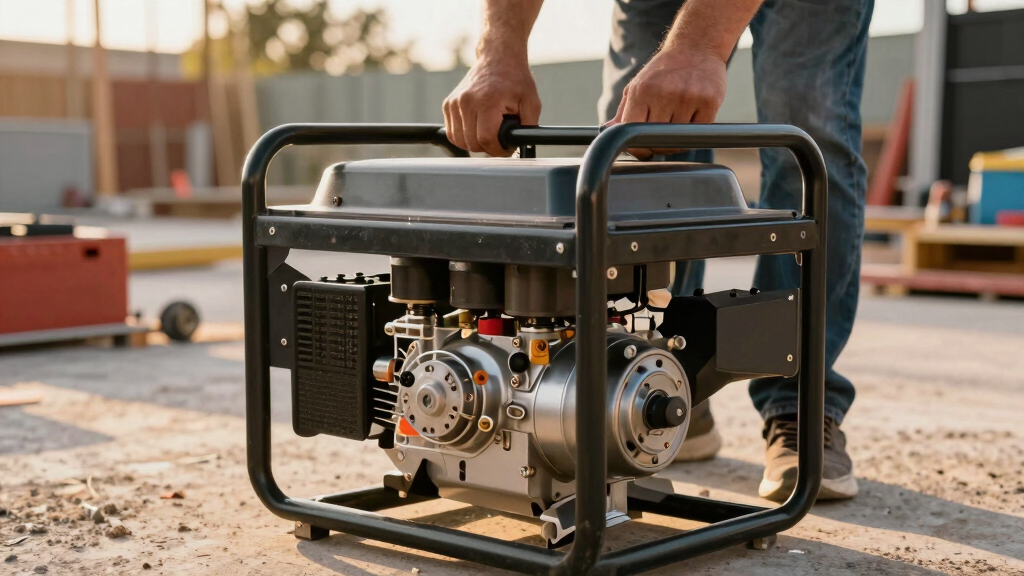
Our evaluation focused on performance, portability, build quality, and safety features. Power output was measured in starting and running watts to ensure units could handle typical jobsite loads. We prioritized models with reliable fuel options and longer runtimes, as well as those designed to withstand harsh conditions. Ease of use, including electric start and convenience features like remote controls or wireless charging, influenced rankings. Cost-effectiveness and maintenance considerations were also key, helping identify which generators deliver the best value for different budgets and needs.
Factors to Consider When Choosing Best Portable Generator For Jobsite Power
Choosing the right portable generator for a jobsite requires understanding several crucial factors. Beyond raw power, you need to consider fuel options, portability, safety features, and noise levels. Making the wrong choice can lead to insufficient power, safety risks, or excessive noise that disrupts work. This guide explains the key criteria to help you select a generator that meets your specific jobsite demands while providing long-term value.Power Output and Capacity
Matching your generator’s power capacity with your jobsite’s needs is essential. Consider the starting wattage for tools with motors, and ensure the rated running watts can sustain your typical load. Overestimating can lead to unnecessary costs and weight, while underestimating risks power shortages that halt work. For most jobsites, a model with at least 4,000 running watts strikes a good balance between capability and portability, but larger projects may require higher output units.
Fuel Type and Runtime
Gasoline is the most common fuel, but dual-fuel models offer LPG or propane compatibility, providing more flexibility, especially in remote locations. Longer runtimes reduce the need for frequent refueling, saving time and effort. Consider how much fuel capacity the unit has, along with fuel efficiency ratings. For extended jobsites, a generator with a larger fuel tank or options for quick refills can keep your work uninterrupted.
Portability and Weight
Portability is a key concern; a heavy, bulky unit may be impractical for frequent transport. Look for models with wheels, handles, or compact designs. Lightweight inverter generators excel for quick setup and movement, but often deliver less power. Conversely, more powerful units tend to be heavier, so weigh your need for mobility against the power output. Consider also how the generator will be stored and transported on your site.
Safety and Noise
Safety features like automatic CO sensors and remote shutdown are becoming standard and are vital in enclosed or semi-enclosed jobsite environments. Noise levels matter too; quieter models reduce disruption and fatigue, especially if work extends into early mornings or late evenings. Look for units with noise ratings around 60-70 decibels for a good balance. Investing in safety and noise controls can improve overall jobsite conditions and operator safety.
Durability and Weather Resistance
Jobsite conditions can be harsh, so durability is non-negotiable. Weather-resistant panels, corrosion-proof coatings, and sturdy frames extend a generator’s lifespan. Units with robust construction tend to handle dust, moisture, and rough handling better. If your site is exposed to the elements, prioritize models with built-in protection features to avoid costly breakdowns and maintenance.
Frequently Asked Questions
How much power do I need for typical jobsite tools?
Most standard construction tools like drills, saws, and compressors require between 500 and 3,000 watts each, with larger equipment demanding more. For a typical small to medium jobsite, a generator providing at least 4,000 to 6,000 watts of continuous power should cover most needs. Always check the starting wattage of each tool to ensure your generator can handle initial surge loads without tripping or overloads.
Is inverter technology worth the extra cost for a jobsite generator?
Inverter generators are known for producing cleaner power, which is safer for sensitive electronics such as laptops, communication equipment, and modern tools. They are usually quieter and more fuel-efficient but tend to be more expensive. For jobsites where delicate electronics or precision tools are used, investing in inverter technology can prevent damage and improve workflow. However, for purely heavy-duty, non-sensitive tasks, traditional models may suffice.
How important is noise level on a busy jobsite?
Noise level can significantly impact worker comfort and communication, especially in enclosed or residential areas. Quieter models, typically below 65 decibels, reduce fatigue and disturbance, making long workdays more bearable. If noise is a concern, prioritize inverter or specially engineered quiet models, even if they cost a bit more. Remember that louder generators may also attract regulatory restrictions in certain zones.
What maintenance should I expect for a portable generator?
Regular maintenance includes checking and changing oil, inspecting filters, and ensuring the spark plug is clean. Fuel stabilizers can extend the life of stored fuel, and periodic testing helps catch issues early. Proper storage during off-hours prevents corrosion and damage, especially in harsh environments. Choosing a model with accessible service points and a good warranty can simplify ongoing maintenance and reduce downtime.
When should I choose a dual-fuel or tri-fuel generator?
Dual- or tri-fuel generators offer flexibility, especially useful in remote or unpredictable fuel supply situations. They allow you to switch between gasoline and LPG or propane, which can be more economical and convenient depending on availability. These models tend to be slightly heavier and more complex but provide peace of mind for longer projects or in areas where fuel options are limited. Consider your typical worksite conditions when deciding if the added versatility is worth the extra investment.
Conclusion
The best overall choice for most users is the DeWalt 10,000 Starting Watt Portable Gas Generator, offering a high power ceiling with reliable build quality. If you prioritize value, the PowerSmart 4400W Dual Fuel Generator provides excellent flexibility at a competitive price. For those seeking a premium experience with quieter operation and advanced safety, the Westinghouse Tri-Fuel Generator is a strong contender. Beginners or smaller operations might find the DeWalt 2,500 Watt Inverter easiest to handle, while contractors needing maximum power should consider larger, heavy-duty units. Tailor your choice to your specific worksite needs, balancing power, portability, and safety features accordingly.