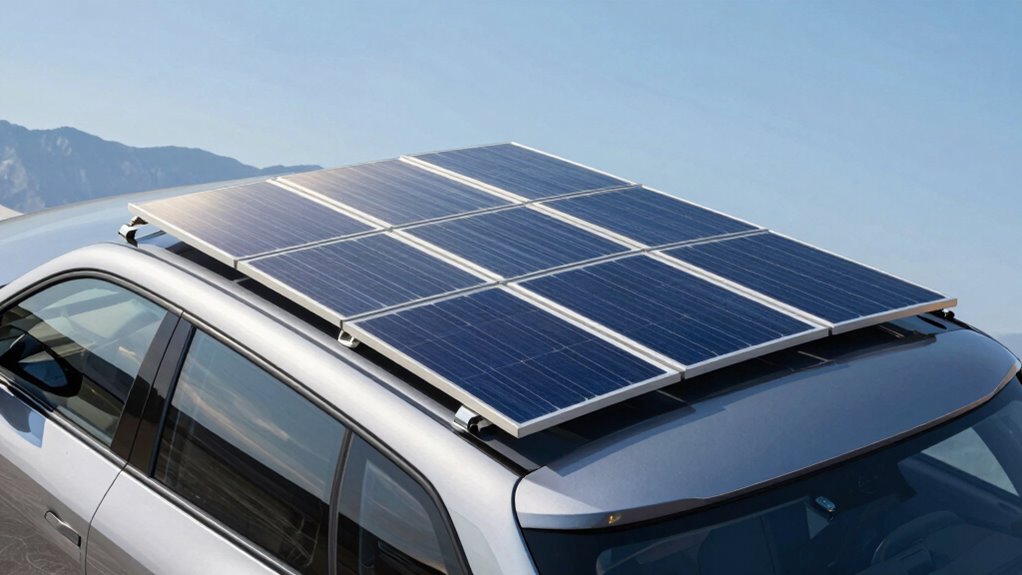
If you’re considering a roof mounted solar panel kit for your vehicle, you’re likely looking to extend your off-grid power capabilities or reduce reliance on traditional charging methods. The best kits balance performance, ease of installation, and durability, but they differ significantly in price and features. The Eco-Worthy 200 Watts 12V/24V Monocrystalline Kit stands out as a solid overall choice for most users, offering a good balance of power and affordability. The Topsolar 340W Kit provides maximum output for those needing higher energy, but at a premium cost. Meanwhile, flexible panels like the ECO-WORTHY 260W offer versatility for curved surfaces. Continue reading for a detailed breakdown of these options and what to consider before buying.

Get business pricing on garage and car supplies
- Business-only prices and quantity discounts
- Tax-exempt purchasing
- Multiple users, one account, clear invoices
Complete the kit


Key Takeaways
- The most powerful kits, like Topsolar 340W, deliver maximum energy but come at a higher price point, making them ideal for heavy-duty use.
- Flexible solar panels provide installation versatility but tend to be slightly less efficient than rigid monocrystalline modules.
- Charge controllers are critical; larger or MPPT controllers often justify higher prices with better efficiency and battery management.
- Ease of installation varies; complete mounting kits simplify setup, but some may require professional help for optimal safety.
- Price ranges widely, so balancing budget and performance is essential; premium kits often include better durability and higher wattage.


More Details on Our Top Picks
ECO-WORTHY 200 Watts 12V/24V Monocrystalline Solar Panel Kit with 30A PWM Charge Controller
This kit stands out for its combination of high-efficiency monocrystalline panels and a complete, plug-and-play setup, making it ideal for those seeking a reliable, all-in-one solution. Compared with the Renogy 200W RV Kit, it offers similar power but includes all necessary mounting hardware, simplifying installation. However, its weight and technical installation requirements may challenge portable users or beginners. The durable aluminum frame and weather-resistant components ensure longevity in harsh conditions, making it a great choice for RVs, boats, and off-grid cabins. Nonetheless, limited to 12V/24V systems and requiring some technical skill for setup are potential hurdles for less experienced buyers.
Pros:- High efficiency monocrystalline cells for greater power output
- Durable corrosion-resistant aluminum frame
- Complete kit with all necessary mounting hardware
- Suitable for various off-grid applications
Cons:- Installation can be complex for novices
- Heavy weight may hinder portability
- Limited to 12V and 24V systems
Best for: RVers and boat owners needing a complete, durable package suitable for diverse outdoor applications
Not ideal for: Beginners or those seeking ultra-lightweight, portable solar solutions that prioritize ease of setup
- Efficiency:Up to 21.5%
- Amperage Capacity:11 A
- Maximum Voltage:27.4 volts
- Maximum Power:200 watts
- Output Voltage:12 volts
- Item Dimensions:35.2″L x 23.1″W x 1.3″H
- Item Weight:31.6 pounds
- Material:Aluminum
- Temperature Rating:85 °F
Our verdict“This kit is ideal for users wanting a reliable, all-in-one solar setup for RVs and boats with moderate DIY skills.”
Zoupw 220 Watt Solar Panel Kit for 12V/24V Battery with 30A LCD PWM Charge Controller, 2 Pack 110W Monocrystalline Modules
This kit excels in delivering stable power output even in low-light conditions, thanks to high-efficiency N-Type monocrystalline panels, making it a strong choice for off-grid enthusiasts. While the Renogy 100W Starter Kit offers simplicity and lower capacity, the Zoupw kit provides more power with a focus on durability, thanks to its waterproof IP68 rating. Its expandable design allows future system growth, but proper wiring knowledge is essential to maximize performance. This kit is suited for users prioritizing weather resistance and consistent output in challenging outdoor environments, though it may fall short for high-energy demands due to its 220W limit.
Pros:- High-efficiency N-Type monocrystalline cells
- Waterproof, corrosion-resistant build
- Expandable with included connectors
- Stable output in low-light conditions
Cons:- Requires proper wiring knowledge for installation
- Limited to 220W total power
- Performance depends on sunlight and weather
Best for: Outdoor adventurers needing reliable power in variable weather conditions with room to expand
Not ideal for: Those with minimal technical skills or expecting very high power needs beyond 220W
- Power Output:2x110W panels
- Total Power:220W
- Voltage Compatibility:12V/24V
- Controller:30A PWM LCD
- Waterproof Rating:IP68
- Warranty:10 years for panels, 2 years for controller
Our verdict“This kit is a smart choice for users wanting durable, weatherproof panels with expandability for off-grid and marine use.”
Renogy 100W 12V Solar Panel Starter Kit with 30A PWM Controller
The Renogy 100W Starter Kit provides a solid entry point into solar power with high efficiency and remote monitoring features, making it suitable for newcomers. Compared to the larger Renogy 200W RV Kit, it offers less capacity but remains straightforward to set up and expand within its 100W limit. Its weather-resistant design and safety certifications add confidence for off-grid projects. However, the smaller capacity and need for additional components for full remote control may limit its appeal for those planning larger systems or seeking fully integrated solutions. Its performance can be influenced by sunlight conditions, which is typical for smaller panels.
Pros:- High efficiency at 22.5%
- Weather-resistant with safety certifications
- Bluetooth remote monitoring
- Supports expansion up to 400W
Cons:- Limited capacity without expansion
- Requires additional components for full remote control
- Performance varies with sunlight
Best for: Beginners or budget-conscious users starting small with off-grid solar setups
Not ideal for: Users needing high power output or complex remote system management without additional investments
- Power:100W
- Voltage:12V
- Controller:30A PWM
- Efficiency:22.5%
- Warranty:10 years (panel), 2 years (controller)
- Remote Monitoring:Bluetooth
Our verdict“This kit suits newcomers looking for a reliable, expandable solar starter at an accessible price point.”
Renogy 200W 12V N-Type RV Solar Panel Kit with Adventurer 30A Controller
This kit offers a substantial 200W output with high-efficiency N-Type cells, making it well-suited for RVs, campers, and small greenhouses. Compared to the Eco-Worthy 200W Kit, it emphasizes ease of installation with pre-drilled holes and plug-and-play cables, plus a 5-year warranty. Its durable, corrosion-resistant aluminum frame ensures longevity in demanding environments. While the 200W capacity makes it more suitable for higher energy needs, its size and dependency on sunlight limit its performance in overcast conditions. The kit’s compatibility with various battery types and straightforward setup make it appealing for those seeking a reliable, mid-range system but less so for users expecting large-scale power or low-light flexibility.
Pros:- High efficiency at 22%
- Durable, corrosion-resistant construction
- Easy to install with pre-drilled mounting points
- 5-year warranty for peace of mind
Cons:- Limited to 200W capacity
- Performance depends on sunlight availability
- Requires compatible batteries for optimal use
Best for: RV owners and small-scale off-grid users needing solid daily energy output
Not ideal for: Those requiring high-capacity systems or minimal installation effort
- Power:200W
- Voltage:12V
- Efficiency:22%
- Protection Degree:IP67
- Warranty:5 years
- Controller:30A
Our verdict“This kit fits RV users who want a dependable, high-efficiency solar panel with straightforward installation and moderate capacity.”
Solar Panel Mounting Rail Kit for 5 x 320W Panels, Includes Aluminum Rails, Clamps, L-Brackets & Grounding Lugs
This mounting kit is designed for extensive solar arrays, capable of supporting multiple high-wattage panels. Compared to the Renogy 200W Kit, it offers the hardware necessary to assemble a much larger system, ideal for those planning to expand or install on complex roof structures. Its durable aluminum construction ensures long-term weather resistance, and the included hardware simplifies secure attachment. Nevertheless, it does not include panels, requiring buyers to source compatible modules separately. Its size and hardware complexity make it unsuitable for small or portable setups but a perfect choice for professional or large-scale rooftop projects where reliability and flexibility are priorities.
Pros:- Heavy-duty aluminum construction
- Universal compatibility with various panel sizes
- Complete hardware kit for stable, waterproof installation
- Supports large, multi-panel arrays
Cons:- Panels not included
- Requires technical knowledge for assembly
- Designed for specific panel sizes, limiting flexibility
Best for: Solar professionals or DIY enthusiasts installing multi-panel arrays on varied roof types
Not ideal for: Casual users or those seeking a ready-to-go system with panels included
- Number of Rails:8
- Rail Length:47.2 inches
- Compatible Panel Wattage:up to 320W
- Material:6005-T5 aluminum alloy
- Adjustable Clamps:30-45mm end clamps, 30-40mm mid-clamps
- Includes:L-brackets, end clamps, mid-clamps, grounding lugs
- Roof Compatibility:Metal, Tile, Shingle, Wood
- Cable Management:Stainless steel wire clips
Our verdict“This kit is ideal for experienced installers aiming for large, durable solar arrays on complex roofs.”
ECO-WORTHY 260W Flexible Solar Panel Kit for Off-Grid Use
This kit stands out for its lightweight and highly flexible design, making it a prime choice for those who need to install solar panels on irregular surfaces or portable setups. Compared to the Topsolar 340W kit, it offers less raw power but excels in ease of transport and installation, especially suited for RVs, boats, or temporary setups. Its 130W panels are upgraded from standard flexibility, providing a noticeable boost in power output. However, the reliance on all packages arriving before assembly and its performance dependence on sunlight highlight some logistical and environmental limitations. Its comprehensive protections ensure safe battery charging, but it remains limited to off-grid use, which could be a drawback for those seeking integrated grid-tie capability.
Pros:- Lightweight and flexible design for easy transportation and installation
- Increased power output with upgraded 130W panels
- Comprehensive protections for safe battery charging
Cons:- Requires all packages to arrive before assembly, potentially delaying setup
- Performance highly dependent on sunlight conditions
- Limited to off-grid applications, not suitable for grid-tied needs
Best for: Owners of lightweight, portable off-grid setups like RVs, boats, or tiny homes who prioritize flexibility and ease of installation
Not ideal for: Users needing high-capacity or grid-tied systems, as this kit is limited to small-scale off-grid applications and depends heavily on sunlight availability
- Output Power:1.04kWh per day
- Panel Power:130W each
- Number of Panels:2
- Charge Controller:30A, LCD display, PWM
- Cable Lengths:16.4ft and 4.92ft
- Battery Compatibility:Lead-acid, gel, lithium phosphate
Our verdict“This kit is best for those needing a portable, flexible solution for off-grid energy, accepting some dependency on sunlight and smaller power capacity.”
Topsolar 340W Monocrystalline Solar Panel Kit for Off-Grid Systems
Compared with the ECO-WORTHY flexible kit, the Topsolar 340W panel offers significantly more power, making it suitable for users with higher energy needs or those installing multiple panels for expanded capacity. Its high-efficiency monocrystalline cells with 21% efficiency translate into better performance in limited sunlight, ideal for more demanding off-grid applications like cabins or larger RV systems. Its durable aluminum frame and high wind and snow load ratings ensure resilience in harsh outdoor conditions. While it doesn’t include an inverter, this kit’s modular nature allows for flexible system expansion, unlike the more limited flexibility of the ECO-WORTHY model. The need for some technical knowledge and the capacity limitation to 340W mean it’s less suited for complete novices or those seeking simple plug-and-play solutions.
Pros:- High efficiency solar cells with 21% performance
- Durable, corrosion-resistant aluminum frame suitable for outdoor environments
- Includes mounting brackets and cables for straightforward installation
- Suitable for various off-grid applications with high resilience
Cons:- No integrated inverter, requiring additional components for power conversion
- Installation requires some technical skills and planning
- Limited to 340W capacity; multiple panels needed for larger systems
Best for: Intermediate to advanced users seeking a durable, high-efficiency solar setup for off-grid homes, RVs, or cabins that can be expanded as needed
Not ideal for: Beginners or those requiring a simple, all-in-one plug-and-play kit, since it demands some technical installation knowledge and additional components like an inverter
- Power:340W
- Voltage:12V/24V
- Cell Efficiency:21%
- Frame Material:Aluminum
- Dimensions:48.5″ L x 26.4″ W x 1.2″ H
- Maximum Wind Load:2400Pa
- Snow Load:5400Pa
- Charge Controller:30A PWM
- Output Voltage:12V
Our verdict“This kit makes the most sense for users who need reliable, high-efficiency power with room for system expansion and are comfortable with installation complexity.”

How We Picked
In selecting these products, I prioritized real-world performance metrics like wattage output and compatibility with typical vehicle batteries. Ease of installation and build quality were key factors, since vehicle mounting demands durability and straightforward setup. I also considered value for money, ensuring each kit offers a meaningful balance between cost and features. The ranking reflects a combination of user convenience, energy capacity, and overall reliability, with top picks offering a broad appeal for different vehicle setups and budgets.Factors to Consider When Choosing Roof Mounted Solar Panel Kit For Vehicles
Choosing the right roof mounted solar panel kit for your vehicle involves more than just wattage. It’s important to consider factors like panel type, mounting options, charge controller compatibility, and your specific energy needs. A well-chosen kit can significantly extend your off-grid capabilities, but a poor fit may lead to installation hassles or inefficient power generation. Here are key considerations to keep in mind when making your decision.Panel Type and Efficiency
Monocrystalline panels are generally the most efficient and durable, making them a popular choice for vehicle mounts where space is limited. Polycrystalline options tend to be cheaper but slightly less efficient, which could mean more panels are needed to meet the same energy demands. Flexible panels are appealing for curved surfaces but often have slightly lower efficiency and lifespan, so weigh the need for flexibility against long-term performance.
Mounting System Compatibility
Ensure the mounting hardware is compatible with your vehicle’s roof type and that it can withstand road vibrations and weather. Some kits include complete mounting rails, clamps, and grounding parts, simplifying installation. Avoid overly complex systems if you’re not comfortable with DIY work, as improper mounting can damage panels or reduce their lifespan. Consider whether you prefer adhesive mounts or rack-based systems, each offering different tradeoffs in stability and ease of removal.
Charge Controller Features
The charge controller is vital for protecting batteries and optimizing energy flow. MPPT controllers are more efficient, especially in fluctuating sunlight, but tend to cost more. PWM controllers are simpler and cheaper but less effective at maximizing power, which could impact your overall system performance. Think about your energy needs and budget to select a controller that balances cost with efficiency.
Power Needs and System Size
Accurately estimating your power consumption prevents over- or under-sizing your system. Larger vehicles or those with higher energy demands benefit from higher wattage kits, like 200W or more. Smaller setups or occasional use might do well with 100W or 150W kits. Remember that excess capacity can be a waste of money, but too little power limits your off-grid potential.
Budget and Longevity
Premium kits often include better weatherproofing, higher-quality materials, and more reliable warranties, which can save money over time. Cheaper options may require more maintenance or replacement sooner, especially in demanding environments. Balance upfront costs with long-term durability to find a system that offers good value and peace of mind.
Frequently Asked Questions
Can I install a roof mounted solar panel kit myself?
Yes, many kits are designed for DIY installation, especially those with complete mounting hardware and straightforward wiring. However, it’s important to understand your vehicle’s roof structure and ensure proper sealing and grounding to prevent leaks or damage. If you’re unfamiliar with electrical work or vehicle modifications, consulting a professional may be a safer choice to guarantee safety and system efficiency.
Will a flexible solar panel hold up over time on a vehicle roof?
Flexible panels are attractive for their ease of installation on curved surfaces, but they typically have a shorter lifespan compared to rigid modules, often around 5-10 years. They are more susceptible to damage from scratches, UV exposure, and thermal cycling. For long-term durability, rigid panels with proper mounting tend to offer better performance and longevity, especially if the vehicle is driven frequently or exposed to harsh conditions.
What size solar kit do I need for my vehicle?
The ideal size depends on your energy usage and available roof space. A small, portable setup around 100-150W may suffice for basic needs like charging phones and small appliances, but larger systems of 200W or more are better suited for running larger devices or extended off-grid trips. Measure your power requirements carefully and consider future needs to avoid under- or over-investing in your system.
Are charge controllers necessary, and which type should I choose?
Charge controllers are essential for protecting your batteries and ensuring efficient energy transfer. MPPT controllers are generally worth the extra cost if you want maximum efficiency, especially in variable sunlight conditions. PWM controllers are simpler and affordable but may lead to slightly less charging efficiency. Your choice should reflect your system size, budget, and how much you rely on consistent power generation.
Is it better to buy a complete kit or assemble parts separately?
Complete kits simplify the installation process by providing compatible components and detailed instructions, reducing setup time and potential errors. Assembling parts separately can sometimes save money or allow customization, but it requires more technical knowledge and effort. For most users, opting for a well-rated complete kit offers a safer, more reliable solution, especially if you’re new to solar installations.