
To choose the right air compressor, you need to understand your tools’ CFM ratings and select a model with a slightly higher capacity for smoother operation. Properly matching the compressor prevents delays and keeps your project running efficiently. Regular maintenance, like changing filters and draining moisture, keeps performance peak. Safety is key—wear protection and double-check connections. Keep these tips in mind, and you’ll get the most out of your gear every time. Keep exploring to learn even more.

Get business pricing on garage and car supplies
- Business-only prices and quantity discounts
- Tax-exempt purchasing
- Multiple users, one account, clear invoices
Key Takeaways
- Match compressor CFM to your tool’s requirements, with a slight buffer for consistent performance.
- Regularly maintain filters, hoses, and tanks to ensure optimal airflow and prevent downtime.
- Understand how airflow (CFM) impacts task efficiency and troubleshoot performance issues effectively.
- Follow safety protocols, including proper ventilation and protective gear, during compressor operation.
- Consider system efficiency and pressure settings to optimize performance and long-term cost savings.
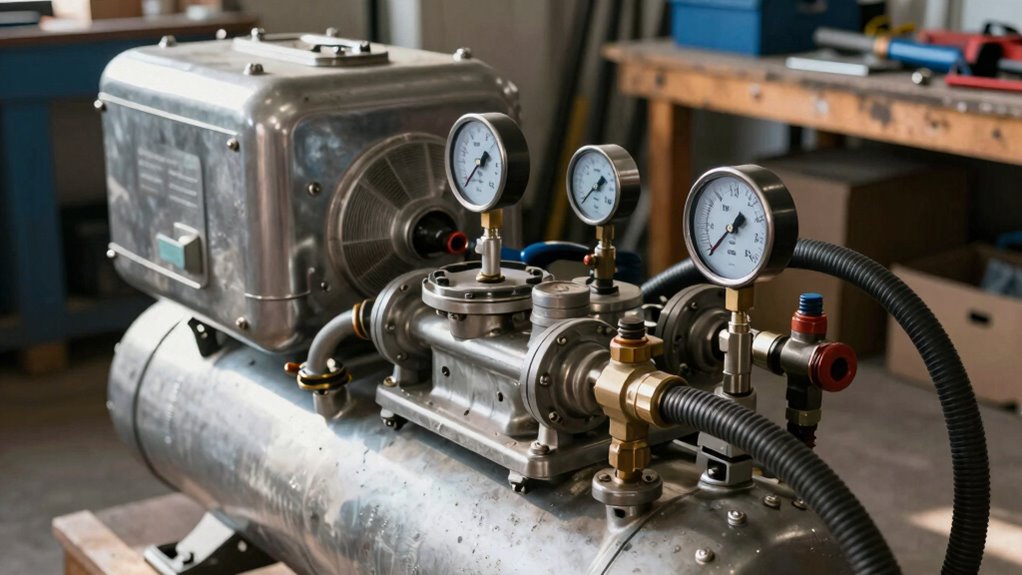
Ever wondered how to choose the right air compressor for your needs? It’s a common question, especially when you’re trying to match the compressor’s capabilities with your projects. One critical factor to evaluate is the CFM — cubic feet per minute — which measures how much air the compressor can deliver at a specific pressure. Understanding this helps guarantee you get a machine that can keep up with your tools and tasks without constant delays or inefficiencies. When selecting an air compressor, look at your tools’ required CFM ratings and pick a model that exceeds those numbers slightly. This buffer prevents shortages and promotes smooth operation, especially during continuous use.
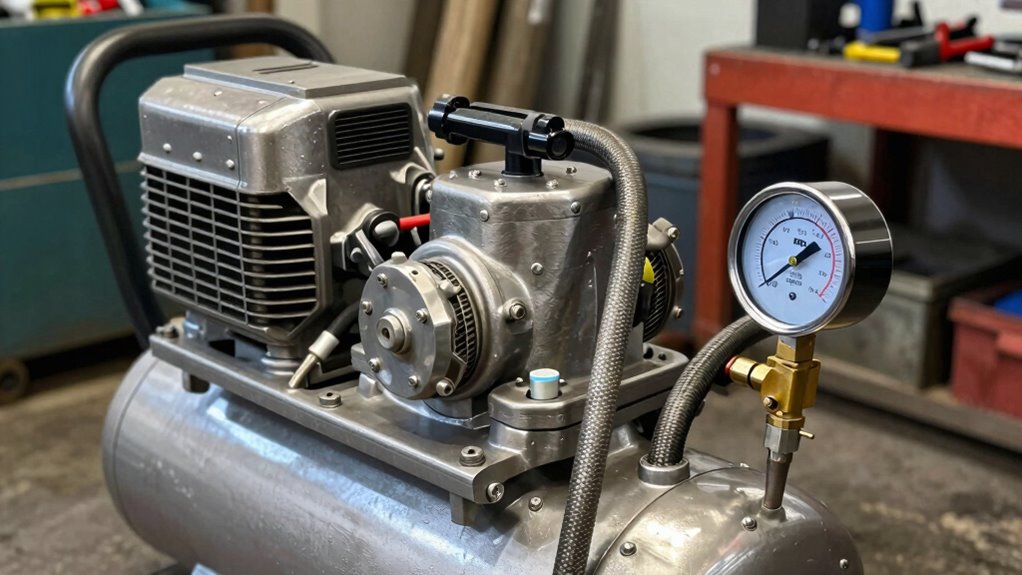
Once you’ve chosen the right compressor, it’s crucial to keep it running efficiently. That’s where maintenance tips come into play. Regularly check and replace air filters to prevent dust and debris from clogging the system, which can reduce performance and damage internal components. Drain the moisture from the tank frequently — water buildup can cause rust and corrosion, shortening the lifespan of your compressor. Keep an eye on the belts and hoses, replacing any that show signs of wear or cracking. Lubricate moving parts as recommended by the manufacturer to minimize friction and prolong the life of your equipment. Proper maintenance not only extends your compressor’s lifespan but also maintains ideal CFM output, ensuring your tools perform consistently. Additionally, understanding the importance of air compressor capacity can help you select the most suitable model for your needs. Recognizing how airflow relates to your specific tasks can further optimize your compressor’s performance. Being aware of performance factors can help troubleshoot issues and improve overall efficiency. Paying attention to system efficiency can lead to better energy use and cost savings over time. Moreover, knowing how pressure settings influence compressor performance can help you fine-tune your setup for optimal results.
Safety precautions are equally important when using and maintaining your air compressor. Always operate the machine in well-ventilated areas to prevent the buildup of fumes or exhaust gases. Wear eye protection and hearing guards to shield yourself from flying debris and loud noises. Never bypass safety features or modify the compressor, as this can lead to dangerous malfunctions. Before starting, double-check all connections and fittings to prevent leaks or accidental discharges. Be cautious when releasing pressure — always turn off the compressor and drain the tank before performing maintenance or repairs. Understanding and respecting safety guidelines not only protects you but also preserves your equipment, guaranteeing it remains reliable for years to come.
air compressor with high CFM rating
As an affiliate, we earn on qualifying purchases.
As an affiliate, we earn on qualifying purchases.
Frequently Asked Questions
How Do I Measure My Air Tool’s CFM Requirements Accurately?
To measure your air tool’s CFM requirements accurately, start with CFM measurement techniques like using a calibrated flow meter or a manometer. Check your air tool’s specifications for air tool compatibility, focusing on the recommended CFM. Run the tool at its maximum speed, and measure the airflow over a set period. This helps guarantee your compressor supplies enough air without underperforming or damaging your tools.
Can I Upgrade My Compressor’s CFM Capacity Later?
You can upgrade your compressor’s CFM capacity later, but it’s not always straightforward. Investigate the truth behind compressor efficiency and maintenance strategies before doing so, as upgrading may require a new unit or modifications to your current setup. Proper maintenance guarantees your existing compressor runs efficiently, and understanding your actual CFM needs prevents unnecessary upgrades. Always assess your long-term usage to avoid overloading or underperforming your system.
What Is the Impact of Low CFM on Tool Performance?
Low CFM reduces your air pressure, causing tools to perform poorly or unevenly. You might notice slower operation, less power, or incomplete tasks. This impacts tool compatibility because many tools require a specific CFM to work efficiently. If your compressor’s CFM is too low, your tools won’t get the airflow they need, leading to frustration and possible damage over time. Upgrading your compressor can help maintain ideal tool performance and compatibility.
How Does Ambient Temperature Affect Compressor CFM?
Oh, the irony—hotter ambient temperatures actually decrease compressor CFM because of reduced air density. When it’s warm outside, ambient cooling becomes essential for proper temperature regulation, ensuring your compressor runs efficiently. Higher temperatures cause the air to expand, lowering its pressure and flow rate. So, if you want consistent CFM, keep an eye on temperature regulation and consider cooling methods to combat the effects of hot weather.
Are There Portable Compressors With High CFM Ratings?
Yes, there are portable compressors with high CFM ratings available. You can find models designed for demanding tasks that offer impressive airflow, often used in construction or industrial settings. These portable compressors are lightweight enough to move easily, yet powerful enough to deliver the high CFM ratings you need for continuous operation. When choosing one, look for specifications that match your CFM requirements to guarantee it handles your workload efficiently.
As an affiliate, we earn on qualifying purchases.
Conclusion
Now that you understand CFM and how it impacts your tools, you’re ready to choose the perfect compressor. Picture yourself effortlessly powering your projects, each nail driven, tire inflated, or paint sprayer firing smoothly like a well-oiled machine. With the right CFM, your workspace becomes a symphony of efficiency, and your hands, guided by reliable gear, bring your ideas to life with ease. You’re all set to take on any task that comes your way.
air compressor moisture drain valve
As an affiliate, we earn on qualifying purchases.
As an affiliate, we earn on qualifying purchases.
As an affiliate, we earn on qualifying purchases.
Halloween Picks
halloween
As an affiliate, we earn on qualifying purchases.