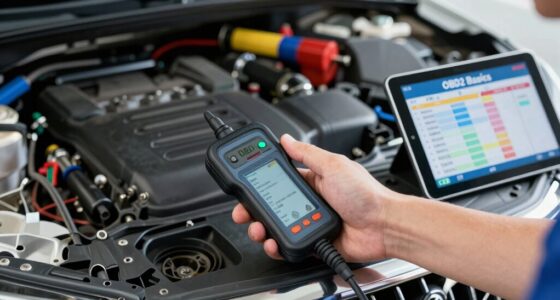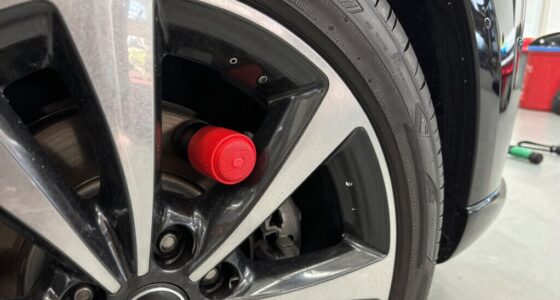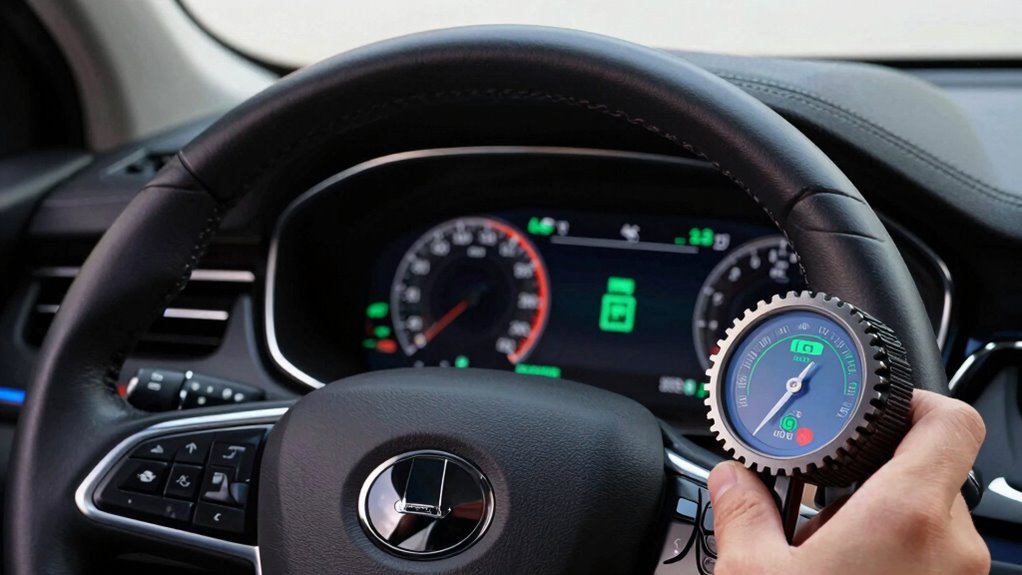

Start by checking all your tires, including the spare, with a reliable gauge and inflate them to the manufacturer’s recommended PSI. Turn on your vehicle without starting the engine to see if warning lights appear. Make certain the sensors are clean and free of debris, then verify that they communicate properly with your system. Comparing sensor readings with a manual gauge helps confirm accuracy. Keep up with these simple steps regularly to help maintain safety and car performance. Continue to learn how to keep your TPMS in top shape.
Listen free for 30 days with Audible
Thousands of audiobooks and originals — cancel anytime.
As an affiliate, we earn on qualifying purchases.
Key Takeaways
- Check and inflate all tires, including the spare, to the recommended PSI using a reliable gauge.
- Verify TPMS sensor calibration, especially after tire changes or warning alerts.
- Inspect dashboard warning lights and sensor condition for damage or debris.
- Clean sensors regularly and ensure they are free from dirt and corrosion.
- Compare sensor readings with a manual gauge to confirm accuracy and system reliability.
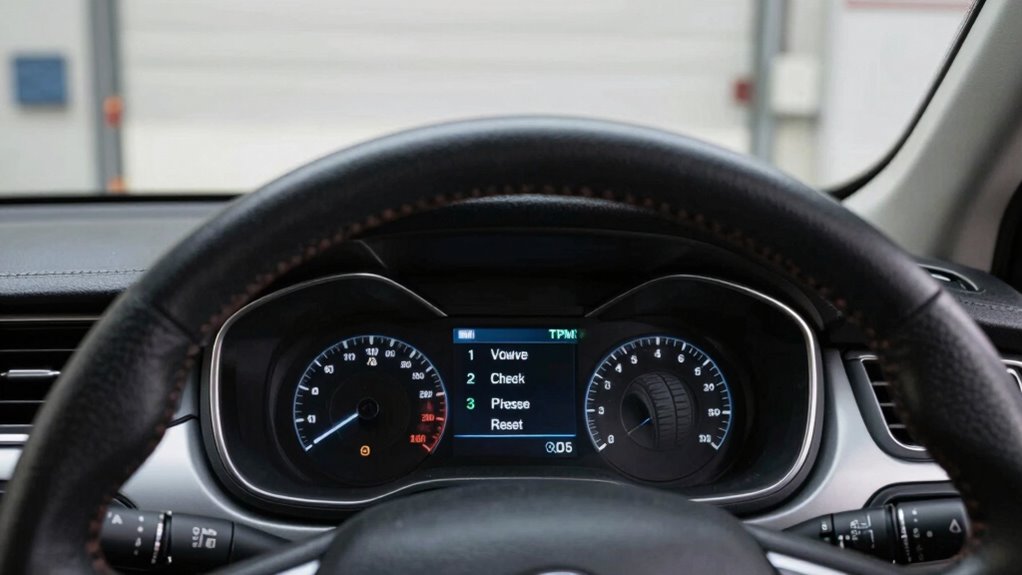
If you drive daily, having a Tire Pressure Monitoring System (TPMS) isn’t just a luxury—it’s a smart safety feature that keeps you aware of your tire health in real-time. Regularly performing a quick 5-minute checklist ensures your system functions correctly, maintaining optimal tire pressure safety. Start by checking your tire pressure with a reliable gauge, making sure all tires—including the spare—are inflated to the manufacturer’s recommended PSI. Properly inflated tires improve fuel efficiency, handling, and safety, so never ignore this step. Once you’ve confirmed the pressure levels are accurate, it’s essential to verify that your TPMS sensors are communicating properly with your vehicle’s system. Many modern vehicles automatically calibrate sensors when tires are inflated to the correct pressure, but if your system displays a warning or if you’ve recently changed tires, sensor calibration might be necessary. Consult your owner’s manual for specific instructions on calibrating your sensors, as improper calibration can compromise tire pressure safety by providing false readings or missing critical alerts. Additionally, understanding TPMS calibration can help you troubleshoot issues more effectively.
Next, inspect your tire pressure warning light to ensure it’s functioning correctly. Turn on your vehicle without starting the engine and observe the dashboard. If the warning light stays on or flashes, it indicates an issue with the system—possibly sensor malfunction or calibration error. If you notice irregularities, consider re-calibrating the sensors or scheduling a professional inspection. It’s also wise to check for any physical damage or debris on the sensors, especially if you’ve recently driven on rough roads or hit a pothole. Clean the sensors gently with a soft cloth, ensuring they’re free of dirt and corrosion, which can interfere with their operation and compromise tire pressure safety. Proper sensor maintenance can extend the lifespan of your TPMS components and ensure accurate readings. Being aware of tire pressure safety helps prevent accidents caused by under- or over-inflated tires, emphasizing the importance of regular checks. Regularly inspecting the sensors and understanding sensor functionality can help maintain the overall reliability of your system. Remember, some vehicles may also require periodic system updates to keep the TPMS functioning optimally, so staying informed about your vehicle’s specific needs is crucial.
Finally, take a moment to verify the accuracy of your TPMS readings by comparing them with your manual pressure gauge. This step confirms that your sensors and calibration are reliable. If the readings differ significantly, it’s time to revisit sensor calibration or seek professional help. Staying proactive with these simple checks ensures your TPMS functions as intended, providing peace of mind during daily commutes. Remember, a well-maintained TPMS not only alerts you to low tire pressure but also prevents potential blowouts and improves overall safety on the road. In just five minutes, you can ensure your tire pressure safety system is working correctly, helping you drive confidently every day.
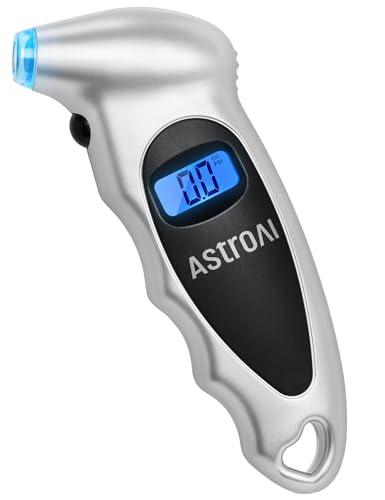
AstroAI Digital Tire Pressure Gauge 150PSI, ±1PSI Accuracy for Car Truck
- Accurate Readings: Calibrated to ±1 PSI for reliability
- Backlit Display & Nozzle Light: Illuminated nozzle and LCD for visibility
- Multiple Measurement Units: Switch between PSI, Bar, Kgf/cm², KPA
As an affiliate, we earn on qualifying purchases.
As an affiliate, we earn on qualifying purchases.
Frequently Asked Questions
How Often Should I Recalibrate My TPMS?
You should recalibrate your TPMS whenever you change your tires or notice inconsistent tire pressure readings. Sensor calibration guarantees your system accurately detects pressure changes, maintaining tire pressure consistency and safety. It’s also wise to recalibrate after any tire repair or rotation. Regular checks every few months help identify sensor issues early, preventing false alerts and ensuring your TPMS functions properly, keeping your driving safe and efficient.
Can TPMS Prevent Flat Tires Automatically?
Think of your TPMS as a vigilant guardian, always watching over your tires. While it can alert you to low tire pressure, it doesn’t automatically prevent flat tires. Proper sensor calibration guarantees accurate readings, so you catch issues early. If your tire pressure drops dangerously low, the system warns you, giving you time to act. But, to truly prevent flats, regular checks and maintenance are essential.
What Is the Lifespan of a Typical TPMS Sensor?
A typical TPMS sensor lasts about 5 to 10 years, but its lifespan depends on factors like the sensor battery and signal interference. Over time, the sensor’s battery drains, reducing its ability to send accurate signals. Signal interference from nearby electronic devices or metallic structures can also shorten its effectiveness. Regularly checking your TPMS can help you identify when sensors need replacement, ensuring your system stays reliable.
Are Aftermarket TPMS Systems as Reliable as OEM?
You might think aftermarket TPMS systems are just as reliable as OEM, but the differences often lie in sensor placement and battery life. OEM sensors are designed specifically for your vehicle, guaranteeing perfect fit and longevity. In contrast, aftermarket sensors can vary in quality, potentially affecting performance over time. While some aftermarket options work well, you should weigh the importance of consistent sensor placement and battery durability to guarantee safety and accuracy.
How Does Extreme Weather Affect TPMS Accuracy?
Extreme weather impacts TPMS accuracy through temperature fluctuations that can cause sensors to give false readings or lose calibration. Cold temperatures may slow sensor response, while heat can trigger false alerts. To maintain accuracy, you should regularly check sensor calibration, especially after significant weather changes. Proper calibration guarantees your TPMS provides reliable tire pressure information, keeping you safe regardless of weather conditions.
As an affiliate, we earn on qualifying purchases.
Conclusion
Now that you’ve got the 5-minute checklist down, you’re all set to keep your TPMS in top shape. But here’s the catch—what if that tiny warning light flickers on unexpectedly? Will you be ready to act fast or hesitate? Staying vigilant could mean the difference between a smooth ride and a costly mishap. Keep your eyes on that dashboard, and stay one step ahead—because in the world of daily driving, every second counts.
As an affiliate, we earn on qualifying purchases.
vehicle tire pressure monitoring system
As an affiliate, we earn on qualifying purchases.
As an affiliate, we earn on qualifying purchases.
Flea & tick season Picks
flea and tick prevention
As an affiliate, we earn on qualifying purchases.