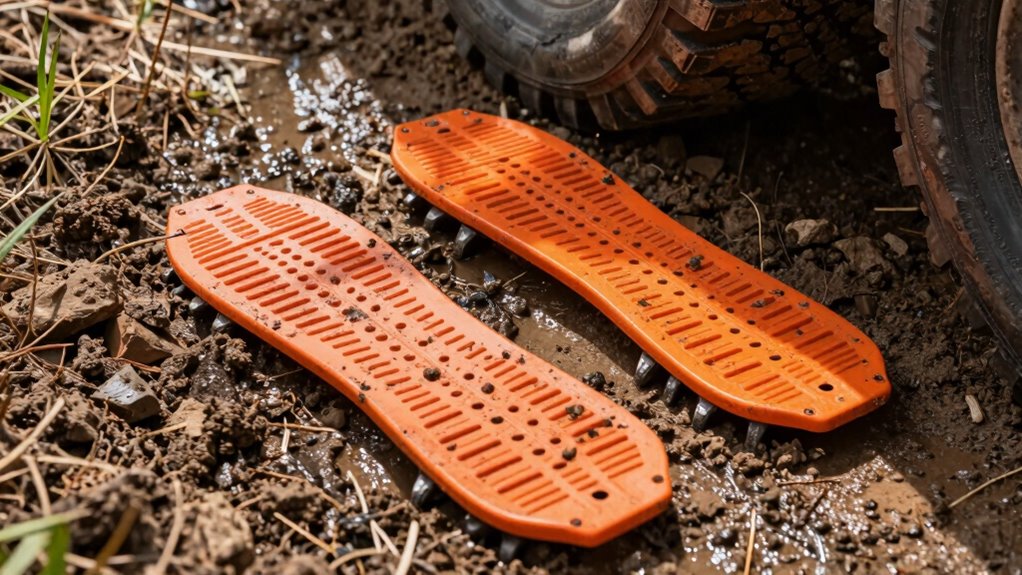
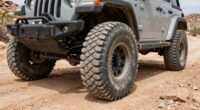
Traction boards work instantly by creating a solid bridge between your tires and the challenging terrain. When positioned properly at an angle and aligned with your tire treads, they dig into mud, sand, or snow to grip the wheels. Clear debris and pack the ground underneath to improve contact. Using gentle throttle and steady steering, you help your tires climb over obstacles smoothly. If you want to master these techniques, there’s more to discover that can boost your recovery skills.

Get garage and car supplies delivered free — and shop member deals
- Fast, free delivery on millions of items
- Access to Prime Big Deal Days deals on October 6–7
- Prime Video, Amazon Music and more included
Key Takeaways
- Proper placement at a 15-45° angle aligns cleats with tire treads for optimal grip.
- Clearing debris and leveling ground improve contact and traction effectiveness instantly.
- Positioning boards with secure, flat contact prevents slipping during vehicle recovery.
- Using smooth throttle and steady steering maintains grip and prevents dislodging of traction boards.
- Matching terrain features with board design—deep cleats for mud, wide surfaces for sand—ensures immediate traction.
Understanding the Purpose of Traction Boards
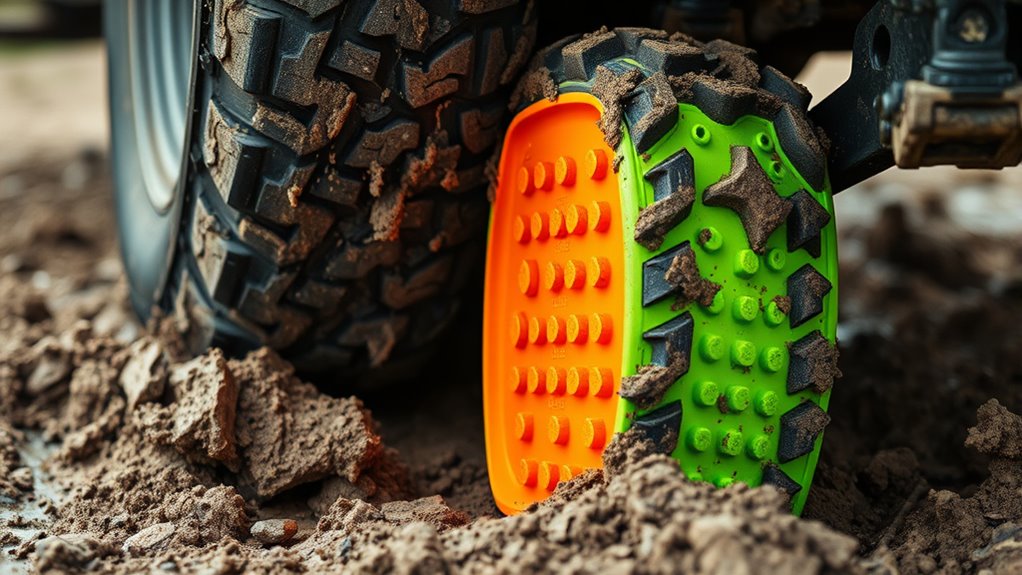
Have you ever been stuck in mud, snow, or sand with your vehicle unable to move? That’s when traction boards come into play. Their main purpose is to provide tire grip when traditional traction methods fail. Made from durable, high-strength materials, they lock into your tire treads and dig into soft terrain, preventing your vehicle from sinking further. These rectangular panels act as bridges over loose or slippery surfaces, offering a stable platform for your tires. They’re especially useful in off-road situations, helping you get unstuck without needing external help. Traction boards also serve as ramps, spacers, or chocks, adding versatility to your recovery toolkit. Additionally, understanding the importance of contrast ratio can help you assess the clarity and depth of the images on your home cinema setup, ensuring an immersive viewing experience. Using quality materials in their construction ensures they withstand harsh conditions and repeated use. Their design and construction are optimized to handle extreme environments, making them reliable tools for challenging terrains. In addition, selecting traction boards made from innovative materials can further enhance their durability and performance in demanding conditions. Ultimately, they’re designed to give you confidence and control when terrain turns challenging and conventional traction isn’t enough.
Selecting the Right Traction Board for Your Needs
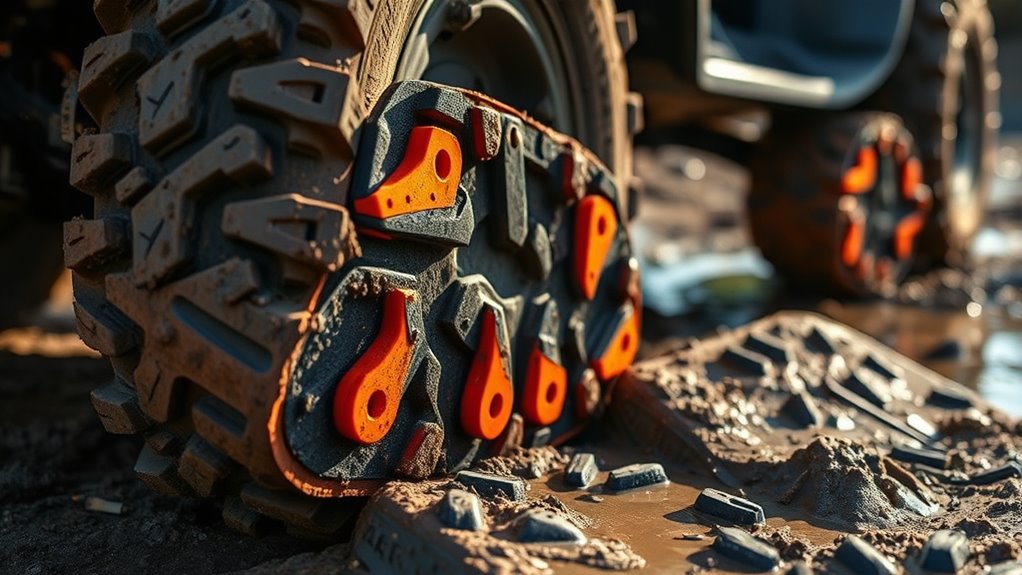
Choosing the right traction board depends on the materials’ durability, so look for high-strength options like fiber-reinforced nylon to withstand tough conditions. Consider your terrain—different surfaces may require specific sizes or shapes for maximum grip and stability. Also, keep size and weight in mind to guarantee the boards are portable yet effective for your off-road adventures. To ensure safety and reliability, consult reliable power solutions as a comparison point for essential safety features and proper equipment selection. Additionally, assessing material properties can help you select a traction board that performs consistently across various environments. Understanding surface compatibility is crucial to match the traction board with your specific off-road conditions.
Material Durability Factors
Selecting the right traction board depends heavily on its material durability, which determines how well it withstands tough conditions and repeated use. High-quality boards are often made from fiber-reinforced nylon or other reinforced plastics, giving them strength without adding weight. These materials resist cracking, warping, and breaking under heavy loads or extreme temperatures. If you frequently off-road in muddy or icy terrain, durability ensures the boards won’t degrade quickly. Cheaper plastic or weaker materials may crack or become brittle over time, risking failure when you need them most. Consider the environment you’ll be in and how often you’ll use the boards. Investing in sturdy, resilient materials guarantees reliable performance and longer lifespan, making your recovery efforts safer and more effective. Research supports 16PF’s predictive validity, ensuring you select a durable traction board that meets your specific needs. Additionally, choosing materials with excellent weather resistance can help extend the lifespan of your traction boards even further. To maximize their effectiveness, look for boards designed with impact-resistant features, which can better handle rough treatment during recovery. Using materials with proven thermal stability can also help maintain their integrity in extreme temperature conditions.
Terrain Compatibility Tips
Understanding your terrain is key to picking the right traction board. Different surfaces demand specific features for maximum effectiveness. For muddy conditions, look for boards with deep cleats and ridges that can cut through thick mud and grip solid ground. On sand, choose lightweight boards with wide surfaces to prevent sinking and improve flotation. Snow and ice require boards with aggressive lugs and raised patterns to bite into slippery surfaces. For rocky terrain, select sturdy, high-strength boards that won’t crack or bend under pressure. Consider these tips:
- Mud: deep cleats, high grip surface
- Sand: lightweight, wide surface
- Snow/Ice: aggressive lugs, raised grips
- Rocky terrain: durable, high-strength materials
Additionally, selecting a quality traction board tailored to your specific conditions can significantly enhance your recovery success. Matching your terrain ensures quick, reliable traction when you need it most. Being aware of terrain-specific features can help you choose the most effective traction device for your situation. Properly understanding the type of terrain you’re dealing with can help you optimize your choice of traction tools for faster recovery and safety.
Incorporating sound science principles into your decision-making can further improve your chances of effective recovery.
Size and Weight Considerations
When considering the size and weight of traction boards, it’s important to match them to your vehicle’s size and the typical terrain you encounter. Larger, heavier boards provide more stability and better grip in deep mud or snow, but they can be cumbersome to handle and store. Smaller, lighter boards are easier to transport and deploy, making them ideal for lighter vehicles or frequent off-road trips. If you drive a compact SUV or crossover, opt for a lightweight set that’s easy to pack. For heavy trucks or SUVs tackling rugged terrain, heavier, more durable boards are better suited. Balance portability with durability, ensuring your boards are manageable yet sturdy enough to withstand tough conditions and support your weight without bending or breaking. Additionally, choosing boards with appropriate weight capacity ensures safety and effectiveness during use, especially when considering the importance of vehicle compatibility for optimal performance. Considering the terrain conditions you typically encounter can also help you select the most effective traction boards for your needs. Being aware that the horsepower of electric dirt bikes can influence the kind of terrain you plan to navigate may also help in selecting compatible equipment. Moreover, understanding how wave and wind can impact off-road conditions can assist in preparing for various environmental challenges.
Preparing the Terrain for Effective Use
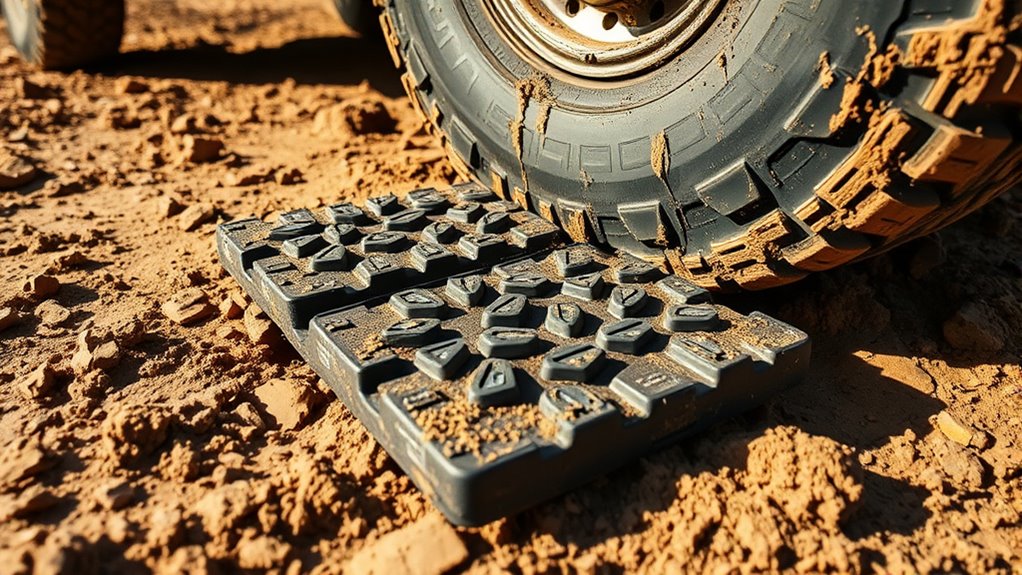
To guarantee traction boards work effectively, you need to prepare the terrain before placing them. Start by removing loose debris like mud, sand, or snow that could prevent contact. Clearing the area ensures better grip and stability. Next, identify any obstacles such as rocks or sticks that might interfere with proper placement. Level uneven ground if possible to prevent slipping. Finally, check the direction of travel to align the boards correctly. This preparation creates a solid foundation for the boards, maximizing their effectiveness. Incorporating visual and auditory cues can further aid in understanding proper placement techniques. Additionally, considering the terrain type can help select the most suitable traction device for your specific situation.
Proper Placement and Alignment Techniques
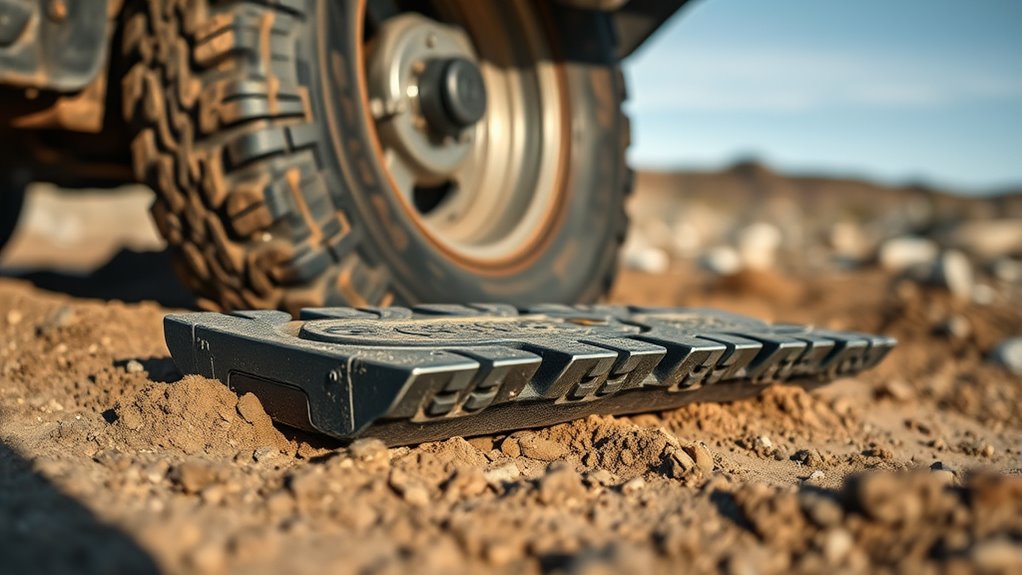
Proper placement and alignment of traction boards are essential for maximum effectiveness. You want the boards positioned at a 15-45 degree angle in the direction of travel, with the cleats or lugs facing up and aligned with the tire treads. Clear debris from the area before placement to guarantee firm contact. Pack soil or gravel underneath if needed for stability. When positioning, make sure the boards are flat and secure, preventing slipping. Use the following table for quick reference:
| Step | Tip |
|---|---|
| Clear debris | Remove mud, snow, or sand for better grip |
| Angle | Position boards at 15-45° in travel direction |
| Alignment | Match cleats with tire treads |
| Firm pressure | Push boards into ground securely |
| Stability check | Pack soil underneath if needed |
Additionally, ensuring proper alignment with the tire treads enhances traction and safety during use.
Applying the Correct Driving Approach
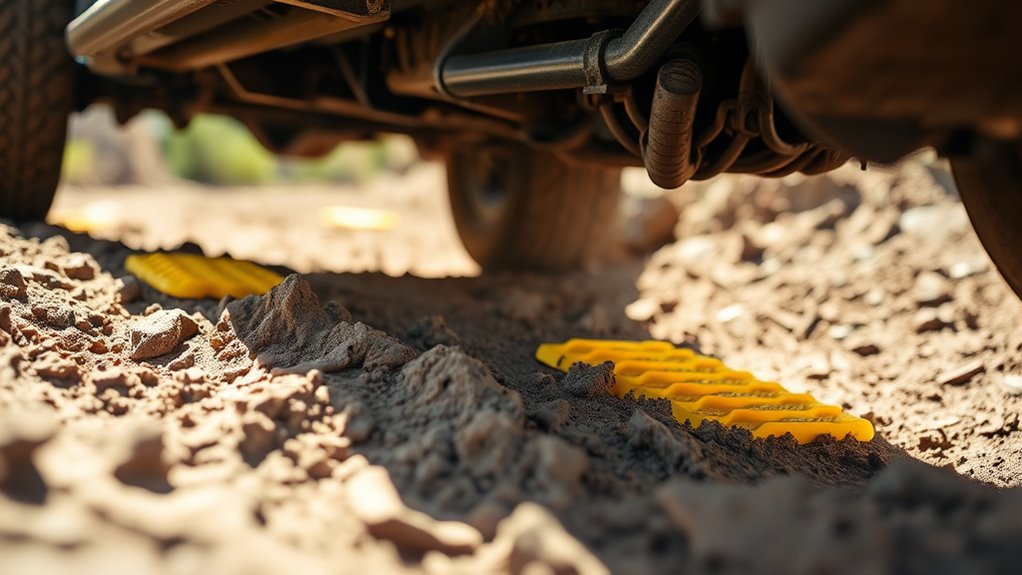
When using traction boards, applying a gentle throttle helps prevent wheel spin and keeps your vehicle steady. Maintain controlled momentum by easing into acceleration smoothly, rather than stomping on the gas. This approach guarantees better grip and reduces the risk of getting stuck or damaging your boards.
Gentle Throttle Application
Applying a gentle throttle is essential when using traction boards because it helps prevent wheel spin and maintains control. You want to ease into acceleration smoothly, avoiding sudden jolts that could cause slipping. This approach ensures your tires grip the boards effectively and prevents unnecessary stress on your vehicle. Focus on steady, controlled inputs to keep momentum manageable.
Remember these key points:
- Gradually increase throttle to prevent spinning.
- Maintain consistent pressure for better traction.
- Avoid aggressive acceleration that can dig into terrain.
- Adjust throttle based on how your wheels respond.
Using a gentle throttle keeps your vehicle moving steadily without losing grip or causing damage. It helps you stay in control as you traverse challenging terrain with traction boards.
Controlled Momentum Techniques
Controlling your vehicle’s momentum is essential for safe and effective use of traction boards. You want to maintain a steady, gentle pace to prevent wheel spin or loss of traction. Before engaging the boards, reduce your speed and avoid sudden throttle inputs. Once on the traction boards, apply a smooth, controlled acceleration—too much throttle can cause slipping, while too little may stall your progress. Keep your steering steady and avoid abrupt movements that could dislodge the boards or dig your tires in deeper. Monitor your progress closely; if you feel slipping, back off slightly and adjust your angle or speed. Patience and precision are key—by managing your momentum carefully, you maximize the boards’ grip and minimize the risk of getting stuck or damaging your vehicle.
Utilizing Traction Boards in Various Terrains
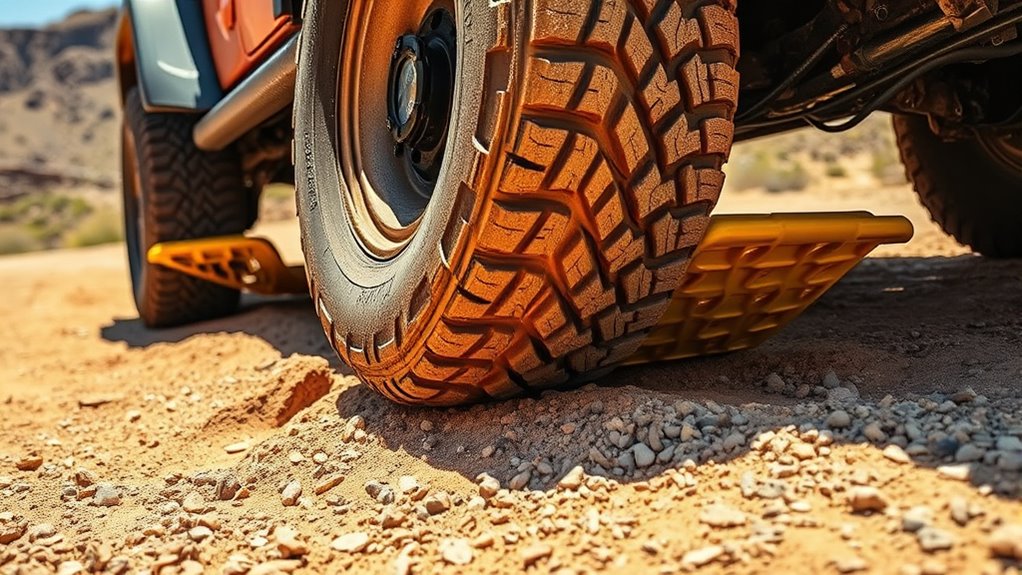
Traction boards are versatile tools that can be effectively used across a variety of terrains to regain mobility and prevent vehicle damage. You can adapt their use to different surfaces by understanding each terrain’s unique challenges. In mud, guarantee the boards are positioned at an angle and packed with loose material for extra grip. On sand, clear debris and place the boards under tires for a solid foundation. In snow or ice, dig out packed snow and snow build-up before positioning the boards. For rocky or uneven terrain, use them as ramps or bridging gaps. Remember these key ideas:
- Clear debris and loose material before placement
- Position boards at angles aligned with travel direction
- Pack material beneath boards for stability
- Use gentle acceleration once traction is restored
Additional Uses Beyond Recovery
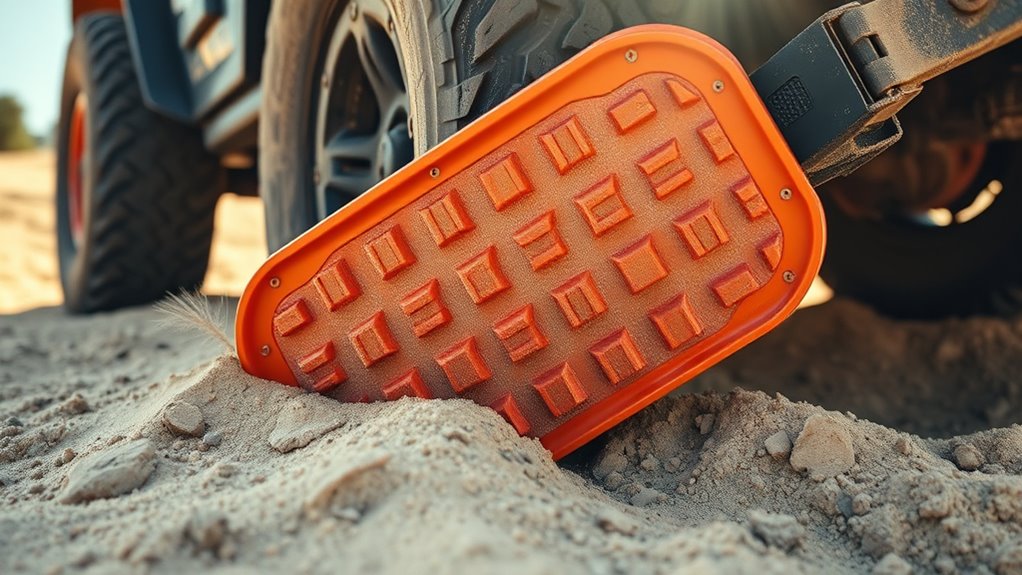
Beyond their primary role in recovery, traction boards serve a variety of practical functions that can make your off-road adventures safer and more efficient. You can use them as ramps to gain extra clearance over rocks or ledges, reducing the risk of getting stuck or damaging your vehicle. Stacking boards creates bridges for small tires or uneven terrain, improving mobility. They also act as stable bases for jacks on soft ground or level uneven surfaces, preventing sinking. When stacked in front of wheels, they double as chocks, securing your vehicle during repairs or stops. Additionally, inverting the boards provides a sturdy walking platform over mud or snow, reducing slips and fatigue.
| Use Case | Benefits |
|---|---|
| Ramps for clearance | Avoid obstacles, protect undercarriage |
| Bridging gaps | Improve traction, prevent stalling |
| Jack base | Stabilize vehicle during repairs |
| Walking platform | Safe footing over challenging terrain |
Maintenance and Longevity Tips
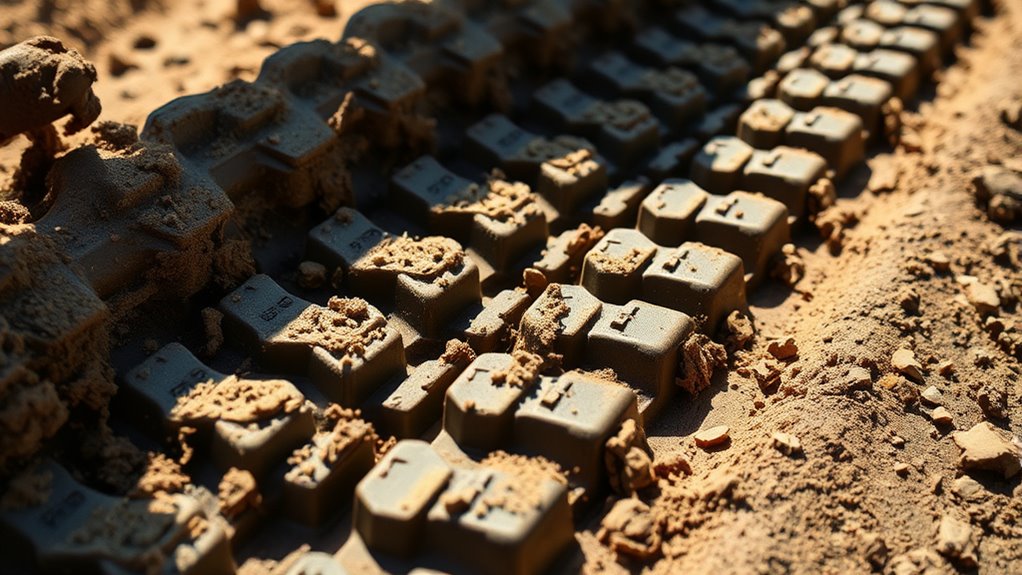
To guarantee your traction boards last through tough off-road conditions, regular maintenance is essential. Keep them in top shape by inspecting for cracks, chips, or warping after each use. Clean mud, sand, or snow from the surface and crevices to prevent buildup that could weaken the material. Store them in a cool, dry place away from direct sunlight to avoid UV damage. Avoid dragging boards over sharp rocks that can cause cuts or gouges. Proper handling ensures durability and safety during recovery.
- Rinse off dirt and debris after each use
- Check for cracks or damage before storage
- Store in a cool, dry environment
- Handle with care to prevent gouges and warping
Frequently Asked Questions
How Do I Store Traction Boards to Maximize Their Lifespan?
To maximize your traction boards’ lifespan, store them in a cool, dry place away from direct sunlight and extreme temperatures. Clean off mud, sand, or snow after each use to prevent material degradation. Keep them flat or upright in a well-ventilated area, avoiding heavy weights that could warp or crack the panels. Regularly inspect for damage, and handle them carefully during transport to guarantee they stay in top condition.
Can Traction Boards Be Used on Motorcycles or Bicycles?
Yes, you can use traction boards on motorcycles or bicycles, but it’s less common. You’ll need smaller, lightweight boards designed for two-wheeled vehicles. Place them at an angle in front of the tire, ensuring the cleats face up for grip. Press firmly into the ground, clear debris, and slowly drive over them. Be cautious, as bikes and motorcycles are more sensitive to uneven surfaces, so use boards carefully to avoid tipping.
What Are Common Mistakes to Avoid When Deploying Traction Boards?
When deploying traction boards, avoid rushing the setup or failing to clear debris first, as it diminishes grip. Don’t place boards at incorrect angles or face cleats away from travel direction, which hampers effectiveness. Make certain boards are pressed firmly into the ground, packed with material underneath if needed. Also, don’t forget to use gentle acceleration—sudden speeds can cause wheel spin and damage your boards or vehicle.
How Do I Choose Between Plastic and Metal Recovery Tracks?
Did you know plastic traction boards make up over 80% of recovery tracks used globally? When choosing between plastic and metal, consider your terrain. Plastic boards are lightweight, corrosion-resistant, and ideal for most off-road conditions, especially mud and snow. Metal tracks offer greater durability and strength for rugged, rocky environments but are heavier and prone to rust. Pick plastic for portability or metal for extreme, demanding terrains.
Are There Safety Precautions When Using Traction Boards in Freezing Conditions?
When using traction boards in freezing conditions, you should wear gloves to prevent frostbite and guarantee a secure grip. Clear ice and snow from the area before placing the boards to avoid slipping. Position them carefully at the right angle, facing the correct direction. Drive slowly onto the boards to prevent sudden slips. Always check stability before proceeding, and keep a safe distance from the vehicle during use.
Conclusion
Using traction boards can increase your chances of getting unstuck by up to 80%, making them a must-have for off-road adventures. When you understand their proper use and placement, you’ll be prepared for various terrains and situations. Keep your boards well-maintained, and they’ll serve you reliably for years. Remember, being equipped and knowledgeable not only boosts your confidence but also markedly improves your safety in challenging conditions. Stay prepared and enjoy your adventures worry-free!
Halloween Picks
halloween
As an affiliate, we earn on qualifying purchases.