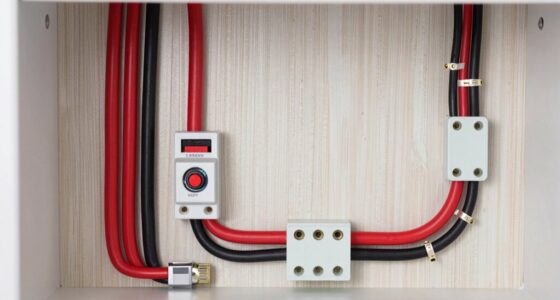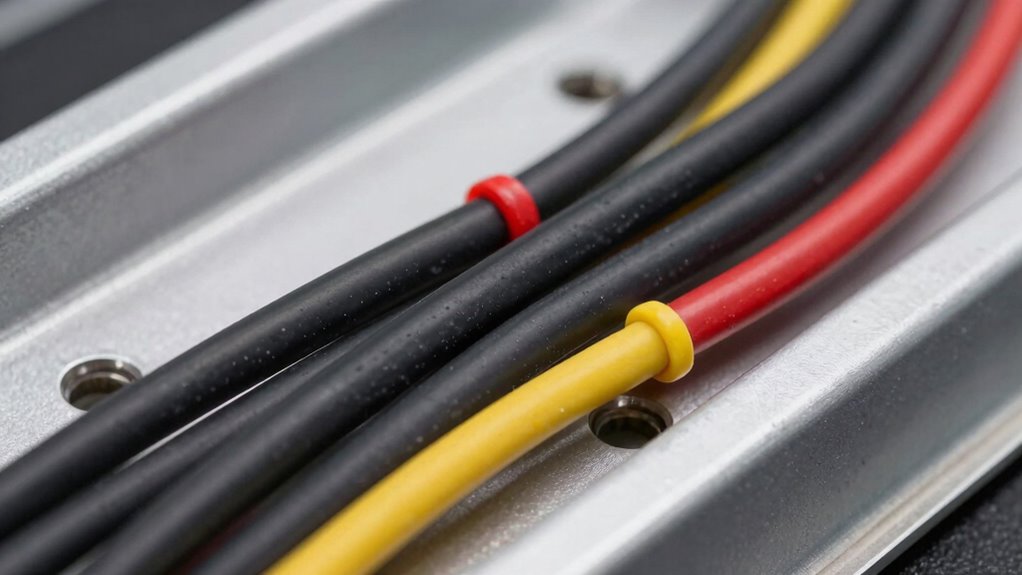

To protect your wiring harness, use looms to bundle wires together for mechanical safety and organization, preventing damage from abrasion and movement. Install grommets where wires pass through metal panels to cushion against sharp edges and avoid wear. Proper routing is essential; keep wires away from hot surfaces, moving parts, and sharp edges to prevent stress and breakage. Combining these techniques enhances durability and reliability—if you want to learn more about optimizing your wiring protection, keep exploring these strategies.

Get garage and car supplies delivered free — and shop member deals
- Fast, free delivery on millions of items
- Access to Prime Big Deal Days deals on October 6–7
- Prime Video, Amazon Music and more included
Key Takeaways
- Proper routing avoids hot surfaces, sharp edges, and moving parts to prevent mechanical damage to wiring.
- Grommets cushion wires passing through metal panels, preventing abrasion and cutting.
- Looms bundle wires for organized protection, reducing the risk of damage and simplifying maintenance.
- Combining insulation, environmental shields, and routing strategies enhances overall wiring system durability.
- Secure fasteners and clamps ensure wires stay in place, minimizing mechanical stress and wear.
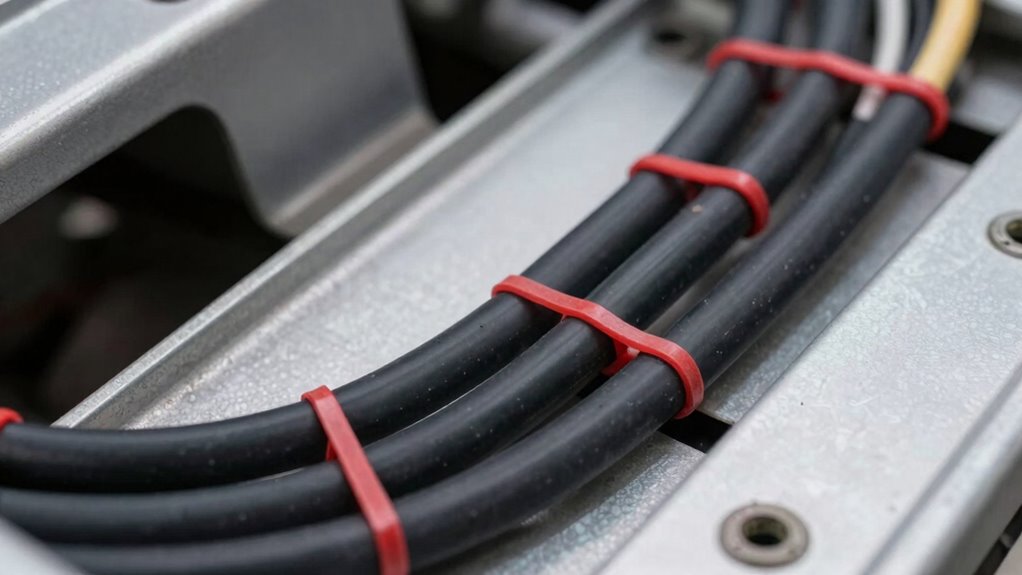
Have you ever wondered what keeps your vehicle’s electrical system safe from damage? It all comes down to proper wiring harness protection, which involves several key components working together. One essential element is cable insulation. This layer surrounds the individual wires, preventing them from shorting out if they come into contact with each other or external surfaces. Good cable insulation is durable, resistant to heat, chemicals, and vibrations—factors that are common in automotive environments. Without it, wires could easily wear down, crack, or break, leading to electrical failures that are often difficult to diagnose.
Proper wiring protection prevents shorts and damage in vehicles, ensuring durability and reliable electrical performance.
Alongside cable insulation, environmental shielding plays a critical role in safeguarding your wiring. Environmental shielding protects the entire harness from external elements such as moisture, dirt, debris, and temperature fluctuations. This shielding typically takes the form of protective sleeves or covers that envelop the entire wiring bundle. By shielding your wiring from these harsh conditions, you reduce the risk of corrosion and moisture ingress, which can cause electrical shorts or component failures. Proper environmental shielding ensures that your electrical system remains reliable, even when exposed to extreme weather or rough terrains. Understanding the importance of protective coverings can help you choose the right materials for your specific environment. Paying attention to material selection is crucial for ensuring long-term durability and performance. Additionally, selecting the appropriate protective materials can greatly enhance the lifespan of your wiring system. Considering installation best practices can further improve the effectiveness of your wiring protection.
Routing also considerably impacts wiring harness protection. Correct routing directs wires away from hot surfaces, moving parts, or sharp edges that could damage the insulation or shielding. When you route your wiring properly, you minimize the chances of abrasion and mechanical stress. Using grommets at points where wires pass through metal panels is essential; these rubber or plastic inserts cushion the wires and prevent them from being cut or worn down by sharp edges. Grommets not only protect the insulation but also help maintain the integrity of environmental shielding by sealing gaps and preventing contaminants from entering.
Looms are another critical component in harness protection. These flexible sleeves bundle multiple wires together, providing a layer of mechanical protection. Looms also help organize the wiring, making maintenance easier and reducing the risk of accidental disconnections or damage. They often work in conjunction with cable ties and clamps to keep the harness securely in place, preventing unnecessary movement that could lead to wear or disconnection over time. Properly installed looms can also help distribute mechanical stresses evenly across the wiring bundle.
Together, cable insulation, environmental shielding, proper routing, grommets, and looms form an all-encompassing protective system for your wiring harness. This integrated approach ensures that your vehicle’s electrical system remains durable, reliable, and safe from damage caused by environmental factors or mechanical stress. Paying attention to these protective measures and understanding the role of cable insulation and other components can significantly extend the lifespan of your wiring and keep your vehicle running smoothly.
automotive wiring loom protection
As an affiliate, we earn on qualifying purchases.
As an affiliate, we earn on qualifying purchases.
Frequently Asked Questions
How Do I Choose the Right Loom Material for My Application?
To choose the right loom material, consider your application’s environment and the required insulation durability. If your wiring faces harsh conditions, opt for a durable, heat-resistant material like silicone or braided nylon. For lighter, indoor use, PVC or polyethylene might suffice. Assess factors like exposure to chemicals, moisture, and temperature fluctuations to guarantee your loom material provides adequate protection and longevity for your wiring harness.
What Are the Common Signs of Wiring Harness Damage?
You’ll notice wiring harness damage through insulation degradation, which causes exposed wires and potential short circuits. Abrasion marks on the insulation indicate wear from rubbing against other components or protective covers. You might also see frayed wires or discolored insulation, both signs that the harness needs inspection or replacement. Regularly check for these signs to prevent electrical failures, and guarantee your wiring stays protected with proper loom, grommets, and routing.
How Often Should Wiring Harnesses Be Inspected for Protection?
Think of your wiring harness as the backbone of your vehicle’s electrical system, needing regular checkups. You should inspect it at least every six months or more frequently if you notice symptoms like electrical issues or after rough terrain. During inspections, focus on electrical insulation, loom integrity, and routing. This helps catch potential damage early, making circuit troubleshooting easier and preventing costly failures down the line.
Can I Retrofit Grommets Into Existing Wiring Setups?
Yes, you can retrofit grommets into existing wiring setups. Use retrofitting techniques like carefully enlarging the hole if needed, ensuring grommet compatibility with your wiring size, and securely fitting the grommet to prevent movement. Make sure to choose grommets made from durable, flexible materials suitable for your environment. This process enhances protection against abrasion, vibration, and moisture, extending your wiring harness’s lifespan without extensive rewiring.
What Safety Precautions Are Necessary When Routing Wiring Harnesses?
A stitch in time saves nine, so prioritize safety when routing wiring harnesses. You should wear gloves and eye protection, avoid pinching or crushing wires, and guarantee proper electrical insulation to prevent shorts. Use heat-resistant materials near high-temperature areas, and secure wires firmly to prevent movement. Always double-check connections and routing paths. Following these precautions keeps your setup safe, reliable, and protected from damage or fire hazards.
As an affiliate, we earn on qualifying purchases.
Conclusion
Protecting your wiring harness isn’t just about safeguarding wires; it’s about ensuring your vehicle’s safety and longevity. A well-loomed, grommeted, and properly routed harness can withstand heat, movement, and wear. While neglecting these details might seem small, it’s the difference between a reliable ride and costly repairs. Think of your wiring as the nervous system—delicate yet essential—so invest in protection, and keep your vehicle running smoothly and safely, mile after mile.
As an affiliate, we earn on qualifying purchases.
automotive cable insulation sleeves
As an affiliate, we earn on qualifying purchases.
As an affiliate, we earn on qualifying purchases.
Fall Picks
fall essentials
As an affiliate, we earn on qualifying purchases.