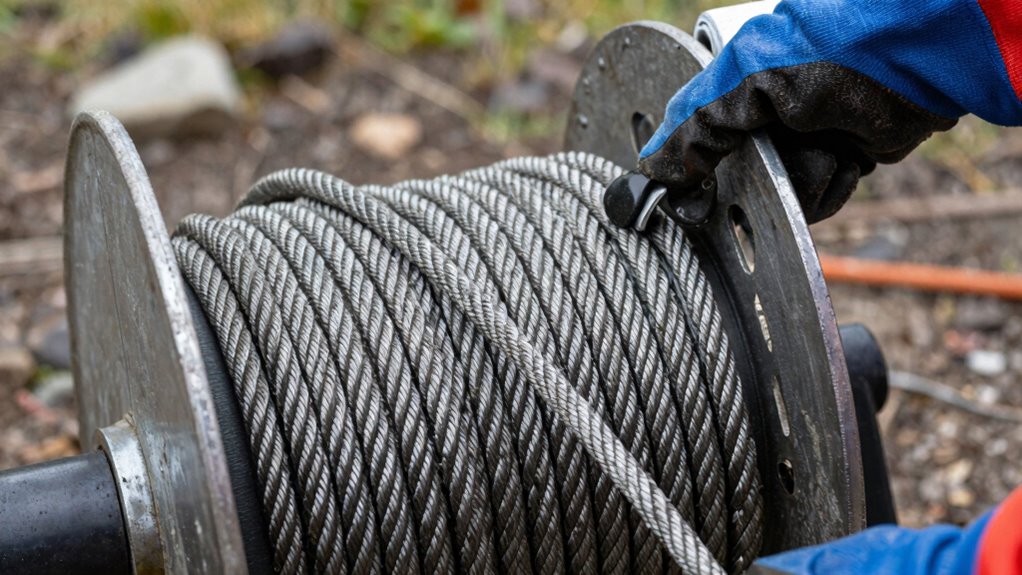

To spool a winch line tightly without damaging the rope, start by inspecting and maintaining the rope to guarantee it’s in good condition. Attach the line properly, then keep it straight and aligned with the drum. Use gloves for a firm grip as you slowly wind, maintaining consistent tension—tight but not overly tight. Use a level wind mechanism if available for even layers. Proper technique prevents damage and prolongs rope life; learn more to perfect your approach.

Get business pricing on garage and car supplies
- Business-only prices and quantity discounts
- Tax-exempt purchasing
- Multiple users, one account, clear invoices
Key Takeaways
- Maintain consistent tension while winding to keep the rope tight without overstretching.
- Use a level wind mechanism or guide to ensure even, neat layers across the drum.
- Wear gloves or use a cloth for a firm grip, preventing slippage that could loosen the line.
- Regularly check tension during spooling, adjusting as needed to avoid slack or overly tight wraps.
- Secure the loose end properly after spooling to prevent unwinding and ensure consistent tension.
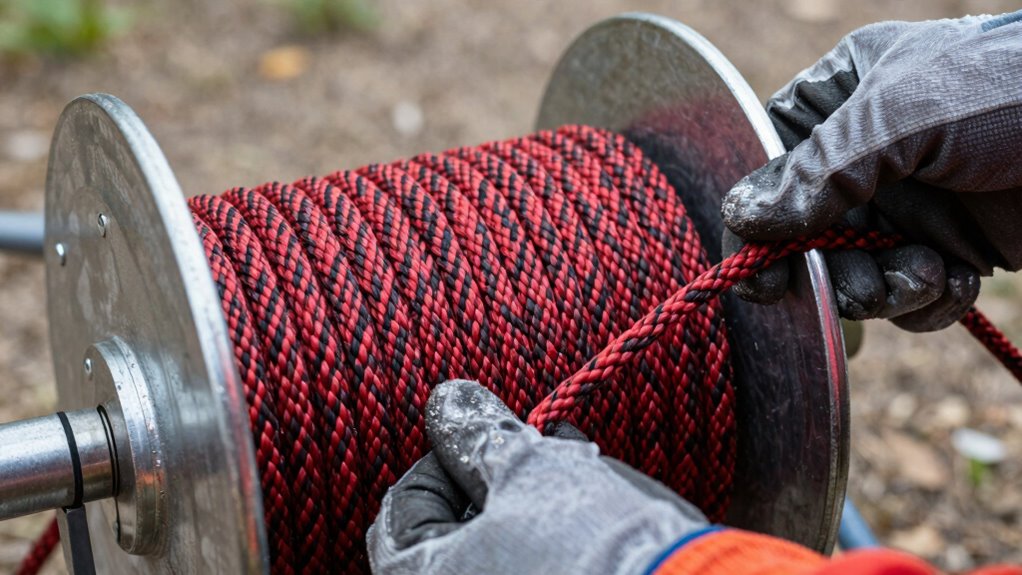
Spooling a winch line tightly is essential for ensuring safe and efficient operation, but it can be tricky if you don’t do it correctly. When you spool the line improperly, it can lead to slack, uneven layers, or even damage to the rope, compromising both safety and performance. To avoid these issues, you need to pay close attention to how you wind the line onto the drum. Start by inspecting your rope for any signs of wear or fraying, which is a key part of rope maintenance. If the rope shows damage, replace it before spooling to prevent failure during use. Properly maintained rope not only lasts longer but also reduces the risk of accidents caused by weak spots or broken strands.
Before you begin spooling, ensure the winch is securely mounted and that the area around it is clear. Attach the rope to the drum’s center or designated anchor point, following the manufacturer’s instructions to prevent slippage. As you start winding, keep the line straight and aligned with the drum to avoid overlaps or tangles. Use a glove or a cloth to maintain a firm grip on the rope if necessary, but avoid pulling too hard, which could cause internal damage. As you crank the winch, pay attention to the tension; it should be firm but not overly tight, as excessive tension can stress the rope and lead to premature wear. Proper winch safety involves careful handling and correct spooling techniques to prevent accidents.
To achieve a tight, even spool, layer the rope carefully, making sure each wrap sits neatly next to the previous one without crossing or overlapping. If your winch has a level wind mechanism, use it to guide the line evenly across the drum. This feature simplifies the process and ensures consistent winding, reducing the risk of tangles or uneven layers that can cause problems during operation. Regular inspection of the rope integrity is crucial for maintaining safety and prolonging the lifespan of your equipment. Additionally, taking the time to properly coil the rope ensures it remains in good condition and prevents damage caused by improper handling. Paying attention to the correct spooling technique can significantly extend the life of your rope and improve overall safety.
Proper winch safety means not rushing the spooling process—taking your time ensures the rope is wound correctly and reduces the likelihood of accidents or damage later on. Once you’ve finished spooling, secure the loose end of the rope with a knot or clip to prevent it from unwinding during storage or use. Regularly inspect and maintain your rope, especially after heavy use, to extend its lifespan and keep your operations safe. Being aware of how proper spooling impacts the overall durability of the rope can help prevent costly repairs or replacements. By following these steps, you’ll ensure your winch line remains tight, safe, and in top condition, making every pull more reliable and secure.
As an affiliate, we earn on qualifying purchases.
Frequently Asked Questions
What Type of Rope Is Best for Winching?
For winching, synthetic ropes like Dyneema or polyester are best because of their high rope durability and lightweight nature. They resist abrasions and UV damage, making them ideal for tough conditions. You should also consider material compatibility; verify the rope’s strength matches your winch’s specifications. Avoid steel cables unless necessary, as synthetic ropes are safer, easier to handle, and less damaging to your equipment.
How Often Should I Re-Spool My Winch Line?
You should re-spool your winch line every 3 to 6 months to maintain ideal winch maintenance and guarantee rope durability. Regularly inspecting the line for frays, kinks, or damage helps prevent failures. Re-spooling keeps the rope properly tensioned and free of dirt or debris, extending its lifespan. Consistent upkeep ensures your winch operates smoothly and safely, especially during critical recovery situations.
Can I Use a Drill to Spool the Winch Line?
Yes, you can use a drill for spooling your winch line, but only if it’s compatible and designed for such use. Before proceeding, check your winch’s specifications and verify the drill’s power and compatibility align with the spooling techniques. Using a drill can speed up the process, but stay cautious—apply steady pressure and avoid over-spooling to prevent damage to the rope. Proper technique is key for safe, effective spooling.
What Are Signs of a Damaged Winch Rope?
You’ll notice signs of a damaged winch rope if you see fraying, cuts, or broken strands, which compromise rope longevity and safety. Discoloration, corrosion, or kinks are also red flags. Regularly inspect the rope for these issues to prevent damage and extend its lifespan. Address minor damage early to prevent it from worsening, ensuring your winch operates safely and effectively, maintaining damage prevention and peak performance.
How Do I Prevent Kinks When Spooling?
Did you know that improperly spooled winch ropes are a leading cause of rope failure? To prevent kinks, always use proper rope storage techniques—keep the rope organized and avoid twisting it. When spooling, go slow and guarantee the rope lays evenly on the drum. Regularly check for twists, and manually straighten any kinks as they form. This keeps your rope in top condition and ready for use.
As an affiliate, we earn on qualifying purchases.
Conclusion
Just like a skilled sailor tucks the sails tightly before a storm, spooling your winch line with care guarantees it’s ready for action without damage. When you finish, take a moment to double-check the tension, imagining the precision needed to keep a ship steady through turbulent seas. A tight, well-spooled line is your safeguard—ready to perform when you need it most. With patience and attention, your winch will serve you reliably, like a steadfast compass guiding you home.
As an affiliate, we earn on qualifying purchases.
As an affiliate, we earn on qualifying purchases.
Fall Picks
fall essentials
As an affiliate, we earn on qualifying purchases.