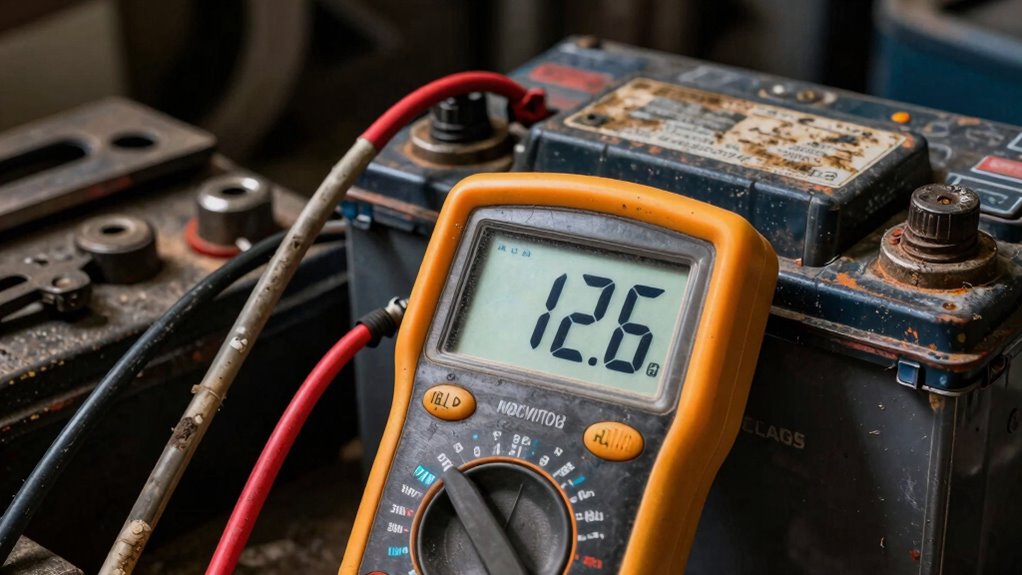

A static voltage of 12.6V might seem like your battery is fully charged, but it doesn’t guarantee it’s healthy or capable of reliable starting. Voltage alone doesn’t reflect capacity, internal degradation, or performance under load, which can decline even when voltage looks good. Over time, batteries lose their ability to hold charge and deliver power. To truly know your battery’s condition, you need to check capacity and test under real-world conditions—there’s more to it than just voltage.

Get garage and car supplies delivered free — and shop member deals
- Fast, free delivery on millions of items
- Access to Prime Big Deal Days deals on October 6–7
- Prime Video, Amazon Music and more included
Key Takeaways
- Static voltage of 12.6V does not indicate the battery’s capacity or ability to deliver power under load.
- A healthy-looking voltage can still mask internal degradation or reduced capacity.
- Voltage readings alone don’t reveal how the battery performs during actual engine start or electrical demands.
- Age, usage, and temperature affect battery health, which static voltage cannot accurately reflect.
- Relying solely on voltage can lead to unexpected failures; capacity testing provides a more complete health assessment.

Many car owners assume that a resting voltage of 12.6 volts automatically indicates a healthy battery, but that’s not always the case. While 12.6V is often cited as the ideal resting voltage for a fully charged lead-acid battery, it doesn’t tell the whole story about your battery’s true condition. Voltage alone can be misleading because it doesn’t directly measure the battery’s capacity or how well it can perform under load. A battery might show 12.6V when tested with a multimeter, but that doesn’t guarantee it has the capacity to start your vehicle reliably or hold a charge over time. That’s where understanding battery capacity becomes essential.
Battery capacity refers to how much energy your battery can store and deliver when needed. Over time, batteries can lose capacity due to aging, repeated discharges, or internal degradation. So, even if your battery reads 12.6V at rest, it might not have enough reserve to power your car’s electrical system during cold starts or long drives. This disparity highlights why voltage readings alone aren’t sufficient for evaluating overall health. Instead, you should consider performing a load test or checking for voltage fluctuations during various operating conditions. Voltage fluctuations, or changes in voltage when the engine is running or under load, can reveal underlying issues. A healthy battery should maintain a steady voltage close to 13.7-14.7V when the alternator is charging, but significant drops or irregular fluctuations suggest that your battery isn’t functioning at its best.
Furthermore, a battery’s age and the frequency of use influence its health more than a static voltage reading. A new battery might show the expected 12.6V when fully charged, but if it’s been subjected to frequent deep discharges or extreme temperatures, its capacity could be compromised. This means it might struggle to start the engine, especially in cold weather, even though the voltage appears normal. Regular testing that includes checking for voltage fluctuations under load, as well as capacity tests, provides a more thorough picture of your battery’s health. Relying solely on a static voltage reading can lead you to overlook potential problems that could leave you stranded unexpectedly. Additionally, understanding how battery capacity deteriorates over time can help you better anticipate when it’s time for a replacement.
As an affiliate, we earn on qualifying purchases.
Frequently Asked Questions
Can a Fully Charged Battery Read Exactly 12.6v?
Yes, a fully charged battery can read exactly 12.6V, especially in lead-acid chemistry, which typically shows this voltage when fully charged. However, voltage stability depends on battery chemistry and temperature. You shouldn’t rely solely on this reading to assess health; a healthy battery maintains voltage stability under load. Always check with proper testing tools, as voltage alone can be misleading about your battery’s true condition.
How Does Temperature Affect Battery Voltage Readings?
Temperature directly impacts battery voltage readings by affecting electrolyte stability and internal resistance. When it’s cold, electrolyte stability decreases, increasing internal resistance and lowering voltage readings, even if the battery’s state is good. Conversely, high temperatures improve electrolyte stability, reducing internal resistance and possibly giving higher voltage readings. Always consider temperature effects when testing your battery, as these factors can mislead you about its true health.
Is a Higher Voltage Always Better for Battery Health?
Imagine your battery as a delicate dance, where higher voltage isn’t always better. A higher voltage might seem like a sign of power, but it can mean overcharging or stress, risking damage. Focus on voltage stability over time and consider charging cycles. Consistent, stable voltage indicates a healthy battery, while fluctuations hint at potential problems. Keep an eye on these signs to guarantee your battery stays in peak condition.
How Often Should I Test My Battery’s Voltage?
You should test your battery’s voltage at least once a month to monitor its health. Regular testing helps you track changes in battery capacity and identify potential issues early. If you notice significant voltage drops, it may indicate reduced charging cycles or declining capacity. Testing frequently guarantees you catch problems before they worsen, keeping your battery reliable and prolonging its lifespan.
What Other Indicators Show a Battery’s True Health?
To truly tell if your battery’s healthy, look for signs beyond voltage. Check for capacity degradation, which causes your battery to hold less charge over time. Watch for slow cranking, frequent recharging, or swelling. Battery aging can also manifest as corrosion or leaks. These indicators reveal the real health, helping you determine if your battery needs replacing before it fails unexpectedly.
As an affiliate, we earn on qualifying purchases.
Conclusion
Remember, a reading of 12.6V doesn’t guarantee your battery’s health. For example, you might see that voltage after a full charge, but if your car struggles to start or the voltage drops quickly under load, your battery could still be failing. Always test your battery under real conditions and consider other signs of wear. Don’t rely solely on voltage — a thorough check will give you a true picture of your battery’s health.
As an affiliate, we earn on qualifying purchases.
As an affiliate, we earn on qualifying purchases.
Halloween Picks
halloween
As an affiliate, we earn on qualifying purchases.