
Your seat position impacts your control, visibility, and reaction times, directly affecting your lap times. When your seat is properly adjusted, you can operate pedals and steering comfortably, reducing fatigue and improving precision. It also enhances your view of the track, helping you anticipate turns and hazards faster. The right seat height and angle balance stability with good sightlines, making you more confident and responsive. Keep exploring to discover how fine-tuning your seat can boost your performance.
Key Takeaways
- Proper seat positioning improves driver control and reduces fatigue, allowing quicker responses during laps.
- Correct seat height and tilt enhance visibility of the track, aiding better decision-making and timing.
- Optimal ergonomics facilitate precise pedal and steering operation, increasing driving accuracy.
- Well-adjusted seats improve reaction times by providing a stable and comfortable driving posture.
- Fine-tuning seat position balances stability and sightlines, leading to faster lap times through better control and perception.

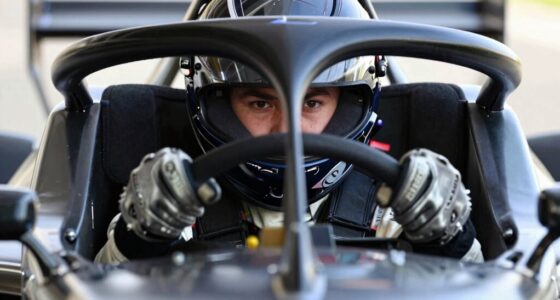
Your seat position in a race car can considerably impact your lap times, as even small adjustments can improve your control and comfort on the track. When you get your seat just right, you enhance your ergonomics comfort, which means you can operate the pedals and steering wheel more naturally and without unnecessary strain. Proper ergonomics reduce fatigue during long sessions, allowing you to maintain focus and precision throughout the race. If your seat is too far back or too upright, you might find yourself stretched or cramped, which leads to slower reaction times and inconsistent braking or steering inputs.
Proper seat positioning enhances control, reduces fatigue, and improves reaction times for better race performance.
Equally important is your visibility perspective. Your seat height and tilt influence how well you can see the track ahead, the apexes, and your surroundings. A seat positioned too low might hide critical parts of the track, making it harder to anticipate turns or spot hazards early. Conversely, a seat that’s too high could distort your perception of distances and angles, causing you to misjudge braking points or turn-in points. Adjusting your seat to maximize visibility allows you to scan the track more effectively, giving you better situational awareness and confidence in your driving decisions.
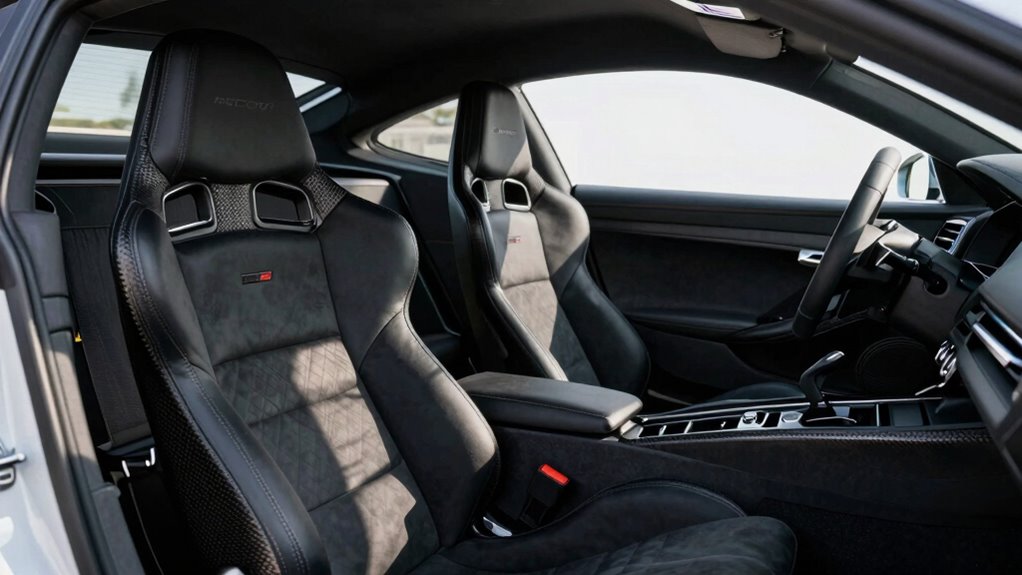
The ideal seat position combines these elements seamlessly. You want to sit low enough for a good center of gravity, which enhances stability and control, but also high enough to see over the steering wheel comfortably and gain a clear view of the track. Adjusting the seat angle to match your seat belt and harness setup is vital, ensuring you stay securely in place without sacrificing comfort. When your ergonomics comfort is dialed in, you can apply consistent pedal pressure and steering inputs without distraction, directly influencing your lap times. Additionally, proper seat adjustments in relation to your body’s posture can further enhance your driving effectiveness and reduce fatigue. Incorporating adjustable seat features can help fine-tune your position even more precisely for optimal performance.
Fine-tuning your seat position isn’t just about comfort; it’s a strategic move to improve your race performance. A well-positioned seat allows for quicker, more precise reactions to track conditions. It helps you develop a better feel for the car’s behavior, especially during high-speed corners and braking zones. When your visibility perspective is ideal, you won’t waste time correcting mistakes or hesitating because you’re unsure of where to turn or brake. Instead, you’ll have the confidence to push harder, knowing you have the best possible view and control. Additionally, innovative design in seat construction can further enhance your comfort and positional accuracy, ultimately leading to faster lap times.
In the end, your seat position acts as the foundation for effective driving. It’s a small change that can lead to significant gains in lap times, by making your control more intuitive and your perception sharper. Prioritize your ergonomics comfort and visibility perspective—these are key to unlocking your full potential on the track.

Supllueer Racing Seat with Double Locking Slides Cloth Breathable Gaming Seat Adjustable fit Most racing simulator cockpits(Steering Wheel Stand Not Include)
【Comfort Adjustment】: The back of the bucket seats for car can be adjusted between 65-180 degrees. By adjusting…
As an affiliate, we earn on qualifying purchases.
As an affiliate, we earn on qualifying purchases.
Frequently Asked Questions
How Does Seat Position Influence Driver Fatigue During a Race?
Your seat position greatly influences driver fatigue during a race by impacting ergonomic comfort and muscle strain. When you’re properly adjusted, you reduce unnecessary muscle tension and avoid awkward postures, helping you stay focused longer. An ideal seat position minimizes strain on your back, neck, and arms, preventing early fatigue. This allows you to maintain better control and concentration throughout the race, ultimately improving your performance and endurance.
Are There Optimal Seat Adjustments for Different Track Types?
You should tailor your seat adjustments to the track type, considering ergonomics considerations and the unique demands of each circuit. For high-speed tracks, lean back slightly to enhance aerodynamics and stability. On twisty, technical courses, adjust your seat to promote better control and responsiveness. Use seat adjustment techniques to fine-tune your position, ensuring comfort and ideal reach to controls, which ultimately helps you perform at your best across different racing environments.
Can Seat Position Affect Car Handling and Stability?
Your seat position can profoundly impact car handling and stability. By adjusting for ergonomic comfort, you guarantee better control and reduce fatigue during driving. Proper seat placement also enhances visibility, allowing you to anticipate turns and obstacles more effectively. When your seat is correctly positioned, you gain a more precise feel for the car’s responses, helping you maintain stability through corners and improve overall handling on different track types.
How Do Driver Preferences Impact Seat Placement Choices?
You’re the captain of your comfort ship, so driver preferences greatly influence seat placement choices. You prioritize ergonomic comfort to prevent fatigue and optimize visibility to stay aware of your surroundings. By tuning your seat to match your body and driving style, you’re steering towards better control and confidence. Trust your instincts, as a seat that feels right helps you perform at your best, turning every drive into a smooth voyage.
Is Seat Position Customization Available for Different Vehicle Models?
Yes, seat position customization is available for many vehicle models. You can easily adjust your seat using seat adjustment controls, ensuring ideal comfort and control. Modern vehicles often feature ergonomic design, allowing you to customize the seat to fit your body perfectly. This personalized adjustment helps improve driving comfort and performance, making it easier to find the optimal driving position for your needs and preferences.

Graco® TriRide 3-in-1 Reclining Car Seat, Clybourne – Rear & Forward Facing Car Seat, Highback Booster, Adjustable Headrest
3-in-1 car seat grows with your child from rear-facing harness (5-40 lb) to forward-facing harness (26.5-65 lb) to…
As an affiliate, we earn on qualifying purchases.
As an affiliate, we earn on qualifying purchases.
Conclusion
By simply adjusting your seat position, you could release the secret to shaving seconds off your lap time—literally transforming you into a racing legend overnight! It’s not just about comfort; it’s about unleashing your true speed potential. Don’t underestimate this tiny tweak—your fastest lap ever is just a seat adjustment away. So go ahead, move that seat, and watch your rivals tremble as you dominate the track like a true champion!

Next Level Racing ERS3 Elite Series Reclining Seat (NLR-E050)
Designed specifically for a seamless sim racing experience
As an affiliate, we earn on qualifying purchases.
As an affiliate, we earn on qualifying purchases.

Trak Racer Oversized Adjustable Seat Bracket for GT Formula Seating | Universal Mount for Racing Simulator Seats | 18 Stage Adjustments, Steel Construction, Black Powder Coat
18-Stage Adjustable Positioning- Easily adjust your seat for the perfect racing posture with 18 distinct adjustments, allowing for…
As an affiliate, we earn on qualifying purchases.
As an affiliate, we earn on qualifying purchases.