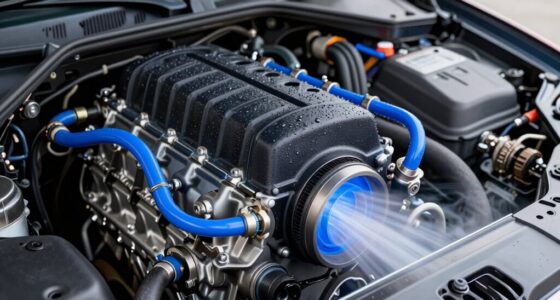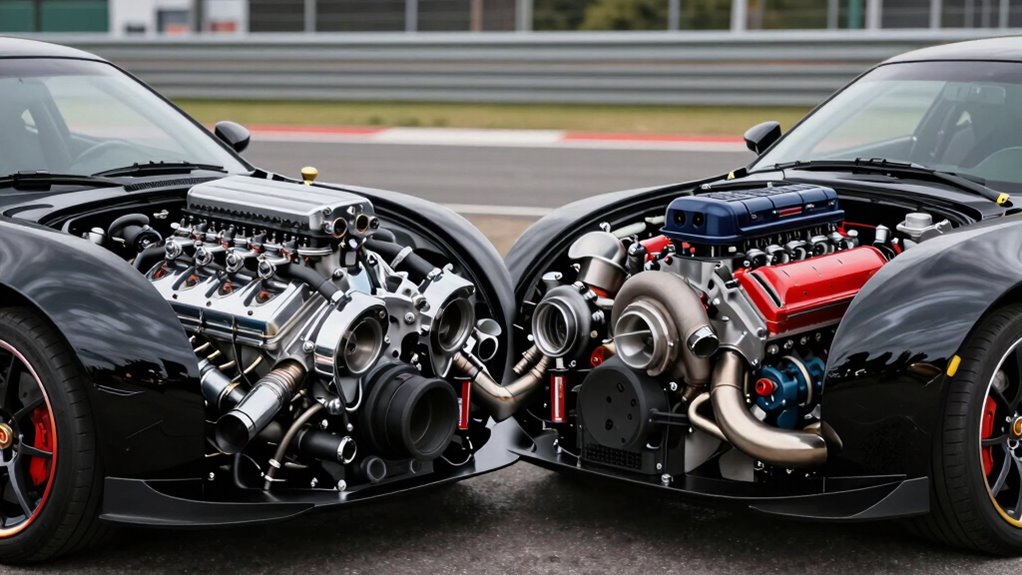

If you’re choosing between naturally aspirated and turbo engines, consider your driving style and priorities. Naturally aspirated engines deliver immediate throttle response, are simpler, and tend to be more reliable and easier to maintain. Turbo engines boost power and fuel efficiency but add complexity, which can impact durability and maintenance. Both options have advantages depending on your needs—learn more to find the best fit for you and how each performs in real-world driving.
Key Takeaways
- Naturally aspirated engines have simpler design and fewer components, making maintenance easier and more reliable.
- Turbo engines boost power and efficiency by forcing more air into the combustion chamber, often matching larger naturally aspirated engines.
- Naturally aspirated engines provide more immediate throttle response and predictable power delivery.
- Turbocharged engines can be more complex, requiring careful maintenance and potentially affecting long-term durability.
- Turbo engines generally offer better fuel efficiency during steady cruising, but may be less predictable under aggressive driving.
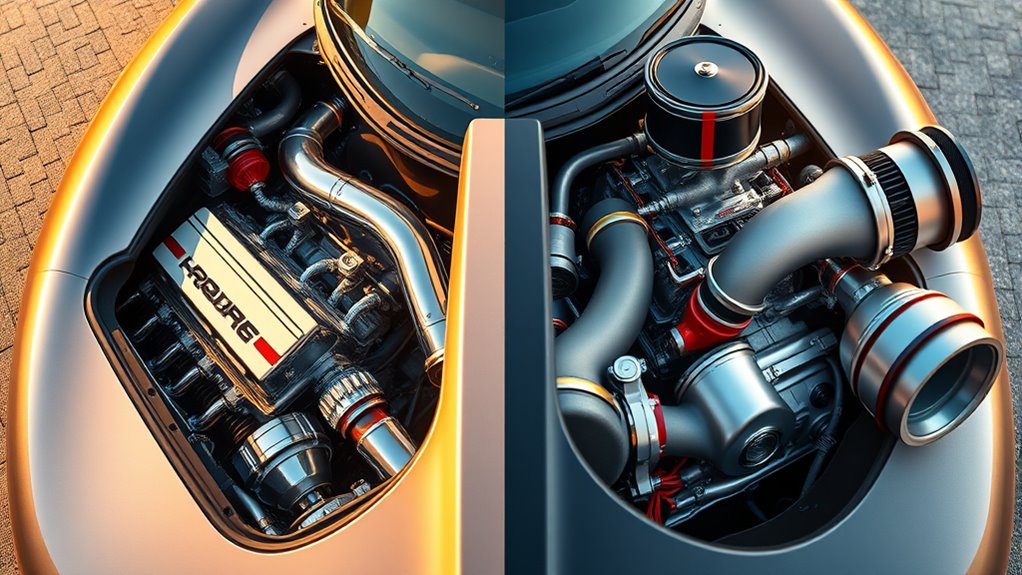
When choosing between naturally aspirated and turbocharged engines, understanding their differences is essential. These two types of engines have distinct characteristics that can influence your driving experience, fuel costs, and maintenance needs. Naturally aspirated engines rely solely on atmospheric pressure to bring air into the engine, which means their power output is directly related to the engine size and design. They tend to be simpler, with fewer components, making them more straightforward to maintain. On the other hand, turbocharged engines use a turbine-driven forced induction system to push more air into the combustion chamber, allowing for increased power without markedly increasing engine size. This setup can boost performance, but it also introduces additional complexity that affects both fuel efficiency and maintenance requirements.
Fuel efficiency is one of the biggest considerations when comparing these engines. Turbocharged engines are generally more fuel-efficient because they produce more power from smaller engines. By forcing extra air into the cylinders, they can generate the same or greater power as larger naturally aspirated engines while consuming less fuel. This means that with a turbo, you might get better mileage, especially during highway driving or when cruising at steady speeds. However, this advantage can diminish if the turbocharged engine is driven aggressively, as turbo systems tend to be less forgiving under hard acceleration. Naturally aspirated engines, while often less efficient, tend to have more predictable fuel consumption since they lack the turbo system, which can sometimes cause inefficient fuel use if the turbo kicks in frequently. Additionally, the presence of a turbo can influence the engine’s long-term durability, making maintenance more critical for sustained performance. Proper turbocharger maintenance can help mitigate some of these concerns and extend engine life. Moreover, naturally aspirated engines often have a more linear power delivery, which can be preferable for certain driving styles and engine responsiveness. It’s also worth noting that naturally aspirated engines are generally less susceptible to turbo lag, providing more immediate throttle response during acceleration. In some cases, the simpler design of naturally aspirated engines can lead to increased reliability over the lifespan of the engine.
Frequently Asked Questions
Which Engine Type Has Better Longevity and Lower Maintenance Costs?
You’ll find naturally aspirated engines generally have better engine durability and lower maintenance expenses. They have simpler designs with fewer parts prone to wear, making them more reliable over time. Turbo engines, while powerful, often require more maintenance due to added components like intercoolers and turbochargers. If longevity and lower upkeep are your priorities, a naturally aspirated engine is a smarter choice, offering consistent performance with fewer costly repairs.
How Do Naturally Aspirated and Turbo Engines Compare in Fuel Efficiency?
You’ll find that naturally aspirated engines typically have better fuel efficiency and lower fuel consumption, especially at steady speeds, because they operate without the added complexity of a turbocharger. Turbo engines, however, often excel in efficiency metrics during high-performance driving or under load, as they boost power without considerably increasing fuel use. Overall, your choice depends on driving habits—if you prioritize economy, naturally aspirated engines usually win.
What Are the Environmental Impacts of Each Engine Type?
You should know that naturally aspirated engines typically have lower emission levels and resource consumption because they operate without forced induction, making them more environmentally friendly. Turbo engines, while more efficient in power, tend to produce higher emissions due to increased fuel use during high-performance conditions. If reducing environmental impact is your priority, naturally aspirated engines may be a better choice, but turbo engines can be optimized for better sustainability with modern technology.
Which Engine Type Offers Better Performance at High Altitudes?
You’ll find turbo engines excel at high altitudes, maintaining about 20-30% more power than naturally aspirated engines. As you climb, turbochargers compensate for thinner air, enhancing altitude performance and power consistency. Imagine driving through mountain passes, feeling steady acceleration where naturally aspirated engines would struggle. This makes turbo engines ideal for high-altitude driving, offering reliable performance and impressive power retention even where air density drops markedly.
How Do Tuning Potential and Aftermarket Modifications Differ Between Them?
You’ll find that turbo engines generally offer greater tuning potential and aftermarket modifications, thanks to their higher boost capabilities and more complex tuning options. However, tuning a turbo can be more complex and costly due to the need for upgraded components like intercoolers and boost controllers. Naturally aspirated engines tend to be more straightforward and affordable to modify, making them appealing if you prefer simpler tuning and less maintenance.
Conclusion
So, whether you prefer the simplicity of naturally aspirated engines or the boosted power of turbos, it really comes down to your driving style. Sure, turbos can be more complex and costlier to maintain, but they deliver impressive performance when you need it. If you value reliability and straightforwardness, a naturally aspirated engine might suit you better. Either way, both options can give you a fun, reliable ride—it’s all about what excites you most behind the wheel.