
To prevent blown fuses, it’s essential to convert watts to amps at 12V accurately. Use the simple formula: amps = watts ÷ 12. For example, a 120W device draws 10A. Proper calculations help you select the right fuse rating and wire gauge, avoiding overheating or damage. Knowing this math keeps your electrical system safe and efficient. Keep going to uncover more tips for designing a robust, reliable setup.
Key Takeaways
- Use the formula Amps = Watts ÷ 12V to accurately determine current draw at 12V systems.
- Select fuses with ratings slightly above the calculated current to prevent nuisance blowing and ensure safety.
- Proper watt-to-amp conversion guides correct wiring gauge choices, reducing overheating risks.
- Overestimating fuse ratings based on accurate calculations helps protect wiring, devices, and batteries.
- Precise current calculations prevent system overloads, overheating, and potential damage or safety hazards.

Understanding watt-to-amp conversions at 12V is essential if you’re working with electrical systems or batteries. When dealing with any electrical setup, knowing how to convert watts to amps helps you choose the right components and prevent problems like blown fuses or damaged equipment. It’s especially important for maintaining battery safety; overloading circuits can cause overheating, reduce battery life, or even lead to dangerous failures. To avoid these issues, you need to understand how wattage, current, and voltage interrelate, so you can select fuse ratings that match your system’s demands.
Knowing watt-to-amp conversions at 12V is vital for safe, efficient electrical system design and battery protection.
At 12 volts, the relationship between watts and amps is straightforward but often misunderstood. The formula you’ll use is amps = watts divided by volts. For example, if your device consumes 120 watts, dividing 120 by 12 gives you 10 amps. This simple calculation is crucial for ensuring that the wiring and fuses you choose can handle the load. If you select a fuse rated too low, it’ll blow prematurely, interrupting your system and potentially causing inconvenience or damage. On the other hand, choosing a fuse rated too high risks allowing excessive current to pass through, which can damage the wiring, the device, or the battery itself.
When it comes to battery safety, understanding watt-to-amp conversions helps you avoid scenarios that could lead to dangerous overheating or short circuits. Proper fuse ratings act as a safeguard, designed to disconnect the circuit before any damage occurs. For instance, if your system draws 15 amps, you might select a fuse rated slightly above that, say 20 amps, to prevent nuisance blowing while still protecting the system. Knowing the exact current draw based on wattage allows you to tailor fuse ratings accurately, ensuring safety and performance.
Additionally, being precise in your calculations ensures your wiring is adequate for the current load. Wires have maximum current ratings, and exceeding those can cause overheating or melting. By understanding the watt-to-amp conversion at 12V, you can match your wire gauge and fuse ratings correctly, maintaining system integrity and battery safety. This knowledge helps you avoid costly mistakes, like installing undersized fuses or wiring that can’t handle the load, which could compromise safety and damage your equipment. Furthermore, proper system design based on accurate watt-to-amp calculations can improve overall efficiency and lifespan of your electrical components.
Frequently Asked Questions
How Do Temperature Changes Affect Watt-To-Amp Conversions?
Temperature changes impact watt-to-amp conversions because thermal expansion can alter component resistance, causing fluctuations in current flow. As temperatures rise, resistance often increases, which may lower the amps for a given wattage. Voltage fluctuations also occur with temperature shifts, affecting the conversion accuracy. You should account for these factors to prevent fuse blows, ensuring your system remains stable and efficient despite temperature variations.
What Safety Precautions Should I Take During Conversions?
Imagine you’re a modern-day electrician in a bustling workshop. To stay safe during conversions, always wear proper gear, including insulated gloves and goggles. Confirm your battery is well-ventilated and handle it in a dry area. Use insulation techniques like heat shrink tubing or electrical tape to prevent shorts. Keep a fire extinguisher nearby, and never work on live circuits to avoid sparks or shocks.
Can These Conversions Apply to Other Voltage Systems?
Yes, these conversions can apply to other voltage systems, but you need to take into account your battery chemistry and wiring gauge. Different battery chemistries, like lithium or lead-acid, may handle power differently, affecting safety. Also, verify your wiring gauge matches the current load to prevent overheating. Always adjust your calculations accordingly, and consult specific guidelines for each voltage system to keep everything safe and efficient.
How Do I Handle Peak Versus Continuous Power Ratings?
Think of peak versus continuous power ratings as a gentle dance with your battery capacity and voltage regulation. You handle them by ensuring your device’s peak power doesn’t tempt your system beyond its limits, while continuous power stays within a comfortable range. Always check your equipment’s specifications, match them with your power source, and avoid overstressing your system, so your battery stays healthy and reliable over time.
What Tools or Meters Are Best for Measuring Amps Accurately?
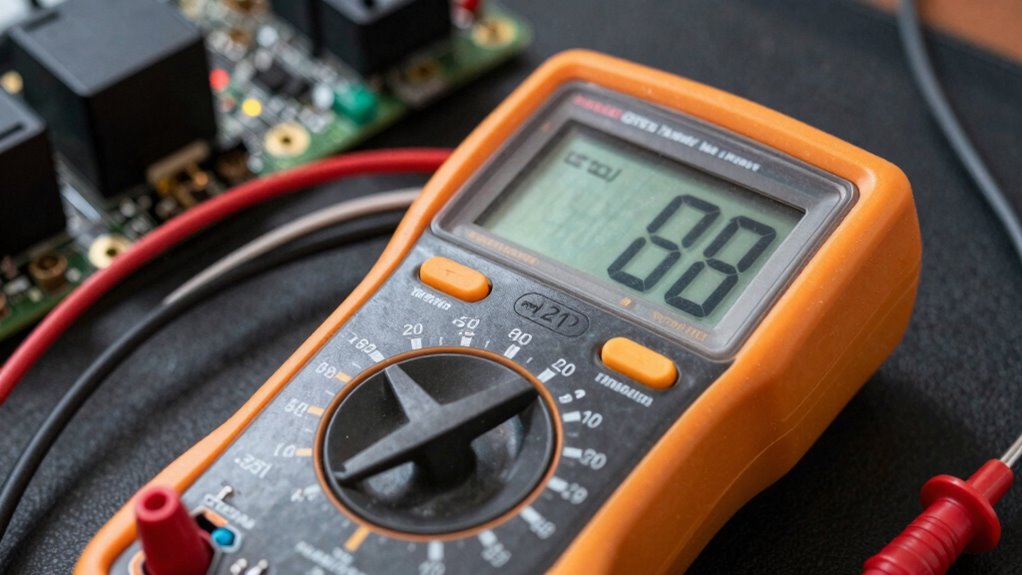
To measure amps accurately, you should choose a good multimeter with a high amp rating and a clamp meter. A multimeter helps you get precise readings for lower currents, while a clamp meter is ideal for measuring higher currents without breaking the circuit. Look for a multimeter with true RMS capabilities and a clamp meter that can handle the expected current range to guarantee accurate measurements and prevent damage.
Conclusion
Now that you understand how watt-to-amp conversions work at 12V, you’re better equipped to prevent those frustrating blown fuses. But remember, a small miscalculation can still lead to unexpected surprises. Will you double-check your calculations next time, or risk the same costly mistakes? Stay vigilant—sometimes, the tiniest detail makes all the difference in keeping your system safe and running smoothly. The power’s in your hands; don’t let it slip away.