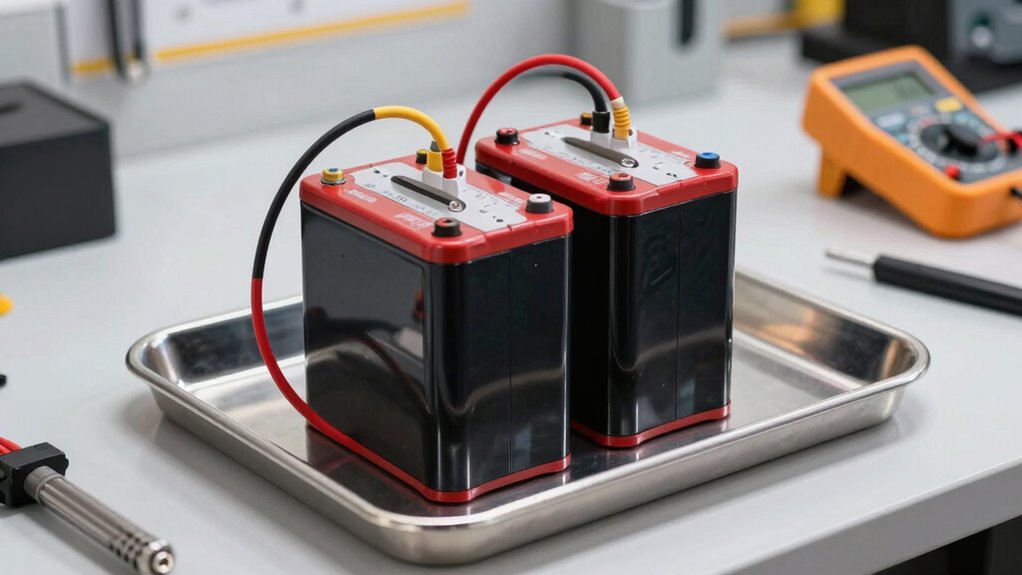

A dual battery system keeps your main starter battery separate from your auxiliary power, preventing accessory use from draining the engine battery. By adding a second deep-cycle battery and using a proper isolator, like a VSR or diode, you guarantee both batteries stay healthy and charged. This setup keeps your starter ready and allows extended power for accessories. If you want to learn how to set up and maintain this system safely, there’s more to explore here.
Key Takeaways
- Use a battery isolator or VSR to connect secondary batteries only when the engine is running, preventing drain on the starter battery.
- Select appropriate batteries for each role—deep-cycle for accessories, AGM or lead-acid for starting—to optimize performance and longevity.
- Properly wire heavy-gauge cables between batteries, alternator, and isolator, ensuring secure, corrosion-free connections for reliable power separation.
- Incorporate fuses and secure mounting in ventilated, vibration-resistant locations to protect components and enhance system safety.
- Regularly monitor voltage and connection integrity to maintain system health without risking the primary starter battery.

Nilight 12V 140 AMP Dual Battery Isolator Auto Manual Voltage Sensitive Relay with Digital Voltmeter Smart VSR Automatic Charger Disconnect w/Voltmeter for Truck RV UTV Boat Can Am
Function: The Voltage Sensitive Relay (VSR) ensures that the primary battery is always charged and ready to start…
As an affiliate, we earn on qualifying purchases.
As an affiliate, we earn on qualifying purchases.
Understanding Dual Battery Systems

A dual battery system separates your vehicle’s main starter battery from a secondary battery dedicated to powering accessories. This setup allows you to run lights, fridges, or winches without risking your ability to start the engine. You can choose different types of batteries—like lead-acid or AGM for the main, and deep-cycle for the secondary—to match your power needs. The system typically includes components like an isolator or a smart charger, which manage charging and prevent drain. Overall, a dual battery system boosts reliability and keeps your vehicle ready for off-road adventures. Proper wiring ensures safe and efficient operation of your dual battery setup. Understanding the heat distribution and material differences in batteries can help you select the best options for longevity and performance. Additionally, considering battery lifespan and maintenance requirements can further optimize your setup’s durability, especially when selecting batteries with appropriate temperature tolerance for varying conditions. Proper installation techniques are crucial to ensure safety and optimal performance over time.
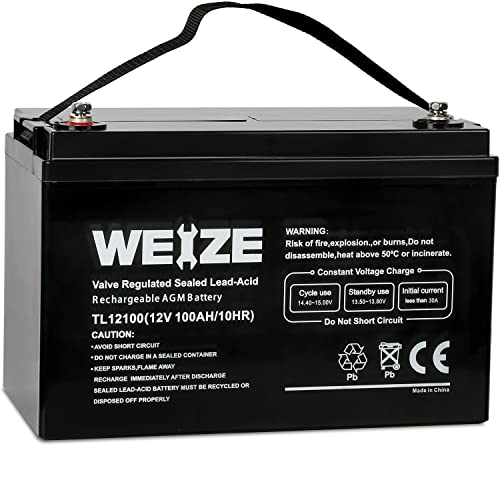
Weize Deep Cycle AGM 12 Volt 100Ah Battery, Maintenance-Free, 3% Self-Discharge Rate, 1150A Max Discharge Current, Perfect for RV, Solar, Trolling Motor, Wind, Marine, Camping and Off-Grid System
MAINTENANCE FREE: 12.99x 6.73x 8.43 inches. Weize 12v 100Ah sealed lead acid battery is manufactured with absorbent glass…
As an affiliate, we earn on qualifying purchases.
As an affiliate, we earn on qualifying purchases.
Core Components of a Dual Battery Setup
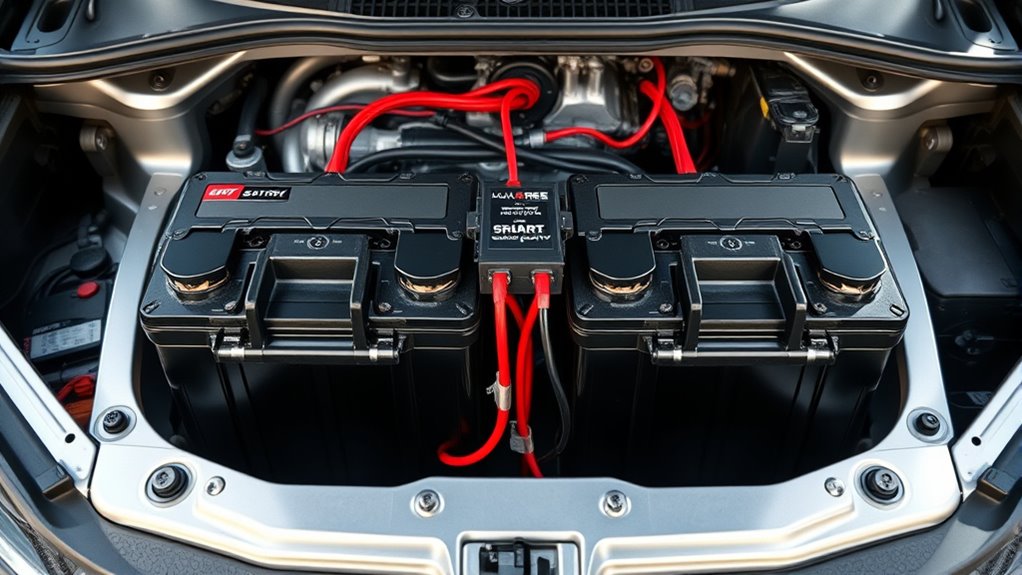
Understanding the core components of a dual battery setup is essential for making certain your system functions reliably. These parts work together to keep your batteries safe and charge efficiently. First, your primary battery handles engine starting and basic electronics, typically a lead-acid or AGM. Second, the secondary battery is a deep-cycle type, designed for prolonged use and discharges. Third, the battery isolator manages the connection between the two batteries, allowing charging while preventing drain on the starter battery. Additional key components include heavy-gauge cabling that links batteries to the alternator and isolator, and the charging system—usually an alternator, DC-DC charger, or solar regulator—that guarantees proper recharging. Proper component selection and setup are crucial for optimizing your deep-sky imaging capabilities while maintaining reliable vehicle operation. To prevent battery damage, choosing the right type and quality of components ensures longevity and system efficiency. Additionally, understanding the electrical load and incorporating appropriate fuses or circuit breakers protects the entire system from potential faults. Implementing proper wiring practices further enhances safety and system performance. For example, using quality connectors reduces the risk of corrosion and connection failures. Together, these components create a robust, reliable system for powering accessories without risking your engine’s start.
Nilight 12V 140 AMP Dual Battery Isolator Auto Manual Voltage Sensitive Relay with Digital Voltmeter Smart VSR Automatic Charger Disconnect w/Voltmeter for Truck RV UTV Boat Can Am
Function: The Voltage Sensitive Relay (VSR) ensures that the primary battery is always charged and ready to start…
As an affiliate, we earn on qualifying purchases.
As an affiliate, we earn on qualifying purchases.
Different Types of Battery Isolators
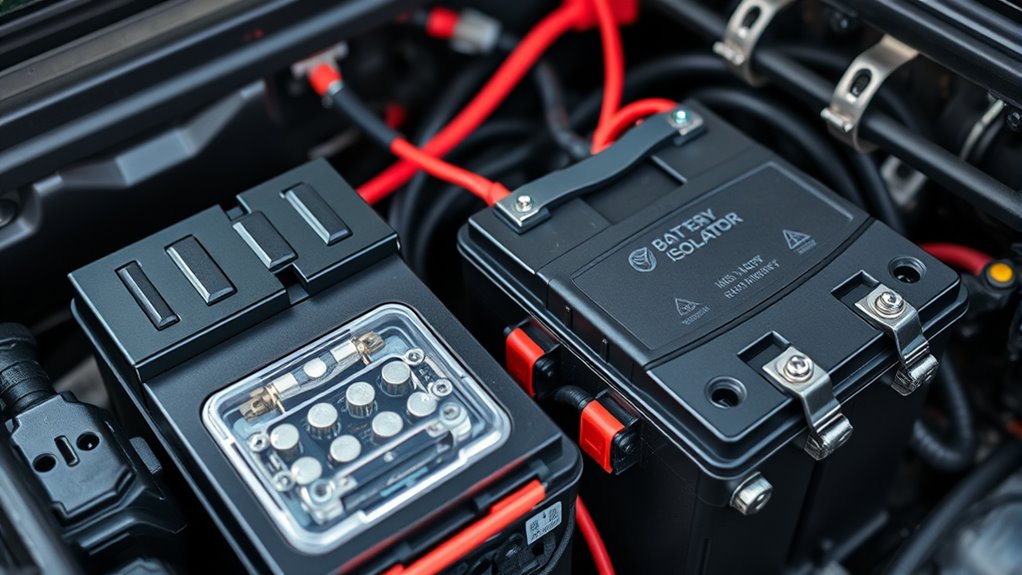
When choosing a battery isolator, two common options are Voltage Sensitive Relays and electronic diode isolators. These devices manage how the batteries connect and disconnect, ensuring proper charging and power sharing. Understanding how each type works helps you select the best solution for your dual battery system. Additionally, selecting the right isolator can help prevent battery drain issues and extend the lifespan of your batteries. Proper cookie management can also ensure your system remains secure and efficient during operation. Consulting whole-house water filtration systems principles can inspire better system management and maintenance practices for your batteries, ensuring consistent performance over time. Incorporating auditory processing strategies can further optimize your system’s reliability by improving monitoring and diagnostics. Using solar charge controllers, such as MPPT types, can increase energy harvest efficiency and better protect your batteries from overcharging.
Voltage Sensitive Relays
Voltage Sensitive Relays (VSRs) are essential components in dual battery systems because they automatically connect or disconnect batteries based on voltage levels. When your engine runs, the VSR detects the charging voltage and connects the secondary battery, ensuring it charges without draining the starter. When the engine stops and voltage drops, the relay disconnects, preventing the secondary from discharging the starter battery. Here are three key points about VSRs:
- They activate automatically, no manual intervention needed.
- They typically operate within a voltage range of around 13.2V to 14.4V.
- They are reliable, simple, and ideal for maintaining battery separation during vehicle off conditions. The durability of VSRs makes them a dependable choice for long-term use.
- Proper installation and maintenance of VSRs ensure consistent performance and longevity, making them a trusted choice for dual battery setups.
VSRs are a practical choice for seamless charging and battery isolation, enhancing your vehicle’s reliability.
Electronic Diode Isolators
Electronic diode isolators are a popular choice for managing battery separation in dual systems because they use diodes to control current flow. When the engine runs, the diode allows current to flow from the alternator to both batteries, charging them simultaneously. When the engine turns off, the diode prevents current from flowing back, ensuring the primary starter battery stays isolated and ready to crank. These isolators are simple, reliable, and highly effective, with no moving parts. They generate minimal voltage drop, which means efficient power transfer. However, they do produce some heat due to the voltage drop across the diode, so proper heat sinking is essential. Electronic diode isolators are ideal for straightforward setups, providing a clean, maintenance-free way to keep batteries separated without complex wiring. Understanding their heat dissipation needs] is important for optimal performance and longevity.

Dual Battery Isolator Kit 12V – 140 Amp Multi-voltage 12v or 24v Kit (VSR) for Dual Battery Setup – Automatic Disconnect Switch for Car, Truck, RV, UTV, ATV, Marine – Battery Wiring Kit
Advanced Dual Battery Isolator Multi-voltage 12v or 24v – Designed for superior performance, this dual battery kit ensures…
As an affiliate, we earn on qualifying purchases.
As an affiliate, we earn on qualifying purchases.
How Charging Works in Dual Battery Configurations
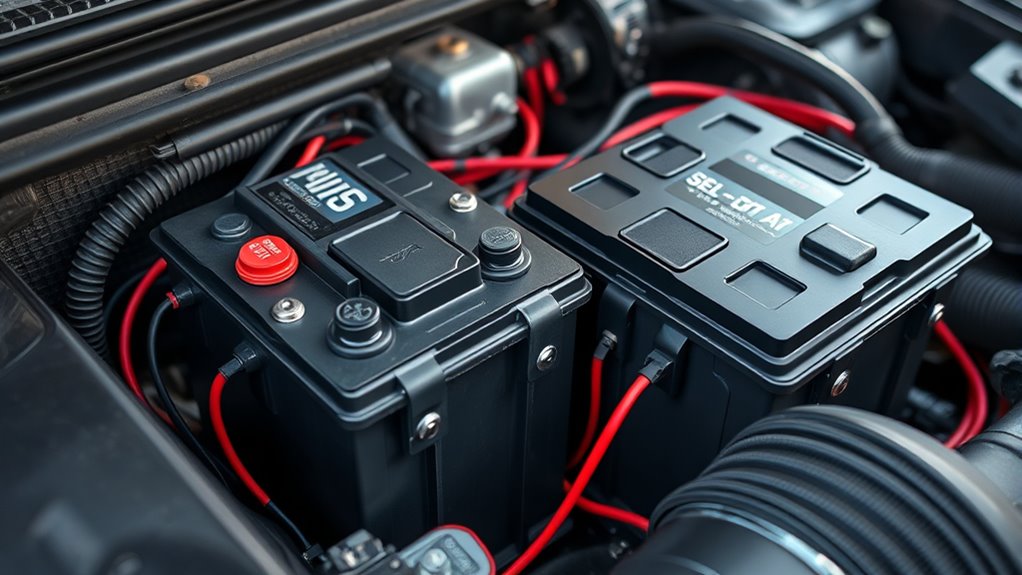
Your vehicle’s alternator plays a key role in charging both batteries by sending current through the isolator. It guarantees the primary battery charges first, while the secondary gets replenished once the system detects sufficient voltage. Managing multiple power sources efficiently keeps your batteries ready without overloading your electrical system. Incorporating expert voice actors in advertising can also help communicate these technical details more effectively to a broader audience.
Alternator’s Role in Charging
The alternator plays a crucial role in dual battery systems by providing the primary source of charging when the engine runs. It generates electrical power and supplies it to both the starter and secondary batteries, guaranteeing they stay charged. Here’s how it works:
- The alternator produces current that flows through heavy-gauge cables to the primary battery and, via an isolator, to the secondary battery.
- When the engine is running, the alternator’s voltage rises, activating the isolator to connect the batteries and allow charging.
- Once the batteries reach the desired voltage, the isolator prevents overcharging and battery drain, maintaining ideal charge levels.
This setup maximizes efficiency, keeps your batteries healthy, and ensures your accessories stay powered without risking your starter battery.
Managing Multiple Power Sources
Managing multiple power sources in a dual battery system involves coordinating how both batteries are charged to guarantee reliable operation and prevent conflicts. When your engine runs, the alternator charges both batteries through a battery isolator or relay, ensuring the starter battery remains ready for engine starts. The isolator directs current to the secondary battery without allowing it to drain the starter battery when the engine is off. If you have solar panels or a DC-DC charger, these sources can supplement charging, especially when parked or off-grid. Proper wiring and component placement are vital for efficient charging and to avoid overloading. Correct wiring practices help ensure safe and effective power management. Regularly check connections and charge levels to guarantee both batteries stay healthy, functioning correctly, and ready when you need them. Ensuring proper wiring and component placement is essential for efficient charging and to prevent electrical issues. Additionally, understanding load management helps optimize charging efficiency and battery longevity. To improve system reliability, consider integrating battery monitoring systems that provide real-time data on charge levels and health.
Proper Installation Practices for Safety and Efficiency
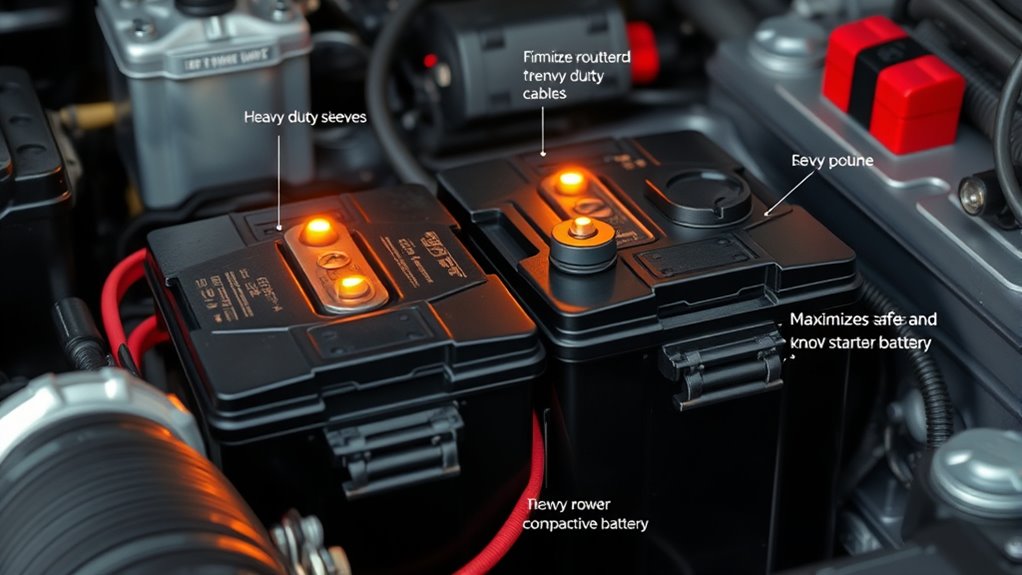
Proper installation of a dual battery system is crucial for ensuring both safety and efficiency. To do it right, focus on these key practices:
Proper dual battery installation ensures safety, efficiency, and reliable power when you need it most.
- Secure the secondary battery in a vibration-resistant, well-ventilated spot to prevent damage and overheating.
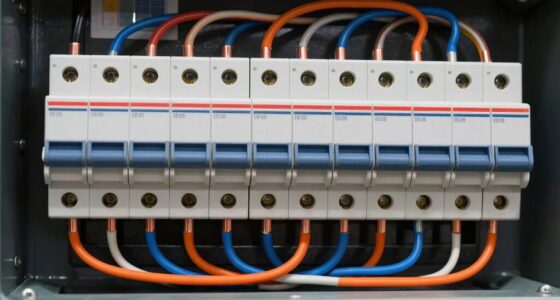
- Use heavy-gauge cables from the alternator to the primary battery, then to the isolator, ensuring minimal voltage drop.
- Install the isolator after the primary battery is fully charged, preventing unnecessary drain and ensuring reliable operation.
- Incorporate appropriate fuse and circuit protection to safeguard against electrical faults and ensure system longevity.
Always double-check connections for tightness and proper insulation. Avoid shortcuts, and consider professional help for complex wiring. Proper routing and secure mounting reduce risks and ensure your system functions smoothly, giving you peace of mind and reliable power when you need it most.
Benefits of Using a Dual Battery System
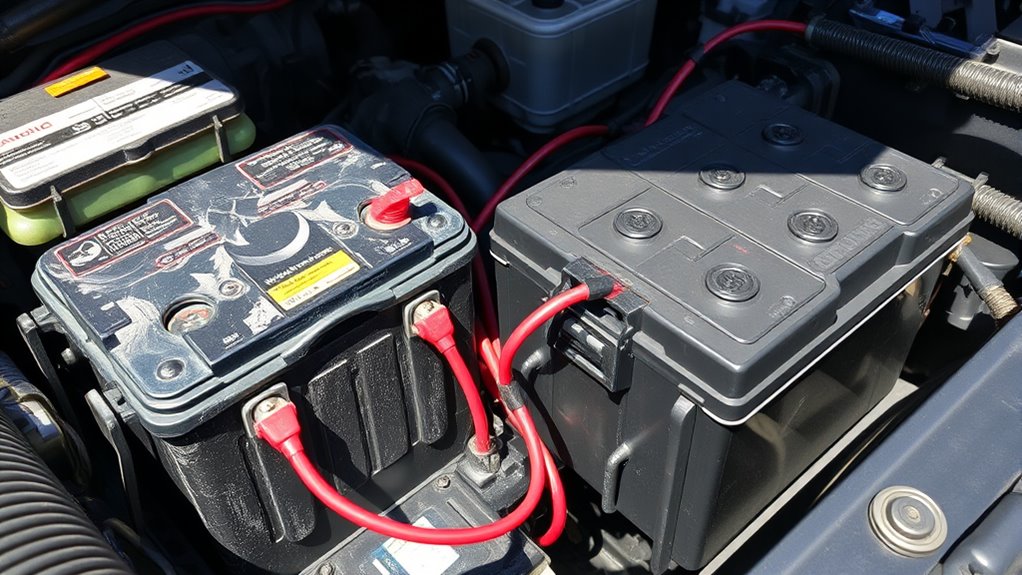
A well-installed dual battery system offers significant advantages by ensuring your vehicle’s main starter battery remains ready at all times. You won’t have to worry about draining your primary battery when running accessories like fridges, lights, or winches, which means fewer unexpected stalls or breakdowns. It provides reliable power for extended adventures, allowing you to use electronics without compromising engine starting ability. Additionally, isolating the batteries prevents the secondary from discharging your starter battery, especially when the vehicle is off. This setup boosts safety, giving you peace of mind whether you’re off-grid or just running multiple devices. Overall, a dual battery system enhances your vehicle’s dependability, making it ideal for those who rely on their vehicle’s power for work, recreation, or emergencies.
Maintenance Tips to Keep Your Dual Batteries Healthy
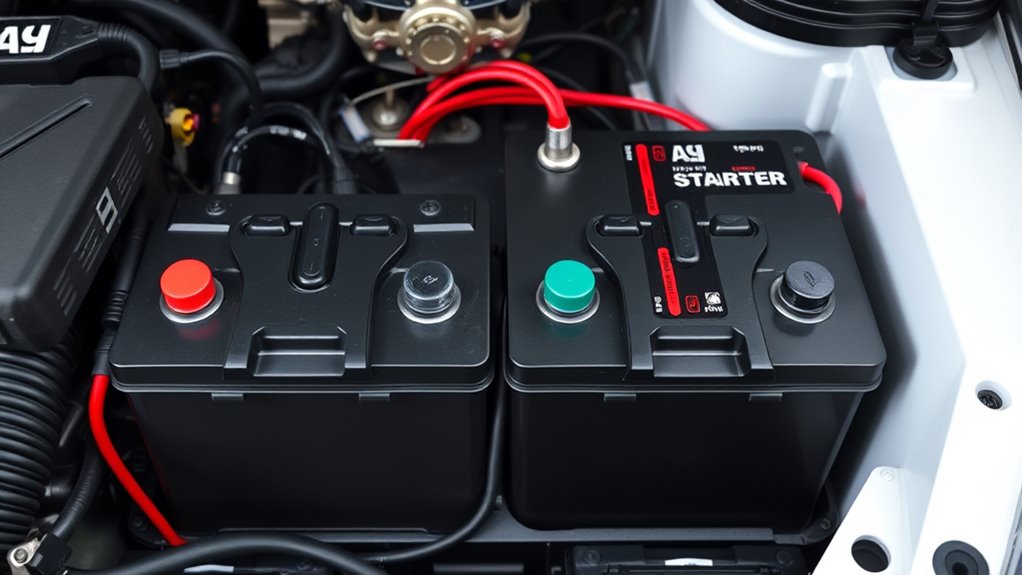
To keep your dual batteries performing reliably, regular inspection and maintenance are essential. Proper care prevents issues and extends their lifespan.
Here are three key tips:
- Check connections regularly: Ensure all cables and terminals are tight, clean, and free of corrosion. Loose or corroded connections can reduce charging efficiency and cause system failures.
- Monitor battery health: Use a multimeter or battery tester to verify voltage levels and overall condition. Replace any batteries showing signs of deterioration or decreased capacity.
- Maintain proper charge levels: Keep batteries charged to recommended levels. Avoid deep discharges and ensure your charging system is functioning correctly to prevent sulfation and damage.
Consistent maintenance keeps your dual battery system reliable, ensuring your accessories run smoothly and your starter battery stays ready.
Choosing the Right Batteries for Your Needs
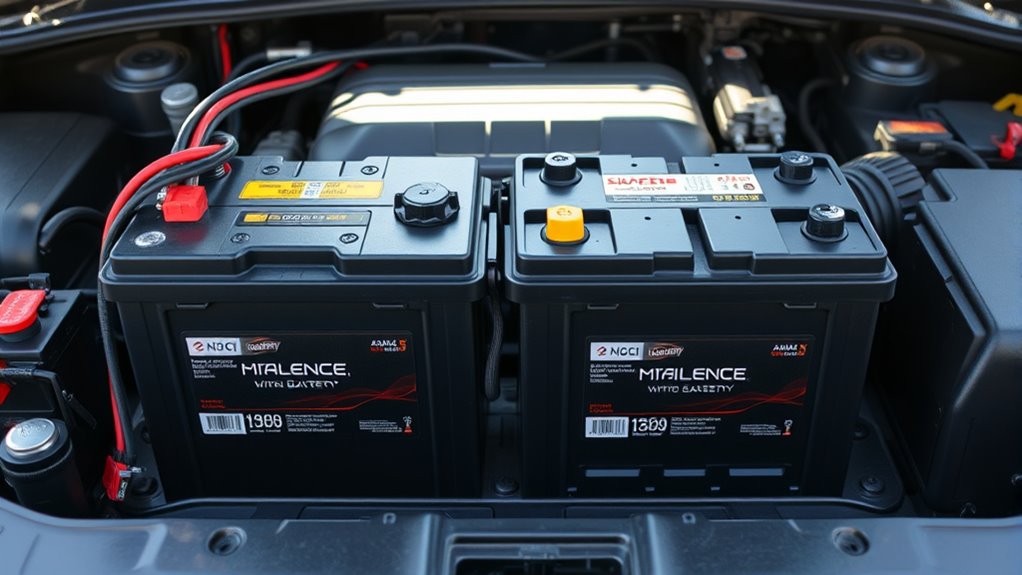
Choosing the right batteries for your dual system depends on understanding your power needs and the conditions you’ll face. If you run accessories like fridges or lights long-term, opt for a deep-cycle secondary battery that handles repeated discharges. For your starter, a high-quality lead-acid or AGM battery ensures reliable engine cranking. Consider climate, vibrations, and space—these factors influence battery choice. Here’s a quick guide:
| Application | Recommended Battery Type | Key Feature |
|---|---|---|
| Starter Engine | AGM or Lead-Acid | High current, reliable start |
| Accessories | Deep-cycle | Long-lasting, repeated use |
| Off-road Use | Vibration-resistant | Durable in rough terrain |
| Extended camping | AGM or Gel | Maintenance-free, sealed |
| Solar Integration | Deep-cycle or AGM | Efficient charging, longevity |
Common Mistakes to Avoid When Setting Up Dual Batteries
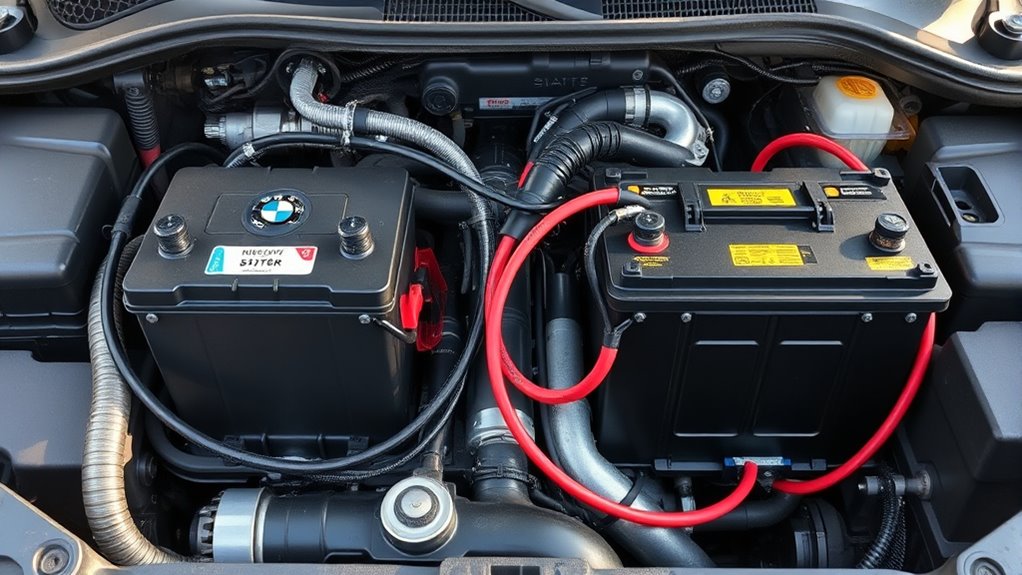
One common mistake is wiring the batteries without considering proper isolation, which can lead to both batteries discharging each other or draining the starter battery when the vehicle is off. To avoid this, keep these points in mind:
- Incorrect isolator wiring: Failing to install the isolator properly can cause batteries to connect or drain unintentionally.
- Using inadequate gauge cables: Thin wires can cause voltage drops and overheating, reducing system efficiency and safety.
- Poor placement of components: Mounting batteries or isolators in vibration-prone areas can damage parts and lead to connection failures.
Frequently Asked Questions
Can I Install a Dual Battery System Myself?
Yes, you can install a dual battery system yourself if you’re comfortable with basic wiring and vehicle maintenance. Start by choosing the right components, like a deep-cycle secondary battery and an isolator. Then, follow step-by-step instructions for securing the batteries, wiring heavy gauge cables, and installing the isolator correctly. However, if you’re unsure about electrical work or vehicle wiring, it’s best to consult a professional to guarantee safety and proper function.
How Long Does a Secondary Battery Typically Last?
A secondary battery typically lasts 3 to 5 years, like a well-tuned engine running smoothly for miles. Its lifespan depends on usage, maintenance, and quality. Regularly check your connections, keep it charged, and avoid deep discharges to extend its life. High-quality deep-cycle batteries can even last longer if properly cared for. So, treat it like a trusted companion, and it’ll serve you reliably on all your adventures.
Is a Dual Battery System Suitable for All Vehicle Types?
Yes, a dual battery system suits most vehicle types, especially those used for off-road adventures, camping, or heavy accessory use. If you rely on multiple electrical devices or need extra power without risking your starter battery, it’s a smart choice. However, for small or economy vehicles, professional assessment is suggested to guarantee proper installation and compatibility. It helps keep your vehicle reliable and ready for any journey.
What Is the Best Way to Monitor Battery Health?
You should install a battery monitor or voltmeter to keep an eye on your battery health. Regularly check the voltage levels, especially when the vehicle is off and running. Use a multi-meter for precise readings or a dedicated monitor with alerts. This way, you’ll catch potential issues early, prevent overcharging or deep discharges, and make certain your batteries stay in good shape for reliable performance.
Do Dual Battery Systems Work With Electric Vehicles?
You might think dual battery systems only suit traditional vehicles, but they can work with electric vehicles too. Although EVs have integrated battery management, adding a secondary system can help power accessories or backup options. Modern designs integrate seamlessly, using smart controllers to manage charging and discharging without affecting the main battery. With proper setup, you can enhance your EV’s capability, ensuring reliable power for your accessories while protecting your primary battery.
Conclusion
A dual battery system is a smart way to power your accessories without risking your starter battery. If you worry about complexity, think of it like a traffic system—your isolator directs power safely, ensuring your main battery stays charged. With proper setup and maintenance, you’ll enjoy reliable power on the road. It’s a simple upgrade that keeps your adventures running smoothly without sacrificing your vehicle’s core performance.