
High-current accessories like amplifiers and large lighting setups can draw dozens of amps, putting serious stress on your vehicle’s electrical system. Smaller devices such as chargers or LED lights usually pull only fractions of an amp, but when you add high-demand gear, voltage drops and wiring issues can occur if not properly managed. If you want to keep your system running smoothly and avoid damage, understanding the typical draws helps—continue exploring to learn how to protect your electrical setup.
Key Takeaways
- High-demand accessories like large amplifiers or lighting systems can draw dozens of amps, stressing the vehicle’s electrical system.
- Small devices such as chargers and LED lights typically draw less than an amp, posing minimal risk when properly wired.
- Overloading circuits with accessories exceeding their recommended amp draw causes voltage drops and potential component damage.
- Proper wiring gauge and fuse sizing are critical to handle accessory loads and prevent overheating or fires.
- Continuous high current draw from accessories can accelerate battery and alternator wear, reducing overall vehicle electrical system lifespan.
Have you ever wondered how much power your vehicle’s accessories draw when they’re turned on? It’s a common question for anyone looking to keep their electrical system in top shape. When accessories like amplifiers, lights, or charging devices are operating, they draw current from your vehicle’s battery, which impacts overall performance and longevity. To understand their impact, you need to consider two key factors: battery voltage and wiring gauge. Battery voltage, typically around 12.6 volts in a healthy system, determines how much electrical pressure is available to power your accessories. When your vehicle is running, this voltage can dip slightly, especially if your battery is aging or undercharged, causing accessories to draw more current to compensate. This increased draw can strain your electrical system if it’s not properly maintained or designed. Additionally, proper electrical system design ensures that accessories operate efficiently and safely without overloading circuits.
Wiring gauge plays a crucial role in managing this power load. The wiring gauge refers to the thickness of the wire—smaller gauge numbers mean thicker wires capable of carrying more current safely. If you use wires that are too thin for your accessories’ amp draw, you risk excessive heat buildup, which can lead to melted insulation or even fires. For high-demand accessories like amplifiers or large lighting setups, using the correct wiring gauge is essential to prevent voltage drops and ensure efficient operation. When wiring is inadequate, voltage can drop significantly across the circuit, causing your accessories to underperform or shut off unexpectedly. Conversely, using the appropriate gauge helps maintain stable voltage levels, reducing the stress on your battery and electrical system.
It’s also important to note that the amp draw of accessories varies widely. Small LED lights or phone chargers may only draw a fraction of an amp, while powerful audio amplifiers can pull dozens of amps when operating at full capacity. Knowing the typical draw of each accessory helps you plan your wiring and fuse setup properly. Properly sizing your wiring gauge and ensuring your battery voltage remains stable can extend the lifespan of your vehicle’s electrical system. Overloading circuits or using inadequate wiring not only reduces efficiency but can also cause damage over time, leading to costly repairs.
Frequently Asked Questions
How Can I Safely Measure Accessory Amp Draws Myself?
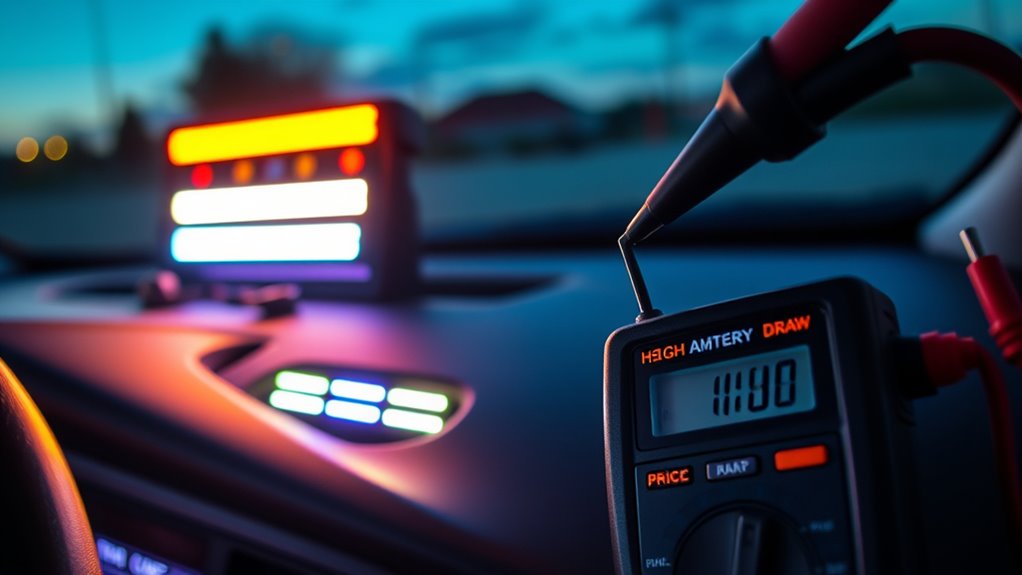
To safely measure accessory amp draws yourself, start by turning off your vehicle and disconnecting the negative battery terminal. Use your multimeter to set up for current measurement, typically on the 10A setting. Connect the multimeter in series with the accessory’s power wire, then turn the vehicle back on. Carefully read the voltage measurement, ensuring your multimeter is correctly set up to avoid damage, and note the current draw.
Do Aftermarket Accessories Typically Draw More Power?
Yes, aftermarket accessories usually draw more power, which can strain your battery capacity and impact fuse ratings. When installing new accessories, you need to verify they’re compatible with your vehicle’s electrical system. Check the fuse ratings and avoid overloading circuits. Proper wiring and using a fuse tap can help manage higher draws, preventing electrical issues and protecting your system from damage caused by excessive accessory power consumption.
What Signs Indicate an Accessory Is Draining Too Much Power?
Your electrical system whispers warnings when an accessory drains too much power, like flickering headlights or dimming interior lights. You might notice increased battery drain or unexplained electrical issues, signaling that a component is overworking your system. If your vehicle struggles to start or if fuses keep blowing, it’s time to check that accessory’s draw. Ignoring these signs is like ignoring a warning bell—your system’s health depends on catching it early.
Can High Amp Draws Damage My Vehicle’s Electrical System?
Yes, high amp draws can damage your vehicle’s electrical system. When accessories pull too much power, it causes excessive battery drain and increases alternator load, potentially overworking components. This strain can lead to premature wear or failure of your battery and alternator, risking electrical system malfunctions or breakdowns. To protect your system, monitor accessory usage, and address any high draw issues promptly.
Are There Recommended Fuses for High-Draw Accessories?
Yes, there are recommended fuses for high-draw accessories to guarantee proper accessory protection. You should select fuse ratings that match your accessory’s current draw, typically found on the device or in its manual. Using the correct fuse rating prevents damage to your vehicle’s electrical system, avoids fuse blowouts, and ensures safe operation. Always choose a fuse with a slightly higher rating than your accessory’s draw, but never exceed the maximum recommended rating.
Conclusion
Knowing which accessories draw the most amps helps you protect your electrical system. Remember, a chain is only as strong as its weakest link—so, avoid overloading circuits or ignoring signs of strain. By staying mindful of your accessory draws, you keep your system running smoothly and prevent costly damage. Think of your electrical system as a garden; with proper care and attention, it’ll flourish rather than wither under the weight of unnecessary loads.