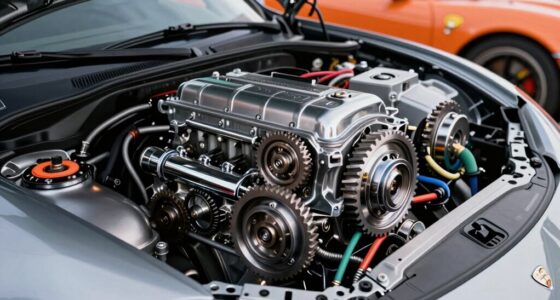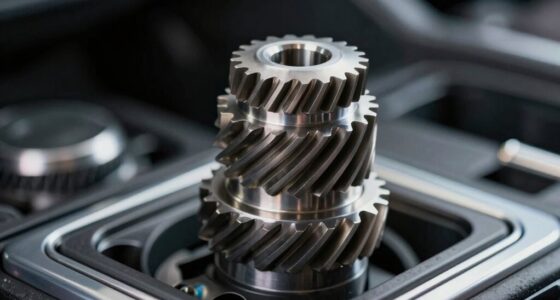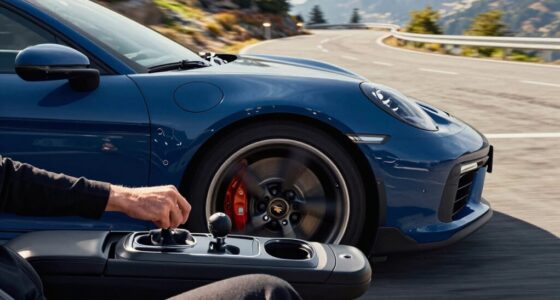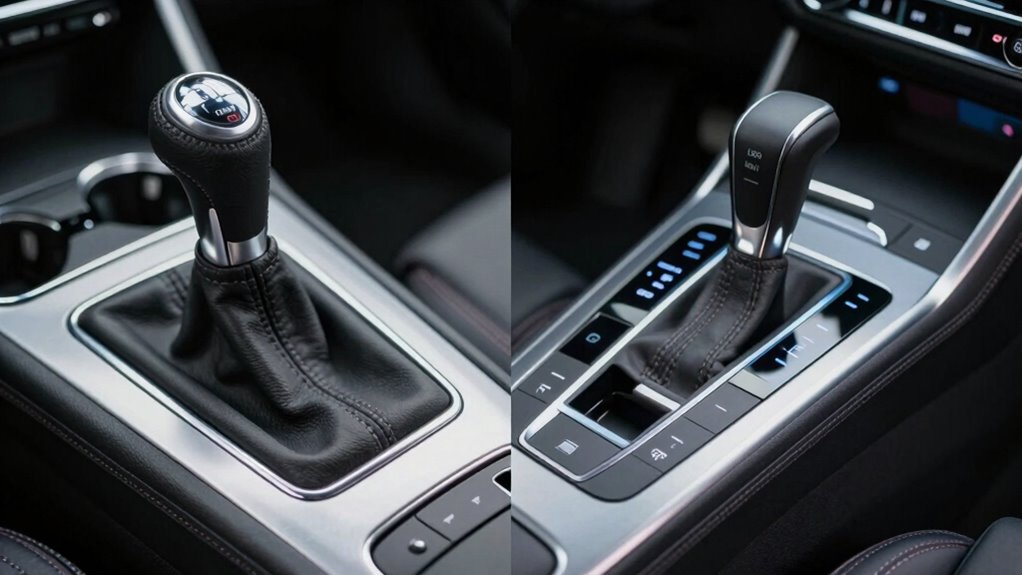
Manual transmissions put you in control by requiring you to operate a clutch and shift gears yourself, offering a engaging driving experience and skill mastery. Dual-clutch systems combine the convenience of automatic shifting with rapid, precise gear changes, boosting efficiency and responsiveness. While manuals are simpler and cheaper to maintain, dual-clutch gearboxes tend to be more complex and costly. To discover how each option suits your driving style and needs, continue exploring more details below.
Key Takeaways
- Manual transmissions offer driver control through clutch operation and gear shifting, providing an engaging driving experience.
- Dual-clutch systems deliver faster, smoother gear changes with higher efficiency and improved fuel economy.
- Manual gearboxes are mechanically simpler and cheaper to repair but require skill to operate smoothly.
- Dual-clutch transmissions are complex, costly, and may need specialized maintenance but offer convenience and performance.
- Choice depends on driver preference for engagement and control versus ease of use and efficiency.
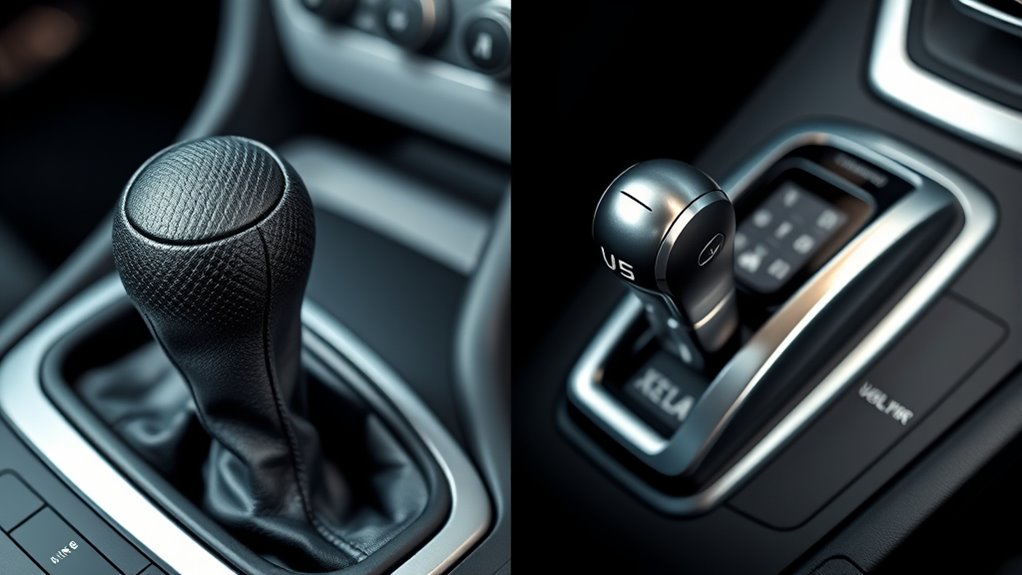
When choosing between manual and dual-clutch transmissions, understanding their differences can help you make an informed decision. Both options influence how you interact with your vehicle’s powertrain, especially when it comes to gear shifting techniques and transmission efficiency. Manual transmissions require you to operate a clutch pedal and shift gears yourself, giving you direct control over the power delivery. This control can be rewarding if you enjoy the engagement of driving, but it also demands a learning curve. Your gear shifting techniques become essential in achieving smooth transitions and maximizing performance, as improper shifts can lead to jerky rides or increased wear. On the other hand, dual-clutch transmissions automate most of the gear changes, combining the benefits of manual control with automatic convenience. They use two clutches to pre-select gears, allowing for lightning-fast shifts that often occur seamlessly without driver input. Transmission technology continues to evolve, making newer systems more reliable and efficient than ever before. In terms of transmission efficiency, dual-clutch systems generally outperform manual transmissions. Because they can shift gears more quickly and precisely, they minimize power loss during gear changes, which improves fuel economy and overall performance. This efficiency is particularly noticeable in stop-and-go traffic or during spirited driving, where rapid gear changes can make a significant difference in responsiveness. Manual transmissions tend to be less efficient because the driver’s gear shifting technique can directly impact how smoothly the transmission operates. Poor technique may cause unnecessary energy loss, increased wear, or delayed shifts, reducing efficiency over time. However, some enthusiasts believe that mastering manual gear shifts can optimize transmission efficiency because you have complete control over when and how gears change, potentially avoiding unnecessary shifts or rev matching errors. Additionally, gear shifting techniques are crucial for achieving optimal performance and longevity of the manual transmission. Proper maintenance practices can also extend the lifespan of manual gearboxes, ensuring smoother operation over many years. While dual-clutch transmissions excel in speed and efficiency, they can be more complex and expensive to repair or replace. They require specialized maintenance and can sometimes jerk or hesitate if the system detects a malfunction. Manual transmissions are often simpler mechanically, which can translate into lower repair costs and easier maintenance, but they demand more active involvement from you during driving. If you value driving engagement and enjoy honing your gear shifting techniques, a manual transmission might suit you best. Conversely, if you prefer convenience, quicker shifts, and better transmission efficiency with less effort, a dual-clutch system offers compelling advantages. Ultimately, your choice depends on your driving style, preference for control, and willingness to learn proper shifting techniques to maximize what your transmission can deliver.
Frequently Asked Questions
Which Transmission Type Is More Environmentally Friendly?
You’ll find that dual-clutch transmissions are generally more environmentally friendly because they offer better fuel efficiency and reduce emissions impact. They shift gears faster and smoother, optimizing engine performance and conserving fuel. Manual transmissions can be eco-friendly too if driven efficiently, but dual-clutch systems usually provide a more consistent, eco-conscious driving experience. Overall, if minimizing your environmental footprint is a priority, a dual-clutch transmission is typically the better choice.
How Do Maintenance Costs Compare Between Manual and Dual-Clutch Transmissions?
You’ll find that maintenance costs for manual transmissions are generally lower, thanks to simpler mechanics and less frequent upkeep. Dual-clutch transmissions, however, tend to have higher costs due to complex components and more frequent maintenance needs. A clear cost comparison shows manual transmissions require fewer repairs and less maintenance frequency, making them cheaper to keep running. If budget matters, manual options often prove to be more economical long-term.
Are Dual-Clutch Transmissions More Prone to Mechanical Issues?
Yes, dual-clutch transmissions can be more prone to mechanical issues, especially clutch wear and hydraulic failure. You might notice clutch wear faster because of the frequent, precise shifts, and hydraulic failure could cause shifting problems or erratic behavior. While they offer quick gear changes, these issues mean you may face higher repair costs and more maintenance compared to manual transmissions. Stay attentive to signs of wear to prevent major problems.
Can Manual Transmissions Be Automated Easily?
Yes, manual transmissions can be automated, but it’s not as simple as removing the clutch pedal and gear shifter. You’d need a sophisticated automated system that manages clutch engagement and gear shifting seamlessly. This technology, called automated manual transmission (AMT), replicates the driver’s actions electronically. While it’s possible, it involves significant modifications and isn’t as common as dual-clutch or fully automatic transmissions.
Which Transmission Offers Better Resale Value?
You’ll find that manual transmissions often have better resale value because they tend to depreciate less, especially among enthusiasts. Factors like transmission depreciation influence how well your car holds its value, and manuals usually appeal to a niche market. Dual-clutch transmissions, while offering smoother shifts, might depreciate faster due to higher repair costs and limited demand. So, if resale value matters most, a manual might be your better choice.
Conclusion
Choosing between a manual and dual-clutch transmission depends on what you value most. If you crave full control and a traditional feel, a manual might suit you better. But if you want quick shifts and effortless driving, a dual-clutch could be your perfect match. Both have their advantages, yet they cater to different driving styles. Ultimately, it’s about what excites you more—feeling the road or letting technology handle the gears.