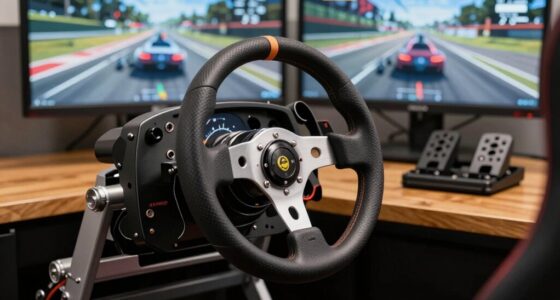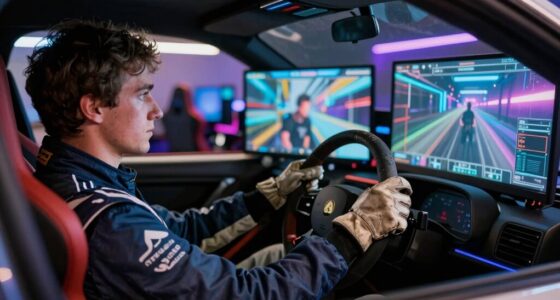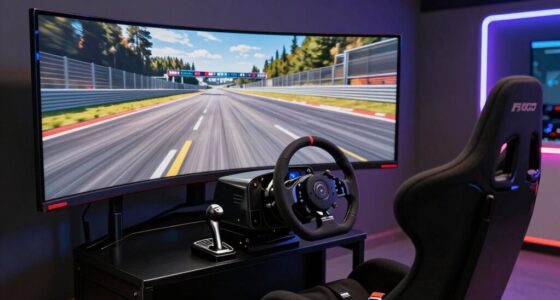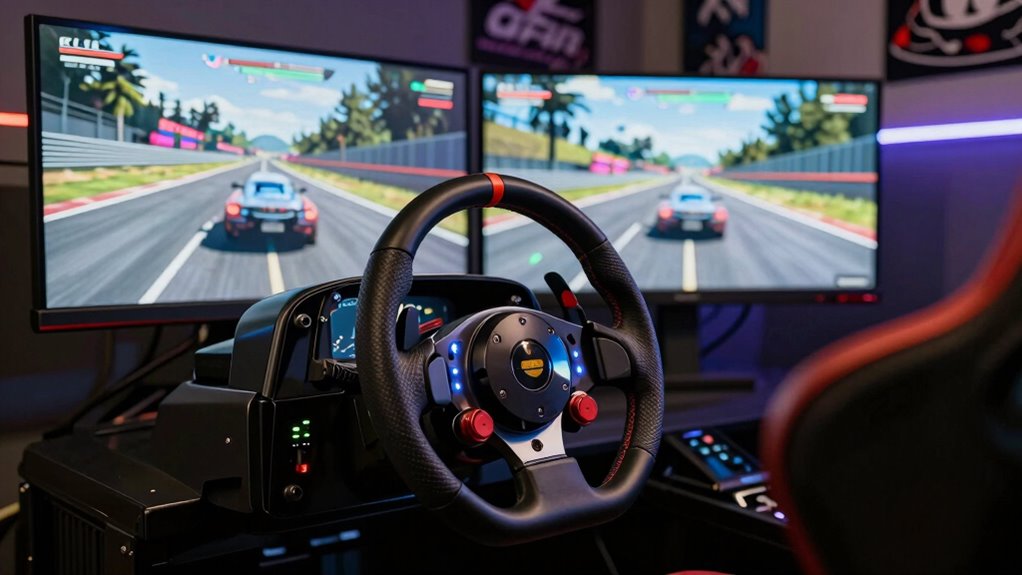

Sim racing is a highly effective driver development tool that helps you improve skills like throttle control, racing lines, and quick decision-making through realistic and data-rich environments. It’s affordable, accessible, and allows you to practice anytime, anywhere, with instant feedback to track your progress. Many pros start with sim racing, as it transfers well to real-world racing by reinforcing muscle memory and racecraft. Keep exploring how it can boost your driving skills even further.
Key Takeaways
- Sim racing offers cost-effective, accessible training with instant, data-driven feedback to improve driving skills consistently.
- Many professional drivers transfer core skills like racing lines and throttle control from virtual to real-world racing.
- It promotes continuous analysis and strategic adjustments, enhancing decision-making and reaction times.
- Advanced simulators create immersive environments, enabling remote coaching and personalized skill development.
- Sim racing accelerates skill transfer, builds foundational techniques, and fosters strategic thinking in a safe, versatile setting.
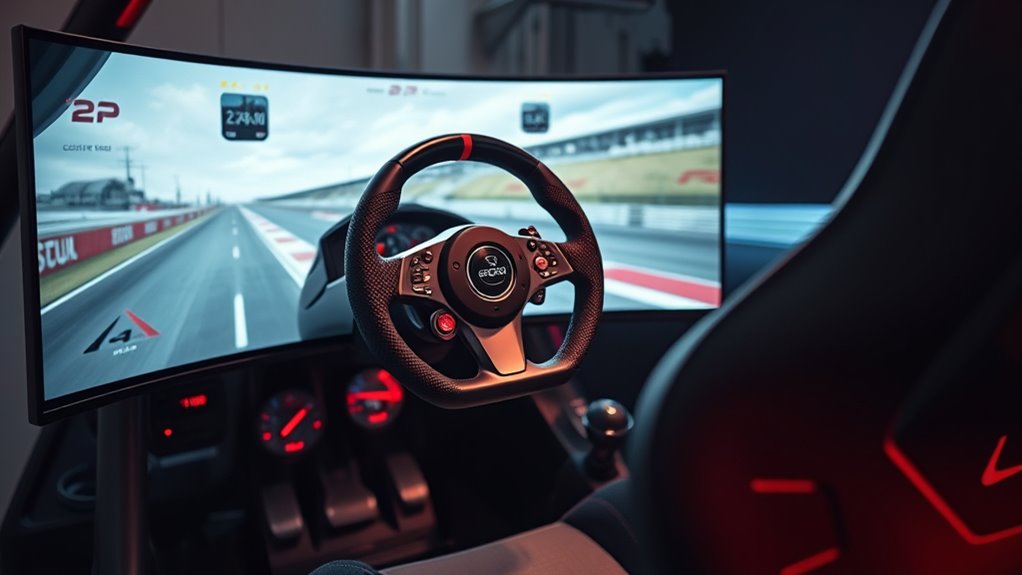
Sim racing has become an increasingly valuable tool for driver development, offering a cost-effective and accessible way to hone skills. Unlike traditional training methods, it allows you to practice anytime and anywhere, making consistent improvement more achievable. One of the key benefits of sim racing is the virtual feedback it provides. When you race on a high-quality simulator, you receive instant, data-driven insights into your performance—like lap times, braking points, and steering inputs. This virtual feedback helps you identify weaknesses and track progress over time, creating a clear pathway for skill development. It’s similar to having a personal coach who’s constantly analyzing your every move and offering suggestions for improvement.
Another advantage is how well skills transfer from the virtual environment to real-world driving. Many professional drivers started with sim racing, and they often testify that the skills they developed—such as car control, racing lines, and situational awareness—translate effectively onto the track. The core principles of racing, like throttle control, braking techniques, and understanding car dynamics, are consistent across both worlds. When you practice in a simulator, you’re reinforcing muscle memory and decision-making processes that are essential during real races. The precision and consistency you develop in a virtual setting can boost your confidence and performance in actual cars. Plus, since simulators can recreate a wide range of conditions—rain, night racing, different track surfaces—you gain experience handling diverse scenarios without the risks or costs associated with real-world testing.
Sim racing’s virtual feedback also encourages analytical thinking. You’re constantly analyzing your laps, adjusting your approach, and experimenting with different techniques to see what works best. This iterative process accelerates skill transfer, as you learn to adapt quickly and make smarter decisions. Over time, these lessons stick, making your reactions sharper and your racing more polished. Additionally, the immersive nature of modern simulators enhances focus and concentration, helping you develop mental stamina that’s essential during actual races. The combination of real-time feedback and the ability to simulate countless racing conditions creates a detailed training environment. It allows you to build foundational skills, refine techniques, and develop racecraft in a way that’s both efficient and effective. Moreover, emerging cloud-based simulation platforms are expanding access to high-quality training environments, leveraging innovative European cloud servers to deliver sustainable and secure virtual racing experiences. These platforms also facilitate remote coaching, enabling drivers to receive expert guidance regardless of their location. Incorporating advanced feedback systems can help track your progress even more precisely and tailor training programs to your specific needs.
Frequently Asked Questions
How Does Sim Racing Compare to Real-World Driver Training?
Sim racing offers a cost-effective way to practice driving skills, but it can’t fully match real-world driver training. You get virtual feedback that helps improve your reflexes and decision-making, but hardware limitations like lack of physical G-forces and tactile feedback mean it’s not completely realistic. While useful for theory and quick reflex development, it’s no substitute for actual driving experience on real tracks.
What Skills Developed in Sim Racing Transfer Best to Actual Racing?
You develop core skills like vehicle control and reaction time in sim racing that transfer directly to real racing. Your ability to handle precise steering, braking, and throttle inputs improves your overall car control under various conditions. Additionally, quick reactions help you respond faster to unexpected situations on the track. These skills build a strong foundation, making you more confident and capable when you hit the actual raceway.
Are There Professional Drivers Who Started With Sim Racing?
Yes, many professional drivers started with sim racing. You can compete in virtual championships, showcasing your skills and gaining recognition. Success in these events often leads to sponsorship opportunities, helping you shift to real-world racing. By excelling in virtual competitions, you demonstrate your talent and dedication, making it easier to catch the eye of teams and sponsors who value proven performance in digital racing environments.
How Affordable Is Sim Racing Compared to Traditional Driver Development Programs?
Sim racing is considerably more affordable than traditional driver development programs. With a modest investment in a good setup, you get access to high-quality simulations, reducing costs associated with travel, team fees, and track time. The cost comparison shows that sim racing offers an accessible entry point for aspiring drivers, making investment affordability a major advantage. You can develop your skills effectively without breaking the bank, unlike conventional racing paths.
Can Sim Racing Help Improve Driver Mental Resilience?
Yes, sim racing can boost your mental resilience. Studies show that drivers who train virtually improve their focus by up to 30%. By engaging in intense virtual races, you develop better stress management skills, helping you stay calm under pressure. It trains your mind to stay sharp and maintain virtual focus during challenging situations, which translates to real-world racing. This mental conditioning makes you more resilient and better prepared for high-stakes scenarios.
Conclusion
So, if you think sim racing is just a game, think again. It’s like having a secret weapon that can turn you into a racing legend overnight. With every lap, you’re sharpening skills that would take years on real tracks. It’s the fastest, most intense way to boost your driving, making you feel unstoppable. Embrace the virtual world, because someday, it might just make you a real-world champion—faster than you ever imagined.