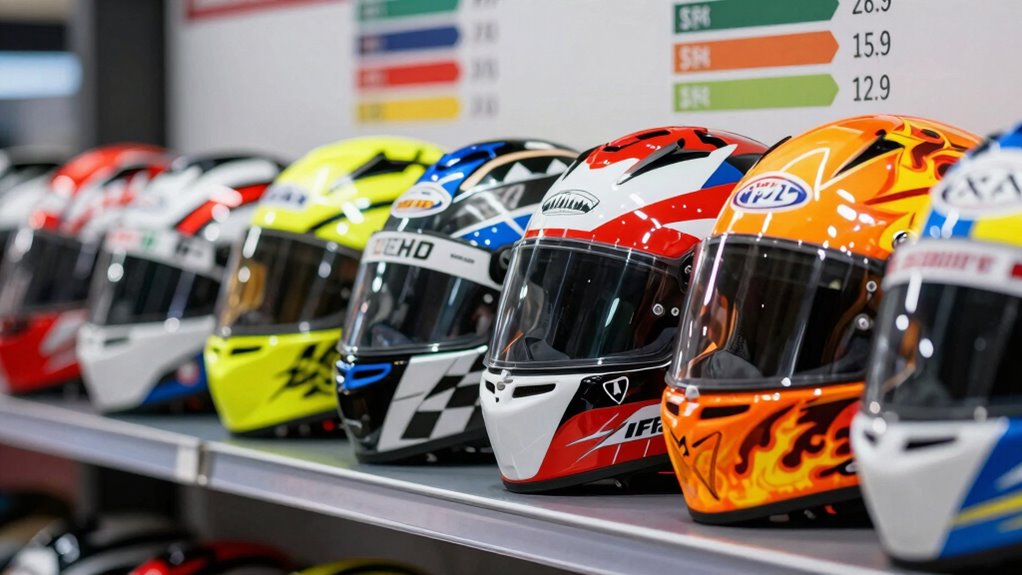

Racing helmet safety ratings rely on strict standards from organizations like Snell, FIA, and DOT, ensuring helmets withstand high-impact crashes. Modern helmets use advanced materials such as carbon fiber and fiberglass to offer lightweight but strong protection. They feature reinforced impact zones, multi-layer foam padding, and ventilation systems for comfort and safety. If you want to understand how these ratings improve your protection and what to look for, there’s more to discover below.
Key Takeaways
- Helmets are tested and certified by organizations like Snell, FIA, and DOT to meet impact resistance and safety standards.
- Advanced materials such as carbon fiber and fiberglass composites enhance impact absorption and reduce weight for better protection.
- Impact zones are strategically reinforced within the helmet shell to improve energy dissipation during collisions.
- Certification labels indicate helmets have passed rigorous impact, penetration, and retention tests.
- Continuous research and testing updates ensure helmets incorporate the latest safety technology and standards.
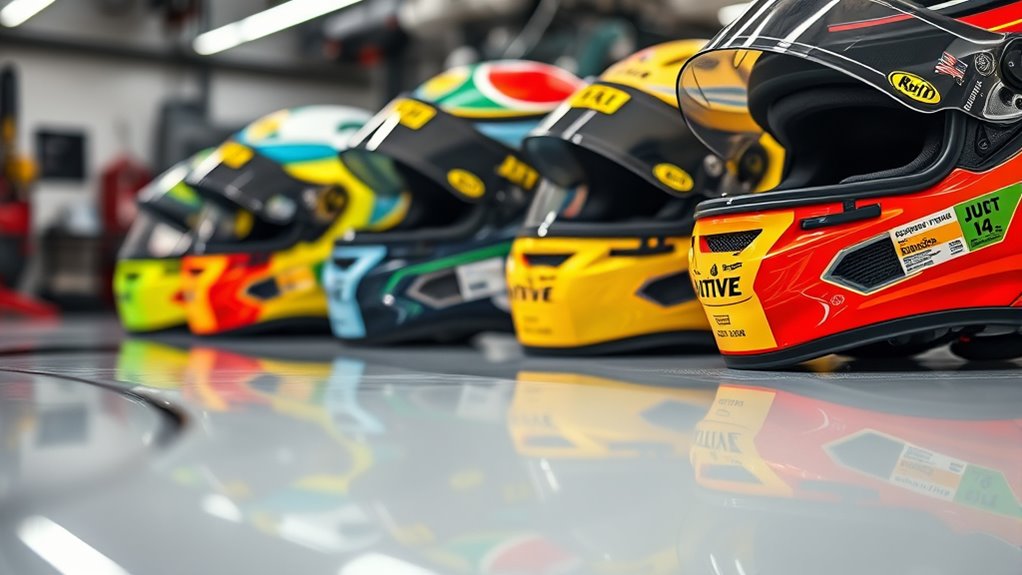
When choosing a racing helmet, understanding safety ratings is crucial to guarantee your protection on the track. You need to be confident that your helmet meets the highest standards of safety, which begins with knowing about helmet technology and safety certification standards. Modern helmet technology incorporates advanced materials and construction techniques designed to absorb impact and reduce rotational forces, ensuring maximum protection during a crash. Features like reinforced liners, multi-density foam, and specialized venting systems are all part of the evolution that makes helmets safer than ever before. Knowledge of helmet certification standards allows racers to make informed decisions about their safety gear. Safety certification standards are the benchmarks that verify a helmet’s ability to protect you in high-impact situations. Organizations like Snell Memorial Foundation, FIA, and DOT set these standards, each with specific testing protocols. When a helmet bears the Snell or FIA label, you can trust that it has undergone rigorous testing for impact resistance, penetration, and retention system strength. These standards are updated regularly to reflect new research and technological advancements, so choosing a helmet with current certification guarantees you’re getting reliable protection. Additionally, ongoing innovations in helmet safety technology continue to improve impact absorption and overall performance. Advances in helmet materials such as carbon fiber and fiberglass composites have contributed to developing lightweight yet durable shells, which help reduce fatigue during long races. Modern helmet shells are also designed with impact zones that are strategically reinforced to maximize energy absorption in critical areas, enhancing safety during collisions. Continuous research and development in helmet testing methods ensure that safety standards keep pace with emerging risks and technological progress. Helmet technology has advanced considerably, allowing manufacturers to develop lightweight yet durable shells that don’t compromise safety. Carbon fiber and fiberglass composites are common materials that provide strength without adding unnecessary weight, helping you stay comfortable during long races. Inside, multi-layered foam padding and energy-absorbing liners work together to dissipate crash forces, reducing the risk of head injuries. Some helmets also incorporate innovative ventilation systems to keep you cool, which is essential when you’re pushing your limits on the track.
Frequently Asked Questions
How Often Should I Replace My Racing Helmet?
You should replace your racing helmet every five years, following helmet longevity and replacement guidelines. Even if it looks fine, the materials can break down over time, reducing protection. After a crash or significant impact, replace it immediately. Regularly inspect your helmet for cracks or damage, and adhere to manufacturer recommendations. Staying proactive ensures your safety, so don’t delay replacing your helmet when needed.
Are Carbon Fiber Helmets Safer Than Fiberglass?
Carbon fiber helmets are generally safer than fiberglass because they’re lighter and offer better helmet ventilation, reducing fatigue and overheating during races. The lighter weight improves comfort and minimizes strain on your neck, while enhanced ventilation keeps you cool and alert. This combination helps you stay focused and protected. Remember, always choose a helmet that meets safety standards, regardless of the material, to make certain of maximum protection on the track.
Do Different Racing Series Require Specific Helmet Standards?
You’ll find that different racing series do require specific helmet standards, often dictated by helmet certification requirements. For example, some series mandate FIA or Snell certifications, ensuring helmets meet strict safety criteria. This means you must follow helmet maintenance routines to keep your gear compliant and effective. Did you know that proper helmet maintenance can extend safety ratings by up to 20%? Always check your series’ specific standards to stay protected on the track.
How Do I Properly Fit My Racing Helmet?
To properly fit your racing helmet, first guarantee it sits snugly without causing discomfort. It should fit evenly around your head, with your eyebrows just below the helmet’s edge. Check helmet ventilation to stay cool and prevent overheating, and pick a lightweight helmet to reduce fatigue during long races. Shake your head gently to confirm it stays in place, and make sure the chin strap is secure but comfortable.
What Are the Latest Safety Innovations in Helmet Technology?
Imagine your helmet as a futuristic shield, evolving with cutting-edge tech. You’ll notice new safety innovations like advanced helmet material comparisons, offering lighter yet stronger protection, and aerodynamic designs that slice through air like a jet. These innovations reduce drag and improve stability, keeping you safe and comfortable at high speeds. Embrace these advancements, and your helmet becomes a seamless blend of science and safety, ready to face any challenge on the track.
Conclusion
When choosing a racing helmet, safety ratings should be your top priority. Did you know that helmets with higher safety ratings can reduce head injury risk by up to 50%? This statistic highlights how essential it is to select certified, high-quality gear. Remember, your safety depends on it. Always check the ratings before racing, and don’t compromise on quality—your head’s safety is worth it. Stay protected and race smart!