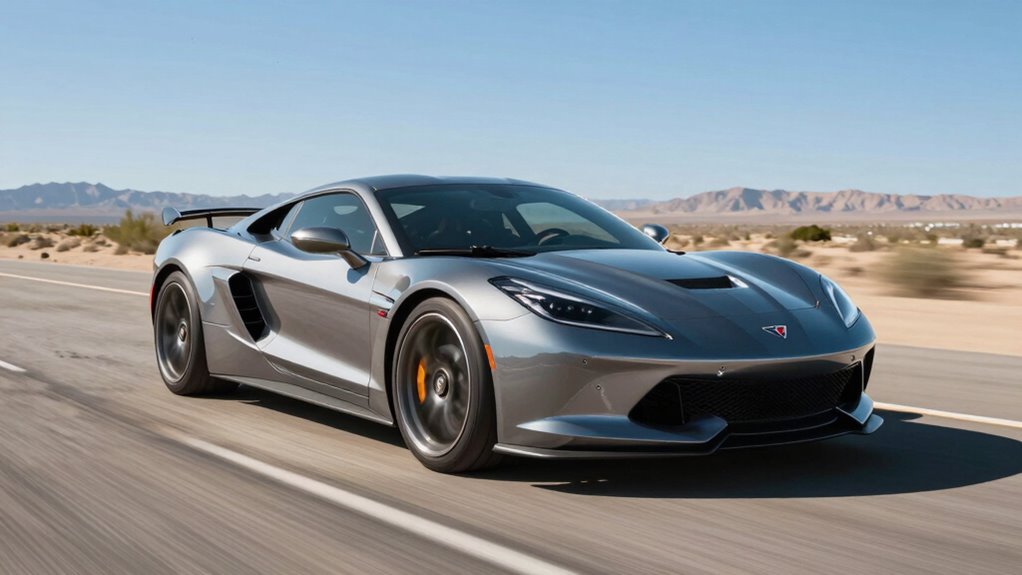

Horsepower is what mainly determines your vehicle’s top speed, as it overcomes air resistance at high speeds. Torque influences acceleration and how quickly you get there, especially from a standstill. Both work together for excellent performance, with horsepower pushing for high speeds and torque aiding quick starts. To truly understand which matters more for your driving style, explore how power curves, gear ratios, and vehicle design influence speed further. Keep going to discover how these factors combine to maximize your vehicle’s potential.

Get business pricing on garage and car supplies
- Business-only prices and quantity discounts
- Tax-exempt purchasing
- Multiple users, one account, clear invoices
Key Takeaways
- Horsepower determines the vehicle’s top speed by overcoming aerodynamic drag at high RPMs.
- Torque influences acceleration and initial responsiveness, affecting how quickly a vehicle reaches top speed.
- Both high horsepower and torque are essential for optimal speed, depending on vehicle design and intended performance.
- Power curves show how horsepower and torque vary with engine speed, impacting overall speed potential.
- Proper gear ratios and vehicle aerodynamics are crucial to translating engine power and torque into maximum speed.
Understanding the Basics of Horsepower and Torque
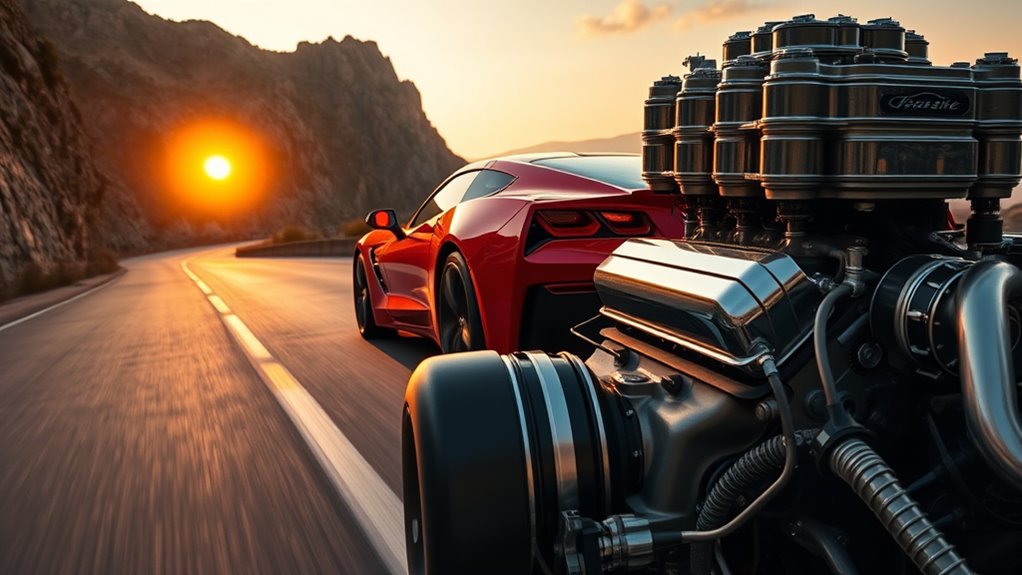
Understanding the basics of horsepower and torque is essential for grasping how engines perform. Horsepower measures an engine’s ability to do work over time, impacting acceleration and top speed, but it also influences fuel efficiency. Engines with higher horsepower often consume more fuel, leading to increased fuel costs. Torque, on the other hand, reflects the engine’s twisting force, affecting how quickly a vehicle can start moving and handle heavy loads. Both factors can influence maintenance costs: high-performance engines with more horsepower or torque may require more frequent repairs or upgrades. Additionally, color accuracy plays a role in how engines and vehicle displays present information, which can enhance driver awareness and safety. Understanding the common repairs involved in maintaining high-horsepower or high-torque engines can help prevent costly breakdowns and ensure optimal performance. Recognizing the performance impact of these engine characteristics enables better vehicle selection based on individual needs. By understanding these concepts, you can better assess how an engine’s power affects your vehicle’s performance, fuel consumption, and long-term upkeep. Moreover, understanding engine tuning can optimize how horsepower and torque are delivered for different driving needs. Exploring engine efficiency can also reveal ways to maximize performance while minimizing fuel consumption.
How Horsepower Affects Top Speed

Horsepower directly influences a vehicle’s top speed because it determines how quickly the engine can produce the power needed to overcome air resistance and other forces at high speeds. While many horsepower myths suggest it’s the sole factor, actual top speed depends on how horsepower interacts with aerodynamics and gearing. Checking torque charts can help clarify this relationship, showing how torque and horsepower work together at different RPMs. Remember, a high horsepower number alone doesn’t guarantee a faster top speed if the vehicle’s design isn’t optimized. To maximize top speed, focus on engines with balanced horsepower output and suitable gearing. Additionally, aerodynamics play a crucial role in how efficiently a vehicle can cut through the air at high velocities. Understanding these nuances helps you see that horsepower’s role is essential but not the only element affecting how fast your vehicle can go. Recognizing how engine performance interacts with these factors can further refine your understanding of vehicle speed capabilities. Moreover, considering power-to-weight ratio is vital, as it directly impacts acceleration and top speed, emphasizing the importance of overall vehicle design. Incorporating vehicle tuning can also optimize how horsepower and torque translate into real-world speed.
The Role of Torque in Acceleration

Torque directly influences how quickly your vehicle accelerates and how much power the engine produces. Higher torque means faster acceleration and better performance in demanding conditions. To get the most out of your engine, it’s important to understand how to measure torque’s effectiveness in real-world driving. Understanding water resistance can also play a role in overall vehicle performance and efficiency. Additionally, considering sector performance metrics can help you evaluate how different vehicle components or systems contribute to overall performance. Recognizing how engine efficiency impacts torque output can further optimize vehicle performance and fuel economy. Moreover, factors like maintenance costs and operational considerations can affect how well your vehicle maintains optimal torque levels over time. Analyzing performance data can provide deeper insights into how torque impacts speed and reliability in various conditions.
Torque’s Impact on Speed
When it comes to acceleration, torque plays an essential role by providing the immediate rotational force needed to start moving and increase speed. High torque allows your vehicle to quickly overcome inertia, giving you faster acceleration. This impact on speed depends on factors like engine cooling, which keeps torque output consistent during demanding drives, and transmission efficiency, ensuring that torque is effectively transferred to the wheels. Understanding this connection helps you appreciate how torque influences your vehicle’s responsiveness. Additionally, smart engine management systems can optimize torque output for different driving conditions, further enhancing performance. Proper cooling systems help maintain consistent torque levels during intense driving, preventing power drops that could hinder acceleration. Recognizing the importance of precious metals in diversification strategies can also be crucial for long-term financial stability. Effective thermal management is vital for maintaining optimal torque output during high-performance driving, ensuring consistent acceleration and responsiveness. Moreover, engine tuning techniques can fine-tune torque delivery for specific performance needs, maximizing speed and efficiency.
Acceleration and Engine Power
Understanding how engine power influences acceleration reveals the crucial role torque plays in getting your vehicle moving quickly. Torque provides the immediate rotational force needed to start moving, especially from a standstill. When your engine is properly tuned, it optimizes torque delivery, improving acceleration without sacrificing fuel efficiency. Higher torque means you can accelerate faster, making your vehicle more responsive in everyday driving and racing scenarios. Keep in mind, boosting torque through engine tuning can sometimes impact fuel economy, so balance is key. To better understand, consider this table:
| Torque Level | Acceleration Effect | Fuel Efficiency Impact |
|---|---|---|
| Low | Slow response | Better economy |
| Moderate | Smooth acceleration | Balanced |
| High | Rapid acceleration | Reduced economy |
Additionally, choosing the right vehicle components, like engine parts, can significantly influence your torque output and overall performance. Understanding engine tuning techniques can further enhance your vehicle’s responsiveness and power delivery. Proper performance upgrades can also help you optimize torque for your specific driving needs. Moreover, regular maintenance of engine components ensures optimal torque and engine performance over time. Maintaining proper engine oil levels is also essential to preserve torque and prevent performance drops.
Measuring Torque Effectiveness
To effectively gauge how torque influences your vehicle’s acceleration, it’s essential to measure its effectiveness accurately. Understanding torque curves helps you see how torque varies across different engine speeds, revealing where your engine performs best. Monitoring engine efficiency in relation to torque output shows how well your engine converts fuel into usable power, impacting acceleration. By analyzing these factors, you can determine if your vehicle produces ample torque at low RPMs for quick starts or maintains steady torque for sustained acceleration. Additionally, evaluating torque curve analysis can provide deeper insights into your engine’s performance characteristics. Regularly assessing engine efficiency ensures that torque production isn’t sacrificing fuel economy. Incorporating performance metrics into your vehicle assessments allows for more precise tuning and better understanding of your engine’s capabilities. Using torque effectiveness data can help identify optimal driving conditions and improve overall acceleration performance.
Comparing Horsepower and Torque in Different Types of Vehicles
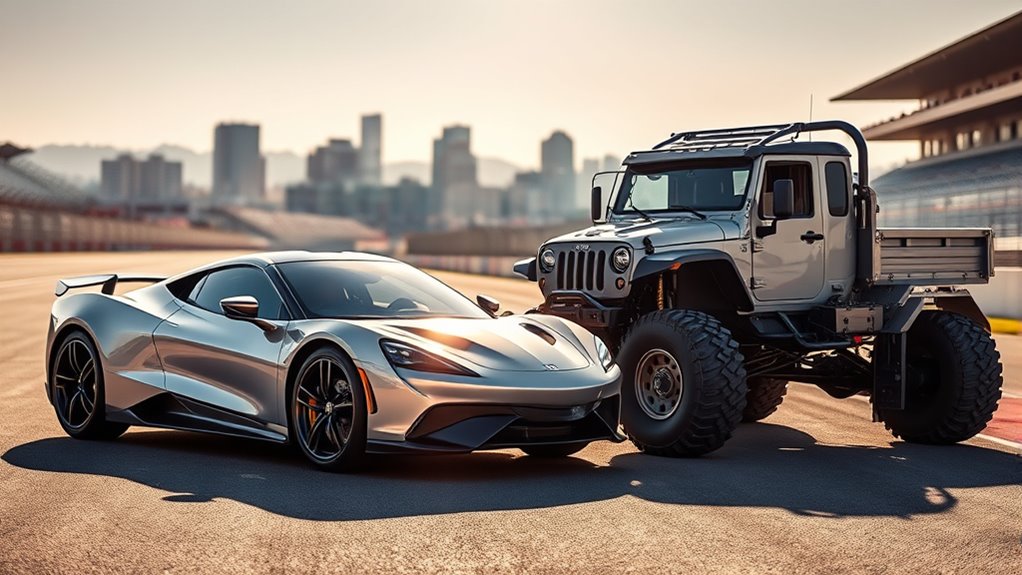
Different types of vehicles rely on varying balances of horsepower and torque to perform ideally. For example, electric motors deliver instant torque, making electric cars quick off the line, even with moderate horsepower. Hybrid systems combine internal combustion engines with electric motors, balancing torque and horsepower for efficiency and smooth acceleration. Sports cars often prioritize high horsepower to achieve top speeds, while trucks and SUVs emphasize torque for towing and hauling. Electric vehicles typically have high torque at low speeds, providing rapid acceleration. Conversely, traditional gasoline engines may produce more horsepower at higher RPMs. Understanding these differences helps you appreciate how each vehicle’s design optimizes performance based on its primary function, whether it’s speed, towing, or efficiency. Additionally, sound therapy techniques and auditory feedback methods are employed in speech therapy to improve communication skills, highlighting the importance of tailored interventions for different needs.
How Power Curves Impact Performance
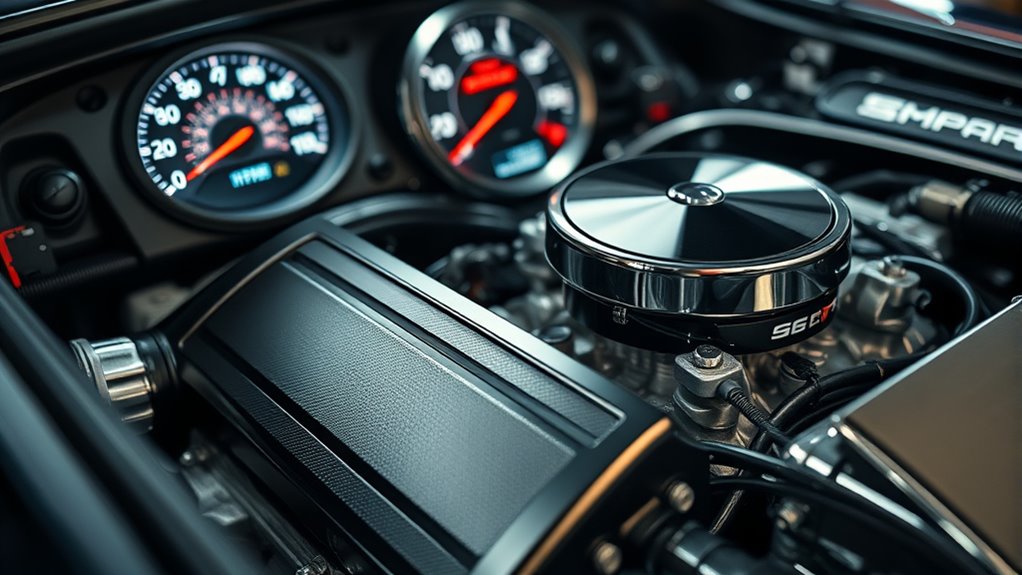
Power curves show how a vehicle’s power output varies across different engine speeds, directly influencing its performance. When you understand this, you can optimize engine tuning to maximize power at key RPMs and improve acceleration. A smooth power curve ensures consistent performance, especially at high speeds, by reducing the effects of aerodynamic drag.
- Adjusting engine tuning can shift the power curve for better responsiveness.
- Recognizing where peak power occurs helps in selecting suitable gear ratios.
- Managing airflow and exhaust flow can flatten the power curve, enhancing top-end speed.
The Importance of Gear Ratios and Power Delivery

Gear ratios play a vital role in how effectively your vehicle delivers power to the wheels. They control how engine torque is transformed into wheel torque, impacting acceleration and top speed. A well-chosen gear ratio ensures smooth power delivery and optimal performance. For example:
| Gear Ratio | Effect on Power Delivery |
|---|---|
| Low | Better acceleration, less top speed |
| High | Higher top speed, slower acceleration |
Choosing the right gear ratio depends on your driving goals. If you want quick acceleration, opt for a lower ratio. For higher top speeds, a higher ratio works better. Proper gear ratios maximize power delivery, allowing your car to perform at its best without sacrificing efficiency or responsiveness.
Real-World Examples of Speed in Various Cars
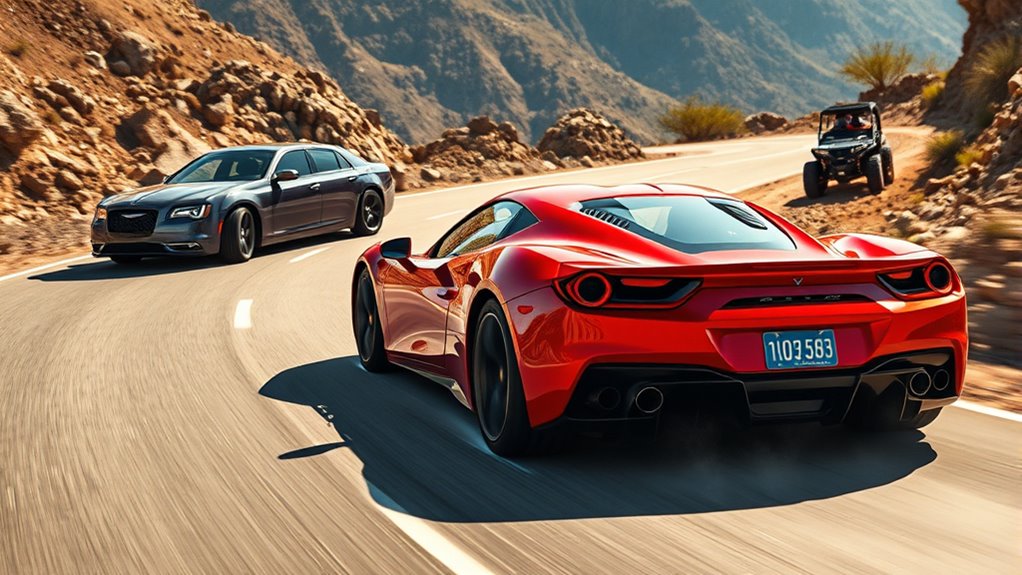
Have you ever wondered how some cars achieve incredible speeds while others lag behind? It’s often a mix of horsepower, torque, and design choices. For example, sports cars like the Porsche 911 showcase high horsepower, enabling rapid acceleration and top speeds. Luxury sedans, such as the Mercedes-Benz S-Class, emphasize comfort and luxury interiors but still deliver impressive speed thanks to efficient power delivery. Meanwhile, electric vehicles like the Tesla Model S combine instant torque with smooth handling, maximizing speed while maintaining fuel efficiency benefits through advanced technology.
- High-performance engines boost top speeds in sports cars
- Luxury interiors enhance driver experience without sacrificing speed
- Fuel-efficient models often optimize torque for better acceleration and range
How to Interpret Vehicle Specifications
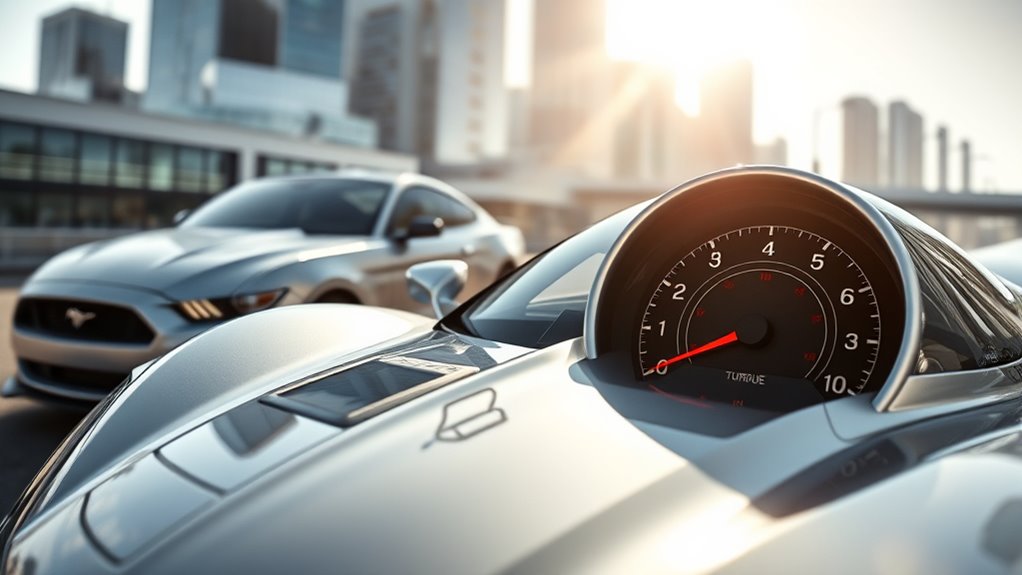
Understanding vehicle specifications helps you see what a car can really do beyond just looks and price. When you look at engine efficiency, it reveals how well the engine converts fuel into power, affecting both performance and longevity. Fuel economy indicates how far you can go on a gallon of gas, which is vital for cost savings and environmental impact. Pay attention to horsepower and torque ratings—they tell you about acceleration and towing capacity. Also, check the engine size and type, as these influence efficiency and overall performance. By interpreting these specs, you gain a clearer picture of a vehicle’s capabilities, ensuring you choose a car that matches your driving style and needs. This knowledge helps you make smarter, more informed decisions.
The Synergy Between Horsepower and Torque

Horsepower and torque work together to define a vehicle’s performance, each playing a pivotal role in how your car accelerates and handles workload. While horsepower measures the power output over time, torque reflects the twisting force that gets your vehicle moving. Understanding their synergy helps you see beyond horsepower myths and torque misconceptions. For example, high torque at low RPMs can improve acceleration from a standstill, while sustained horsepower maintains speed. Recognizing this balance allows you to choose vehicles suited for your driving needs.
- Torque provides initial acceleration, while horsepower sustains top speed
- Misconceptions often oversimplify their relationship, causing confusion
- Both are essential for overall vehicle performance, not just one or the other
Factors That Maximize a Vehicle’s Speed Potential
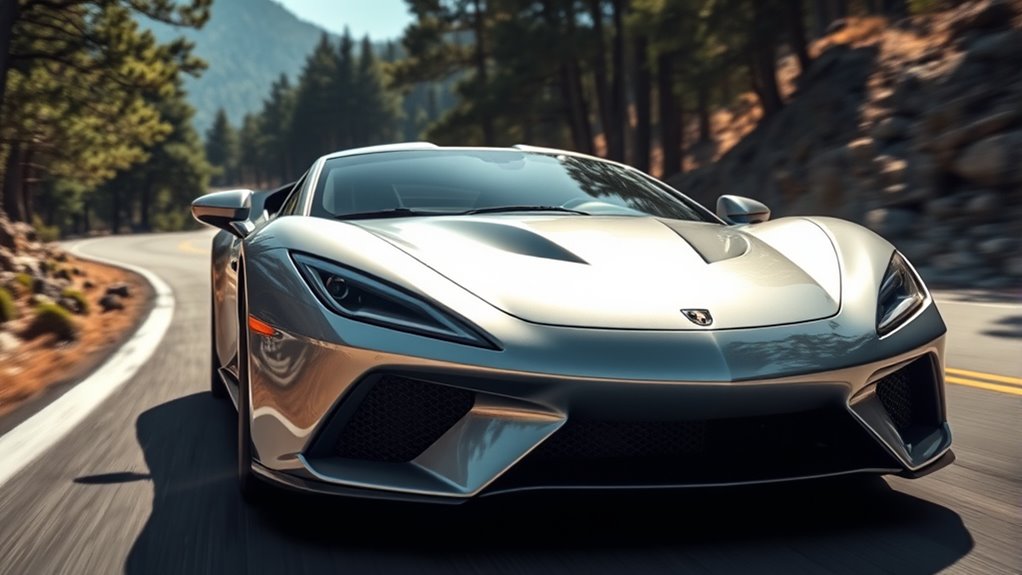
Maximizing a vehicle’s speed potential involves optimizing several key factors that work together to deliver peak performance. Two critical elements are aerodynamic efficiency and tire grip. Improving aerodynamic efficiency reduces drag, allowing your vehicle to cut through the air more easily. Tire grip ensures better traction, translating to faster acceleration and better handling at high speeds. To visualize this, consider the following:
| Factor | Effect | Optimization Tip |
|---|---|---|
| Aerodynamic efficiency | Reduces drag, boosts top speed | Use low-drag body designs |
| Tire grip | Enhances acceleration and handling | Choose high-performance tires |
| Power delivery | Guarantees effective transfer of energy | Tune engine for smooth power output |
Focusing on these factors helps access your vehicle’s maximum speed potential.
Frequently Asked Questions
Can a Car Have High Horsepower but Low Torque?
Yes, your car can have high horsepower but low torque. This often results in a louder engine noise and less low-end power, making acceleration feel less responsive. You might notice it uses more fuel efficiency at higher speeds, but struggles with quick starts or climbing hills. So, if you want quick acceleration and better low-speed performance, focus on both horsepower and torque, not just one or the other.
How Do Modifications Affect Horsepower and Torque?
Think of your engine as a musical instrument, where modifications like engine tuning and upgraded exhaust systems are your tuning pegs and new strings. These tweaks can boost horsepower by making your engine sing louder and more efficiently, while also enhancing torque by giving you that instant punch. When you modify your car, you’re fine-tuning its performance, allowing it to release more power and torque, ultimately making it faster and more responsive on the road.
Is Horsepower More Important Than Torque for Racing?
Horsepower is more important than torque for racing because it directly impacts your top speed and acceleration. With better engine efficiency and turbocharging technology, you can enhance horsepower to maximize your vehicle’s performance. While torque helps with initial acceleration, high horsepower ensures you maintain impressive speeds on the straightaways. Focus on increasing horsepower through modifications to achieve faster lap times and better overall racing results.
How Does Vehicle Weight Influence Horsepower and Torque Needs?
Think of your vehicle as a sprinter carrying a backpack. When weight increases, you need more horsepower and torque to overcome aerodynamic drag and keep pace. Heavier cars demand higher power to accelerate efficiently, especially considering transmission efficiency. Without enough horsepower and torque, you’ll struggle against resistance, making weight a critical factor in tuning your vehicle’s performance for speed.
What Is the Relationship Between Engine Size and Power Output?
You’ll find that larger engine displacement generally produces more power because it allows for greater air and fuel intake, boosting overall output. This increases power density, meaning more power per unit of engine size. As a result, bigger engines tend to generate higher horsepower, giving you more speed and acceleration. However, efficiency and torque also matter, so it is crucial to balance engine size with other factors to get the best performance.
Conclusion
Understanding the balance between horsepower and torque helps you choose the right vehicle for your speed needs. Did you know that the Bugatti Chiron delivers 1,479 horsepower, allowing it to reach 60 mph in just 2.4 seconds? By focusing on both factors and how they work together, you can unleash your car’s full potential. Remember, it’s not just about raw power—it’s about how you use it for maximum speed and performance.
Evergreen bestsellers Picks
bestsellers
As an affiliate, we earn on qualifying purchases.