To re-spool a winch rope tightly without damage, make certain the winch is off and the rope is free of tangles. Keep steady tension as you guide the rope onto the drum, using a tensioner or brake if available. Guide the rope to stay centered, avoiding overlaps and twists, and layer it evenly for durability. If you follow these steps carefully, you’ll prevent damage while achieving a secure, tight spool. Learn more to master perfect spooling techniques.
Key Takeaways
- Turn off the winch and inspect the rope for damage before spooling.
- Apply steady, moderate tension during winding to prevent slack and bunching.
- Use built-in guides or rollers to keep the rope centered and aligned on the drum.
- Layer the rope evenly from the center outward, avoiding overlaps or twists.
- Periodically check for smooth, even layering, and secure the rope after spooling to prevent damage.
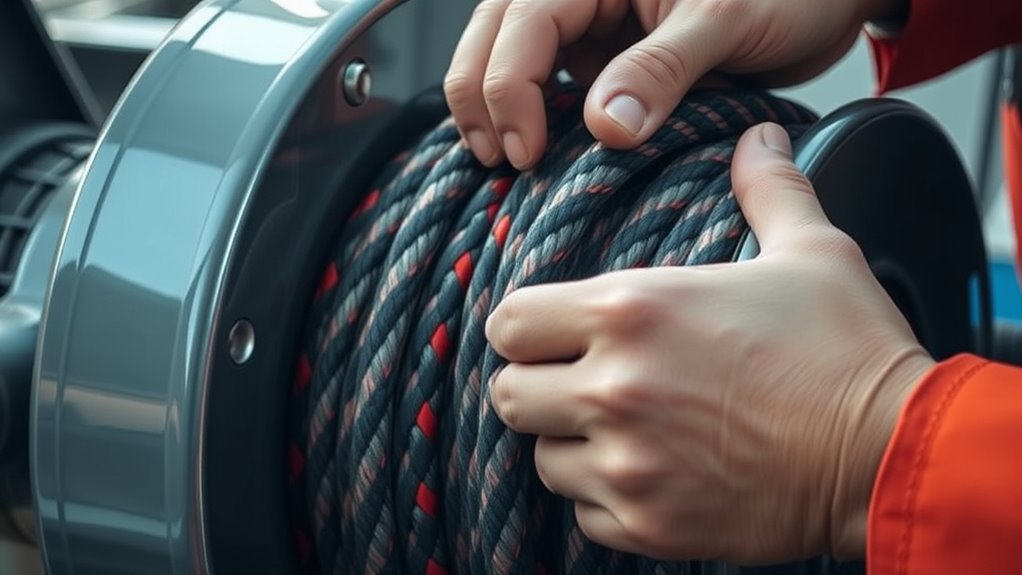
When spooling a winch, it’s essential to do it correctly to guarantee smooth operation and prevent damage. Proper spooling ensures that the rope maintains consistent tension and that the spool remains aligned, which are critical for the longevity and safety of your equipment. If you neglect these aspects, you risk creating uneven wear, increasing the chance of rope fraying, or even damaging the winch itself.
Proper spooling maintains tension and alignment, ensuring safety and extending your winch’s lifespan.
Start by making sure the winch is off and the rope is free of tangles or knots. When you begin spooling, pay close attention to the tension in the rope. You want it tight enough to stay snug against the spool, but not so tight that it causes unnecessary strain. A loose rope can slip or bunch up, leading to uneven spooling, while over-tensioning can put undue stress on the cable and the winch drum. To get this right, apply steady, moderate tension as you wind the rope onto the spool, ensuring it feeds smoothly without slack or resistance.
Next, focus on spool alignment. Keeping the rope aligned properly on the drum is essential for even spooling. If the rope starts to drift to one side, it can cause uneven layers that might lead to tangles or damage. To prevent this, guide the rope carefully as it feeds onto the spool, maintaining a consistent path across the width of the drum. Many winches have a guide or a roller to help with this, so utilize those features whenever possible. As you spool, periodically stop and check that the rope is sitting evenly, adjusting your feeding angle if necessary.
It’s also wise to spool the rope in layers, starting from the center and working outward. This method distributes the tension evenly and minimizes the risk of overlapping or pinching the rope. If your winch has a brake or a tensioner, use it to help maintain the right tension throughout the process. Consistent tension and spool alignment are key to preventing the rope from bunching up or wearing prematurely.
Finally, once you’ve finished spooling, make sure the rope is secure and free of slack. Double-check that the layers are evenly stacked, and that the rope runs smoothly without any twists or kinks. Properly spooled rope not only extends the lifespan of your winch cable but also ensures safer, more reliable operation during your next recovery or lifting task. Remember, taking the time to spool correctly makes all the difference in maintaining your equipment’s performance and safety.
Frequently Asked Questions
Can Different Rope Types Be Spooled Using the Same Technique?
Yes, you can use the same spooling technique for different rope materials, but you should adjust the spooling tension accordingly. Different rope types, like synthetic or natural fibers, have varying strengths and flexibility. Always check the manufacturer’s guidelines for proper tension to prevent damage. By paying attention to rope material and maintaining consistent spooling tension, you guarantee a tight, safe spool without risking damage or reduced performance.
How Often Should I Check My Spooled Winch Rope for Damage?
Think of your winch rope as your trusted partner—regular inspections are essential. You should check it every 3 to 6 months, or after heavy use. Look for damage indicators like fraying, cracks, or corrosion. Ignoring these signs can lead to unexpected failures. By maintaining a routine inspection frequency, you guarantee your winch stays reliable and safe, preventing costly repairs and potential accidents.
Is It Necessary to Use a Glove While Spooling the Rope?
Yes, you should wear gloves while spooling the rope. Gloves enhance rope handling safety by protecting your hands from cuts, abrasions, and rope burns. They also give you a better grip, reducing the risk of slipping or damaging the rope. Proper glove safety is essential when working with winch ropes, ensuring you maintain control and avoid injury during spooling. Always choose gloves suited for heavy-duty rope handling.
What Are Signs That the Rope Is Spooling Incorrectly?
Imagine the rope as a flowing river; if it’s spooling incorrectly, you’ll notice signs like rope fraying and uneven spooling. These issues signal that the tension isn’t consistent, causing wear and potential damage. You might see the rope’s strands beginning to unravel or notice it’s not lying smoothly on the drum. Keep an eye out for these signs to prevent damage and make certain your winch works efficiently.
Can This Technique Be Used for Electric or Hydraulic Winches?
Yes, you can use this spooling technique for electric and hydraulic winches. Just guarantee electric compatibility by checking the winch’s specifications and avoid over-tightening to prevent damage. For hydraulic winches, consider hydraulic considerations like pressure settings and fluid flow, adjusting your approach accordingly. Always follow the manufacturer’s guidelines, and be cautious to prevent rope damage, especially with high-torque electric or hydraulic systems.
Conclusion
Mastering the winch spooling technique ensures your rope stays tight and damage-free, extending its lifespan. Did you know that improper spooling can reduce your rope’s strength by up to 50%? By following the right method, you not only protect your gear but also guarantee safety during your toughest pulls. So, next time you spool, remember: a tight, even wrap is key—keeping your winch reliable and ready for action whenever you need it.