
To anchor trees safely, use wide, padded straps designed to distribute force evenly, preventing damage to bark and roots. Verify straps are snug but not too tight, avoiding excessive pressure on the cambium layer. Regularly inspect your gear for wear or damage and replace anything compromised. Properly anchored straps protect the tree’s health while securely holding equipment. Want to discover more about the best techniques for safe and effective tree anchoring?
Key Takeaways
- Use wide, padded straps to evenly distribute force and protect the tree’s bark and cambium layer.
- Ensure straps are snug but not overly tight, avoiding excessive pressure that could damage the tree.
- Regularly inspect and maintain straps, replacing any worn or damaged gear immediately.
- Properly position straps to prevent slipping and distribute load evenly, avoiding girdling or crushing.
- Follow manufacturer instructions for correct anchoring techniques and store gear in a clean, dry environment.
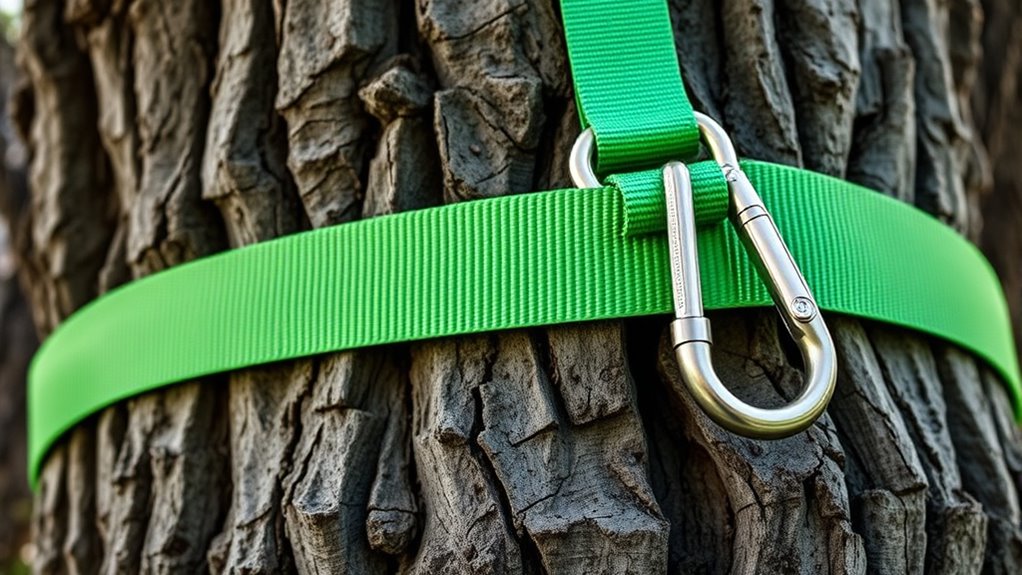
Tree saver straps are indispensable tools for protecting trees during construction, landscaping, or other activities that require lifting or moving them. When you’re working around mature trees, it’s important to minimize damage to the bark, roots, and overall health. Properly using these straps helps you secure the tree safely without causing harm, guaranteeing it remains healthy long after your project is complete. The key to success is understanding how to anchor the straps correctly and maintain your gear properly.
Climbing safety is a critical aspect of working with tree saver straps. You need to guarantee your gear is in excellent condition before lifting or pulling. Regular gear maintenance involves inspecting straps for signs of wear, fraying, or damage, and replacing them immediately if you find any issues. This not only prolongs the life of your gear but also keeps you safe. Properly maintained straps prevent slippage or sudden failure during lifting operations, which could injure you or damage the tree. Always follow manufacturer instructions for storage and care, and keep your straps clean and dry to prevent deterioration.
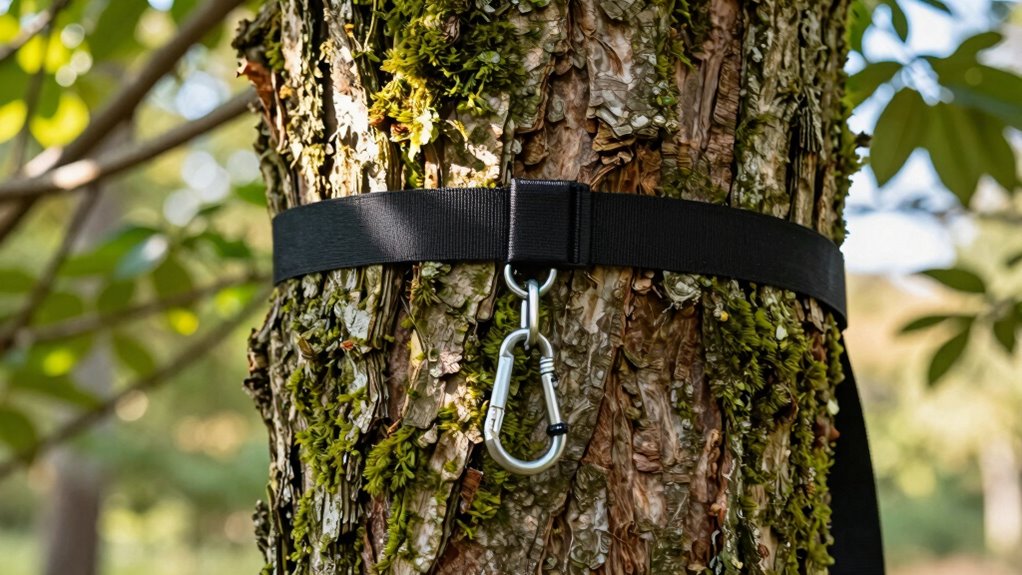
When anchoring a tree with straps, you want to distribute force evenly to avoid girdling or crushing the bark. Use wide, padded straps designed specifically for trees, and avoid sharp edges or knots that could cut into the bark. Position the straps so they don’t put excessive pressure on any one spot, and ensure they are snug but not too tight. This careful approach helps protect the tree’s cambium layer, which is essential for its health. As you work, keep an eye on the condition of the straps, adjusting as needed to prevent any slipping or uneven pressure.
Additionally, selecting appropriate projectors with high contrast ratios and accurate color reproduction can enhance your viewing experience, especially if you’re working in a well-lit environment or setting up a home cinema. Maintaining your gear is straightforward but indispensable. After each use, clean off dirt and debris, and check for any signs of damage. Store your straps in a cool, dry place away from direct sunlight, which can weaken synthetic fibers over time. When inspecting, look for worn stitching, tears, or signs of deterioration in the material. Replacing worn straps immediately prevents accidents and safeguards the tree’s health. Proper gear maintenance not only extends the lifespan of your straps but also guarantees your safety during each project.

Kenmore KW2001 SpotLite Portable Carpet Spot Cleaner & Pet Stain Remover, 17Kpa Powerful Suction with Versatile Tools for Upholstery, Couches, Car and Auto Detailer, Gray
Remove Tough Stains: Powerful suction lifts stains on carpets, upholstery and auto interiors.Wet Pickup : Yes, Integrated On-Board...
As an affiliate, we earn on qualifying purchases.
Frequently Asked Questions
Can Tree Saver Straps Be Reused After Heavy Use?
Yes, you can reuse tree saver straps after heavy use if they maintain good strap durability. Check for signs of wear, fraying, or damage before reusing. Follow the reuse guidelines to guarantee safety and effectiveness. If the straps show any weakness or damage, replace them to avoid failure. Proper inspection and care help extend their lifespan, making them a reliable and eco-friendly option for future anchoring needs.
Are Tree Saver Straps Environmentally Friendly and Biodegradable?
Tree saver straps are generally not biodegradable, as they’re made from synthetic materials like nylon or polyester, which can take years to break down. This means they may have a negative environmental impact if not disposed of properly. To minimize your ecological footprint, look for straps made from biodegradable materials or reusable options. Properly recycling or repurposing straps helps reduce waste and supports environmental conservation efforts.
How Do Tree Saver Straps Compare to Other Tree Anchoring Methods?
Tree saver straps are generally better than other anchoring methods because they combine rope durability with ease of installation. Unlike ropes that can damage bark or require complex setups, these straps are designed to be gentle on trees while providing strong, reliable support. You’ll find them straightforward to set up, making your anchoring safer for the environment and more convenient for you.
What Is the Maximum Weight Capacity of a Typical Tree Saver Strap?
When it comes to tree saver straps, they typically have a weight limit around 3,000 to 4,000 pounds, but don’t push your luck—always leave a safety margin. Think of it as not putting all your eggs in one basket. These straps are designed for safety and durability, so verify you use the right one for your load. Checking the manufacturer’s specs helps keep your gear and trees safe.
Can Tree Saver Straps Be Used on Any Tree Species?
You can generally use tree saver straps on most tree species, but check for species compatibility first. The strap material, usually nylon or polyester, should be durable and resistant to weather, ensuring it won’t damage the tree or degrade quickly. Avoid using straps on very young or fragile trees, and always inspect the species and strap quality to prevent harm. Proper selection helps protect trees while providing secure anchoring.

Shark StainStriker Portable Carpet Upholstery & Area Rug Cleaner, Stain & Odor Remover, Perfect for Car Interiors, Nordic Blue, PX202BRN
Shark StainStriker is a portable carpet and upholstery cleaner with pet mess extractor, bonus XL tool, and full-size...
As an affiliate, we earn on qualifying purchases.
Conclusion
By understanding how to properly use tree saver straps, you guarantee both your safety and the health of the trees. Remember, a well-placed strap is like a knight’s shield—protecting without harming. With these tips, you can confidently anchor your gear while respecting nature’s integrity. As the Bard once mused, “What’s past is prologue,” so always prioritize sustainable practices. Respect the trees, and they’ll serve you well, just like the finest of allies in your adventure.

Shark StainStriker Portable Carpet, Upholstery & Area Rug Cleaner with Pet Mess Extractor, Stain & Odor Remover, Perfect for Car Interiors, White, PX201
Shark StainStriker is a portable carpet and upholstery cleaner with the pet mess extractor that combines dual-activated formula...
As an affiliate, we earn on qualifying purchases.

Wet Dry Vacuum Cleaner - 5.5 Peak HP, HEPA, Stainless Steel, 3-in-1 Upholstery Shop Vac - 6 Gal Carpet Extractor for Car Detailing
POWERFUL SUCTION PERFORMANCE: Delivers 5.5 peak HP for deep cleaning on wet and dry messes. This wet dry...
As an affiliate, we earn on qualifying purchases.