Choosing between ratchet straps and cam straps depends on your load’s weight and handling needs. Ratchet straps provide heavy-duty tension control, making them ideal for bulky or high-value items, while cam straps are perfect for lighter loads that require quick, easy fastening. If you need maximum security and adjustable tightness, go with ratchet straps. For simple, fast securing, cam straps work well. Keep exploring to find out which option best suits your specific load and safety standards.
Key Takeaways
- Choose ratchet straps for heavy, bulky loads requiring precise tension and maximum security.
- Opt for cam straps for lighter, softer, or smaller loads needing quick, easy securing and release.
- Ensure straps meet industry standards like DOT and FMCSA for safety and proper load rating.
- Use durable materials such as polyester webbing for weather resistance and long-term durability.
- Regularly inspect straps for wear, damage, or corrosion to maintain safety during transit.
When it comes to securing loads safely, ratchet straps and cam straps are two of the most dependable options you can choose. Both are vital tools in guaranteeing your cargo stays put during transit, but understanding their differences and best uses makes all the difference. One of the key safety considerations when selecting between them is how well they maintain tension and prevent slipping. You want straps that hold tight without risking sudden failure. Material durability is equally important, as straps made from high-quality materials withstand harsh conditions, UV rays, and heavy loads without fraying or breaking.
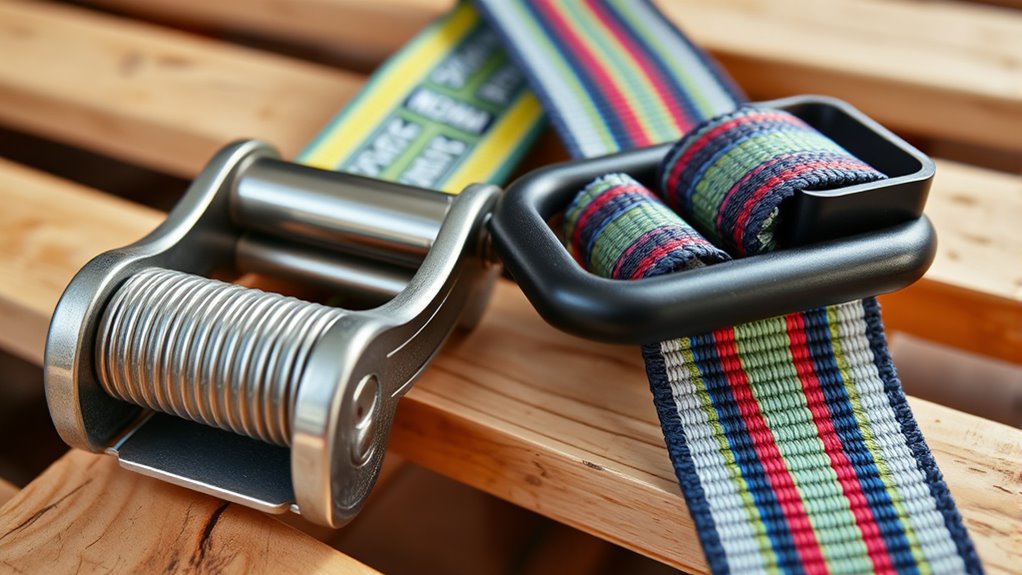
Ratchet straps are praised for their strength and precise tension control. Their ratcheting mechanism allows you to tighten the strap incrementally, ensuring a secure hold tailored to your load’s needs. This feature makes them ideal for heavy-duty applications where maximum security is vital. When selecting a ratchet strap, pay close attention to the quality of the webbing material—polyester is common because it resists stretching, UV damage, and moisture. Heavy-duty ratchet straps typically feature reinforced eyelets and sealed hardware, further enhancing safety considerations by reducing the risk of failure under tension.
Ratchet straps offer strong, precise tension control with durable, UV-resistant polyester webbing and reinforced hardware for maximum safety.
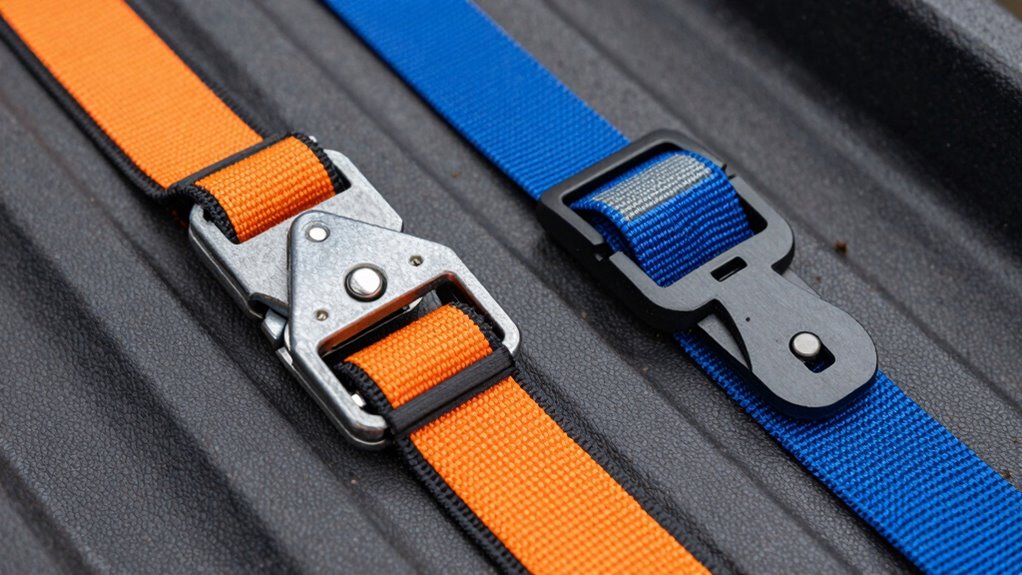
Cam straps, on the other hand, offer simplicity and quick release, making them perfect for lighter loads or situations where speed matters. They operate with a cam buckle that allows you to tighten the strap by pulling the webbing through, then locking it in place with a cam lever. While they might not offer the same level of tension control as ratchet straps, their ease of use and lower profile make them convenient for securing softer goods or smaller loads. When choosing cam straps, ensure the webbing is made from durable materials like polyester or nylon, which resist wear and tear over time. The cam buckle itself should be sturdy, ideally with corrosion-resistant coatings for longevity.
Ultimately, safety considerations and material durability guide your choice. For heavy, bulky, or high-value loads, ratchet straps provide the security and tension control you need. For lighter or less demanding tasks, cam straps offer a quick, reliable solution without sacrificing safety. Whichever you pick, always verify that the straps meet industry standards such as those from the Department of Transportation (DOT) or the Federal Motor Carrier Safety Administration (FMCSA). Properly inspecting straps before use and ensuring they’re rated for your load’s weight is essential to prevent accidents and protect your cargo during transit.
Frequently Asked Questions
Can Ratchet Straps Be Reused After Heavy Use?
Yes, you can reuse ratchet straps after heavy use if the strap material remains intact and the load capacity isn’t compromised. Inspect the straps carefully for fraying, tears, or damaged stitching, as these reduce strength. If the load capacity is still reliable and the strap looks good, it’s safe to reuse. Always test the strap’s condition before securing your load again to ensure safety and reliability.
Are Cam Straps Suitable for Securing Heavy Machinery?
Imagine tightening a belt around heavy machinery, feeling the tension hold firm. Cam straps can be suitable for securing heavy machinery, but only if they’re rated for the load security you’re dealing with. You need straps with high breaking strength and proper durability, as lighter-duty cam straps might stretch or slip under such weight. Always verify weight limits and ensure your straps meet safety standards before securing your load.
How Do Weather Conditions Affect Strap Durability?
Weather conditions can considerably affect strap durability. UV degradation from prolonged sun exposure weakens the material over time, reducing its strength. Moisture impact, especially in rain or humid environments, can cause straps to weaken or develop mold and mildew. To guarantee safety, choose straps with UV-resistant coatings and avoid exposing them to excessive moisture. Regularly inspect your straps for signs of wear and replace them as needed.
What Safety Standards Do Ratchet and Cam Straps Meet?
Think safety standards are just labels? Think again. Your ratchet and cam straps meet strict regulations like ASTM, ANSI, and OSHA, guaranteeing they’re reliable under various conditions. Their strap material and load capacity are tested rigorously to guarantee performance. These standards make sure your straps can handle the load safely, giving you peace of mind. Always check the labels to verify your straps meet the necessary safety standards for your specific application.
Can Straps Be Customized for Specific Load Sizes?
Yes, straps can be customized for specific load sizes. You can opt for load-specific straps that are tailored to your needs, ensuring better security and safety. Strap customization allows you to choose the right length, width, and type of strap for your load, reducing the risk of damage or failure. Contact manufacturers or suppliers who offer customization options to get straps that perfectly fit your unique requirements.
Conclusion
Now that you know the ins and outs of ratchet and cam straps, you’re ready to tame any load like a pro. Think of these straps as your trusty steed—each with its own strength and personality—helping you conquer your haul with confidence. Whether you’re securing a delicate load or a hefty freight, choosing the right strap is like finding the perfect key to open smooth, worry-free transport. Ride on, and keep your cargo safe and sound!