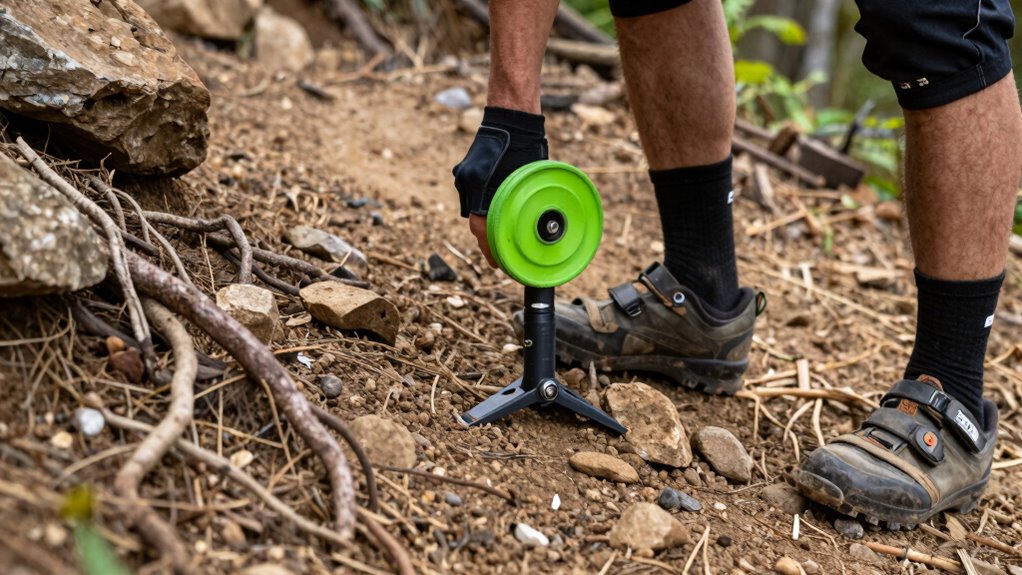

When jacking your vehicle on uneven or soft ground, make sure to choose a firm, level spot and clear away loose debris. Use a high-quality jack with a wide base and place a sturdy support like wood or rocks under the saddle for added stability. Always position jack stands securely under proper lift points, and double-check the ground stability before lifting. Proper setup is key—keep exploring to learn more essential safety tips.
Key Takeaways
- Assess terrain for softness, slopes, and irregularities before selecting a jacking location.
- Use high-quality, heavy-duty jacks with wide bases and appropriate weight capacity.
- Position the jack on solid, level areas using support materials like wood blocks or gravel to stabilize the ground.
- Place jack stands securely after lifting, never relying solely on the jack for support.
- Stabilize the ground and equipment with proper leveling and support techniques to prevent shifting or sinking during the lift.
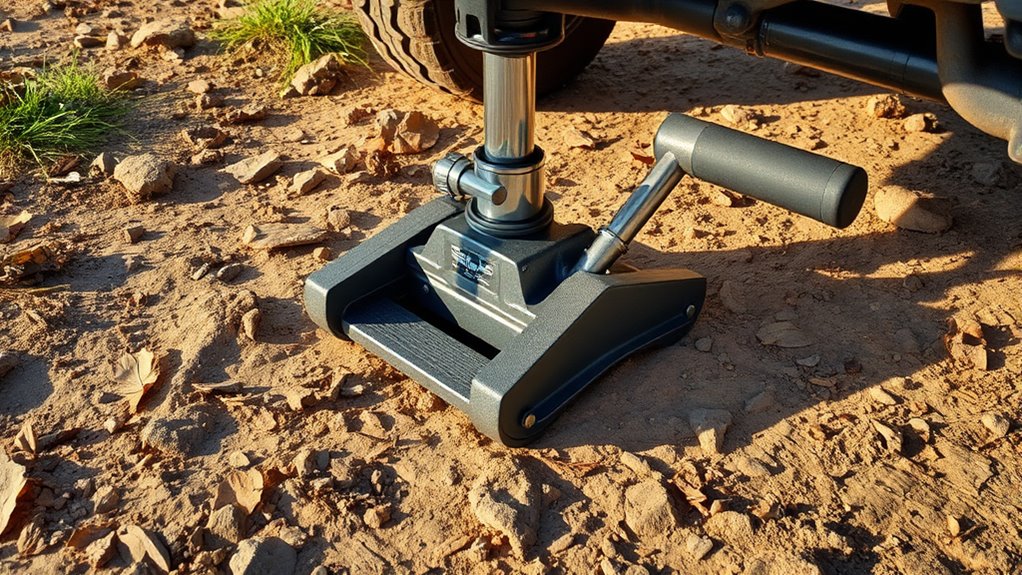
Jacking up a vehicle on uneven ground can be challenging and dangerous if you don’t take the right precautions. The key to safety lies in understanding lift stability and making proper equipment selection. When you’re off-road or working on soft soil, the terrain’s irregularities can cause your jack or lift to shift unexpectedly, risking injury or damage. To prevent accidents, you need to guarantee your setup is stable and reliable before lifting the vehicle.
First, assess the terrain carefully. Soft soil, loose gravel, or uneven slopes can compromise the stability of your jack. If the ground isn’t firm or level, your vehicle could settle or shift once lifted, leading to dangerous situations. That’s why selecting the right equipment is essential. Opt for a high-quality, heavy-duty floor jack with a wide base and sufficient weight capacity. These jacks offer better lift stability on uneven surfaces. If you’re working in particularly soft or unstable ground, consider using a jack stand with a broad, stable footprint. Using a jack pad or a piece of wood under the jack’s saddle can also distribute weight more evenly, reducing the risk of sinking or tipping.
Assess soft or uneven ground; use heavy-duty jacks and support pads for safe lifting.
When placing your jack, always choose a solid, flat area on the vehicle’s frame or designated lift points. Avoid jacking on suspension components or other parts not designed for lifting, as this can damage the vehicle or cause it to slip. If the ground is uneven, level the surface as best you can by placing sturdy, supportive materials underneath the jack or stands. This may involve stacking rocks, gravel, or wooden blocks to create a more stable foundation. Always double-check that your equipment is securely positioned and that the vehicle is stable before you start lifting.
Once you lift the vehicle, keep a close eye on how it responds to the uneven ground. Even a slight shift can compromise safety. Never work under a vehicle supported only by a jack; always use jack stands to hold the weight securely. Remember, the goal with equipment selection and guaranteeing lift stability is to create a safe, predictable environment for your work. If you’re unsure about the terrain or your setup, it’s better to take extra time to stabilize everything than to rush and risk injury. Proper planning and careful equipment choices keep you safe, especially when working on trails or soft soil where ground conditions are unpredictable. Being aware of lift stability and ground conditions can make all the difference in preventing accidents.

Off-Road Traction Boards with Jack Base, Heavy-Duty Recovery Tracks for 4x4, Truck, Jeep, SUV,Ideal Offroad Accessories for Mud, Sand & Snow (Large)
[Enhanced Double-Sided Traction Design] Both sides of the boards feature a diamond array construction and cross-shaped teeth to...
As an affiliate, we earn on qualifying purchases.
Frequently Asked Questions
How Do I Choose the Right Jack for Uneven Terrain?
You should choose a jack with a sturdy jack pad to guarantee ground stability on uneven terrain. Look for a jack with adjustable height and a wide base to distribute weight evenly and prevent sinking into soft soil or tilting on uneven ground. Always check that the jack can handle your vehicle’s weight, and consider using additional support, like cribbing, for extra stability on challenging terrain.
What Are Signs of an Unstable Jack Setup?
You’ll notice instability if your jack shifts or tilts, risking collapse. An unstable setup often shows uneven contact with the ground, even with a jack pad in place. Studies show that improper ground stabilization causes 65% of jacking accidents. Always verify your jack pad is properly positioned, and the ground is firm and level. If the jack wobbles or sinks, it’s a clear sign to re-stabilize before proceeding.
Can I Jack on Wet or Muddy Ground Safely?
You shouldn’t jack on wet or muddy ground because it compromises ground stability and risks your setup. Muddy conditions make the surface slippery and uneven, increasing the chance of the jack slipping or sinking. Always guarantee your jack placement is on firm, dry ground. If the ground is too soft or wet, find a solid, stable spot or use a platform to improve ground stability before jacking.
How Do I Prevent Slipping During Jacking?
Ever wondered how to keep your vehicle from slipping while jacking? To prevent slipping, guarantee proper jack pad placement on a solid, flat surface, and place stabilizer bars for extra support. Double-check your jack’s stability before lifting, and avoid sudden movements. Use wheel chocks to lock tires, and always work on a level area. These precautions help you maintain control and safety during the jacking process.
What Safety Gear Should I Use While Jacking?
You should wear gloves and safety goggles to protect your hands and eyes during jacking. Prioritize jack stand safety by choosing sturdy, properly rated jack stands, and always use a reliable jack pad selection to distribute weight evenly on soft or uneven ground. make certain the vehicle is secure before working underneath, and never rely solely on the hydraulic jack for support. These precautions keep you safe and prevent accidents.

OULEME Off-Road Traction Boards with Jack Lift Base, Recovery Board for Sand, Mud, and Snow Tracks - Tire Traction Pads for RV Truck Jeep SUV (BLACK)
Dimensions: The size of one traction board L 41.7 inches (106 cm), W 11.8 inches (30 cm), H...
As an affiliate, we earn on qualifying purchases.
Conclusion
When jacking on uneven ground, think of it like balancing on a tightrope—you need steady footing and careful adjustments. Always check the stability before lifting, use proper supports, and move slowly to prevent slips or damage. Just like a skilled tightrope walker maintains focus and control, your deliberate actions ensure safety and prevent mishaps. With patience and attention, you’ll keep your trail work secure, making the uneven terrain a manageable challenge rather than a hazard.

BUNKER INDUST Off-Road Traction Boards with Jack Base,Pair Recovery Track 4X4 Jeep Truck Emergency Tire Traction Mat with Bag -Sand, Mud, Snow Tracks Black Traction Pad (Gen 7th)
Jack Base Function: Designed with unique jack base in the center of the traction board is for emergency...
As an affiliate, we earn on qualifying purchases.

OLTEANP 1000 Watt Power Inverter 12V DC to 110V/120V AC Car Inverter with LCD Screen Display, 2 AC Outlets, 36W Type-C Port, 5V/3A USB Port, Car Power Converter for Truck, Home, Vehicles, Laptop, Trip
【2024 NEW UPGRADED POWERFUL 1000W CAR POWER INVERTER】- The OLTEANP Power Inverter offers a continuous DC to AC...
As an affiliate, we earn on qualifying purchases.