To prevent cargo shifting on rough trails, you should use proper tie-down techniques and secure straps snugly without over-tightening. Place straps over top, sides, and underneath your load to distribute tension evenly. Use multiple tie-downs to avoid slack and guarantee stability. Select the right type of tie-downs for your load and always check for tightness before starting your journey. Mastering these basics will keep your cargo safe and your trip trouble-free.

Get business pricing on garage and car supplies
- Business-only prices and quantity discounts
- Tax-exempt purchasing
- Multiple users, one account, clear invoices
Key Takeaways
- Use systematic tension to snugly secure cargo without causing damage or slack that can lead to shifting.
- Place tie-downs over the top, sides, and underneath for balanced stabilization on rough trails.
- Distribute load evenly and strategically with multiple tie-downs to prevent movement in all directions.
- Select appropriate tie-down types and adhere to load limits to ensure durability and safety.
- Regularly check and tighten straps to maintain secure restraint during bumpy terrain.
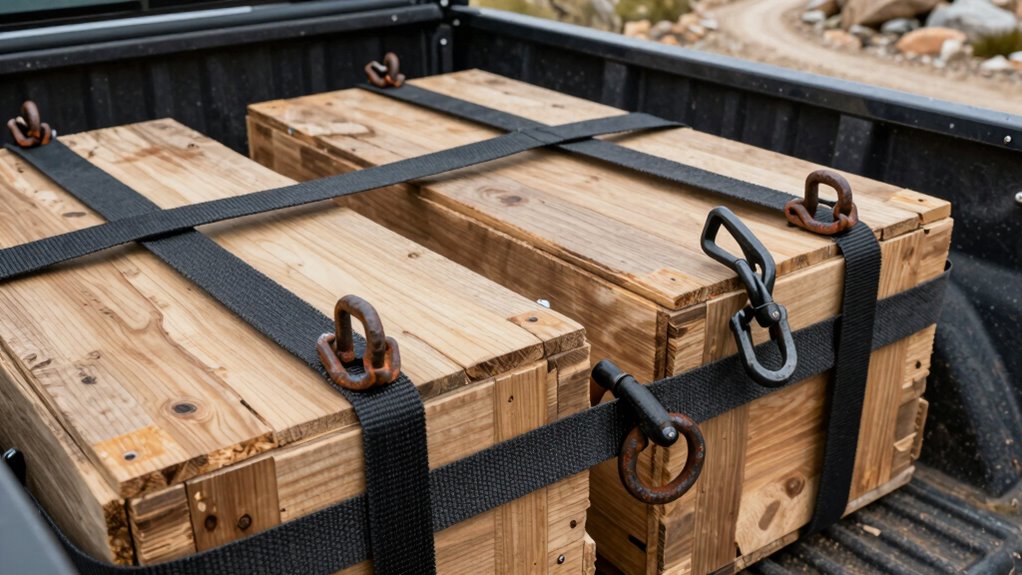
Have you ever wondered how to keep your cargo secure during transport? When you’re heading down rough trails, the last thing you want is for your load to shift or fall apart. That’s where understanding basic cargo tie-down methods becomes essential. Using proper securing techniques and choosing the right tie-down materials can make all the difference between a smooth trip and a costly mishap.
Securing techniques are the foundation of safe cargo transport. The key is to prevent movement in all directions—forward, backward, and side to side. To do this, you need to systematically apply tension across the load, ensuring it’s snug but not overly tight, which can damage the cargo or the tie-downs themselves. Straps should be placed at strategic points—over the top, along the sides, and underneath if possible. Using multiple tie-downs distributed evenly helps stabilize the load, preventing it from shifting unexpectedly. When tightening, make sure to check that each strap is secure and has no slack, as loose restraints are almost as dangerous as no restraints at all. Proper tie-down techniques are essential for ensuring your cargo stays put on rough terrain. Additionally, understanding the types of tie-downs available can help you select the most effective securing methods for different loads. It’s also important to consider load weight limits to avoid overstressing your securing equipment and risking failure. Being familiar with load distribution principles can further enhance your ability to secure your cargo effectively.
As an affiliate, we earn on qualifying purchases.
Frequently Asked Questions
What Are the Best Tie-Down Points on a Vehicle?
The best tie-down points on your vehicle are sturdy, reinforced spots like designated anchor points, tie-down hooks, or built-in tie-down loops. You want to focus on load distribution, ensuring weight is evenly spread to prevent shifting. Use quality tie-down materials like ratchet straps or cam-buckle straps, and secure your cargo tightly at these points. Properly chosen and positioned tie-downs keep your load stable on rough trails, avoiding accidents or damage.
How Do I Choose the Right Tie-Down Straps?
Did you know improper load securing causes over 50% of trail accidents? To choose the right tie-down straps, focus on strap materials like polyester for durability and resistance to UV damage. Consider the weight and size of your cargo to guarantee the straps provide enough load securing strength. Always opt for straps with appropriate working load limits and secure them tightly to your vehicle’s designated tie-down points for safe, effective transportation.
Can Cargo Shift During High-Speed Driving?
Yes, cargo can shift during high-speed driving if it’s not properly secured. This movement jeopardizes load stability and can cause accidents. To prevent this, you should use high-quality tie-down straps, ensuring they’re tight and properly anchored. Distribute the weight evenly across the vehicle, and double-check all straps before hitting the road. Staying vigilant helps keep your cargo in place and maintains safe, stable transport at high speeds.
How Often Should I Check My Tie-Downs?
You should check your tie-downs before each trip and periodically during long drives. Make sure proper load distribution and maintain adequate tie-down tension to prevent cargo shift. Rough trails can loosen straps, so re-tighten as needed to keep everything secure. Regular checks help you spot any loosening early, reducing the risk of shifting cargo and potential accidents. Staying vigilant guarantees safe and smooth travels over tough terrain.
Are There Specific Tie-Down Techniques for Irregularly Shaped Loads?
For irregularly shaped loads, you should use flexible securing techniques to adapt to the shape, ensuring the load stays put. Focus on load balancing by distributing weight evenly and securing all loose ends. Use a combination of straps, ropes, and tie-downs that contour to the load’s shape. Tighten everything firmly, but avoid over-tightening, which can damage the load or the securing equipment. Regularly check and adjust as needed during your trip.
As an affiliate, we earn on qualifying purchases.
Conclusion
Just like a seasoned sailor secures their ship before a storm, you must guarantee your cargo is firmly tied down before hitting rough trails. Think of each strap as a steadfast anchor, holding everything in place against the chaos of the wild. When you master these basics, you won’t just prevent shift—you’ll navigate every adventure with confidence. Remember, a secure load today keeps the mishaps at bay tomorrow. Stay prepared, stay safe.
As an affiliate, we earn on qualifying purchases.
As an affiliate, we earn on qualifying purchases.
Fall Picks
fall essentials
As an affiliate, we earn on qualifying purchases.