To perform a real-world winch safety test, start by inspecting all hardware components, ensuring cables, hooks, and fairleads are in good condition and repair any damage immediately. Check the electrical system, remote control, and vehicle battery for proper operation. Test safety features, clutch, and emergency procedures using controlled loads. Always follow safety precautions, wear protective gear, and keep clear of moving parts. Following these steps will help you improve safety and reliability—keep exploring to learn more.

Get business pricing on garage and car supplies
- Business-only prices and quantity discounts
- Tax-exempt purchasing
- Multiple users, one account, clear invoices
Key Takeaways
- Conduct controlled load tests using test weights or anchors to evaluate winch performance under real conditions.
- Ensure all safety devices and warning signs are in place and clearly visible before testing.
- Verify electrical system functionality, including remote control responsiveness and secure connections.
- Observe cable spooling and smoothness during operation to identify potential issues.
- Review maintenance logs and record test findings to plan necessary repairs and ensure ongoing safety.
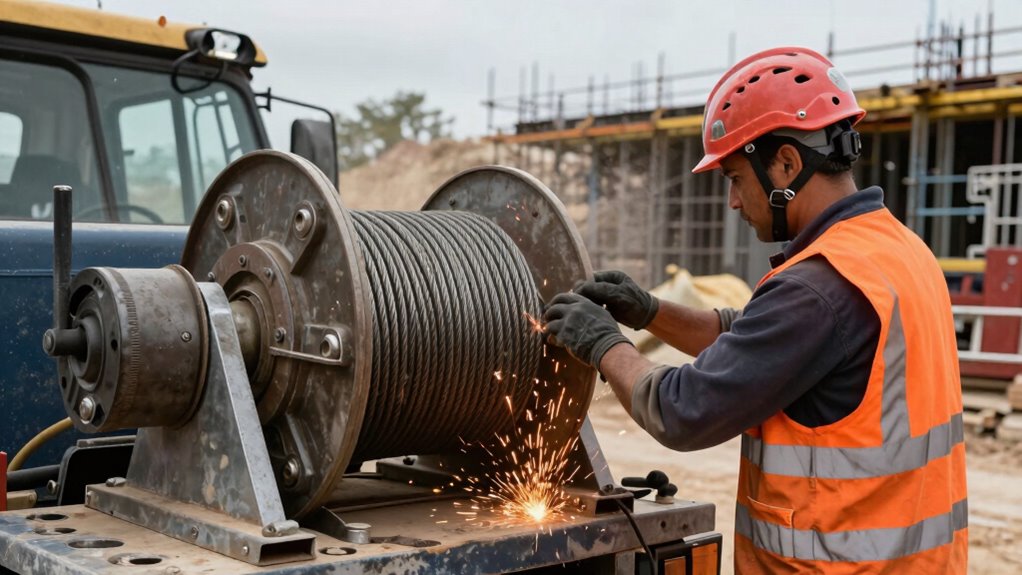
Have you ever wondered if your winch is safe to use? You should be confident that your equipment can handle the job without failing unexpectedly, especially when you’re counting on it during critical moments. To do this, you need to perform a real-world test for winch safety, which involves more than just a quick glance at the gear. It requires a thorough check of your emergency procedures and equipment maintenance routines to guarantee all components are in top condition.
First, examine your winch’s cables, hooks, and fairleads. Look for signs of wear, fraying, or corrosion, which can compromise safety during operation. If you notice any damage, replace the affected parts immediately. Next, test your winch’s electrical system, including the switch and remote control, to verify they’re functioning correctly. A malfunction here can lead to unexpected releases or failure when you need it most. Make sure the power source, usually your vehicle’s battery, is in good shape and capable of providing consistent power without dips that could cause operational issues. Proper equipment maintenance is essential to prevent failures and ensure safe operation.
Inspect cables, hooks, and fairleads for wear or corrosion; test electrical systems and ensure a reliable power source.
Once you’ve inspected and maintained the hardware, move on to the operational test. Engage your emergency procedures before testing under load. For example, ensure your winch’s clutch is functioning and that you know how to quickly disengage it if needed. Use a controlled load, such as a heavy-duty anchor or a designated test weight, to simulate real-world pulling conditions. During this test, observe how smoothly the winch pulls and how well the cable spools in and out. Any jerking or hesitation could indicate underlying problems that need addressing. Additionally, verify that all safety devices and warning signs are properly in place and visible before conducting the test. Regularly checking your safety equipment can help prevent accidents and improve response times in emergencies. Incorporating biodiversity awareness into your safety routines can also promote more eco-friendly practices during outdoor operations.
Throughout this process, keep safety at the forefront. Wear gloves and eye protection, and ensure no one is near the cable or load during testing. Remember, your emergency procedures should include steps for immediate shutdown if something goes wrong. Confirm that your communication signals or radios are working, so you can coordinate with others if necessary. Additionally, performing periodic safety inspections can help identify potential hazards before they become problematic. After the test, review your equipment maintenance log to record findings and plan repairs or replacements proactively.
As an affiliate, we earn on qualifying purchases.
Frequently Asked Questions
How Often Should Winch Safety Tests Be Performed?
You should perform winch safety tests regularly, ideally before each use, to guarantee equipment calibration remains accurate. Incorporate safety training to remind everyone of proper procedures and potential hazards. Frequent testing helps identify issues early, preventing accidents. Make it a routine part of your maintenance schedule, especially after equipment repairs or modifications. Consistent safety checks and training are essential to keep everyone safe and the winch functioning correctly.
What Are Common Signs of Winch Malfunction?
Ever wondered how to spot a winch malfunction before it causes trouble? Common signs include unusual noises, inconsistent operation, or a sudden drop in performance. During winch maintenance, always check for frayed cables, corrosion, or leaks, and follow safety protocols carefully. These indicators can warn you of underlying issues, helping prevent accidents and ensuring your equipment operates safely and reliably. Don’t ignore these warning signs—your safety depends on it.
Are There Industry Standards for Winch Safety Testing?
Yes, industry standards for winch safety testing exist. You should always check the winch specifications to guarantee it meets the required safety standards. Look for safety certifications from recognized organizations, which confirm that the winch has undergone rigorous testing. Adhering to these standards helps prevent accidents and ensures reliable operation. Regularly verifying compliance with industry standards is essential for maintaining safe and efficient winch performance in your operations.
Can DIY Winch Safety Tests Be Reliable?
A stitch in time saves nine, so you might think DIY winch safety tests are reliable, but caution is key. While manual calibration and safety inspections are important, they can’t replace professional testing and standards. DIY checks may catch obvious issues, but they might miss hidden problems. Relying solely on yourself can be risky—trust trained experts for thorough, dependable safety assessments to prevent accidents before they happen.
What Personal Protective Equipment Is Recommended During Testing?
During testing, you should wear protective gloves and safety goggles to guarantee your safety. Protective gloves shield your hands from potential pinches, cuts, or abrasions, while safety goggles protect your eyes from debris or unexpected snaps. Always prioritize these personal protective equipment items to minimize risks. Proper gear helps you stay safe, confident, and focused during winch safety testing, reducing the chance of injury or accidents.
As an affiliate, we earn on qualifying purchases.
Conclusion
As you stand back and observe the winch’s performance, think of it as a trusted steed ready to carry your weight. When you prioritize safety tests, you’re sharpening the sword before battle, ensuring it won’t break when needed most. Remember, a well-tested winch is like a sturdy bridge over turbulent waters—steadfast, reliable, and built to withstand the storms. Keep safety at the forefront, and you’ll navigate every challenge with confidence and peace of mind.
As an affiliate, we earn on qualifying purchases.
As an affiliate, we earn on qualifying purchases.
Columbus Day / Indigenous Peoples' Day Picks
long weekend sales
As an affiliate, we earn on qualifying purchases.