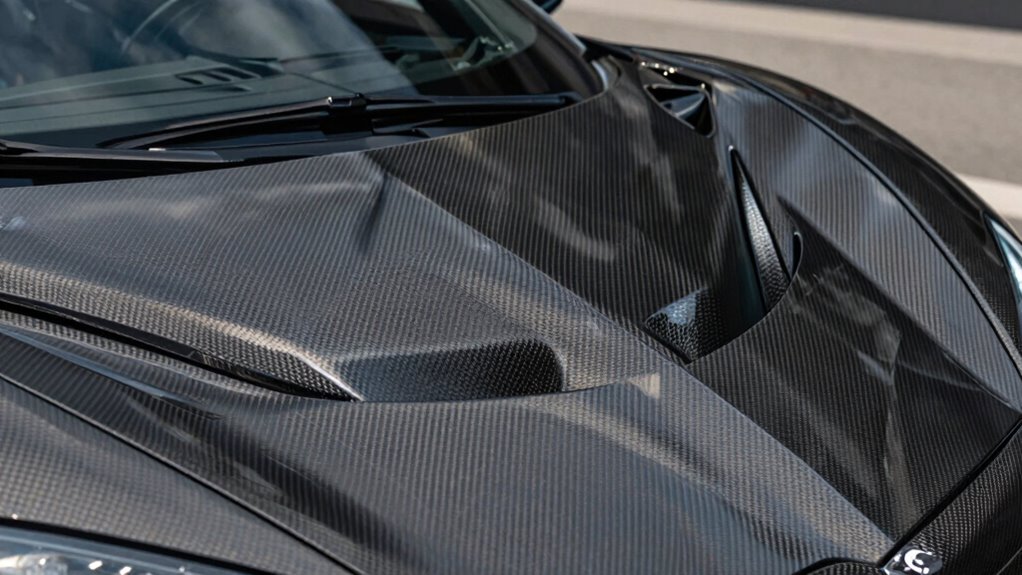

Carbon fiber in modern supercars dramatically improves performance by offering exceptional strength while reducing weight. This advanced material enables you to enjoy faster acceleration, better handling, and higher efficiency. Its use boosts structural stiffness and stability at high speeds, making your drive more responsive and safer. Plus, it adds to the sleek, aggressive look of supercars. If you’re curious about how this revolutionary material continues to shape automotive innovation, there’s more to discover below.
Key Takeaways
- Carbon fiber provides supercars with high strength-to-weight ratio, enhancing speed and agility.
- It is used in body panels, chassis, and interior components for reduced weight and increased stiffness.
- Carbon fiber improves aerodynamic performance and stability at high speeds.
- Its resistance to fatigue and corrosion ensures long-term durability of supercars.
- The material’s lightweight nature contributes to better fuel efficiency and handling.

Carbon fiber has revolutionized the design of modern supercars by delivering unmatched strength while considerably reducing weight. This material’s unique properties allow engineers to craft vehicles that are faster, more agile, and more fuel-efficient. Its lightweight yet durable nature is especially vital in high-performance scenarios where every extra pound can impact speed and handling. You’ll notice that many supercars incorporate carbon fiber components not just for aesthetic appeal but for functional benefits, optimizing the vehicle’s overall performance.
Beyond the automotive industry, carbon fiber’s influence extends to aerospace applications, where its strength-to-weight ratio is invaluable. In aerospace, engineers rely on carbon fiber to build aircraft that are lighter and more fuel-efficient, enabling longer flights and higher payload capacities. This same principle translates seamlessly into supercar design, where reducing weight directly enhances acceleration, braking, and cornering. You can think of carbon fiber as a common thread that ties together advancements across different fields, pushing the boundaries of what’s possible. strength-to-weight ratio is a critical property that makes this material so versatile.
In addition to automotive and aerospace uses, you also encounter carbon fiber in sporting equipment. From high-end tennis rackets to racing bicycles, athletes and enthusiasts seek the material’s ability to combine lightness with strength. This crossover highlights how carbon fiber elevates performance across disciplines, including supercar manufacturing. When you see a sleek, lightweight sports car, it’s often because engineers have borrowed concepts from sporting equipment to maximize efficiency and durability. This synergy allows supercar manufacturers to create vehicles that are not only powerful but also finely tuned for precision handling.
Using carbon fiber in supercars offers multiple advantages. Its stiffness ensures stability at high speeds, while its low weight enhances acceleration and braking distances. The material’s resistance to corrosion and fatigue means that the vehicle maintains its performance over time, reducing maintenance costs and increasing longevity. Incorporating innovative materials like carbon fiber is also a reflection of the ongoing pursuit of advanced engineering in the automotive industry. When you sit behind the wheel of a supercar with carbon fiber accents, you’re experiencing the culmination of decades of research that have made this material a cornerstone of high-performance engineering. The integration of carbon fiber reflects a commitment to innovation, drawing from aerospace and sporting equipment to craft vehicles that are cutting-edge and awe-inspiring.
Ultimately, carbon fiber’s role in modern supercars is a reflection of how cross-industry advancements drive automotive innovation. It’s a material that’s not just about looks but about pushing the limits of speed, safety, and efficiency. As you admire the sleek lines and aggressive stance of a supercar, remember that carbon fiber’s strength and lightness are key to sustainable performance and *unleashing* its exceptional capabilities.
Frequently Asked Questions
How Does Carbon Fiber Impact Supercar Resale Value?
Using carbon fiber in your supercar can boost resale value because it’s a premium material that buyers highly desire. Its durability guarantees the car stays in excellent condition longer, making it more attractive on the market. When you invest in carbon fiber, you’re not only enhancing performance but also increasing the vehicle’s appeal and worth, which can translate to higher resale returns later on.
Can Carbon Fiber Be Recycled Effectively?
You might be surprised to learn that carbon fiber can be recycled effectively through advanced recycling processes, though it’s more complex than recycling metals. For example, some companies are developing eco-friendly alternatives by breaking down carbon fiber into reusable filaments for new parts. This not only reduces waste but also supports sustainability, making carbon fiber a more environmentally responsible material for future supercars and other high-performance vehicles.
What Are the Safety Considerations With Carbon Fiber Components?
You should be aware of carbon fiber hazards, especially when handling or repairing components, as fibers can cause skin irritation or respiratory issues if inhaled. Always wear proper safety gear like gloves and masks. Follow safety regulations during manufacturing and disposal to prevent accidents. Proper training and adherence to guidelines minimize risks, ensuring your safety when working with or around carbon fiber components.
How Does Carbon Fiber Affect Supercar Repair Costs?
When your supercar needs repairs, you’ll find that carbon fiber makes it more costly because of the specialized technicians required. These materials are difficult to fix, often requiring advanced techniques and expensive parts. You should expect higher repair costs compared to traditional materials, especially if the damage is significant. Investing in quality repairs guarantees your supercar maintains its performance and value, but be prepared for the additional expenses that come with carbon fiber components.
Are There Any Environmental Concerns With Carbon Fiber Production?
You might think of carbon fiber production as a double-edged sword—powerful yet potentially harmful. It does generate emissions, impacting the environment, but advances in sustainable manufacturing aim to cut down these effects. By embracing eco-friendly practices, manufacturers can reduce carbon fiber emissions, making the process cleaner. So, yes, there are concerns, but ongoing innovations are steering the industry toward a greener future, helping you enjoy high-performance cars more responsibly.
Conclusion
As you marvel at the sleek curves and blistering speeds, remember that carbon fiber’s true power lies beneath the surface. It’s not just about lighter, faster cars—there’s a secret edge it offers, pushing boundaries you haven’t even imagined. As technology advances, what’s next for these supercar marvels remains shrouded in possibility. The future of performance is being shaped now, and you’re only beginning to glimpse what’s truly achievable. The next revolution could change everything—are you ready to see it unfold?