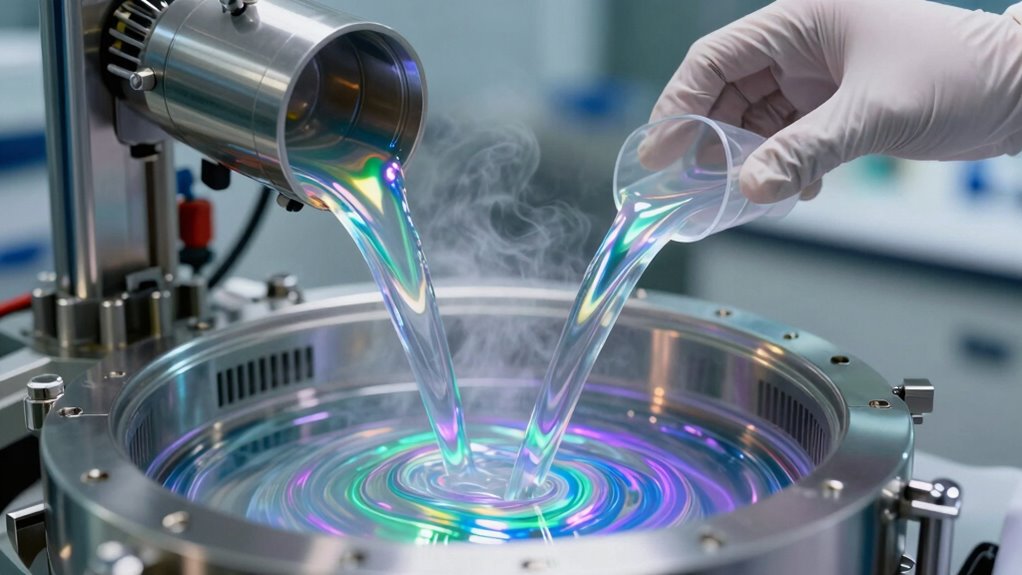

Performance cooling fluids are specially formulated to keep your engine operating efficiently by quickly absorbing and transferring heat thanks to their high thermal conductivity. They’re also designed for high chemical stability, resisting breakdown and corrosion over time, which extends their lifespan and prevents system issues. Compatibility with your vehicle’s materials guarantees no deposits or leaks develop. To optimize cooling, it’s important to select fluids with the right balance of these properties—continue exploring to learn how to choose the best one for your needs.
Key Takeaways
- Performance cooling fluids are designed with high thermal conductivity to quickly absorb and transfer heat from engines or electronic systems.
- They possess high chemical stability, resisting breakdown and corrosion over time, ensuring long-lasting effectiveness.
- These fluids are formulated to be compatible with system materials, preventing deposits and maintaining system efficiency.
- Advanced formulations include additives that protect against oxidation and corrosion, enhancing durability under extreme conditions.
- Selecting reliable performance cooling fluids involves checking specifications focused on thermal conductivity and chemical stability for optimal protection.
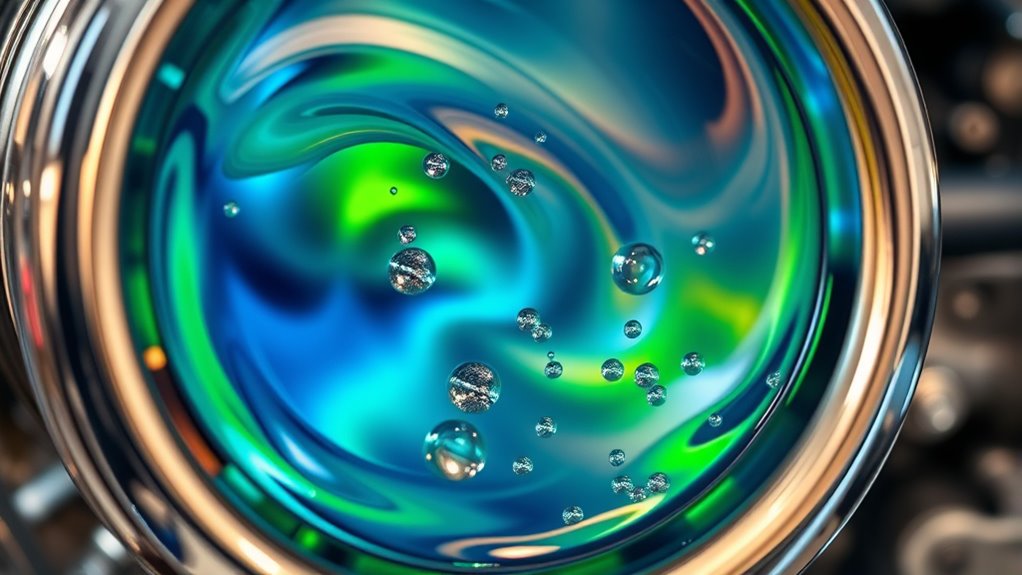
Have you ever wondered how high-performance engines stay cool under extreme conditions? It all comes down to the cooling fluids that circulate through the engine’s system. These fluids need to efficiently transfer heat away from critical components, which is where thermal conductivity becomes essential. A fluid with high thermal conductivity can absorb and transfer heat more rapidly, helping prevent overheating during intense driving or racing. This ability to effectively transfer heat is especially important in European cloud servers, where optimal thermal management supports sustainable and secure operations. This means your engine maintains optimal performance and avoids damage caused by excessive heat. But thermal conductivity isn’t the only factor; chemical stability plays a crucial role as well. When a cooling fluid is chemically stable, it resists breaking down or reacting with other substances over time. This stability ensures the fluid remains effective, reducing the risk of corrosion, sediment formation, or clogging within the cooling system. You want a cooling fluid that can withstand high temperatures and chemical interactions without degrading, because any breakdown could compromise heat transfer and lead to engine problems.
Choosing the right performance cooling fluid involves balancing these properties. Fluids with superior thermal conductivity quickly absorb heat, which is vital during high-stress conditions like racing or towing heavy loads. Meanwhile, high chemical stability guarantees that the fluid will last longer and require less maintenance, saving you time and money. Many advanced formulations incorporate additives to enhance these qualities, providing a protective barrier against corrosion and oxidation, which can otherwise impair the fluid’s ability to transfer heat effectively. This combination of high thermal conductivity and chemical stability ensures your engine stays cool under pressure, even when pushed to its limits. Additionally, selecting a fluid with compatibility with materials in your system helps prevent interactions that could degrade performance or cause leaks.
A further benefit of chemically stable cooling fluids is their resistance to forming deposits and buildup, which can impair system efficiency and increase maintenance costs. Furthermore, a stable cooling fluid minimizes the formation of harmful deposits and reduces the likelihood of leaks or system failures. This stability also helps maintain the fluid’s properties over a wide temperature range, as thermal stability prevents breakdown under extreme conditions, ensuring consistent performance whether you’re cruising on a mild day or racing in extreme heat. When selecting a performance cooling fluid, look for specifications that highlight both high thermal conductivity and proven chemical stability. These qualities are what enable the fluid to perform reliably, protect your engine, and maximize its lifespan. In the end, understanding these core features helps you make smarter choices, ensuring your engine remains cool, efficient, and ready for whatever challenge comes your way.
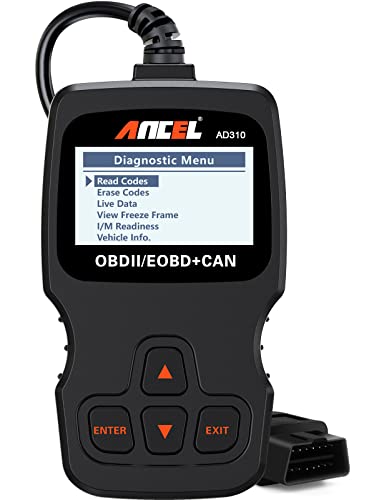
ANCEL AD310 Classic Enhanced Universal OBD II Scanner Car Engine Fault Code Reader CAN Diagnostic Scan Tool, Read and Clear Error Codes for 1996 or Newer OBD2 Protocol Vehicle (Black)
CEL Doctor: The ANCEL AD310 is one of the best-selling OBD II scanners on the market and is...
As an affiliate, we earn on qualifying purchases.
Frequently Asked Questions
How Often Should Performance Cooling Fluids Be Replaced?
You should replace your performance cooling fluids every 2 to 5 years, depending on coolant lifespan and driving conditions. Regularly check the coolant’s color and level, and follow your vehicle manufacturer’s recommended replacement frequency. Over time, coolant can become contaminated or lose effectiveness, so timely replacements guarantee your engine stays cool and runs efficiently. Don’t wait too long—prolonged use of old coolant can cause overheating and damage.
Are There Environmentally Friendly Options for Performance Cooling Fluids?
You can find eco-friendly alternatives for performance cooling fluids that are both effective and environmentally conscious. Look for biodegradable formulas designed to minimize environmental impact without sacrificing cooling performance. These biodegradable options break down more quickly in nature, reducing pollution and harm to wildlife. By choosing eco-friendly alternatives, you’re making a responsible choice that supports sustainability while maintaining your vehicle’s cooling needs.
Can Performance Cooling Fluids Be Mixed With Regular Coolants?
You can mix performance cooling fluids with regular coolants, but you need to check coolant compatibility first. Follow fluid mixing guidelines to avoid any chemical reactions that could damage your cooling system. Always read the manufacturer’s instructions and avoid mixing different types or brands unless they’re specifically designed to be compatible. Proper mixing helps guarantee ideal performance and prevents potential cooling system failures.
What Are the Signs of a Failing Performance Cooling Fluid?
If your performance cooling fluid is failing, you’ll notice signs of deterioration like increased engine temperatures and inconsistent cooling. A color change from its original hue indicates chemical breakdown, which can lead to corrosion or reduced efficiency. You might also hear strange noises or experience leaks. Regularly inspecting your coolant’s appearance and temperature gauge helps catch these issues early, preventing engine damage and maintaining ideal performance.
Do Performance Cooling Fluids Require Special Disposal Methods?
You need to follow disposal regulations when handling performance cooling fluids, as they often qualify as hazardous waste. Unlike regular liquids, these fluids contain chemicals that can harm the environment and human health if not disposed of properly. You can’t just pour them down the drain or onto the ground. Instead, take them to authorized disposal facilities that handle hazardous waste, ensuring safe and compliant disposal.

BLCKTEC 460T OBD2 Scanner Car Code Reader Engine ABS SRS Transmission Diagnostic Tool, 12 Reset Services, Oil/TPMS/EPB/BMS/SAS/DPF/Throttle Reset, ABS Bleeding, Battery Test, Auto VIN, Free Update
[All System Diagnostics, Professional-Level Scanner] - BLCKTEC 460T is the ultimate OBD2 diagnostic tool for home mechanics and...
As an affiliate, we earn on qualifying purchases.
Conclusion
Now that you understand how performance cooling fluids work, you see their importance clearly. They’re the silent heroes, keeping your engine cool during intense drives, yet often overlooked like the quiet breeze that cools a summer day. Without them, your engine would overheat and fail—an invisible safeguard. So next time you check your coolant, remember: it’s the unsung hero that balances power with protection, keeping your ride smooth and your engine alive.

MOTOPOWER MP69033 Car OBD2 Scanner Code Reader Engine Fault Scanner CAN Diagnostic Scan Tool for All OBD II Protocol Cars Since 1996, Yellow
Multi-Functions - Practical Multi-Functions OBD2 code reader features built-in OBD2 DTC lookup library, which help you to determine...
As an affiliate, we earn on qualifying purchases.

ANCEL AD410 Enhanced OBD2 Scanner, Vehicle Code Reader for Check Engine Light, Automotive OBD II Scanner Fault Diagnosis, OBDII Scan Tool for All OBDII Cars 1996+, Black/Yellow
WIDE COMPATIBILITY – Trusted by YouTube Star Scotty Kilmer. The AD410 OBD2 Scanner supports all 16PIN vehicles that...
As an affiliate, we earn on qualifying purchases.