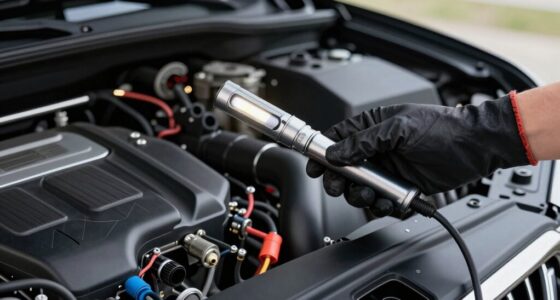
If your brake pedal feels spongy, start by checking the brake fluid level and its condition—look for dark, cloudy, or contaminated fluid. Inspect hoses and connections for leaks or damage, then test for air in the hydraulic system by pressing the pedal repeatedly. Pay attention to how the pedal responds; a sinking or soft pedal often indicates air or internal leaks. Further steps will guide you through pinpointing the problem and fixing it effectively.
Key Takeaways
- Check brake fluid level and clarity for contamination or low levels indicating internal issues.
- Inspect hoses, fittings, and connections for leaks, cracks, or damage that cause air entry or fluid loss.
- Test brake pedal firmness by pumping; a sinking pedal suggests air in the hydraulic system or leaks.
- Look for fluid leaks around master cylinder, lines, and calipers to identify source of sponginess.
- Bleed the brake system to remove trapped air and restore proper pedal response.

VEVOR 6.5L Pneumatic/Manual Oil Extractor Pump, Fluid Extractor Pump for Automotive Fluids Vacuum Evacuation, Oil Change & Fluid Change Tool with Dipstick and Suction Hose
【Dual-Mode Fit all Situation】 Our fluid extractor pump adapts to your needs with pneumatic and manual operation modes....
As an affiliate, we earn on qualifying purchases.
Recognize the Symptoms of a Spongy Brake Pedal
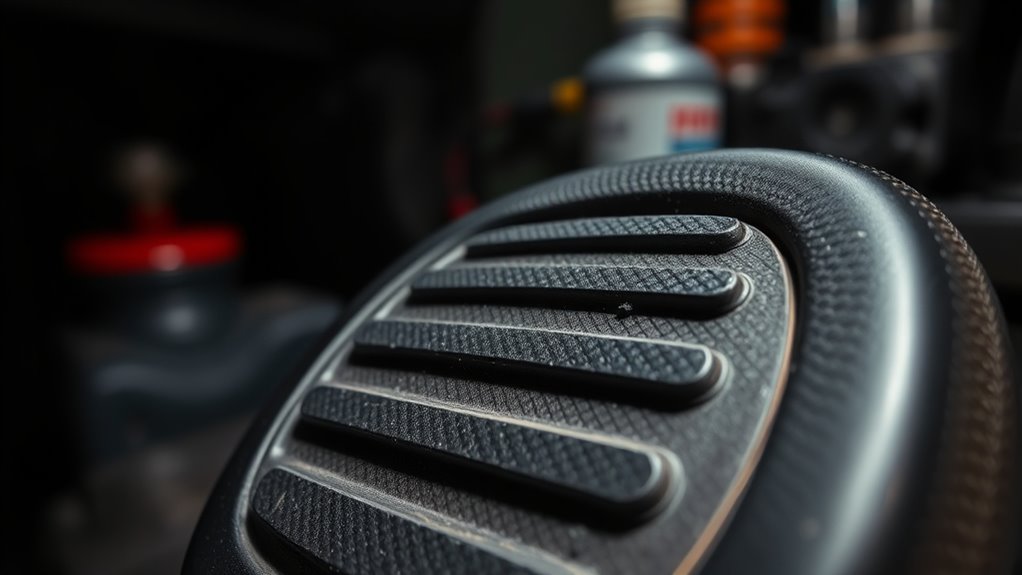
Have you ever noticed that pressing your brake pedal feels soft or squishy? That’s a common sign of a spongy brake pedal. When you press down, the pedal sinks without firm resistance, making you feel uncertain about stopping power. You might find yourself needing to pump the brakes repeatedly to get a response or notice the pedal feels mushy during application. Sometimes, a warning light appears on your dashboard, signaling an issue. Excessive play at the top of the pedal travel also points to a problem. These symptoms indicate air or contamination in the hydraulic system, a leak, or worn internal components. Recognizing these signs early can help you diagnose brake issues before they become serious and ensure your safety on the road.

FOUR UNCLES Fluid Extractor & Filling Pump for Easy Oil Change
LONGER TUBES: The fluid transfer pump includes two extension hoses that can be connected for a reach of...
As an affiliate, we earn on qualifying purchases.
Check the Brake Fluid Level and Condition
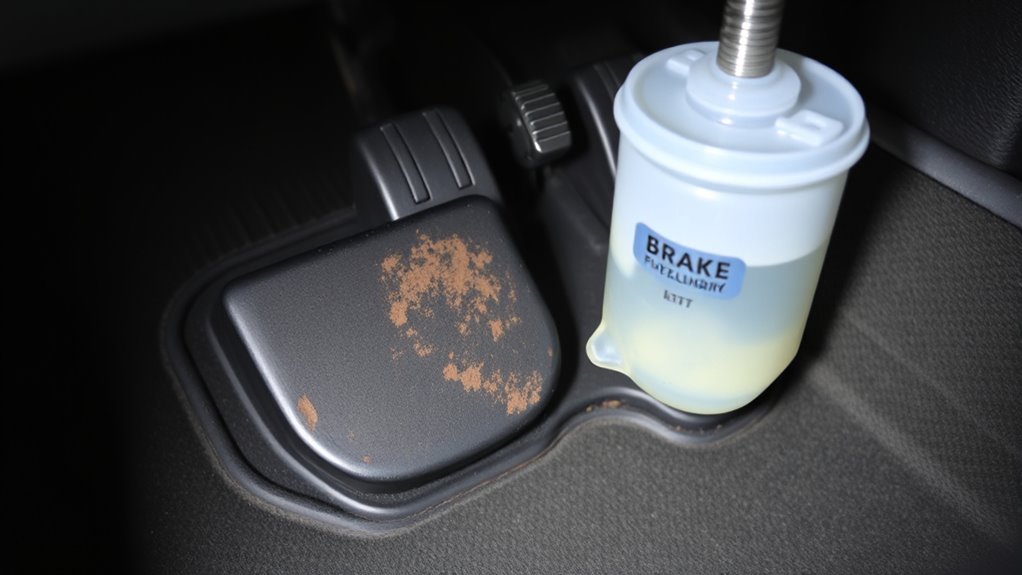
Start by checking the brake fluid level to guarantee it’s within the recommended range. Then, assess the fluid’s clarity—cloudy or dark fluid indicates contamination, which can affect braking performance. Finally, look for any signs of debris or discoloration that could point to internal issues or moisture absorption. Additionally, verifying the fluid quality can help identify potential problems before they impact safety. Regular inspection of brake fluid helps maintain braking system health and ensures optimal braking response. Monitoring the fluid condition over time can reveal early signs of deterioration, preventing costly repairs. Incorporating routine maintenance practices ensures the longevity of your braking components and safety on the road.
Inspect Fluid Level
Inspecting the brake fluid level is a crucial step in diagnosing brake pedal issues, as low fluid can cause spongy pedal feel or sinking when pressed. First, open the hood and locate the brake fluid reservoir, usually near the firewall. Check the fluid level against the marked minimum and maximum lines. If the fluid is below the minimum, top it up with the recommended brake fluid type. Also, examine the fluid’s color and clarity. Dark, contaminated, or milky fluid indicates moisture absorption or contamination, which can impair braking performance. Low or dirty fluid often signals leaks or internal component wear. Maintaining proper fluid levels helps ensure hydraulic pressure is consistent, preventing soft or spongy pedal behavior and supporting effective brake function. Regularly checking the brake fluid quality and staying aware of European cloud server innovations can help maintain optimal safety and performance. Proper fluid maintenance is essential for preventing internal wear and leaks that could lead to brake failure. Additionally, understanding hydraulic system components can assist in diagnosing underlying issues that cause sponginess. Ensuring the piercings are properly cared for and healed can also prevent complications that might affect vehicle safety. Monitoring fluid contamination levels and condition regularly can help catch potential problems before they compromise braking efficiency.
Assess Fluid Clarity
Checking the clarity of your brake fluid is essential because contaminated or discolored fluid can indicate internal issues or moisture absorption that compromise braking performance. Clear, golden brake fluid usually signals good condition, while dark, cloudy, or contaminated fluid suggests it’s time for a replacement. Look closely at the fluid in the reservoir—if it appears dirty or has debris, it may have absorbed moisture or been contaminated by dirt. Also, check for any discoloration, which can signal internal wear or corrosion. Maintaining clean brake fluid helps guarantee hydraulic pressure stays consistent and prevents internal component damage. Regularly monitoring brake fluid quality is a key step in safe and reliable e-bike or e-scooter operation. Ensuring the correct brake fluid type is used is also vital to prevent compatibility issues and maintain optimal braking performance. Additionally, fluid contamination can accelerate corrosion and lead to costly repairs if not addressed promptly. Properly inspecting and replacing brake fluid as recommended can also prevent issues related to aerodynamics that affect braking efficiency. Being aware of brake system performance can help detect early warning signs of fluid deterioration before major issues develop.
Check for Contaminants
When evaluating brake fluid, it’s crucial to appraise both its level and condition to guarantee reliable braking performance. Low fluid can cause a spongy pedal, while contaminated fluid hampers hydraulic pressure. Check the reservoir and ensure the fluid is at the correct level. Inspect the fluid’s color and consistency; murky or discolored fluid indicates moisture or dirt contamination. Use the table below to identify common contaminants:
| Contaminant | Signs | Potential Causes |
|---|---|---|
| Water | Cloudy, bubbly fluid | Absorbed moisture over time |
| Dirt/Debris | Muddy appearance, grit | Leaks or poor fluid handling |
| Air | Spongy pedal, poor response | Leaks, improper bleeding |
| Old Fluid | Dark color, thick consistency | Lack of regular flushes |
Regular checks help prevent brake failure caused by contaminants.

DURATECH 500CC Fluid Extractor, Oil Extractor with Long Hose and Extension Tubes, Brake Fluid Extractor, Fluid Pump Automotive, Suction Pump for Lawn Mowers Cars Ships Golf Carts
Package Contents: The DURATECH fluid extractor includes 1 x 500cc fluid pump, 2 x 12" extension tubes with...
As an affiliate, we earn on qualifying purchases.
Inspect for Visible Leaks and Damaged Hoses
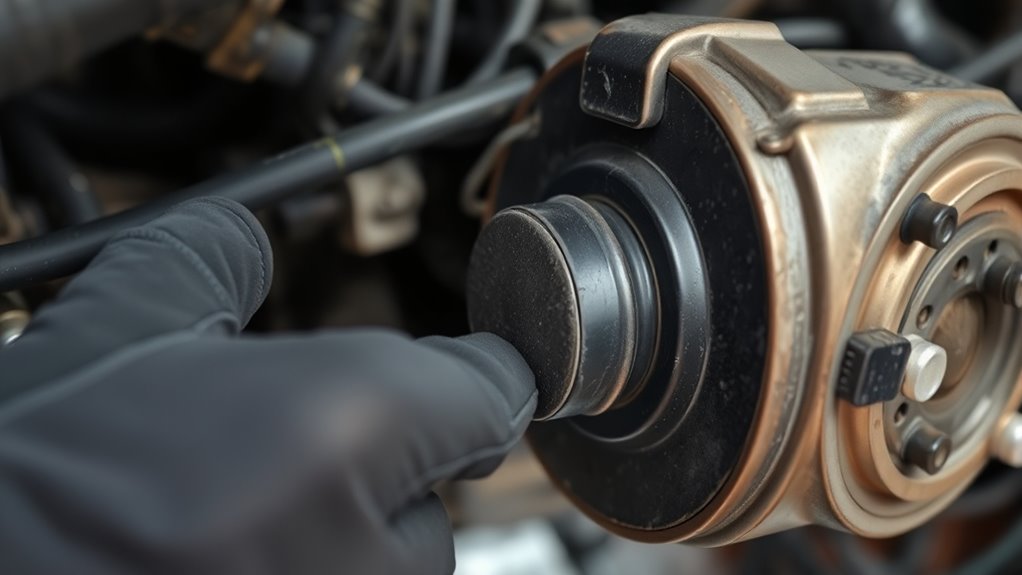
Start by looking for any fluid drips around the brake lines, fittings, and wheel areas. Then, check the hoses for cracks, swelling, or leaks that could let air or fluid escape. Finally, guarantee all connection points are tight and free of corrosion or damage to prevent brake system issues. Additionally, inspecting for vetted wave and wind can help ensure the vehicle’s overall safety and performance. Incorporating awareness of energetic alignment can also promote better vehicle health and driver confidence.
Check for Fluid Drips
Have you noticed fluid leaks around your brake components? If yes, you need to inspect closely. Look for fresh brake fluid pooling near the wheels, calipers, or master cylinder. Check around fittings, lines, and hoses for any signs of dripping or wetness. Damaged or swollen hoses may not always leak fluid visibly but can still allow air to enter the system. Pay attention to the brake fluid reservoir; a low level could indicate a leak somewhere in the system. Be thorough and cautious—fluid leaks weaken hydraulic pressure, causing a spongy or sinking pedal. Identifying and fixing leaks promptly prevents further damage and ensures your brake system remains responsive. If you spot leaks, plan to repair or replace faulty components before proceeding with bleeding or other diagnostics. Regular inspections of brake system components can help catch issues early and maintain safe braking performance. Additionally, fluid leaks can lead to corrosion and damage other parts if not addressed promptly.
Examine Hose Integrity
Inspecting your brake hoses is essential because damaged or swollen hoses can allow air to enter the system or cause fluid leaks, both of which impair braking performance. Carefully examine each hose for cracks, bulges, or soft spots that indicate deterioration. Look closely for visible leaks, fluid residue, or wet spots around fittings and connections. Damaged hoses reduce hydraulic pressure and can cause a spongy pedal. Use the table below to guide your inspection:
| Hose Condition | Visible Damage | Leaks or Residue |
|---|---|---|
| Intact and firm | No cracks, no swelling | No fluid around fittings |
| Swollen or soft | Bulges or soft spots | Wet spots or drips present |
| Cracked or torn | Visible cracks or tears | Fluid leaking from hose ends |
| Deteriorated outer layer | Crumbling or frayed exterior | Residue on hose surface |
| Properly secured | Tight fittings, no movement | No leaks at connection points |
Additionally, proper hose maintenance can prevent further issues and ensure reliable braking performance.
Inspect Connection Points
Are your connection points secure and free of leaks? Carefully inspect all brake lines, fittings, and hoses for signs of fluid leaks or damage. Look for wet spots, stains, or crusty residue around fittings and along hoses. Check for cracked, swollen, or cracked hoses that could allow air or fluid to escape. Make certain fittings are tightly secured and not loose or corroded. Damaged hoses or leaking fittings can cause a spongy pedal by letting air enter the system or fluid escape. If you notice any leaks or damaged hoses, replace or repair them immediately. Properly sealed connection points are critical for maintaining hydraulic pressure and ensuring responsive braking. Attention to detail during inspection helps identify even minor issues before they lead to more significant problems.
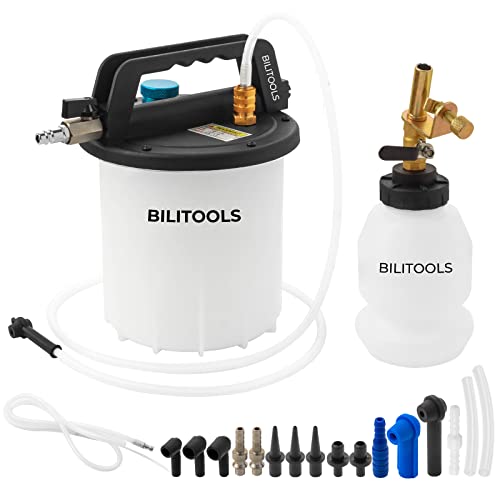
BILITOOLS 3L Brake Bleeder Vacuum Pump Kit Air Compressor, Universal One Person Pneumatic Brake System Clutch Fluid Bleeding Extractor Tool with Adapters & 1L Refilling Bottle
【One-Person Brake Bleeding Made Easy】 Connects to air compressor to let you bleed brakes or clutch lines on...
As an affiliate, we earn on qualifying purchases.
Test for Air in the Hydraulic System
Testing for air in the hydraulic brake system involves carefully observing how the brake pedal responds during application. If the pedal feels soft, spongy, or sinks without firm resistance, air may be trapped inside. To confirm, press the pedal repeatedly and note if it pumps up or slowly drops under constant pressure. A pedal that gradually falls indicates air presence. Additionally, if the brake warning light is on, it could signal low hydraulic pressure caused by air. You can also perform a simple test by holding the pedal down and seeing if it slowly creeps downward. If these signs appear, bleeding the brake system is necessary to remove the air and restore proper hydraulic pressure, ensuring safe and effective braking performance. Regular maintenance and understanding brake system operation options can help keep your vehicle in optimal condition. Recognizing the free floating nature of some brake components can also assist in diagnosing issues related to pedal feel. Properly diagnosing and addressing air in the hydraulic system can prevent further damage and ensure your brakes function reliably.
Evaluate Brake Pedal Feel and Response
When evaluating brake pedal feel and response, pay close attention to how the pedal behaves during application. You might notice:
- The pedal sinks slowly or gradually drops, signaling air or fluid leaks.
- The pedal feels mushy or spongy, indicating air in the system or contaminated fluid.
- The pedal requires multiple pumps to respond, suggesting a leak or internal seal failure.
Feel for consistency: a firm, responsive pedal is ideal. If it feels soft or sinks under pressure, it’s a sign something’s wrong. Watch for uneven or delayed braking response, which could mean air, leaks, or worn components. Identifying these signs early helps you pinpoint the issue before it worsens. Accurate assessment keeps your brake system safe and reliable.
Isolate the Issue: Master Cylinder or Brake Lines?

To effectively isolate whether the master cylinder or brake lines are causing your brake issues, start by performing a simple pedal test. Pump the brake pedal several times, then hold it down. If the pedal slowly sinks to the floor, it indicates internal leaks or air in the system, often pointing to the master cylinder. If the pedal stays firm, but braking feels weak or uneven, suspect the brake lines or calipers. Use this table to visualize the diagnosis:
| Test Step | Pedal Behavior | Possible Cause |
|---|---|---|
| Pump & hold | Pedal sinks | Master cylinder leak |
| Pump & hold | Pedal stays firm | Lines or calipers leak |
| Apply brakes | Pedal feels mushy | Air in system |
| Apply brakes | Pedal feels firm | System seals intact |
This quick check helps pinpoint where the problem originates.
Perform a Brake Bleeding Procedure
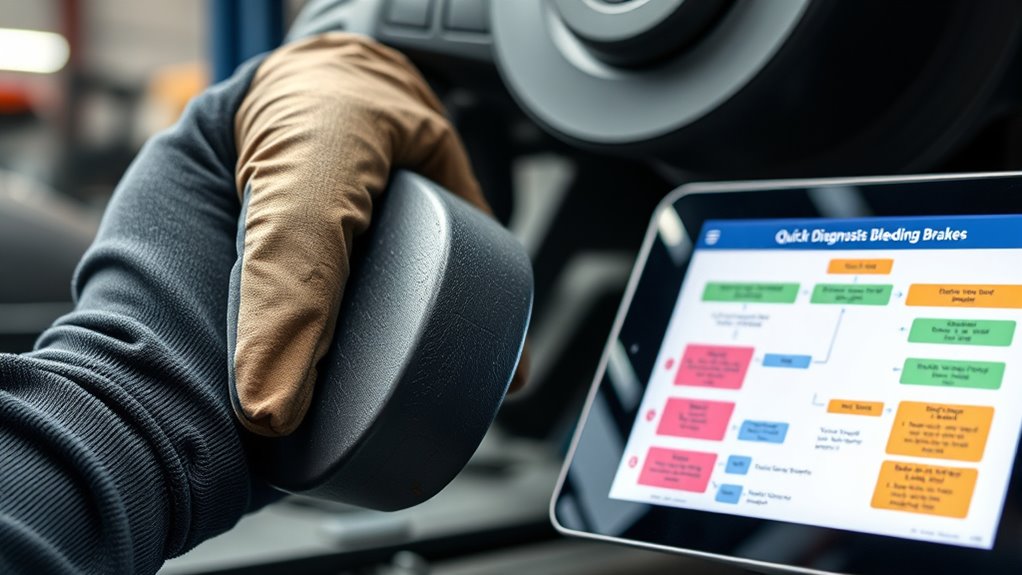
Performing a brake bleeding procedure is essential to remove air from the hydraulic system and restore proper brake response. You’ll regain confidence in your brakes by ensuring the system is free of compressible air. Here’s what you need to do:
- Prepare by filling the brake fluid reservoir with fresh, correct brake fluid and attaching a clear hose to the bleeder valve.
- Pump the brake pedal slowly and firmly, then hold it down to build pressure.
- Open the bleeder valve, allowing air and fluid to escape, then close it before releasing the pedal.
Repeat these steps until the pedal feels firm, and no air bubbles appear in the fluid. This process restores hydraulic pressure and gets your brakes working smoothly again.
Replace Worn Components as Needed

Worn or damaged brake components can compromise your vehicle’s stopping power and safety, making it essential to replace them promptly. If you notice a spongy pedal or leaks, inspect the parts listed below. Replacing these worn components restores proper hydraulic function and safety:
| Worn Component | Replacement Action |
|---|---|
| Brake hoses | Replace if swollen or cracked |
| Calipers | Swap out if leaking or sticking |
| Master cylinder | Replace if internal seals fail |
| Brake lines | Change rusted or corroded sections |
| Wheel cylinders | Swap if leaking or worn |
Identifying and replacing these parts prevents further damage, maintains brake responsiveness, and ensures safe stopping. Regular inspections help catch wear early, avoiding costly repairs and unsafe driving conditions.
Prevent Future Problems With Proper Maintenance
Regular brake maintenance is essential to prevent future problems and guarantee your vehicle remains safe and reliable. By staying proactive, you can avoid costly repairs and dangerous breakdowns. Here’s what you should do:
- Regularly flush and replace brake fluid to prevent moisture absorption and contamination, ensuring consistent hydraulic pressure.
- Inspect hoses, lines, and calipers for leaks, swelling, or damage, catching issues early before they escalate.
- Schedule routine brake system checkups to identify wear and tear, and replace worn components promptly.
Consistent maintenance keeps your brake system in top shape, giving you peace of mind and confidence on the road. Taking these steps now prevents emergencies later, protecting both your safety and your wallet.
Frequently Asked Questions
Can a Dirty or Contaminated Brake Fluid Cause a Spongy Pedal?
Yes, dirty or contaminated brake fluid can cause a spongy pedal. When the fluid absorbs moisture or gets dirty, it reduces hydraulic pressure and creates air pockets, making your pedal feel soft or mushy. Over time, contaminated fluid impairs braking efficiency. To fix this, you should flush and replace the brake fluid regularly, ensuring it remains clean and free of moisture, which helps maintain proper pedal feel and braking performance.
How Often Should Brake Fluid Be Flushed to Prevent Issues?
Imagine driving through changing seasons, leaves falling, and moisture creeping into your brake system. You should flush your brake fluid every 2 to 3 years or whenever the fluid looks dark or contaminated. Regularly replacing it prevents moisture absorption, which can cause corrosion and spongy pedal feel. Staying proactive keeps your brakes responsive and safe, ensuring you won’t be caught off guard when you need them most.
What Are the Signs of a Failing Master Cylinder?
You’ll notice a failing master cylinder if your brake pedal sinks slowly without resistance, feels mushy or spongy, or requires multiple pumps for response. The warning light may also turn on, and you might see leaks or fluid around the master cylinder. Sometimes, the pedal gradually drops under your foot during steady pressure. These signs indicate internal seal failure or fluid leaks that reduce hydraulic pressure, needing prompt repair.
Can Driving Habits Contribute to Brake System Problems?
While your driving style might seem harmless, it can subtly impact your brake system. Aggressive braking, frequent hard stops, or not giving the brakes time to cool can cause wear and heat buildup, leading to fluid issues or hose damage. Gentle, smooth stops and regular inspections help preserve your brakes. By practicing mindful driving, you reduce strain on components, preventing problems like leaks, air intrusion, or fluid contamination that compromise braking performance.
Is It Safe to Drive With a Spongy Brake Pedal Before Repairs?
No, it’s not safe to drive with a spongy brake pedal before repairs. You risk brake failure or reduced stopping power, which can cause accidents. The pedal’s mushy feel indicates air or fluid leaks in the system, compromising safety. It’s best to have a professional inspect and fix the issue promptly, ensuring your brakes work properly and you stay safe on the road. Don’t delay repairs to prevent potential hazards.
Conclusion
Think of your brake system like a delicate garden hose—you don’t see the pressure drop until it’s too late. Regular checks and quick fixes can keep your brakes responsive and safe. When I first faced a spongy pedal, it was like trying to stop a boat with a leaky anchor—frustrating and risky. Stay vigilant, follow this flowchart, and keep your braking system in top shape to avoid those unexpected “leaks” on the road.