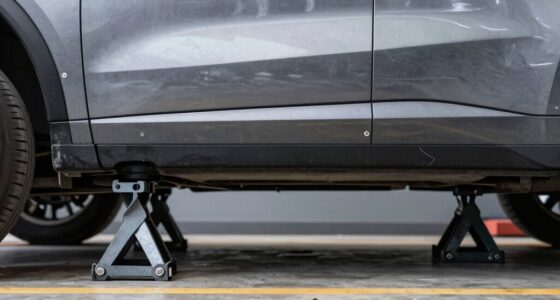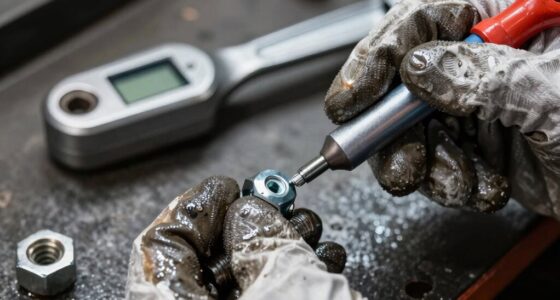
To remove a rounded bolt, start by applying penetrating oil and wait 10-15 minutes to loosen rust. If it’s stubborn, heat the bolt with a heat gun or small torch to expand the metal. Next, try a bolt extractor or locking pliers for a better grip. If those fail, drilling out the bolt is your last option. Following these steps carefully will give you the best chance—continue, and you’ll discover more effective tricks.
Key Takeaways
- Begin with applying penetrating oil and waiting 10-15 minutes to loosen rusted or rounded bolts.
- Use heat cautiously to expand the metal, then attempt to turn the bolt immediately.
- Switch to specialized bolt extractors or locking pliers if initial methods fail.
- Avoid rushing; maintain steady, controlled force to prevent further damage.
- Reserve drilling out the bolt as a last resort after all other options have been exhausted.
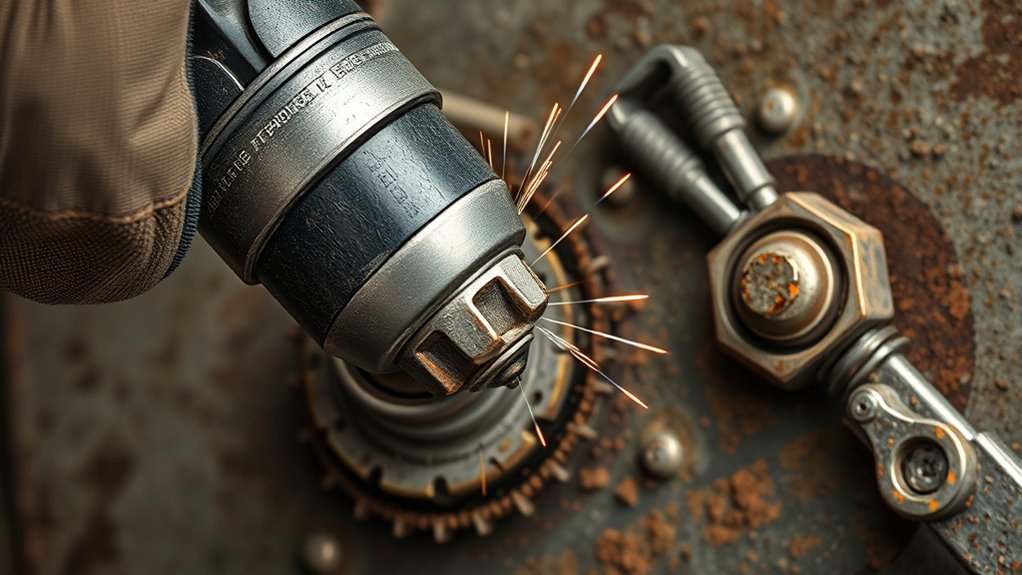
Dealing with a rounded bolt can be frustrating, but with the right tools and techniques, you can remove it without damaging surrounding components. The first step is to try loosening the bolt using penetrating oil. Spray a generous amount around the bolt’s head and let it sit for at least 10-15 minutes. Penetrating oil works by seeping into the rust or grime that’s causing the bolt to seize, breaking down corrosion and easing the grip. Be patient and avoid rushing this step; a well-penetrated bolt is much easier to remove. After the oil has soaked in, try turning the bolt again with your wrench or socket. Sometimes, this alone is enough to free the bolt, especially if it’s only mildly rounded.
If the bolt still refuses to budge, applying heat can make a significant difference. Heat causes metal to expand, which can break the rust or corrosion that’s holding the bolt tightly. Use a heat gun or a small propane torch to carefully heat the bolt and the surrounding area. Be cautious to avoid damaging nearby components or wiring. Applying heat for about 30 seconds to a minute usually suffices, but don’t overdo it, as excessive heat can cause damage. Once heated, immediately try to turn the bolt again with your wrench, preferably using a breaker bar for added leverage. The combination of thermal expansion and the prior application of penetrating oil often loosens stubborn bolts effectively.
If these methods don’t work, consider using specialized tools like bolt extractors or locking pliers. Bolt extractors grip the rounded edges of the bolt more securely than standard sockets. Clamp the extractor onto the bolt head and turn slowly, applying steady pressure. If you’re using locking pliers, lock them onto the bolt head and twist carefully. These tools are designed to grip irregular shapes and provide the torque necessary to turn stubborn bolts. During this process, it’s essential to stay patient and controlled—rushing can strip the bolt further or damage the surrounding material. If all else fails, drilling out the bolt might be your last resort, but always go for the least invasive method first.
Additionally, understanding projector technology can help in creating ideal conditions for maintenance and repairs, since proper lighting and workspace setup can improve your ability to work carefully around delicate components.
Frequently Asked Questions
Can Rounded Bolts Be Removed Without Damaging Surrounding Materials?
Yes, you can remove rounded bolts without damaging surrounding materials by carefully choosing methods that account for bolt corrosion and material compatibility. Use appropriate tools like bolt extractors or screw extractors designed for corrosion-prone bolts. Applying penetrating oil helps loosen corrosion, reducing the risk of damage. Always select removal techniques compatible with the surrounding material to prevent cracking or breaking, ensuring a successful removal while preserving the integrity of nearby components.
What Tools Are Best for Removing Severely Rounded Bolts?
Think of yourself as a skilled locksmith facing a stubborn lock. For severely rounded bolts, specialty tools like bolt extractors, grip sockets, and screw removers work best. These extraction methods grip the damaged head securely, allowing you to turn and remove the bolt without further damage. Use these tools carefully, applying steady pressure, and you’ll free the bolt efficiently—just like releasing a tricky treasure chest.
How Long Does the Removal Process Typically Take?
The removal process usually takes between 15 minutes to an hour, depending on the bolt’s severity and your tools. Timing considerations are essential, so don’t rush. Success rates improve when you follow a step-by-step escalation, starting with simple methods and progressing to specialized tools. Patience and proper technique increase your chances of success, especially with stubborn, rounded bolts. Stay methodical, and you’ll improve your odds of quick, effective removal.
Are There Safety Precautions to Consider During Bolt Removal?
Oh, safety precautions? Who needs those when you’re about to remove a stubborn bolt, right? Actually, you should wear safety gear like goggles and gloves, and use caution measures such as proper tools and stable work surfaces. Ignoring these can lead to injury or damage. Stay alert, follow safety protocols, and don’t rush—your safety’s worth more than a quick fix. Better safe than sorry!
When Should I Seek Professional Help Instead of DIY Removal?
You should seek professional assistance when DIY risks outweigh your skills or tools. If the bolt is deeply rusted, rounded, or stuck, attempting removal might cause damage or injury. Don’t push through excessive force or frustration; instead, contact a professional to avoid costly mistakes or safety hazards. Knowing your limits helps prevent accidents and guarantees the job gets done correctly, saving you time and trouble in the long run.
Conclusion
Removing a rounded bolt can be tricky, but with the right step-by-step approach, you can tackle it confidently. Remember, applying gradual force and using the proper tools increases your success rate. Did you know that over 60% of fastener failures are caused by improper removal techniques? Staying patient and methodical guarantees you avoid damage and save time. So next time you face a stubborn bolt, trust the escalation process—you’ll get it out without hassle.