Difficulty: Intermediate | Time: 30-45 minutes
Open a free Amazon Business account
Business pricing, bulk buying and tax-exempt orders.
Create a free accountAs an affiliate, we earn on qualifying purchases.

Ingersoll Rand W7153-K22 1/2" Cordless Impact Wrench and IQV20 Battery Kit
- ✔ Drive Size: 1/2"
- ✔ Torque: 1,600 ft-lbs
- ✔ Battery Voltage: 20V
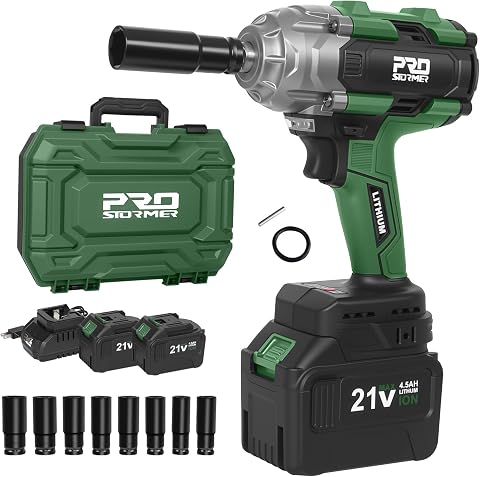
Prostormer 800N.m Cordless Impact Wrench for Car and Home
- ✔ Maximum Torque: 800 Nm
- ✔ Impact Rate: 2500 BPM
- ✔ Speeds: 3

Cordless Impact Wrench Kit, 20V MAX 3/4 Impact Gun, 1474Ft-lbs (2000N.m), Brushless, 6-Mode Speed, 2×4.0Ah Batteries
- ✔ Torque: 1474 ft-lbs (2000N.m)
- ✔ Voltage: 20V MAX
- ✔ Battery Capacity: 2x 4.0Ah
What You’ll Need
Tools & Materials:
- Cordless impact wrench
- Charged battery pack
- Compatible charger
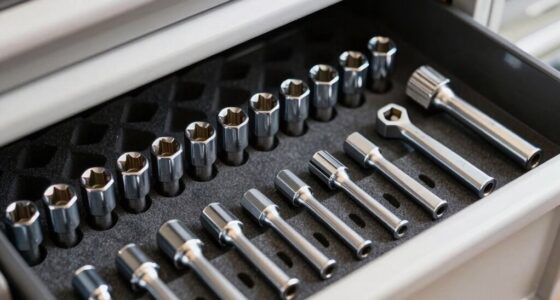
- Set of sockets
- Safety goggles
- Work gloves
Knowledge:
- Basic understanding of power tools
- Knowledge of safety procedures when working with tools
Ingersoll Rand W7153-K22 1/2" Cordless Impact Wrench and IQV20 Battery Kit
<p>The <strong>Ingersoll Rand W7153-K22</strong> stands out for its incredible <strong>1,600 ft-lbs of breakaway torque</strong>, making it ideal for demanding automotive and industrial tasks. Its multiple power modes give users control over torque delivery, which is crucial when handling tough fasteners without risking over-tightening. The steel-reinforced frame enhances durability, while including two batteries and a universal charger ensures continuous operation. However, at 6.1 pounds, it’s relatively heavy for prolonged handheld use, and the high price may deter casual users. Compared to lighter or less powerful models, this wrench prioritizes raw power and professional reliability, making it perfect for heavy-duty applications but less suited for lighter DIY jobs.</p>
Pros:
- Exceptional 1,600 ft-lbs of torque for tough applications
- Includes two batteries and universal charger for extended use
- Multiple power modes for precise control
- Durable steel-reinforced frame
Cons:
- Relatively heavy for prolonged handheld use
- High price point may be prohibitive for casual users
Best for: Professional mechanics, industrial users, and heavy-duty automotive repair
Not ideal for: Casual DIYers or those with budget constraints
Bottom line: This impact wrench is the best choice for professionals needing maximum power and durability, despite its higher cost and weight.
“This impact wrench is the best choice for professionals needing maximum power and durability, despite its higher cost and weight.”
Prostormer 800N.m Cordless Impact Wrench for Car and Home
<p>The <strong>Prostormer 800N.m impact wrench</strong> offers a compelling mix of power and portability, delivering up to <strong>800 Nm of torque</strong>. Its three adjustable speeds—ranging from 0-900 to 0-2450 rpm—make it adaptable for various tasks, from light automotive work to heavier jobs around the house. The ergonomic design and built-in LED light enhance usability, especially in tight or poorly lit spaces. It comes with two 4.5Ah batteries, a charger, and multiple sockets, making it well-suited for those who need a reliable, all-around impact wrench. The main tradeoff lies in its weight—at around 6.6 pounds, extended use can cause fatigue—and its battery life may diminish under prolonged, heavy workloads. Nonetheless, it offers a good balance of power, control, and affordability for most DIY enthusiasts and professionals.</p>
Pros:
- Powerful 800 Nm torque for demanding jobs
- Three adjustable speeds for versatility
- Ergonomic design with LED for better visibility
- Includes two batteries and multiple sockets
Cons:
- Heavy weight may cause fatigue during long sessions
- Battery life can be limited under heavy workloads
Best for: Automotive enthusiasts, DIY homeowners, and general repair tasks
Not ideal for: Heavy industrial use or tasks requiring maximum torque
Bottom line: A versatile, powerful impact wrench that balances performance with user comfort, ideal for automotive and home projects but less suited for prolonged heavy-duty use.
“A versatile, powerful impact wrench that balances performance with user comfort, ideal for automotive and home projects but less suited for prolonged heavy-duty use.”
Cordless Impact Wrench Kit, 20V MAX 3/4 Impact Gun, 1474Ft-lbs (2000N.m), Brushless, 6-Mode Speed, 2×4.0Ah Batteries
<p>This <strong>20V MAX impact wrench kit</strong> delivers an impressive <strong>1474 ft-lbs (2000N.m) of torque</strong>, making it the powerhouse of the lineup. Its brushless motor ensures efficiency and longevity, while the six-speed modes—including forward and reverse—allow for precise control over heavy-duty tasks like automotive repairs and construction. The kit includes two 4.0Ah batteries, providing extended runtime, though the tool’s weight of 6.6 pounds can cause fatigue during prolonged use. It’s overpowered for light tasks, but if you frequently handle demanding jobs, this impact wrench offers unmatched power and versatility. The main consideration is that the high torque and multiple modes come with increased complexity and cost, which might be unnecessary for casual users.</p>
Pros:
- Maximum torque output for tough jobs
- Multiple speed modes for tailored control
- Includes two batteries for extended work sessions
- Brushless motor for durability and efficiency
Cons:
- Relatively heavy for extended handheld use
- May be overkill for simple tasks
- Higher cost and complexity
Best for: Heavy-duty automotive repair, construction, industrial use
Not ideal for: Light DIY projects or occasional home use
Bottom line: This impact wrench is best suited for professionals or serious DIYers demanding maximum power and control, though it may be overpowered for casual use.
“This impact wrench is best suited for professionals or serious DIYers demanding maximum power and control, though it may be overpowered for casual use.”
As an Amazon Associate we earn from qualifying purchases.
Before You Start
Check that the impact wrench is in good working condition, with no visible damage. Confirm that the battery is fully charged. Select the appropriate socket for your task. Wear safety goggles and gloves to protect yourself during operation.Step-by-Step Instructions
Step 1: Attach the appropriate socket
Insert the correct size socket onto the impact wrench’s drive anvil. Push firmly until it clicks into place, ensuring it is securely attached.Tip: Use a socket that fits snugly on the fastener to prevent slipping or stripping. Always double-check the socket is fully seated before operation.
Check: The socket is securely attached, with no wobble or looseness when gently tugged.
Step 2: Set the torque and mode
Turn the impact wrench’s torque adjustment dial to the desired setting based on your task. Select the appropriate mode (e.g., tightening or loosening) if your model offers mode options.Tip: Use lower torque settings for delicate fasteners to avoid damage. For stubborn bolts, set a higher torque but avoid over-tightening.
Check: The selected torque setting matches your task requirements, and the mode is correctly engaged.
Step 3: Position the impact wrench on the fastener
Align the socket with the nut or bolt head. Hold the tool firmly with both hands, keeping it perpendicular to the fastener for maximum control.Tip: Ensure the impact wrench is stable and directly aligned to prevent slipping or cross-threading.
Check: The socket is properly seated on the fastener, and the impact wrench is aligned straight with the fastener.
Step 4: Operate the impact wrench
Press and hold the trigger to start the tool. Allow the impact to apply steady force until the fastener is tightened or loosened to the desired level.Tip: Apply firm, consistent pressure. Do not force the tool beyond its capacity to prevent damage or kickback.
Check: The fastener is either fully tightened to the set torque or loosened completely without slippage or tool stalling.
Step 5: Release the trigger and remove the socket
Release the trigger once the task is complete. Carefully pull the impact wrench away from the fastener. Detach the socket by pressing the release button and pulling it off.Tip: Wait a moment before removing the socket to allow the tool to stop spinning completely. Always disconnect the socket gently to avoid damage.
Check: The fastener is properly tightened or loosened, and the socket is safely removed without damage.
Common Mistakes to Avoid
- Using the wrong socket size or poorly fitting sockets — Always verify socket size matches the fastener; use high-quality, correctly sized sockets for a secure fit.
- Over-tightening or under-tightening fasteners — Set the torque limit appropriately before operation and monitor the torque indicator if available.
- Applying excessive force or pressure during operation — Let the impact wrench do the work; avoid forcing the tool or pressing too hard, which can damage fasteners or the tool.
- Not securing the socket properly — Ensure the socket clicks in securely and test by gently pulling before starting work.
Troubleshooting
Problem: Impact wrench not starting or no power
Solution: Check that the battery is fully charged and properly inserted. Replace the battery if it no longer holds a charge.
Problem: Tool stalls or stops suddenly during operation
Solution: Ensure the socket is properly attached. Reduce torque setting if overloaded or if the fastener is stripped.
Problem: Fastener not loosening or tightening
Solution: Verify the correct socket size and torque setting. Use a higher torque setting if needed, or apply additional manual force with caution.
Problem: Excessive vibration or noise
Solution: Check for loose parts or damaged components. Stop use and inspect the impact wrench for wear or damage.
What Success Looks Like
The impact wrench operates smoothly with no abnormal noise or vibration. Fasteners are tightened or loosened to the specified torque, with socket securely attached. The tool stops immediately when trigger is released and performs consistently during repeated use.Next Steps
After completing your task, clean the impact wrench and store it in a dry, secure place. Regularly inspect the tool for damage and recharge the battery as needed. For continued use, practice adjusting torque settings and switching modes. If the tool shows signs of malfunction, consult the manufacturer’s repair guidelines or seek professional service.Frequently Asked Questions
How do I know what torque setting to use?
Select the torque setting based on the fastener’s specifications. For delicate materials, use lower torque; for stubborn bolts, increase gradually. Refer to manufacturer recommendations or project guidelines.
Can I use any socket with my impact wrench?
Use sockets designed for impact tools, which are made to withstand the force without cracking. Ensure they are the correct size for your fasteners.
How often should I recharge the battery?
Recharge after each use or when the power indicator shows low. Avoid fully discharging the battery frequently to extend its lifespan.
Is it safe to operate the impact wrench one-handed?
No. Always hold the impact wrench with both hands for control and safety, especially when working with heavy or stubborn fasteners.
How do I maintain my impact wrench for longevity?
Regularly clean the tool, check for loose or worn parts, and store it in a dry place. Follow the manufacturer’s maintenance instructions for lubrication and servicing.
Fall Picks
fall essentials
As an affiliate, we earn on qualifying purchases.