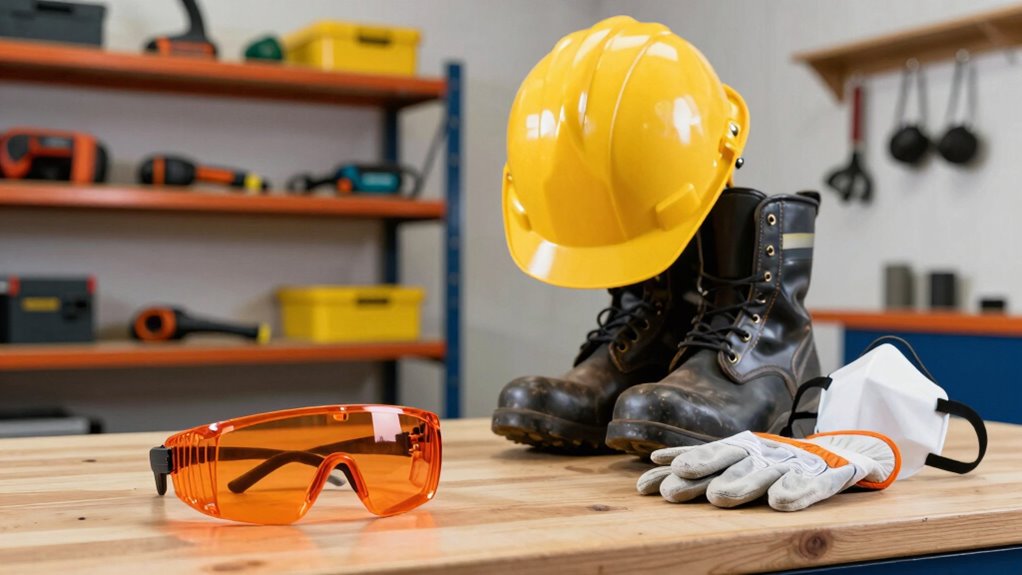

To stay safe in your garage, you need a solid PPE checklist. Always wear impact-resistant safety glasses or goggles, and when handling chemicals, use splash goggles or face shields. Protect your hands with gloves suited for the task, and wear masks or respirators if fumes are present. Don’t forget earplugs or earmuffs for noisy work, sturdy footwear, and a hard hat for overhead hazards. Keeping your gear inspected and maintained prevents you from avoidable injuries—discover the full list to ensure you’re well-prepared.
Key Takeaways
- Regularly inspect and replace damaged PPE like safety glasses, gloves, and helmets to ensure maximum protection.
- Use appropriate eye, face, hearing, and respiratory gear tailored to specific garage hazards.
- Properly store PPE in clean, dry areas to prevent deterioration and contamination.
- Ensure PPE fits securely and comfortably for effective protection during tasks.
- Follow manufacturer guidelines for cleaning, maintenance, and replacement schedules to maintain gear efficacy.
impact-resistant safety glasses with side shields
As an affiliate, we earn on qualifying purchases.
As an affiliate, we earn on qualifying purchases.
Eye and Face Protection Must-Haves
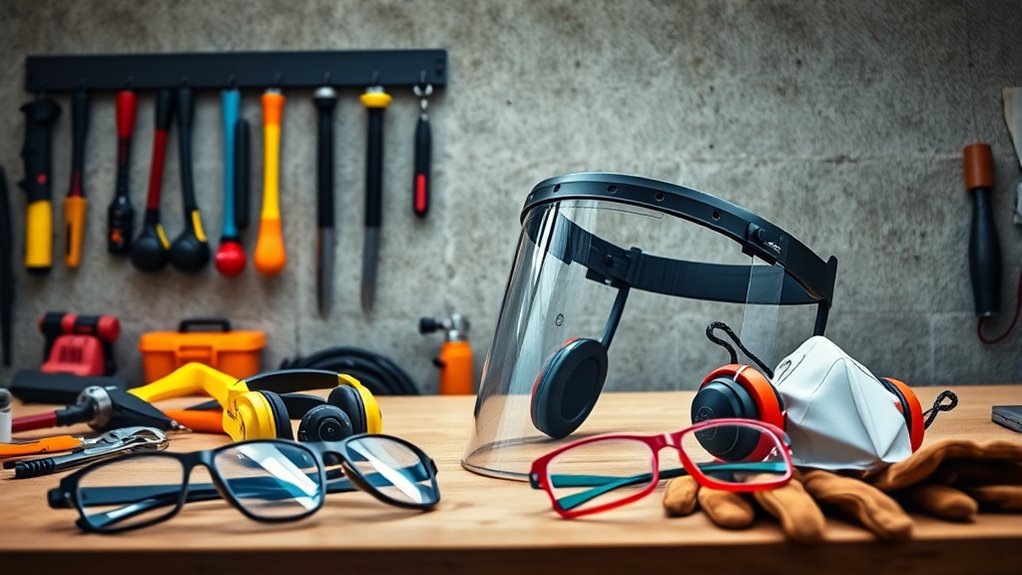
Eye and face protection are essential for preventing injuries in the garage, especially when working with impact tools, chemicals, or welding sparks. You should always wear safety glasses with side shields to guard against impact, abrasion, and flying debris. For tasks involving chemicals, like handling solvents or brake cleaner, chemical splash goggles or face shields are critical. When grinding or welding, sparks and splashes can cause serious damage, so proper eye and face protection is non-negotiable. Make sure your safety gear is ANSI/ISEA Z87.1 compliant, and regularly inspect lenses and frames for scratches or damage. Keep an accessible eyewash station nearby in case of chemical splashes. Proper eye and face protection isn’t just a rule—it’s your first line of defense against serious injuries. Additionally, understanding the thermal behavior of various materials can help you choose the appropriate protective gear for high-heat tasks. Considering the color accuracy of your protective lenses can also reduce eye strain during prolonged work sessions, enhancing safety and comfort. Being aware of the impact resistance standards of your safety glasses can further prevent lens shattering during accidental impacts. Regularly replacing or upgrading your protective gear ensures consistent safety performance and wearer protection.
chemical splash goggles for garage work
As an affiliate, we earn on qualifying purchases.
As an affiliate, we earn on qualifying purchases.
Hand Safety Gear for Every Task
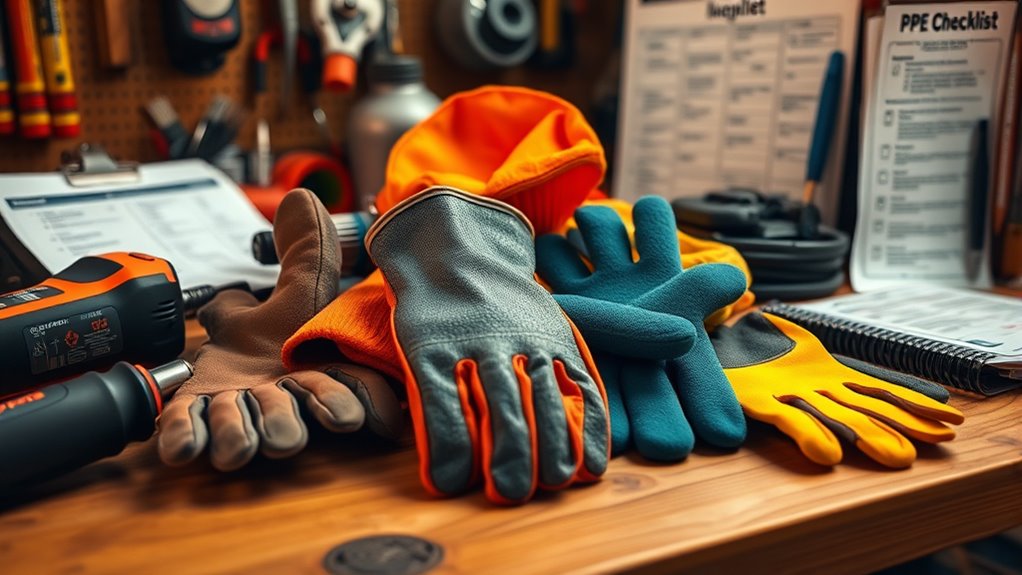
Choosing the right hand protection is crucial to prevent injuries and guarantee safety during every garage task. The correct gloves shield your hands from cuts, chemicals, heat, and impact. For oil and light chemicals, nitrile or vinyl gloves work well. Handling solvents or acids calls for chemical-resistant gloves suited to the specific substance. When working with sharp edges, cut-resistant gloves like Kevlar provide necessary protection. Heavy lifting or impact risks demand leather or impact gloves. For high-voltage work, electrical-insulating gloves are essential. Use this guide to select the appropriate gear for each task: attention to detail is vital when inspecting gloves for defects or proper fit to ensure maximum safety. Additionally, understanding the history of safety regulations can help you stay compliant and choose the most protective gear available. Staying informed about safety standards ensures your gear meets current requirements and offers optimal protection.
hearing protection earplugs or earmuffs
As an affiliate, we earn on qualifying purchases.
As an affiliate, we earn on qualifying purchases.
Respiratory Equipment You Can’t Skip
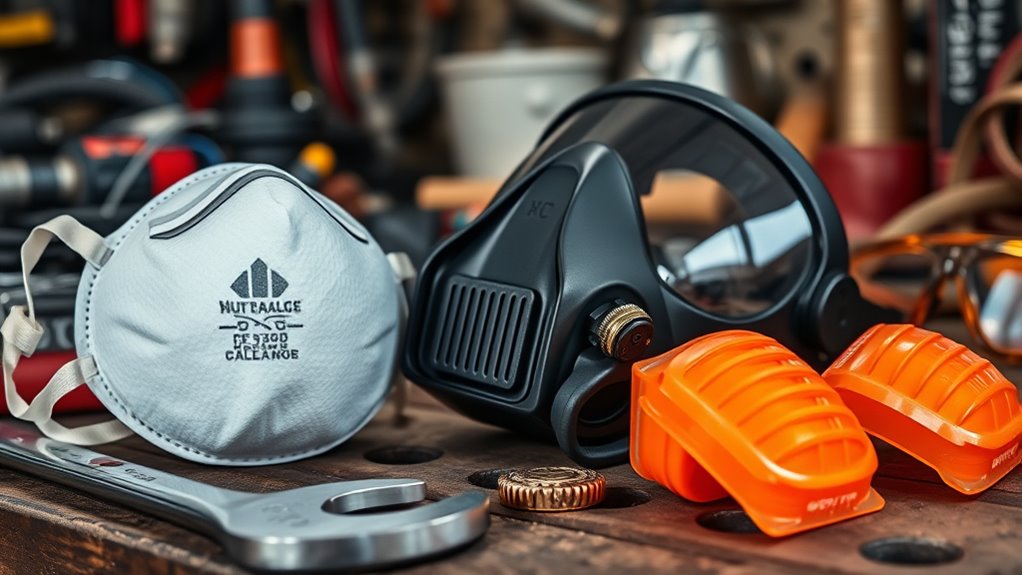
You need to guarantee your respirator fits properly and is well-maintained to stay protected. Choosing the right cartridge depends on the chemicals or particles you’re working with, so make sure you select accordingly. Regularly inspecting and replacing cartridges keeps your respiratory equipment effective and safe. Proper fit testing ensures maximum protection and comfort during use. Additionally, understanding the horsepower capabilities of your electric dirt bike can help you select appropriate safety gear for high-performance rides. Being aware of free floating hazards in your environment can further enhance your safety precautions. Incorporating tableware knowledge can also prevent mishaps when handling dishes and utensils in confined spaces or during emergencies. Being conscious of toilet maintenance practices can also prevent unexpected issues in confined or emergency situations.
Proper Fit and Maintenance
Ensuring proper fit and maintenance of respiratory equipment is essential for effective protection in the garage. You need to regularly check that your masks and respirators fit snugly without gaps, and perform user seal checks each time you wear them. Ill-fitting gear reduces protection and increases exposure risk. Keep filters, cartridges, and valves clean, replacing them according to the manufacturer’s schedule or if they become damaged or contaminated. Store your respirators in a clean, dry place away from sunlight and chemicals to prevent deterioration. Inspect straps, facepieces, and filters before every use, replacing any worn or compromised parts. Proper fit and routine maintenance make certain your respiratory equipment functions correctly, providing the safety you rely on during hazardous tasks.
Choosing the Right Cartridge
Selecting the correct cartridge for your respirator is essential to effectively protect against specific hazards in the garage. Without the right filter, you risk inhaling dangerous fumes or particles. First, identify the contaminant: solvents, paint fumes, dust, or chemicals. Then, match the cartridge to the hazard:
- Use organic vapor cartridges for solvents, paints, and adhesives.
- Choose chemical cartridges with P100 filters for dust and airborne particles.
- Opt for multi-purpose cartridges if exposed to both fumes and dust.
- Check compatibility with your respirator model and ensure proper fit.
- Replace cartridges regularly, following manufacturer guidelines, especially after exposure or if breathing becomes difficult.
Proper selection and maintenance ensure your respiratory protection is effective, keeping you safe from harmful garage fumes.
chemical-resistant work gloves for garage
As an affiliate, we earn on qualifying purchases.
As an affiliate, we earn on qualifying purchases.
Hearing Protection for Noisy Environments

Choosing the right earplugs is vital for protecting your hearing during loud tasks, so make certain to select the appropriate type and fit. Regular noise monitoring helps identify areas where noise levels exceed safe limits, guiding your PPE choices. Keeping track of noise levels guarantees you use the best hearing protection for sustained safety. Incorporating sound measurement techniques can further ensure optimal hearing protection in noisy environments. For example, utilizing support breakfast tips can help you stay energized and alert during long work hours, indirectly supporting your focus on safety measures. Additionally, understanding the power consumption of your appliances can prevent unexpected noise-related issues in your workspace. Monitoring noise levels with appropriate tools also aids in maintaining a safe environment and avoiding potential hearing damage over time. Regularly reviewing your exposure levels ensures ongoing protection and compliance with safety standards.
Appropriate Earplug Selection
In noisy environments, wearing the right earplugs is essential to protect your hearing from damage. Choosing the proper earplugs guarantees you get adequate noise reduction without sacrificing comfort or safety. Consider these factors:
- Noise Reduction Rating (NRR): Select earplugs with an NRR suited for the noise level; higher NRR for louder environments.
- Material: Foam for disposables, silicone or wax for reusable, depending on durability and comfort.
- Fit: Ensure a snug fit that seals your ear canal without causing discomfort.
- Ease of Insertion: Look for earplugs that are simple to insert and remove quickly.
- Compatibility: Confirm they work well with other PPE like safety glasses or respirators, avoiding interference.
- Understanding credit card security measures can help ensure your safety when purchasing hearing protection online.
Proper selection enhances protection, maintains awareness, and prevents hearing loss during noisy tasks.
Sustained Noise Monitoring
Have you ever considered how ongoing noise exposure impacts your hearing health over time? Sustained noise monitoring helps identify areas where noise levels exceed safe limits, typically 85 dB(A) TWA. Using sound level meters or dosimeters, you can assess which shop zones pose risks and require hearing protection. Regular monitoring ensures that your team isn’t unknowingly exposed to damaging noise. It also helps determine the appropriate hearing PPE, whether earplugs, earmuffs, or a combination. Consistent documentation of noise levels supports compliance with OSHA and ANSI standards. By proactively tracking noise, you prevent hearing loss and maintain a safer work environment. Remember, monitoring isn’t a one-time task; it’s an ongoing process crucial for effective hearing conservation and your long-term health. Incorporating repeatable tests and simple tools like BTU and CADR quick‑calculators into your noise assessments can further enhance your understanding of environmental risks. Understanding noise level guidelines is essential for setting appropriate safety protocols and ensuring ongoing compliance. Additionally, fostering a safety culture that prioritizes hearing protection encourages consistent use of PPE among workers. Employing advanced monitoring equipment can help detect fluctuations in noise levels more accurately, ensuring better protection strategies. Conducting regular evaluations of noise data also helps identify trends and adjust safety measures accordingly.
Footwear and Headgear Essentials
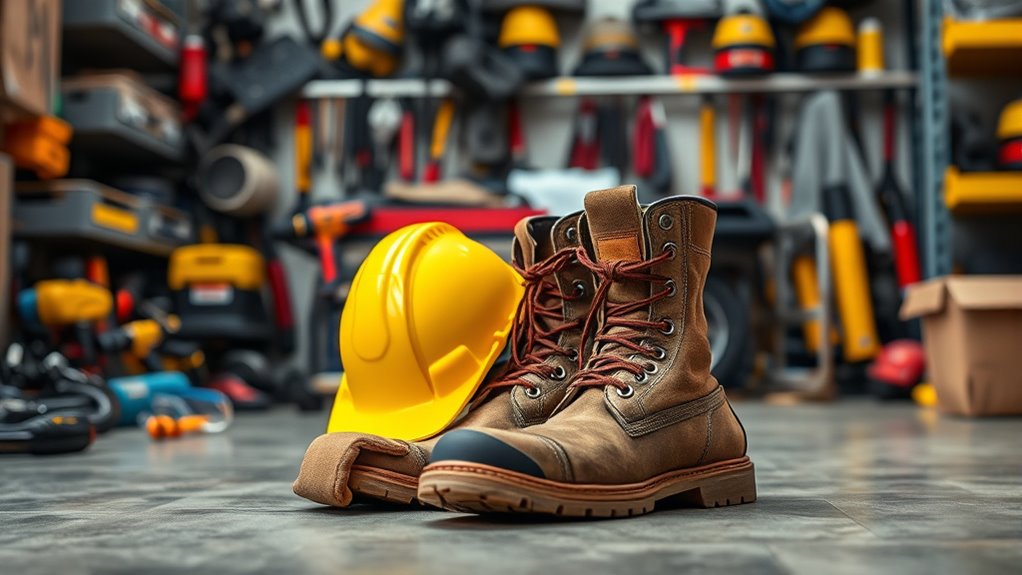
Proper footwear and headgear are essential for ensuring your safety in the garage environment. Your footwear should have steel or composite toes, slip-resistant soles, and puncture resistance to protect against falling objects, slips, and sharp debris. Headgear, like a hard hat, shields you from overhead hazards, falling tools, or accidental impacts. Wearing the right gear minimizes injury risk and keeps you focused on the task at hand. Additionally, selecting gear designed for environmental considerations helps reduce your impact on surroundings and promotes safer work practices.
High-Visibility and Body Coverage Standards
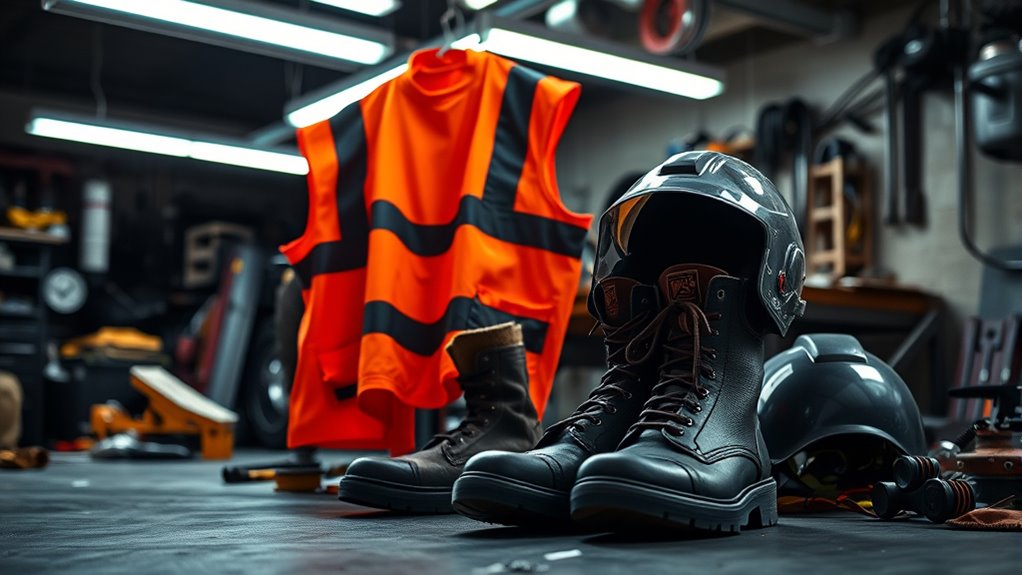
Wearing high-visibility apparel and appropriate body coverage helps you stay seen and protected amid busy garage operations. Bright, reflective clothing makes it easier for others to spot you, reducing the risk of struck-by accidents. When moving vehicles or equipment, don’t underestimate the importance of high-visibility vests or shirts, especially in low-light conditions. Body coverage, like flame-resistant coveralls or long sleeves, shields your skin from burns, sparks, and chemical splashes. Hard hats protect your head from falling objects or overhead hazards. Steel-toe or composite-toe shoes safeguard your feet from heavy or sharp objects. Combining visibility gear with full-body coverage creates a safer environment, helping you avoid injuries and ensuring you’re easily identifiable in hectic, potentially hazardous garage settings.
Maintaining and Inspecting PPE Regularly

You need to regularly inspect your PPE to guarantee it provides proper protection. Follow routine protocols to check for damage, wear, or contamination, and replace items as needed. Proper storage practices also help maintain PPE’s effectiveness and extend its lifespan.
Routine Inspection Protocols
Regularly inspecting PPE is essential to guarantee it provides the intended protection and remains in safe working condition. You should establish a routine schedule to check all gear for damage, wear, or deterioration. Look for cracks, scratches, or compromised seals on goggles and face shields. Ensure gloves are free of tears, holes, or deformations. Verify respirator filters are within their service life and fit correctly. Inspect helmets and headgear for dents or cracks. Replace any items that no longer meet safety standards immediately. Keeping detailed records of inspections helps track PPE condition and replacement needs. This proactive approach minimizes the risk of gear failure during use and maintains compliance with safety regulations.
- Check for cracks, tears, or deformities in all PPE.
- Replace scratched or fogged goggles immediately.
- Confirm filters and cartridges are within their expiration date.
- Tighten or replace worn straps and fasteners.
- Document inspection results and schedule next checks.
Proper Storage Practices
Proper storage practices are essential for maintaining PPE in peak condition and ensuring it remains reliable when needed. Store PPE in a clean, dry area away from chemicals, heat, and direct sunlight. Use designated containers or racks to keep items organized and prevent damage. Regularly inspect PPE for signs of wear, such as cracks, tears, or compromised coatings, replacing damaged gear immediately. Label storage areas clearly to avoid mix-ups or misplacement. Proper storage extends PPE lifespan and guarantees effective protection during work.
| Storage Tip | Best Practice | Common Mistake |
|---|---|---|
| Keep PPE dry | Use ventilated, moisture-free areas | Storing in damp environments |
| Organize PPE systematically | Use labeled shelves or bins | Tossing gear randomly |
| Inspect before storing | Check for damage after use | Ignoring wear and tear |
| Store away from chemicals | Prevent contamination | Storing near solvents or acids |
Emergency Supplies and Safety Stations
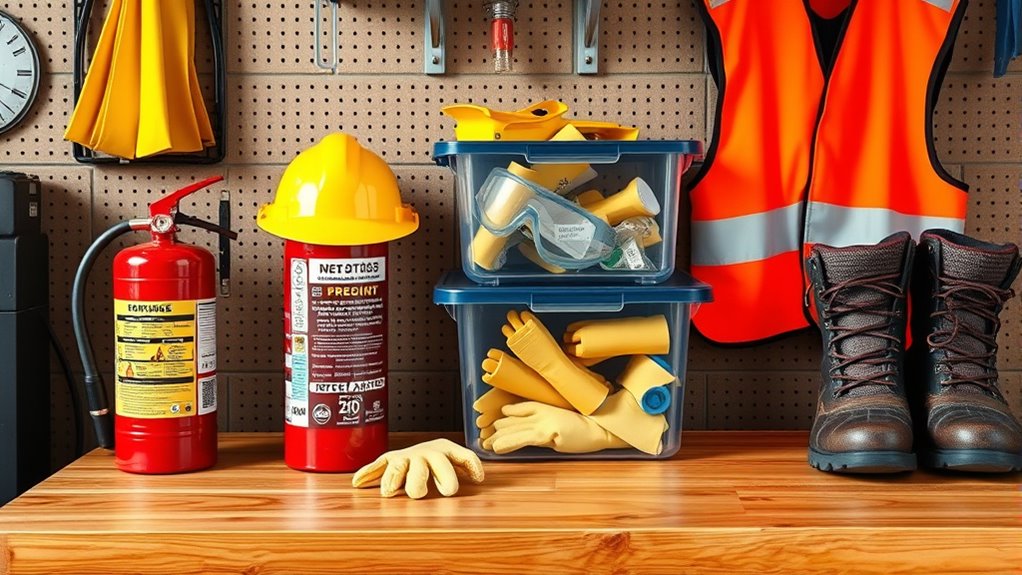
Emergency supplies and safety stations are critical components of a well-organized garage safety program, ensuring quick access to essential first-aid and fire-fighting resources during incidents. You need to have these stations strategically placed and well-stocked to respond promptly to emergencies. Make sure your first-aid kit is complete and regularly checked for expired supplies. An accessible fire extinguisher rated for common garage fires (Class ABC) is essential. Install an emergency eyewash station within 10 seconds of chemical use areas. Clearly label all safety stations and keep pathways unobstructed. Additionally, consider adding a spill kit for chemical leaks and a phone or alarm system to summon help swiftly. Regularly review and practice emergency procedures to keep your response quick and effective.
PPE Policies and Worker Training

Having safety stations and supplies in place is essential, but their effectiveness depends on clear policies and well-trained workers. You need documented PPE policies that specify required gear, procedures, and responsibilities. Training ensures everyone understands proper PPE use, inspection, and maintenance, reducing risks and ensuring compliance. Regularly review training records and update sessions when procedures change. Use visual aids and demonstrations to reinforce proper practices.
| PPE Policy Element | Worker Training Focus |
|---|---|
| PPE requirements | Correct donning and doffing |
| Inspection protocols | Recognizing damaged gear |
| Maintenance schedules | Proper cleaning and storage |
Common PPE Mistakes and How to Avoid Them
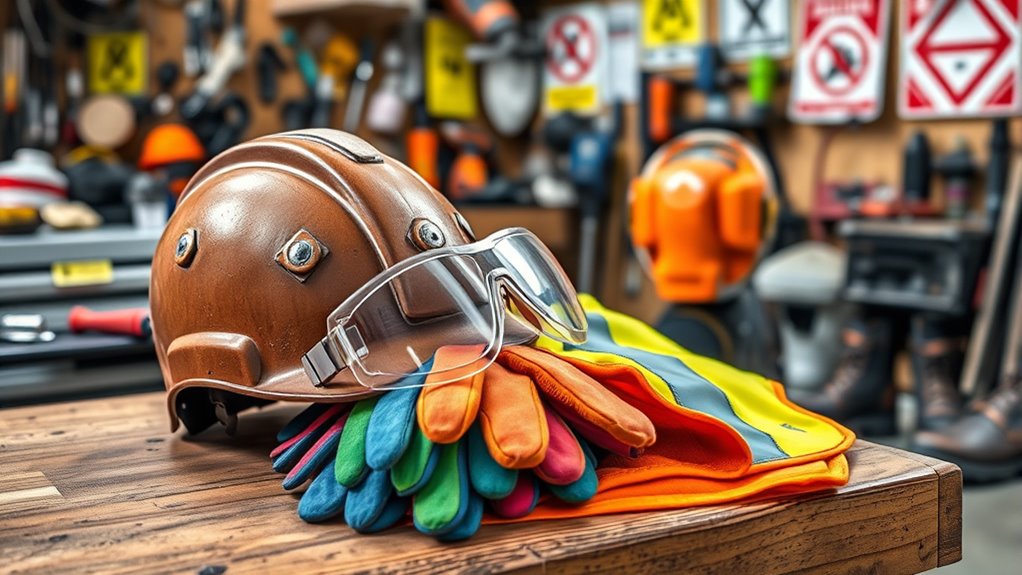
Many workers make common mistakes when using PPE that compromise their safety. One mistake is neglecting regular inspections, which allows damaged gear to go unnoticed. Another is wearing PPE improperly—like helmets tilted or gloves that don’t fit—reducing effectiveness. Failing to replace worn or scratched safety glasses and lenses puts your eyes at risk. Using the wrong PPE for specific hazards, such as cheap goggles for chemical splashes, can lead to injuries. Finally, some ignore proper cleaning and storage, resulting in contaminated or degraded equipment. To avoid these issues, remember to:
Avoid PPE mistakes: inspect regularly, ensure proper fit, choose hazard-specific gear, and maintain cleanliness.
- Regularly inspect and replace damaged PPE
- Use PPE correctly, ensuring a proper fit
- Select PPE suited for the specific hazard
- Clean and store gear properly after use
- Follow manufacturer guidelines and safety protocols
Frequently Asked Questions
How Often Should PPE Be Replaced Due to Wear and Tear?
You should replace PPE as soon as you notice signs of wear and tear. Regular inspections are essential, ideally before each use, to check for scratches, cracks, or damage. For items like gloves, helmets, and eye protection, replace them immediately if compromised. Keep a maintenance schedule to ensure safety gear remains effective. Don’t wait for failure—prioritize replacing damaged PPE to ensure your safety at all times.
Are There Specific PPE Requirements for Working With EV Battery Systems?
When working with EV battery systems, you need specialized PPE to protect yourself. Wear electrical-insulating gloves rated for high voltages, and consider flame-resistant coveralls to guard against thermal risks. Use face shields or chemical splash goggles for potential acid splashes or sparks. Always guarantee your respirator is fitted and in good condition to avoid inhaling fumes. Additionally, wear steel-toe footwear for impact protection and high-visibility clothing when moving around vehicles.
How Do I Ensure Proper Fit and Comfort for Respirators?
You need to make sure your respirator fits like a glove to keep you safe. Start by selecting the right size and style for your face shape. Perform a seal check each time you wear it, tightening straps as needed. Fit-testing by a professional ensures proper fit. Comfort isn’t just a luxury—it’s essential. Regularly inspect your respirator and replace worn parts, so it works like a charm when you need it most.
What PPE Is Necessary for Welding and Grinding Tasks?
For welding and grinding, you need a properly fitting, flame-resistant welding helmet or face shield to protect your face and eyes from sparks and UV radiation. Wear impact-resistant safety glasses with side shields underneath for added eye protection. Use heavy-duty, cut-resistant gloves to shield your hands from sharp edges and hot materials. Also, don’t forget ear protection like earplugs or muffs if noise levels are high, and appropriate protective clothing to prevent burns.
How Can I Tell if My PPE Complies With Safety Standards?
Think of your PPE like a superhero’s suit—if it’s up to standard, it’ll protect you. To check compliance, look for ANSI/ISEA Z87.1 labels on eye and face gear, and confirm gloves and respirators meet NIOSH standards. Regularly inspect your equipment for cracks or wear, replace damaged items promptly, and verify proper fit. Staying informed about local safety codes and manufacturer instructions keeps your gear legit and your safety supercharged.
Conclusion
Think of your garage as a fortress, with PPE as your shield and armor. Skipping gear is like leaving your gates unguarded—you’re vulnerable to unexpected dangers. By properly wearing and maintaining your safety equipment, you’re building strong walls that protect you from harm. Stay vigilant, keep your defenses in top shape, and remember: when it comes to safety, preparedness keeps you standing tall, no matter what surprises the garage throws your way.