
To quickly check your air compressor’s CFM, start by matching the CFM rating to your tools’ needs, adding up the requirements if using multiple tools at once. Verify the compressor’s duty cycle suits your project’s duration, and make certain all safety devices and grounding are in place. Check noise levels and the compressor’s location for stability. Keeping these factors in mind helps prevent overload and keeps your tools running smoothly—continue to explore for more helpful tips.

Get business pricing on garage and car supplies
- Business-only prices and quantity discounts
- Tax-exempt purchasing
- Multiple users, one account, clear invoices
Key Takeaways
- Confirm the compressor’s CFM rating meets or exceeds the combined CFM requirements of all tools in use.
- Add up the CFM needs for multiple tools to ensure sufficient compressor capacity.
- Check that the compressor’s duty cycle supports continuous operation if needed.
- Verify safety features and proper setup, including grounding and ventilation, before use.
- Conduct a quick visual inspection for leaks, damaged cords, and stable placement to prevent issues.
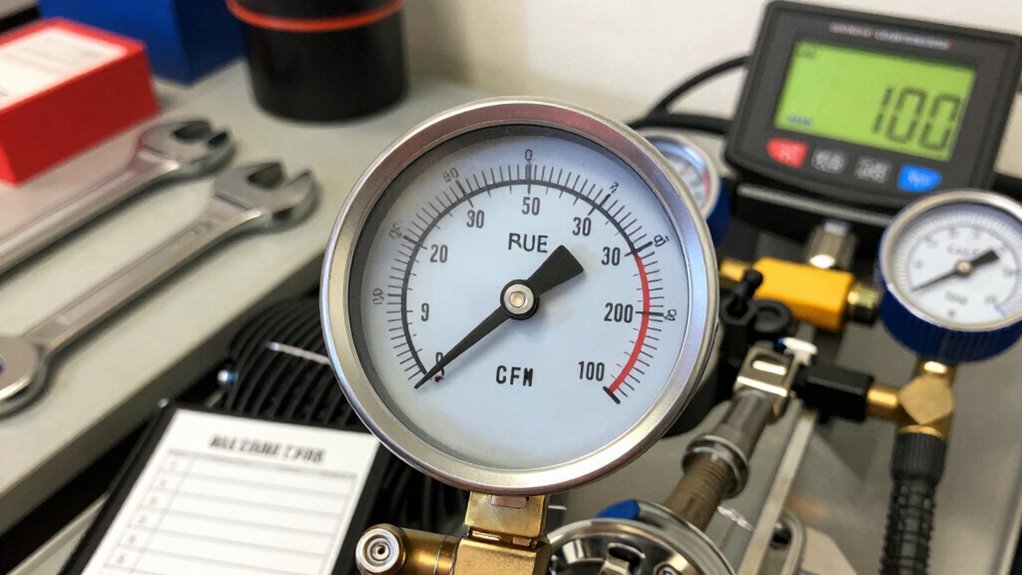
When selecting an air compressor, understanding its CFM (cubic feet per minute) rating is essential to guarantee it meets your needs. The CFM indicates how much air your compressor can deliver, directly impacting your tool performance and overall efficiency. To ensure you’re making the right choice, a quick 5-minute checklist can keep you on track. Start by verifying the CFM rating matches or exceeds the requirements of your tools. If you’re planning to run multiple tools simultaneously, add their CFM needs together and choose a compressor that can handle the total. This prevents underperformance and reduces the risk of compressor strain.
Next, consider the compressor’s duty cycle, which tells you how long the unit can operate before needing a rest. A higher duty cycle ensures longer continuous operation, especially important for demanding tasks. During this check, it’s also wise to review the compressor’s maintenance tips. Regular maintenance, like changing air filters, draining moisture from the tank, and inspecting hoses, keeps the compressor running smoothly and extends its lifespan. When performing these maintenance tasks, always follow the safety guidelines provided by the manufacturer to prevent accidents or damage. Additionally, understanding the air delivery capacity of your compressor helps you plan for efficient operation and avoid overloading the system. It’s also beneficial to familiarize yourself with compressor specifications to fully grasp its capabilities and limitations. Recognizing the performance characteristics of your compressor can help you optimize its use and troubleshoot issues more effectively. Incorporating knowledge of airflow efficiency can further enhance your understanding of how well your compressor performs under load. Moreover, understanding system capacity is crucial to match your compressor’s capabilities with your project demands.
Safety should be a top priority in your quick checklist. Before firing up the compressor, confirm that all safety devices, such as pressure relief valves and guards, are in place and functioning correctly. Make sure the compressor is properly grounded and that you’re working in a well-ventilated area to avoid inhaling fumes or dust. Wearing protective gear like safety glasses and hearing protection is essential, especially during prolonged use. In addition, check that the power cords are undamaged, and there are no leaks or visible damage to hoses and fittings—these issues can pose safety hazards.
Finally, gauge the compressor’s noise level and location. Excessive noise can be distracting or harmful over time, so consider whether your workspace requires soundproofing or a quieter model. Position the compressor on a stable, level surface to prevent vibrations and movement during operation. Taking these few moments to review CFM ratings, perform maintenance tips, and follow safety guidelines ensures your compressor works efficiently, safely, and reliably. This simple 5-minute check helps you avoid costly repairs, accidents, and downtime, making your work safer and more productive every time you use your air compressor.
As an affiliate, we earn on qualifying purchases.
Frequently Asked Questions
How Does Altitude Affect Compressor CFM Ratings?
Altitude effects can markedly impact compressor performance, as higher elevations mean thinner air. When you operate at altitude, the compressor’s CFM ratings may decrease because it’s pulling in less dense air, which reduces output. To maintain peak performance, you might need to adjust the compressor or choose a model designed for high-altitude conditions. Always consider altitude effects to guarantee your compressor functions efficiently and meets your needs.
Can CFM Vary With Different Airflow Demands?
Yes, CFM can vary with different airflow demands. Airflow variability affects compressor efficiency, as a compressor may produce more or less CFM depending on your needs. When demand increases, the compressor works harder, potentially reducing efficiency if it’s not rated for higher airflow. Conversely, during low demand, it may operate below capacity, saving energy. Understanding this helps you optimize compressor performance and guarantee consistent airflow.
What Maintenance Impacts CFM Performance Over Time?
Regular maintenance impacts your CFM performance by ensuring lubrication efficiency and filter cleanliness. When you keep the lubrication system well-oiled, it reduces friction and wear, maintaining peak airflow. Simultaneously, cleaning or replacing filters prevents blockages, allowing air to flow freely. Both practices work together to sustain high CFM levels, prevent pressure drops, and extend your compressor’s lifespan. Prioritize these tasks to keep your compressor running efficiently over time.
Is Higher CFM Always Better for All Tools?
Higher CFM isn’t always better for all tools. You need to take into account tool compatibility and compressor efficiency. Some tools require specific CFM levels to operate safely and effectively, so exceeding those can cause inefficiency or damage. Always match your compressor’s CFM output with your tool’s requirements. This guarantees ideal performance and maintains compressor efficiency, preventing unnecessary wear and tear. Tailoring your CFM to your tools maximizes productivity and longevity.
How Do Temperature Changes Influence CFM Measurements?
Imagine your air compressor’s CFM as a trusty steed, but temperature fluctuations can throw it off course. When temperatures rise or fall, they affect the air’s density, causing CFM measurements to vary. This impacts calibration accuracy, making your readings less reliable. To guarantee precise measurements, always account for temperature changes and regularly calibrate your equipment, especially in environments with significant temperature swings.
As an affiliate, we earn on qualifying purchases.
Conclusion
Think of this checklist as your trusty compass, guiding you through the vast ocean of air compressor choices. By keeping these CFM tips in mind, you’ll navigate smoothly, avoiding rough waters and hidden reefs. When you stay vigilant and follow this quick guide, your compressor will hum like a well-tuned orchestra—powerful, efficient, and ready to tackle any task. Remember, a well-maintained CFM is the heartbeat that keeps your projects beating strong.
portable air compressor with high CFM
As an affiliate, we earn on qualifying purchases.
As an affiliate, we earn on qualifying purchases.
As an affiliate, we earn on qualifying purchases.
Fall Picks
fall essentials
As an affiliate, we earn on qualifying purchases.