TL;DR

Get business pricing on garage and car supplies
- Business-only prices and quantity discounts
- Tax-exempt purchasing
- Multiple users, one account, clear invoices
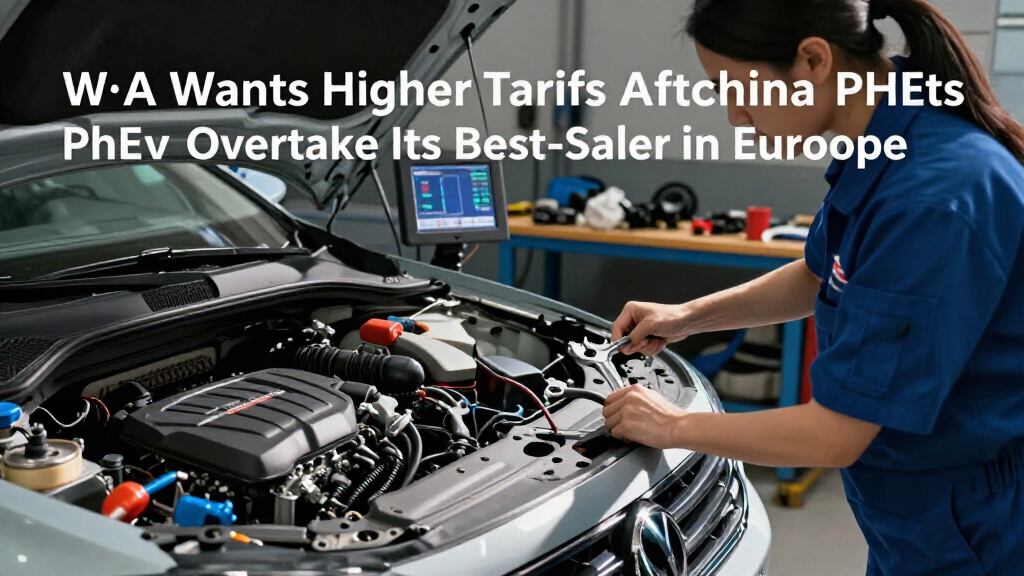
Volkswagen has urged European authorities to impose higher tariffs on Chinese plug-in hybrid vehicles after they outperformed VW’s best-seller in European markets. The move highlights ongoing trade tensions and market shifts in EV segments.
Volkswagen has officially called for increased tariffs on Chinese plug-in hybrid vehicles (PHEVs) after data showed that Chinese-made PHEVs have overtaken VW’s best-selling model in European sales. This development underscores rising competition from Chinese EV manufacturers and could impact trade policies in the region.
According to industry reports, Chinese PHEVs have gained significant market share in Europe, surpassing Volkswagen’s top-selling model, the Golf GTE, in recent months. VW’s management has publicly criticized what it describes as unfair trade practices, citing lower production costs and government support in China as advantages for Chinese automakers. The company has formally requested that European trade authorities consider implementing higher tariffs on Chinese PHEVs to level the playing field.European sales figures, compiled by industry analysts, indicate that Chinese PHEV imports have increased by over 30% year-over-year, driven by aggressive pricing and expanding dealer networks across the continent. VW’s spokesperson confirmed the company’s stance, stating, “We believe that current trade policies do not adequately address the unfair competitive advantages enjoyed by Chinese manufacturers, and we are urging authorities to review tariffs accordingly.”
The European Commission has yet to respond formally to VW’s request, and it remains unclear whether new tariffs will be implemented or if other measures will be considered to curb Chinese EV imports.
This development is significant because it signals a shift in the European EV market, with Chinese manufacturers gaining ground against established European and German brands. If tariffs are increased, it could lead to higher prices for Chinese PHEVs, potentially slowing their growth and affecting trade relations between the EU and China. For consumers, this may influence vehicle availability and pricing in the EV segment. The move also reflects broader tensions over trade fairness and subsidies in the global automotive industry.
plug-in hybrid vehicle car charger
As an affiliate, we earn on qualifying purchases.
As an affiliate, we earn on qualifying purchases.
Recent Trends in Chinese EV Exports to Europe
Over the past two years, Chinese EV manufacturers have ramped up exports to Europe, leveraging government incentives and competitive pricing. Major players like BYD and Geely have expanded their presence, with some models priced significantly lower than comparable European offerings. This surge has prompted concerns among European automakers about market share erosion and the need for protective trade measures. Previously, Chinese EVs faced tariffs and import restrictions, but recent trade negotiations have seen some easing, leading to increased imports.
Volkswagen and other European automakers have responded by increasing local investments and accelerating their own EV development. However, the rapid growth of Chinese PHEVs remains a challenge, prompting VW’s call for higher tariffs as a defensive measure.
“We believe that current trade policies do not adequately address the unfair competitive advantages enjoyed by Chinese manufacturers, and we are urging authorities to review tariffs accordingly.”
— Volkswagen spokesperson
electric vehicle home charging station
As an affiliate, we earn on qualifying purchases.
As an affiliate, we earn on qualifying purchases.
Unclear Outcomes of Potential Tariff Changes
It remains uncertain whether European authorities will approve higher tariffs on Chinese PHEVs, or if other measures, such as quotas or subsidies, will be implemented. The European Commission has not yet announced any formal response to VW’s request, and negotiations over trade policies are ongoing. Additionally, the impact of potential tariffs on vehicle prices, supply chains, and diplomatic relations is still unclear.
As an affiliate, we earn on qualifying purchases.
Next Steps in Trade Policy and Market Response
European trade authorities are expected to review VW’s request in the coming months, possibly leading to consultations or preliminary decisions. Meanwhile, Chinese automakers are likely to continue expanding their presence in Europe, possibly adjusting their strategies based on policy developments. VW and other European automakers may also accelerate their own EV offerings to compete more effectively regardless of tariff changes. Monitoring trade negotiations and sales data will be key to understanding how this dispute evolves.
As an affiliate, we earn on qualifying purchases.
Key Questions
Why is VW demanding higher tariffs on Chinese PHEVs?
Volkswagen argues that Chinese PHEVs benefit from government support and lower production costs, giving them an unfair advantage over European manufacturers. They believe higher tariffs are necessary to ensure fair competition.
Could higher tariffs slow down Chinese EV sales in Europe?
Yes, increased tariffs could raise prices for Chinese PHEVs, potentially reducing their competitiveness and slowing their market growth in Europe.
What are the potential consequences for European consumers?
If tariffs increase, consumers may face higher prices and reduced model options in the EV segment, impacting affordability and choice.
Is this a sign of worsening trade relations between the EU and China?
The move indicates rising tensions over trade fairness and subsidies, but the full impact on diplomatic relations remains to be seen as negotiations continue.
Source: rss
Halloween Picks
halloween
As an affiliate, we earn on qualifying purchases.