
TL;DR
Prime for Young Adults — start your free trial
Fast free delivery, streaming and member deals for eligible 18–24 year olds.
Try it freeAs an affiliate, we earn on qualifying purchases.
A journalist attended Toyota’s employee electrification training and reports on what surprised them. The program highlights Toyota’s focus on workforce readiness and evolving EV plans, with some surprises about their approach and timeline.
A journalist recently participated in Toyota’s employee electrification training, uncovering unexpected details about the automaker’s approach to transitioning to electric vehicles and preparing its workforce for this shift. This training underscores Toyota’s commitment to electrification, despite some surprises that contrast with industry trends.
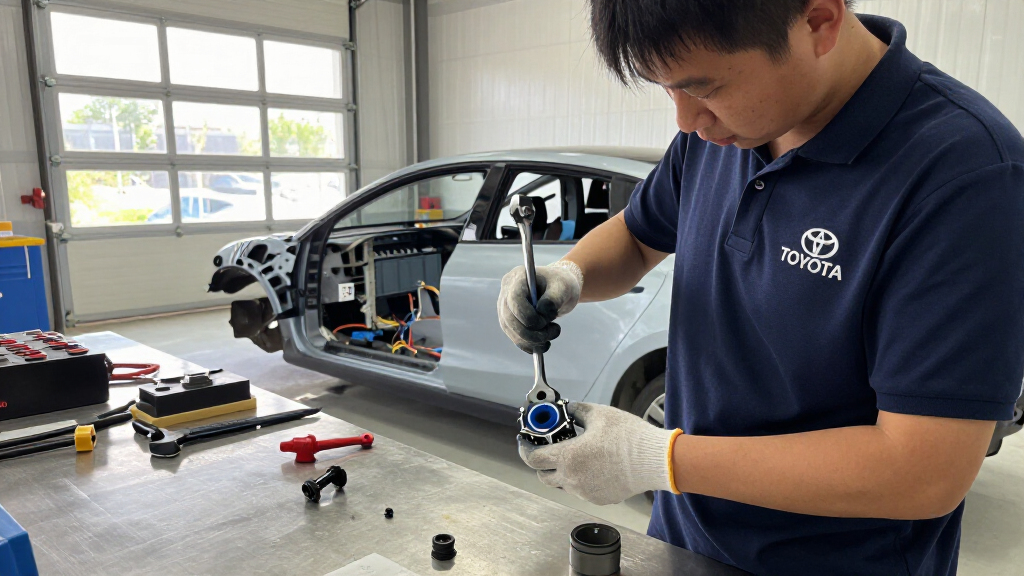
During the training session, Toyota emphasized its focus on hybrid technology alongside pure electric vehicles, reinforcing their strategy of a multi-path approach to electrification. The program included technical modules on battery management, electric motor assembly, and software integration, aimed at upskilling employees for future EV production. Notably, the training revealed Toyota’s cautious timeline for full EV rollout, with officials indicating a target of significantly increasing EV production by 2030 but not abandoning hybrids or fuel cell vehicles. The session also highlighted Toyota’s investment in solid-state battery research, which they see as a key to future EV performance and cost reduction. Surprising to some attendees was Toyota’s emphasis on maintaining internal combustion engine expertise for longer than many competitors, suggesting a deliberate phased transition rather than an abrupt shift., “significanceHeading”: “Implications of Toyota’s Workforce and EV StrategyWhy It Matters
This training sheds light on Toyota’s strategic approach to electrification, emphasizing a cautious, multi-technology transition that prioritizes workforce readiness and technological innovation. For consumers and industry watchers, it indicates that Toyota may continue to offer hybrids and fuel cell vehicles alongside EVs well into the next decade. The focus on solid-state batteries and internal combustion expertise suggests a different pace and path than some competitors, which could influence market dynamics and EV adoption timelines. For Toyota employees and suppliers, understanding this approach is critical for aligning future investments and skills development.As an affiliate, we earn on qualifying purchases.
Toyota’s Electrification Timeline and Industry Position
Toyota has historically been cautious about fully committing to electric vehicles, emphasizing hybrids and fuel cells as part of its broader strategy. While other automakers have announced aggressive EV targets for the 2025-2030 period, Toyota has maintained a more measured approach, focusing on hybrid technology and hydrogen fuel cells. The company’s recent investments in solid-state battery research, along with its ongoing EV development, reflect a transitional phase. Industry analysts note that Toyota’s strategy contrasts with the rapid EV rollouts seen from Tesla and GM, but aligns with its reputation for technological conservatism and long-term planning. The recent training session offers a rare inside look at how Toyota plans to navigate this complex shift while maintaining its traditional strengths.“We’re preparing for a future where hybrids, fuel cells, and EVs coexist. Our goal is to develop the best technology for each application.”
— Toyota engineer during training
As an affiliate, we earn on qualifying purchases.
Unclear Timing and Market Impact of Toyota’s EV Plans
It is not yet clear how quickly Toyota will scale its EV production beyond current levels or how its hybrid and fuel cell strategies will evolve in response to market demands. Details about specific timelines for mass adoption of solid-state batteries and full EV models remain undisclosed, and industry analysts await official announcements to confirm these plans.As an affiliate, we earn on qualifying purchases.
Next Steps in Toyota’s Electrification Roadmap
Toyota is expected to release more detailed EV plans and timelines in upcoming investor presentations and product launches. The company’s continued research into solid-state batteries and workforce training programs suggest a gradual but steady shift towards increased EV offerings, with a focus on technological innovation and maintaining a diverse portfolio. Monitoring Toyota’s official statements and product rollouts over the next 12-24 months will clarify their strategic trajectory.As an affiliate, we earn on qualifying purchases.
Key Questions
What surprised attendees about Toyota’s electrification approach?
Many were surprised to learn that Toyota is maintaining a strong focus on hybrid and fuel cell vehicles alongside EVs, with a cautious timeline for full EV adoption. The emphasis on solid-state battery research and internal combustion engine expertise was also unexpected.
Does Toyota plan to phase out hybrids and fuel cells?
According to the training, Toyota intends to continue developing hybrids and fuel cell vehicles for the foreseeable future, integrating them into a multi-technology portfolio rather than replacing them immediately with EVs.
When will Toyota start mass-producing solid-state batteries?
While Toyota is investing heavily in solid-state battery research, specific timelines for commercial production have not been announced. Industry sources suggest it could be several years before these batteries are widely available in Toyota vehicles.
How does Toyota’s strategy compare to other automakers?
Unlike some competitors that are rapidly shifting to full EVs, Toyota’s approach remains more measured, emphasizing technological innovation and a gradual transition that includes hybrids and fuel cells alongside EVs.
Will Toyota’s training program influence future vehicle designs?
Yes, the training aims to prepare employees for upcoming vehicle models that will incorporate new battery and electric motor technologies, indicating a future where Toyota’s EV lineup will expand significantly.
Source: rss
NFL season / tailgating Picks
team gear
As an affiliate, we earn on qualifying purchases.