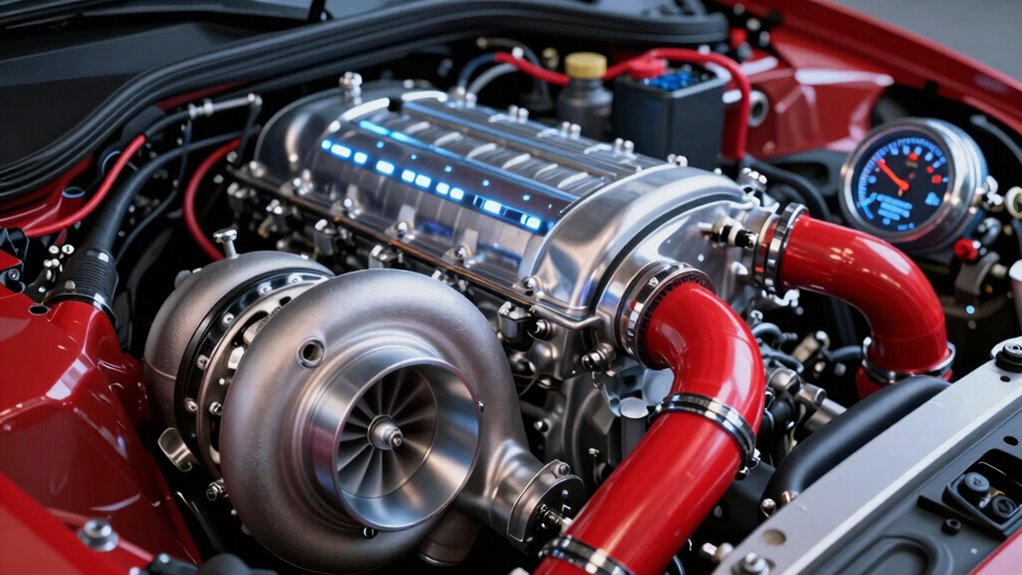

Turbo lag is the delay you feel between pressing the accelerator and actually experiencing the turbocharged boost. It happens because it takes time for the turbo to spin up to its ideal speed, which isn’t immediate due to factors like engine RPM and turbo design. Smaller turbines spin faster, reducing lag, while technological advances like twin-scroll turbines and variable geometry help improve response. If you keep exploring, you’ll discover how these innovations make your turbocharged engine feel more responsive.

Get business pricing on garage and car supplies
- Business-only prices and quantity discounts
- Tax-exempt purchasing
- Multiple users, one account, clear invoices
Key Takeaways
- Turbo lag is the delay between pressing the accelerator and feeling the turbocharged power.
- It occurs because the turbo needs time to spool up and reach optimal speed.
- Factors like turbine size, bearing type, and engine RPM influence spool time and lag.
- Low RPM and cold engines typically cause longer turbo lag due to reduced exhaust flow.
- Modern technologies like twin-scroll turbines and variable geometry turbines help reduce turbo lag.
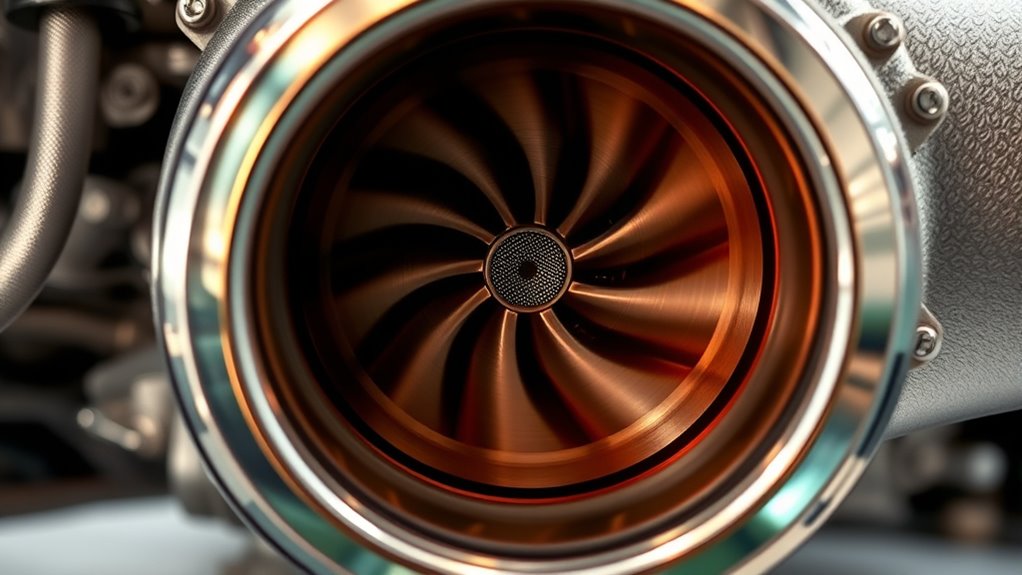
Have you ever felt a delay between pressing the accelerator and feeling the turbocharged power kick in? That’s what’s commonly known as turbo lag, and it’s a frustrating experience for many drivers. When you press the gas pedal, your engine begins to demand more power, and the turbocharger is supposed to respond quickly, increasing the boost pressure to give you that extra oomph. But sometimes, there’s a noticeable pause before you feel the surge of power, and that’s because of the spool time—the period it takes for the turbo to spin up to the necessary speed to produce the desired boost pressure.
The key to understanding turbo lag lies in how the turbocharger works. When you step on the accelerator, exhaust gases flow through the turbine side of the turbo, causing it to spin rapidly. As the turbine spins, it drives the compressor side, which forces more air into the engine’s cylinders, increasing the boost pressure. However, this process isn’t instantaneous. The time it takes for the turbine to reach the most efficient rotational speed—spool time—determines how quickly you experience that boost. During spool time, your engine is fundamentally waiting for the turbo to catch up, which creates that delay in power delivery.
Several factors influence spool time and boost pressure. A larger turbine or compressor can increase overall airflow, but they often lead to longer spool times. Conversely, smaller turbines spool up faster, reducing lag, but they might not generate as much boost pressure at high RPMs. Manufacturers often try to find a balance to maximize response and power. Additionally, the design of the wastegate and the complexity of the turbo system can affect how quickly the turbo spools up. For instance, a ball-bearing turbo can spool faster than a journal-bearing one, minimizing lag. Furthermore, advancements in European cloud innovation have inspired similar technological improvements in turbocharger design to enhance responsiveness. Modern turbo systems also incorporate advanced materials that improve durability and heat resistance, contributing to quicker spool times and better performance.
You can also experience turbo lag more on certain driving conditions. When you’re at low RPM or when the engine is cold, spool time tends to be longer because there’s less exhaust flow to spin the turbo quickly. On the other hand, if you’re already at high RPM and the turbo is spinning near its maximum, the boost pressure can be delivered more instantly. Some modern turbocharged vehicles employ technologies like twin-scroll turbines and variable geometry turbines to reduce spool time and improve responsiveness, helping you feel that turbo power sooner after pressing the accelerator.
turbocharger with twin-scroll technology
As an affiliate, we earn on qualifying purchases.
As an affiliate, we earn on qualifying purchases.
Frequently Asked Questions
How Does Turbo Lag Affect Overall Vehicle Performance?
Turbo lag causes a delay in turbo response, which affects your overall vehicle performance by creating an acceleration delay. When you press the accelerator, you might notice a brief pause before the turbo kicks in, reducing smoothness and responsiveness. This lag can make driving less dynamic, especially during quick acceleration or overtaking, as the engine takes a moment to deliver the expected power, impacting your driving experience.
Can Turbo Lag Be Eliminated Entirely With Modern Technology?
No, turbo lag can’t be eliminated entirely, but modern technology like advanced turbo design and engine tuning considerably reduce it. You’ll notice quicker throttle response and smoother acceleration because engineers optimize the turbo’s spool time and airflow management. While some lag remains due to physics, these innovations make it less noticeable, enhancing your driving experience. Ultimately, technology keeps pushing boundaries to minimize turbo lag as much as possible.
What Is the Average Time Delay Caused by Turbo Lag?
The average delay caused by turbo lag is around 0.5 to 1 second, depending on your vehicle and turbo setup. When you press the accelerator, you’ll notice a brief pause as the turbo reaches its boost threshold and spool time. Modern technologies aim to reduce this delay, but some lag remains. Improving spool time and optimizing boost threshold can make the response feel more immediate and seamless.
Are There Specific Driving Conditions That Worsen Turbo Lag?
Think of turbo lag as a delayed boost, like a sprinter waiting to explode out of the blocks. When you’re driving at low speeds or climbing to high altitudes, turbo lag worsens because the engine struggles to spin the turbo fast enough. High altitude effects reduce air density, making it harder for the turbo to spool up quickly, so you’ll notice more lag when accelerating in these conditions.
How Does Turbo Lag Compare Between Different Engine Sizes?
You’ll notice that turbo lag varies with engine size; smaller engines with smaller turbo sizes typically experience less lag because they spool up faster. Larger engines with greater capacity often have bigger turbos, which take longer to reach peak boost, causing more noticeable lag. So, if you want quicker throttle response, a smaller turbo on a smaller engine capacity generally results in less turbo lag and a more immediate power delivery.
As an affiliate, we earn on qualifying purchases.
Conclusion
So, now that you know about turbo lag, go ahead and impress your friends with your newfound turbo knowledge—because nothing says “cool” like waiting a split second for power to kick in, right? Just remember, when your turbo finally wakes up, you’ll be the hero of every street race… or at least the one who’s patient enough to wait. Who knew that a tiny delay could make you feel like a true automotive genius?
As an affiliate, we earn on qualifying purchases.
As an affiliate, we earn on qualifying purchases.
Halloween Picks
halloween
As an affiliate, we earn on qualifying purchases.