TL;DR

Get business pricing on garage and car supplies
- Business-only prices and quantity discounts
- Tax-exempt purchasing
- Multiple users, one account, clear invoices
NHK World recently interviewed American kei truck owners and a Pennsylvania dealer about why they use the compact Japanese imports. The report cites an estimated 30,000 kei trucks imported to the United States over five years, while registration rules remain different from state to state.
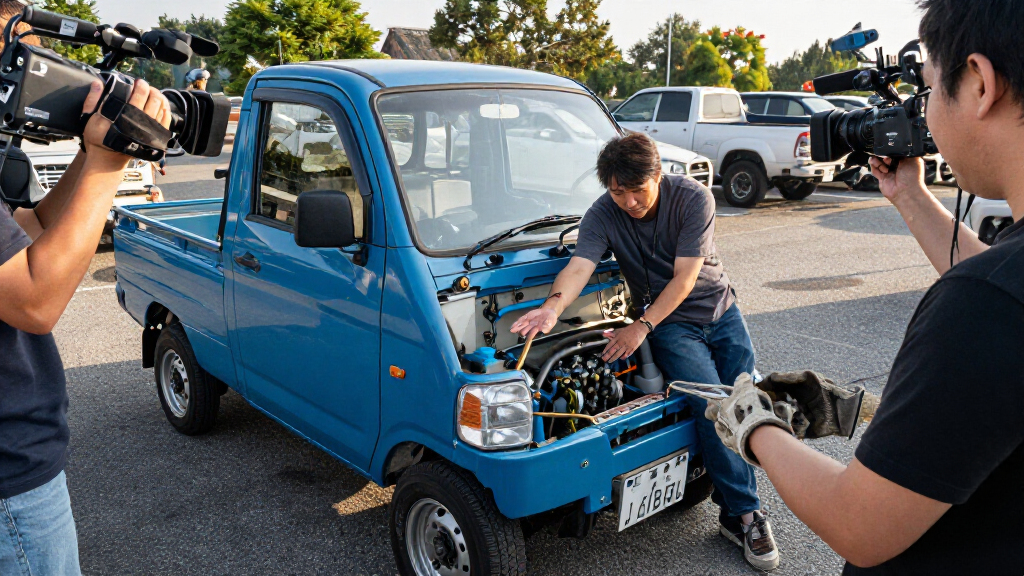
NHK World, Japan’s public broadcaster, recently sent a correspondent to Pennsylvania to interview Americans who own and sell kei trucks, the small Japanese vehicles gaining attention among U.S. buyers. The report focuses on their everyday uses and the patchwork of state rules that can prevent owners from registering them for public roads.
The report visits Lancaster Mini Truck, a Pennsylvania dealership whose inventory includes cab-forward kei trucks and a Nissan S-Cargo. Owner Jake Simpson said he bought his first mini truck five years ago and became interested in selling them after people repeatedly asked him about the vehicle and how to get one. He now imports, by his account, about 15 to 20 trucks a month.
Simpson described the trucks as practical and comparatively affordable. He said he can sell them for about $6,000 to $8,000, and pointed to four-wheel-drive versions and fuel economy of around 40 miles per gallon. In the segment, he uses a tape measure to compare a kei truck’s bed with that of a late-model Ram 3500 crew cab, arguing that the compact truck’s bed can offer a similar length and that its fold-down sides make loading easier.
The source report cites an estimate of 30,000 kei trucks imported into the United States over the past five years. That figure is presented as an estimate, not as a government tally. The NHK segment also features New Yorker Joey Iorio, co-founder of Empire State Kei Advocates, who said he has contacted state senators to seek changes allowing kei vehicles to be registered.
The State-by-State Road Access Fight
The interviews show two different dimensions of the kei truck market: buyers’ interest in a small utility vehicle and the legal limits on using one. Federal import rules allow vehicles not originally certified for the U.S. market to be imported once they are at least 25 years old, according to The Drive’s report. Import eligibility, however, does not automatically mean a vehicle can be registered for public-road use in every state.
For owners and prospective buyers, that distinction can determine whether a truck is a road vehicle or limited to private property or other permitted uses. The report’s account of grassroots advocacy in New York also illustrates how state-level rules can shape the market even when imports are federally eligible. The trucks’ compact size and work uses offer an alternative to large pickups, but the segment does not establish how widely they are used or whether they are suitable for every buyer’s needs.
As an affiliate, we earn on qualifying purchases.
A 25-Year Import Threshold
Kei vehicles are built to Japanese size and engine limits, which help explain their compact footprint. The Drive says Japanese regulations cap overall size, engine displacement and power output, alongside lower tax and insurance rates in Japan. The NHK report’s U.S. examples center on utility: hauling and access to a small truck, rather than performance alone.
The federal 25-year rule is a key part of the import picture. It allows qualifying older vehicles that were not originally homologated for U.S. sale to be imported, but states set their own rules for registration and road use. The report says some states do not permit kei vehicles to be registered for public roads. It also cites Texas as having legalized kei cars the previous year following advocacy by enthusiasts; the source does not provide details of the law or its exact scope.
“I got my first mini truck five years ago. I felt like a celebrity driving it.”
— Jake Simpson, owner of Lancaster Mini Truck
As an affiliate, we earn on qualifying purchases.
Registration Rules Still Vary
The report does not provide a full state-by-state list of registration rules, nor does it specify which types of kei vehicles are covered by every state’s restrictions. It is also unclear from the source whether New York has since changed its rules or what legislative steps remain. The 30,000-import estimate is not accompanied by a methodology or an exact measurement period beyond the past five years.
Claims about fuel economy, price and cargo-bed comparisons are attributed to Simpson and the report’s demonstration; the segment does not supply independent testing or a detailed comparison across models. Importers and buyers should check applicable federal requirements and state motor-vehicle rules before purchasing. The NHK report, as described by The Drive, does not establish that every kei truck can be registered or used on public roads.
As an affiliate, we earn on qualifying purchases.
Advocates Seek State Changes
The next developments depend largely on state lawmakers and motor-vehicle agencies. In New York, Iorio and Empire State Kei Advocates are seeking changes that would allow kei owners to register their vehicles, but the supplied report does not identify a bill, hearing date or decision. Buyers in other states will also need to confirm current rules with their state authorities, since policies can differ and may change.
NHK World’s segment adds public visibility to the owners’ case, but it does not announce a regulatory change or a new nationwide policy. The immediate practical question for prospective owners remains whether a particular vehicle can be legally registered where they live.
Japanese mini truck registration kit
As an affiliate, we earn on qualifying purchases.
As an affiliate, we earn on qualifying purchases.
Key Questions
What did NHK World report?
It interviewed kei truck owners and a dealer in Pennsylvania about the vehicles’ appeal, their practical uses and efforts to address state registration restrictions.
How many kei trucks have been imported into the United States?
The report cites an estimate of 30,000 over the past five years. The source does not provide the estimate’s methodology or a more exact time window.
Can kei trucks be driven on public roads in every state?
No. The report says some states do not allow kei vehicles to be registered for public-road use. Rules vary, so buyers should check with the relevant state motor-vehicle authority.
What does the 25-year rule mean for imports?
As described in The Drive’s report, vehicles not originally homologated for the U.S. can be imported once they are at least 25 years old. That federal import rule does not by itself guarantee state road registration.
Source: rss
Halloween Picks
halloween
As an affiliate, we earn on qualifying purchases.