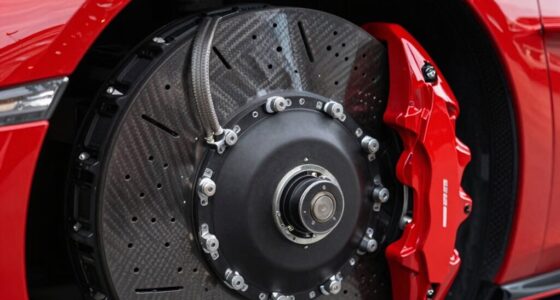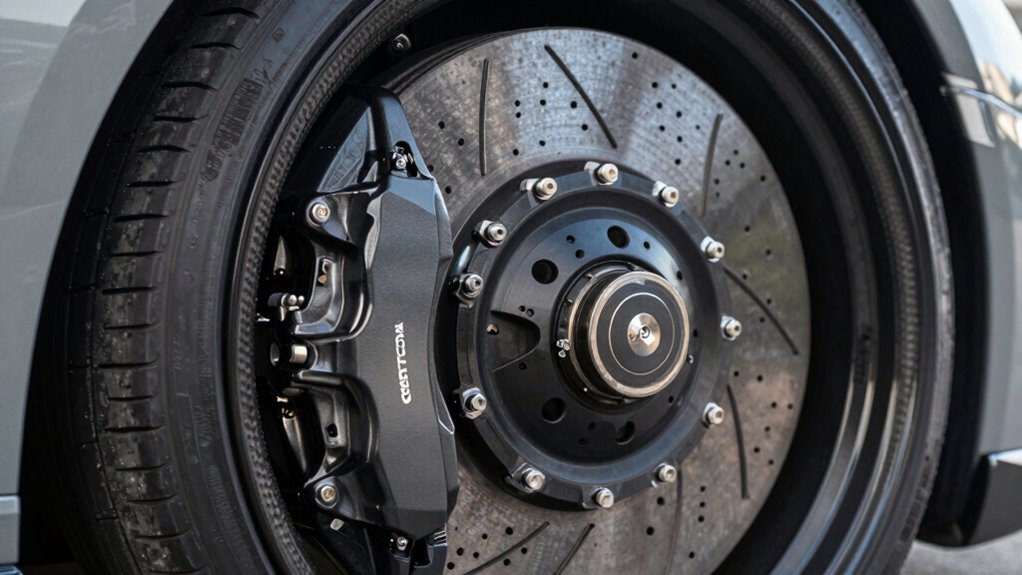

Carbon ceramic brakes combine lightweight carbon fiber composites with a durable ceramic matrix to give you high performance, heat resistance, and long-lasting durability. They provide exceptional stopping power, resist high temperatures, and won’t warp or crack easily under intense use. Plus, they’re highly resistant to corrosion, which extends their lifespan. These brakes improve your vehicle’s handling and responsiveness, especially in demanding conditions. Keep going to discover more about how they can boost your driving experience.
Key Takeaways
- Made from a lightweight composite of carbon fibers and ceramic matrix for strength and heat resistance.
- Offer exceptional stopping power and consistent performance under high temperatures.
- Highly resistant to corrosion, warping, and cracking, extending brake lifespan.
- Reduce unsprung mass, improving vehicle handling and suspension response.
- Ideal for high-performance driving and racing, providing durability in demanding environments.

Carbon ceramic brakes are a high-performance braking system that offers exceptional stopping power and durability. When you choose these brakes, you’re opting for a solution that greatly enhances brake performance, especially under demanding conditions. Unlike traditional steel or cast iron brakes, carbon ceramic discs are made from a composite of carbon fibers and ceramic matrix, which results in a lightweight yet incredibly strong material. This unique construction improves your vehicle’s overall handling and responsiveness, giving you more precise control when you need to slow down or stop quickly.
One of the main advantages of carbon ceramic brakes is their ability to maintain consistent brake performance, even after extensive use. Conventional brakes tend to fade or lose effectiveness when they heat up, but carbon ceramic brakes resist high temperatures far better. This means you can push your vehicle harder without worrying about brake fade, which is essential in high-performance driving or racing scenarios. Their heat resistance ensures that braking remains reliable, providing you with confidence that your stopping power won’t diminish when it matters most. Additionally, heat resistance is a critical factor that enhances their suitability for demanding driving environments. Moreover, the material composition of these brakes is engineered to optimize performance under extreme conditions, making them a preferred choice for enthusiasts and professionals alike.
Carbon ceramic brakes maintain consistent performance and resist fade even after intense use.
Material durability is another key benefit of carbon ceramic brakes. They are highly resistant to corrosion, unlike traditional metal brakes that can rust over time. This corrosion resistance extends the lifespan of the braking system, so you won’t need to replace them as frequently. Additionally, the ceramic components are less susceptible to warping or cracking under extreme conditions, maintaining their structural integrity over miles of driving. This durability not only saves you money in the long run but also guarantees consistent brake performance throughout the life of the component. Moreover, high-performance brake materials like ceramics are developed to optimize heat resistance and longevity, making them suitable for a variety of demanding driving conditions. Furthermore, the unique composition of these materials enhances their ability to withstand extreme environments, solidifying their reputation for reliability.
Because of their lightweight nature, carbon ceramic brakes reduce the overall unsprung mass of your vehicle, which can improve suspension response and ride quality. This weight reduction also means your car accelerates and handles more efficiently, giving you a performance edge on the road or track. Despite their advanced construction, these brakes are designed to withstand harsh environments, including high heat and moisture, without compromising their effectiveness or longevity. Additionally, modern brake materials like ceramics are developed to optimize heat resistance and longevity, making them suitable for a variety of demanding driving conditions. Their resistance to moisture and other elements further enhances their longevity, ensuring consistent performance in diverse climates.
Frequently Asked Questions
How Do Carbon Ceramic Brakes Perform in Wet Conditions?
In wet conditions, carbon ceramic brakes perform well, thanks to their water performance capabilities. You’ll notice that braking efficiency remains high because they resist water accumulation, allowing you to brake confidently even on damp roads. Unlike traditional brakes, they dry quickly and maintain consistent stopping power. So, when it rains, you won’t have to worry about reduced braking performance, ensuring safety and reliability in all weather conditions.
Are Carbon Ceramic Brakes Suitable for Everyday Driving?
You can definitely use carbon ceramic brakes for daily driving, though they’re often seen in high-performance vehicles. For example, a daily commuter might find that these brakes offer exceptional stopping power and durability. However, they can produce more brake noise than traditional systems, which might be a consideration for everyday use. Overall, they’re suitable if you prioritize performance and are willing to accept some additional noise and cost.
What Is the Typical Lifespan of Carbon Ceramic Brake Pads?
You can expect carbon ceramic brake pads to last around 70,000 to 100,000 miles, depending on your driving habits. Their brake pad longevity is impressive, but regular maintenance considerations are essential to maximize their lifespan. Keep an eye on brake performance and listen for unusual noises. Proper care guarantees you get the most out of these high-performance pads, making them a reliable choice for both daily driving and spirited drives.
Can Carbon Ceramic Brakes Be Repaired if Damaged?
While carbon ceramic brakes are renowned for durability, damage repair isn’t straightforward. You can’t simply patch or weld them like traditional brakes. Instead, you need a professional damage assessment to determine if brake repair is feasible. Often, severe damage requires replacing the entire component. Think of it as a high-performance engine—if it’s too damaged, repair isn’t cost-effective, and replacement becomes the better choice to guarantee safety and ideal performance.
How Do Carbon Ceramic Brakes Compare Cost-Wise to Traditional Brakes?
You’ll find that carbon ceramic brakes are considerably more expensive than traditional brakes, largely due to their advanced materials and manufacturing process. The cost comparison shows they come with higher upfront costs, but they offer better performance and durability. Affordability factors include your vehicle type and driving habits—while they’re pricier, they can save money long-term through less frequent replacements and enhanced braking efficiency.
Conclusion
You might think carbon ceramic brakes are just a luxury upgrade, but they actually deliver incredible performance and durability. Some believe they’re only for racing, but recent advancements prove they’re practical for everyday driving too. While they’re more expensive upfront, their heat resistance and longevity often save you money in the long run. So, next time you brake, remember—these high-tech discs might just be the future of automotive braking.