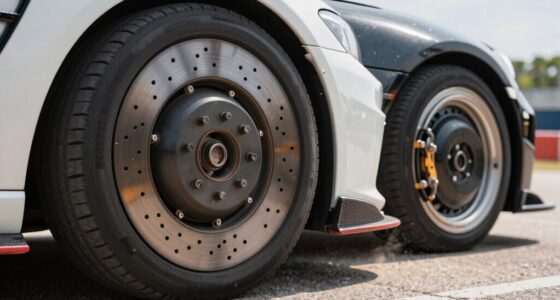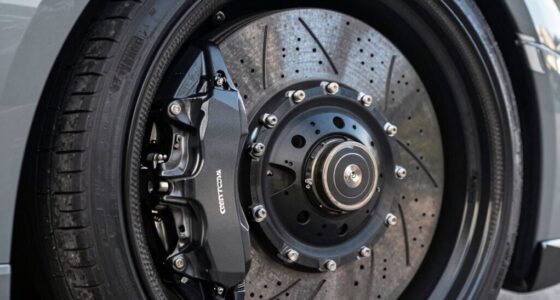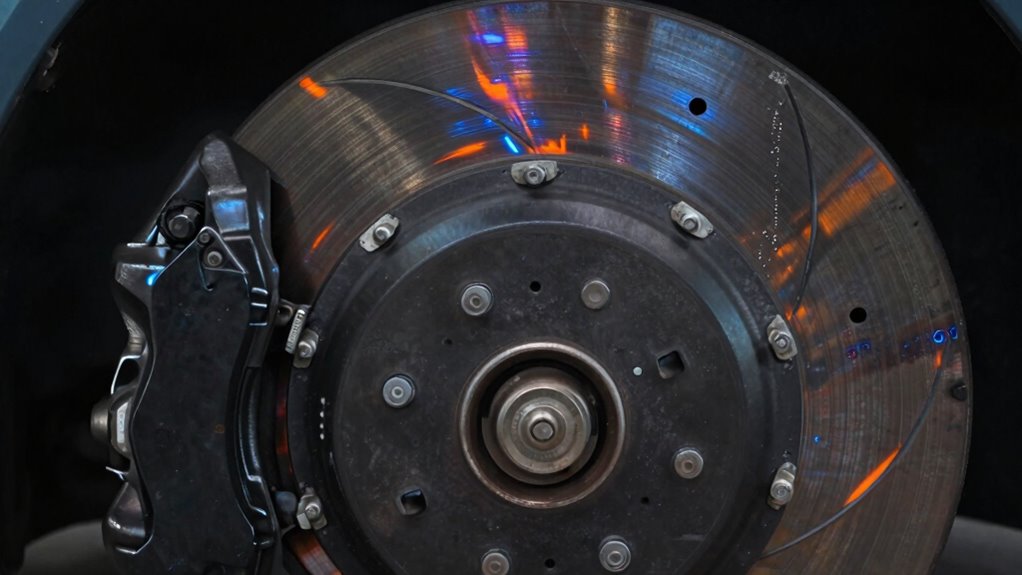

Brake fade happens when your braking system overheating from heavy or prolonged use causes it to become less effective. As your brake components, like rotors and pads, heat up, the friction and metal expand, leading to warped rotors and reduced stopping power. If you notice vibrations, noises, or decreased responsiveness during braking, it’s a sign of brake fade. To avoid this, proper cooling techniques are essential—learn more about how to keep your brakes cool and safe.
Key Takeaways
- Brake fade occurs when excessive heat from prolonged braking reduces braking effectiveness.
- Overheating causes brake components, especially rotors, to warp, leading to vibrations and pulsations.
- Signs include vibrations, reduced responsiveness, noises, and discoloration indicating overheating or warping.
- Preventive measures include engine braking, cooling techniques, and using high-performance brake parts.
- Regular inspection and prompt maintenance help avoid brake fade and ensure safe braking performance.
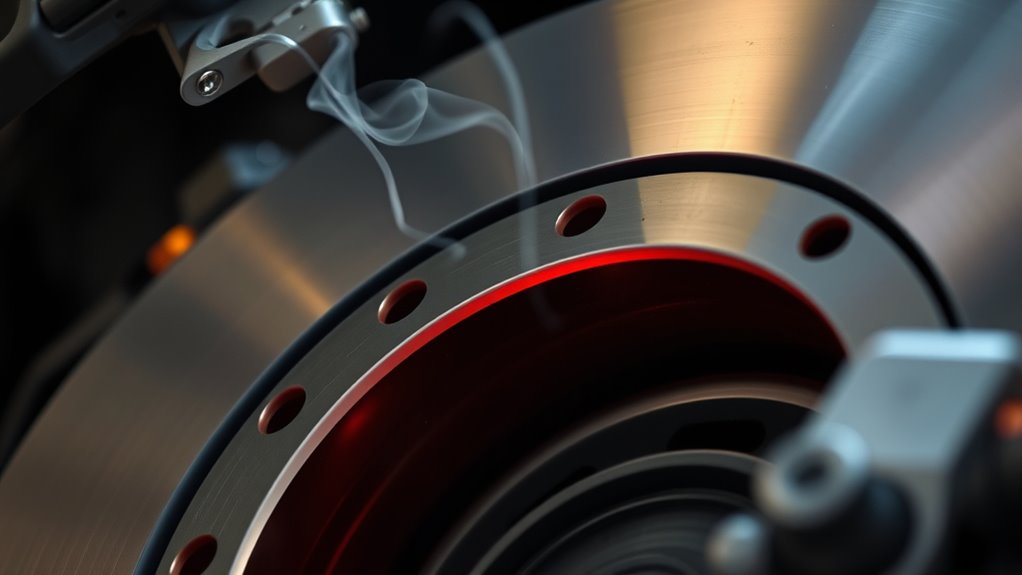
Brake fade occurs when your vehicle’s brake performance diminishes during prolonged or intense use, making it harder to stop effectively. One common cause of brake fade is brake overheating, which happens when you push your brakes too hard for an extended period. As you brake heavily, the friction between the brake pads and the rotors generates a lot of heat. If this heat isn’t dissipated quickly enough, it can lead to a significant temperature rise in the brake components. When brakes overheat, their ability to generate friction drops, reducing stopping power. This is especially noticeable on long downhill descents or during aggressive driving, where brake systems are under constant stress.
Another problem linked to excessive heat is disc warping. When the brake rotors become too hot, they can warp, losing their perfectly flat surface. Disc warping occurs because the metal expands unevenly under high temperatures, causing the rotor to become distorted. Once warped, the rotor no longer makes consistent contact with the brake pads, leading to vibrations, pulsations, and a spongy brake pedal feel. This uneven contact not only reduces braking efficiency but also contributes to further heat build-up, creating a vicious cycle that accelerates brake fade. You might notice a noticeable vibration or steering wheel shimmy when applying the brakes after heavy use, which is a clear sign of disc warping and brake overheating. Additionally, thermal expansion of brake components can exacerbate these issues, further impairing brake performance. Proper cooling techniques are essential and can be supplemented with ventilated rotors to help dissipate heat more effectively, reducing the risk of fade. Regular cooling procedures, such as avoiding continuous braking and allowing the brakes to rest, can help prevent this cycle. Implementing proper cooling techniques can significantly extend the lifespan of your brake system.
To prevent brake fade caused by these issues, you should avoid riding the brakes constantly, especially during downhill drives. Instead, use engine braking by shifting to a lower gear, which reduces the load on your brake system. Regularly inspecting your brake system is also essential; look for signs of excessive heat discoloration, warping, or uneven brake pad wear. Upgrading to high-performance brake pads and rotors designed to handle higher temperatures can also help mitigate brake overheating and disc warping. Additionally, giving your brakes time to cool down after intense use is vital. If you notice any vibrations, reduced responsiveness, or unusual noises, it’s a good idea to have a professional check your brakes promptly. Ignoring these signs can lead to more serious issues, including complete brake failure in extreme cases. Understanding how brake overheating and disc warping contribute to brake fade enables you to take proactive steps to maintain your brake system’s performance and safety. Proper maintenance and awareness of brake system health are essential in preventing dangerous situations on the road.

Bendix Priority1 CFC503 Ceramic Front Brake Pads for Select Models Acura CL, Integra, Legend, NSX, RL, TL, Vigor, Honda Accord, CR-V, EV Plus, Odyssey, Prelude, Isuzu Oasis
OE REPLACEMENT: Designed and engineered to OE specifications for fit, form, and function
As an affiliate, we earn on qualifying purchases.
As an affiliate, we earn on qualifying purchases.
Frequently Asked Questions
How Can I Prevent Brake Fade During Long Descents?
To prevent brake fade during long descents, you should use your brakes sparingly and shift to a lower gear to reduce brake reliance. Regularly check your brake fluid levels and make certain your cooling systems are functioning properly, as they help dissipate heat. Avoid riding the brakes continuously; instead, apply steady, gentle pressure and release periodically to maintain ideal brake performance and prevent overheating.
What Are the Signs of Impending Brake Fade?
You’ll notice brake fade signs like increased pedal travel, reduced braking power, or a spongy feel in the brake pedal. These often occur when brake fluid overheats or brake pads wear down, causing less friction. If your brakes feel less responsive after prolonged use or steep descents, it’s a sign to pause, let the brakes cool, and check for brake fluid levels and pad wear to prevent further fade.
Does Brake Fade Affect All Types of Vehicles Equally?
You might think brake fade affects all vehicles equally, but it actually depends on brake material and vehicle weight. Heavier vehicles with less effective brake materials are more prone to fade, especially during intense braking. Lighter cars with advanced brake systems resist fade better. So, don’t assume your vehicle’s brakes are invincible—underestimating how brake material and weight influence fade could put you at risk during critical moments.
Can Brake Fade Occur in Both Disc and Drum Brakes?
Yes, brake fade can occur in both disc and drum brakes. When you brake vigorously, heat buildup increases due to friction loss, which reduces the braking efficiency. This heat can cause the brake components to become less effective, leading to fade. Both systems are susceptible, especially under heavy or prolonged braking, so it’s important to monitor your braking and avoid excessive heat buildup to prevent fade from affecting your vehicle’s stopping power.
Are There Aftermarket Solutions to Reduce Brake Fade?
Imagine your brakes as a stressed-out chef, desperately cooling down after a fiery roast. Luckily, aftermarket solutions like high-performance pads and enhanced brake cooling kits exist to help. These upgrades reduce brake fade by dissipating heat faster and maintaining stopping power. So, if you’re tired of your brakes overheating and fading, investing in these tech-savvy solutions keeps your “chef” cool under pressure, ensuring safer, more reliable stops every time.
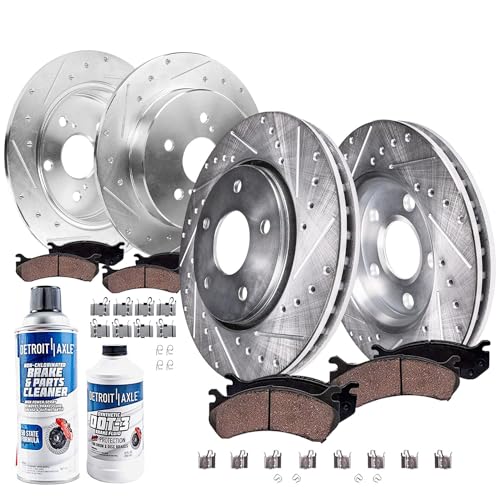
Detroit Axle – Brake Kit for Toyota 12-17 Prius V, 10.83" inch Front and 11.42" inch Rear Drilled Slotted Disc Brake Rotors Ceramic Brakes Pads with Hardware 2012 2013 2014 2015 2016 2017 Replacement
Measurement: 10.83 inch (275mm) Front / 11.42 inch (290mm) Rear Rotor
As an affiliate, we earn on qualifying purchases.
As an affiliate, we earn on qualifying purchases.
Conclusion
As you press the brake pedal harder, you can almost feel the heat building up inside. Suddenly, the brake fade kicks in, and your stopping power diminishes just when you need it most. Will your brakes hold steady next time? Or will the heat creep in again, threatening your control? Stay vigilant, because understanding brake fade isn’t just about stopping—it’s about knowing when your safety could slip away. Are you prepared for what’s lurking behind that pedal?

Orion Motor Tech Hydraulic Flaring Tool Kit, Universal Brake Flaring Tool Set with Tubing Cutter, 45° Single& Double Flaring Tool Kit with Deburring Tool, Brake Line Flaring Tool for ISO Bubble Flare
Versatile Application: From copper pipes to fuel, brake, and transmission lines, this hydraulic flaring tool set lets you…
As an affiliate, we earn on qualifying purchases.
As an affiliate, we earn on qualifying purchases.
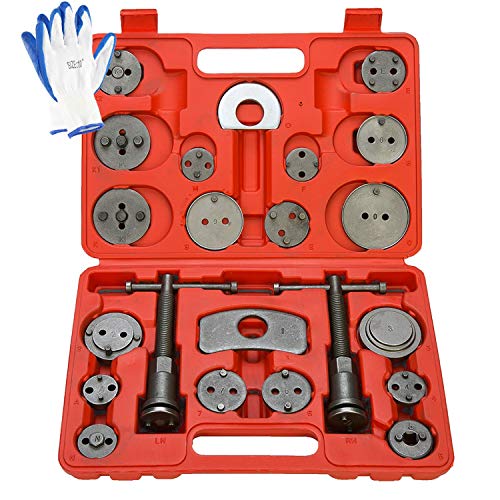
8MILELAKE Disc Brake Caliper Compressor Wind Back Tool 24pc Professional Caliper Tool Set
Ideal for 4 wheel drive cars/trucks
As an affiliate, we earn on qualifying purchases.
As an affiliate, we earn on qualifying purchases.