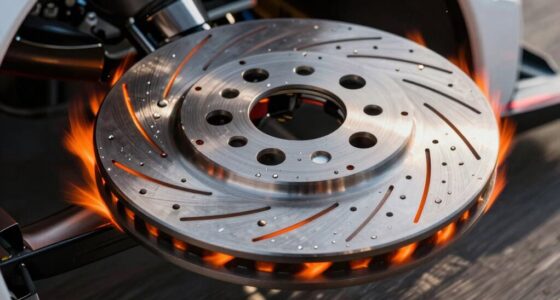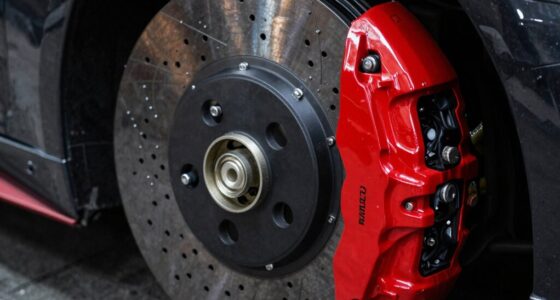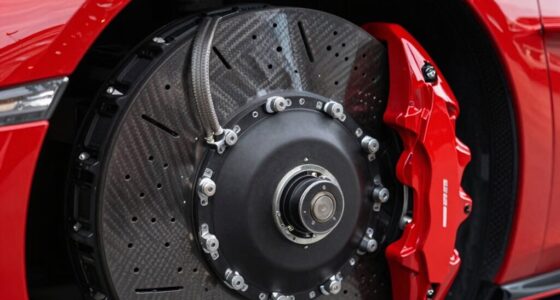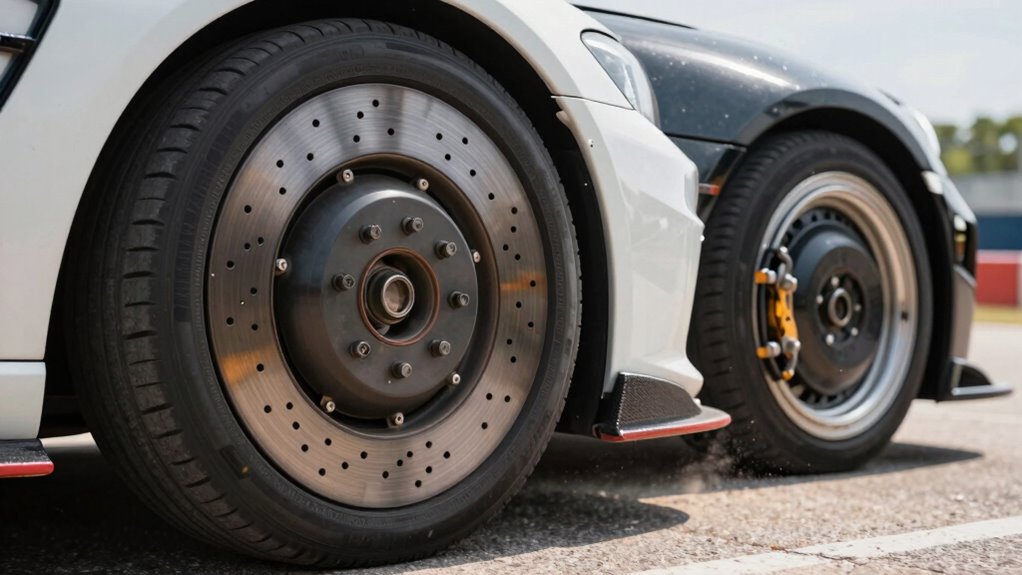
Bigger brakes don’t always make you stop faster because brake performance depends more on heat management, system design, and cooling than on rotor size alone. When brakes overheat, they experience fade, reducing friction and increasing stopping distances even with larger rotors. Proper ventilation and cooling are key to maintaining consistent braking power. If you want to understand the real factors affecting stopping distance and how to optimize your brakes, keep exploring these important details.
Key Takeaways
- Larger rotors increase surface area but do not automatically reduce stopping distance without proper cooling and system design.
- Brake fade from overheating diminishes braking power regardless of rotor size.
- Heavier, bigger rotors can add stress and slow responsiveness, impacting overall stopping performance.
- Effective heat dissipation and ventilation are critical; larger rotors alone cannot prevent brake fade.
- Brake system quality and cooling techniques are more influential than rotor size in achieving shorter stopping distances.
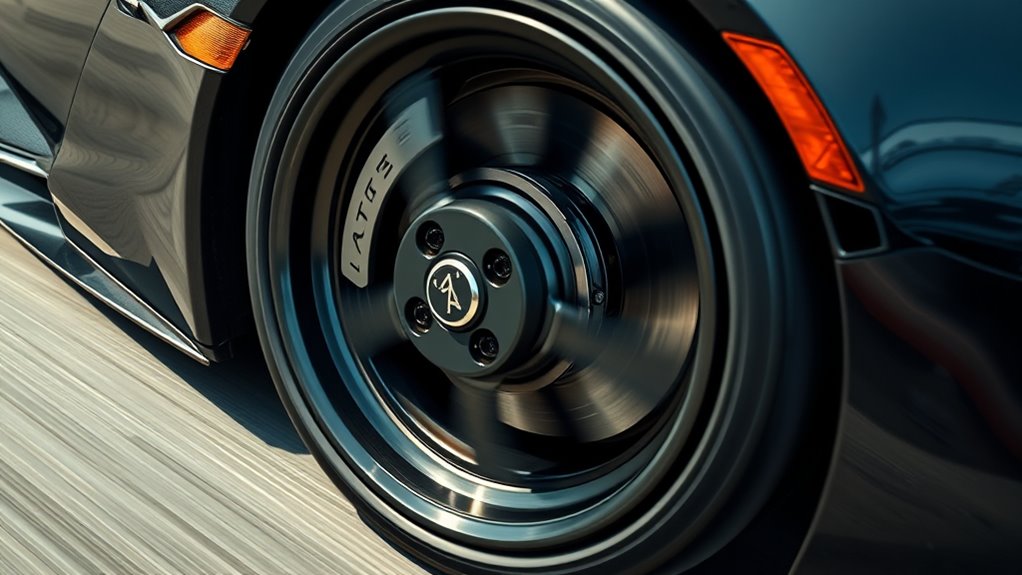
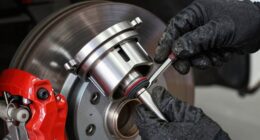
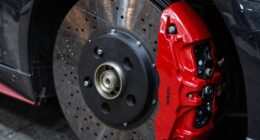
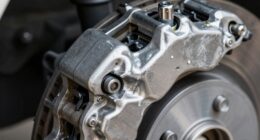
When it comes to stopping a vehicle, many assume that bigger brakes automatically mean shorter stopping distances. However, the reality is more complex. Larger brake rotors can improve braking performance, but they don’t guarantee faster stops. If you’re upgrading your brakes expecting a dramatic reduction in stopping distance, you might be disappointed. One key factor to consider is brake fade, a phenomenon that occurs when brakes overheat during heavy or prolonged use. When brakes heat up excessively, their ability to generate friction diminishes, leading to longer stopping distances regardless of rotor size. So, even if you have bigger rotors, if they’re not designed or cooled properly, brake fade can negate any potential benefits. Additionally, proper cooling systems are crucial to prevent brake fade and maintain consistent stopping power during demanding conditions. Proper ventilation can help dissipate heat more efficiently and sustain braking performance. Rotor size does play a role in braking, but it’s not the only element. Larger rotors provide a bigger surface area for the brake pads to grip, which can improve initial braking power and reduce pad wear. They also tend to dissipate heat more effectively because of their increased mass and surface area. Furthermore, brake system design greatly influences overall braking effectiveness, especially under high-stress conditions. To maximize braking efficiency, thermal management techniques are essential to keep brake components within optimal temperature ranges. However, bigger rotors are also heavier, which can put extra stress on your vehicle’s suspension and braking system. This added weight might slow down your responsiveness or cause uneven wear over time, especially if your calipers aren’t upgraded alongside the rotors. So, simply increasing rotor size without considering other components may not lead to the desired decrease in stopping distance. Additionally, braking system cooling is essential to maintain consistent performance during demanding conditions.
Frequently Asked Questions
Do Larger Brakes Increase Fuel Consumption?
Larger brakes can increase fuel consumption because they add weight and require more energy to operate. The brake material and brake cooling play roles here; heavier brake components and less efficient cooling can make your engine work harder, using more fuel. If your brakes aren’t properly ventilated or made from lightweight material, it can lead to increased drag and heat, both of which contribute to higher fuel use.
How Does Brake Fade Affect Stopping Distance?
As brake fade begins, your stopping distance suddenly lengthens, revealing a hidden danger. This occurs when brake material overheats, losing its ability to grip effectively. Heat dissipation becomes essential—if your brakes can’t shed heat quickly, their performance drops sharply. You might think bigger brakes fix everything, but without proper heat management, brake fade can catch you off guard, making your stops less predictable and more dangerous than you’d expect.
Can Bigger Brakes Cause Steering Issues?
Bigger brakes can cause steering issues if they disrupt your brake system balance and brake pedal feel. When larger brakes aren’t properly matched to your car’s setup, you might notice uneven braking or pulling to one side, affecting steering precision. Poorly balanced brakes can make steering feel less responsive, especially during hard braking. Always guarantee your brake system is correctly calibrated to avoid these issues and maintain safe, predictable handling.
What Is the Ideal Brake Size for My Vehicle?
Choosing the right brake size is like finding the perfect fit for a glove. It depends on your vehicle’s weight, driving style, and how you prioritize brake pedal feel. For most cars, OEM sizes offer a balanced feel and ideal brake pad wear. Oversized brakes can cause a spongy pedal and uneven wear, while undersized ones might not stop effectively. Consult your vehicle’s manual or a mechanic to find your ideal size.
Do Larger Brakes Require More Maintenance?
Yes, larger brakes often require more maintenance. You might notice increased brake pad wear because bigger calipers and pads handle more heat and stress. Additionally, larger rotors are more prone to rotor corrosion if not properly maintained or exposed to moisture. This means you’ll need to regularly check and replace brake pads and clean or replace rotors to guarantee ideal performance and safety.
Conclusion
Remember, bigger brakes aren’t always the answer. Sometimes, their added weight can slow you down or cause overheating, reducing stopping power. For example, a set of massive brakes can weigh over 50 pounds—almost as much as a small dog! That extra weight can make your car harder to control and increase stopping distances in certain situations. So, next time you think bigger is better, consider the balance and design behind your brakes for true stopping power.