When setting up a side-pull winch, avoid angles greater than 15°, as they cause side loads that bend or damage hardware. Improper anchor placement or ignoring pulley use can increase these angles, risking equipment failure. To prevent this, reposition anchor points, use pulleys to straighten lines, and regularly check angles. Managing line direction properly is essential for safety and hardware longevity; keep these tips in mind to avoid costly mistakes as you learn more.
Open a free Amazon Business account
Business pricing, bulk buying and tax-exempt orders.
As an affiliate, we earn on qualifying purchases.
Key Takeaways
- Side pulls at angles greater than 15° increase stress on hardware, risking bending or failure.
- Proper anchor placement and line management help maintain near-straight pulls, reducing hardware damage.
- Using pulleys or snatch blocks redirects pull lines, minimizing side loads and protecting equipment.
- Regularly measuring line angles ensures pulls stay within safe limits, preventing hardware deformation.
- Avoid side pulls by adjusting anchor points and utilizing pulley systems for safer, more efficient winching.
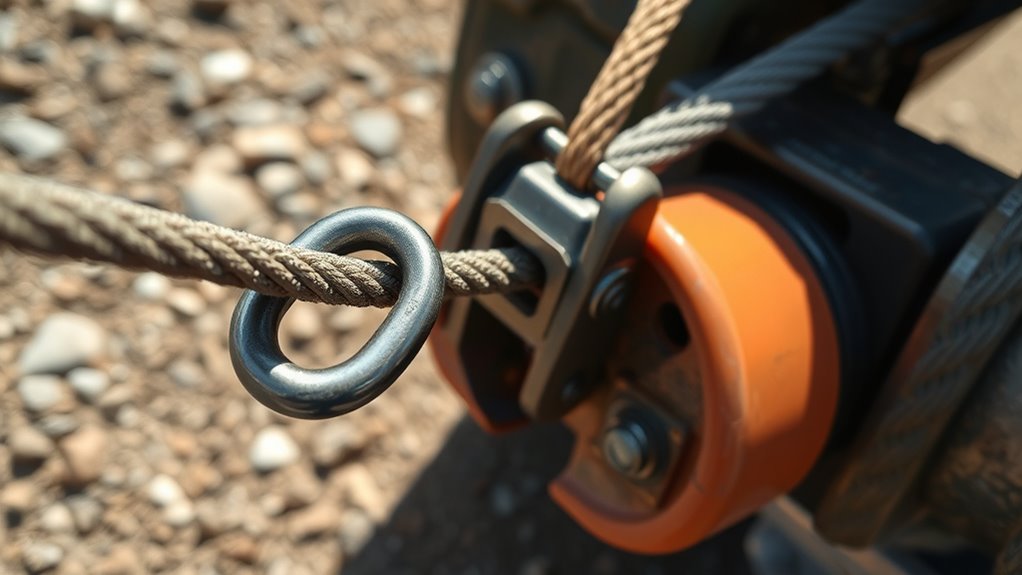
Have you ever considered how the angle of a winch line can impact the safety and efficiency of your operation? The truth is, when you’re setting up a winch, the line angle plays a critical role in how smoothly everything runs. If you don’t pay attention, you risk bending or damaging your hardware, especially if you’re pulling at an angle rather than straight in line with your anchor points. Properly understanding and managing these angles can prevent costly repairs and keep your crew safe.
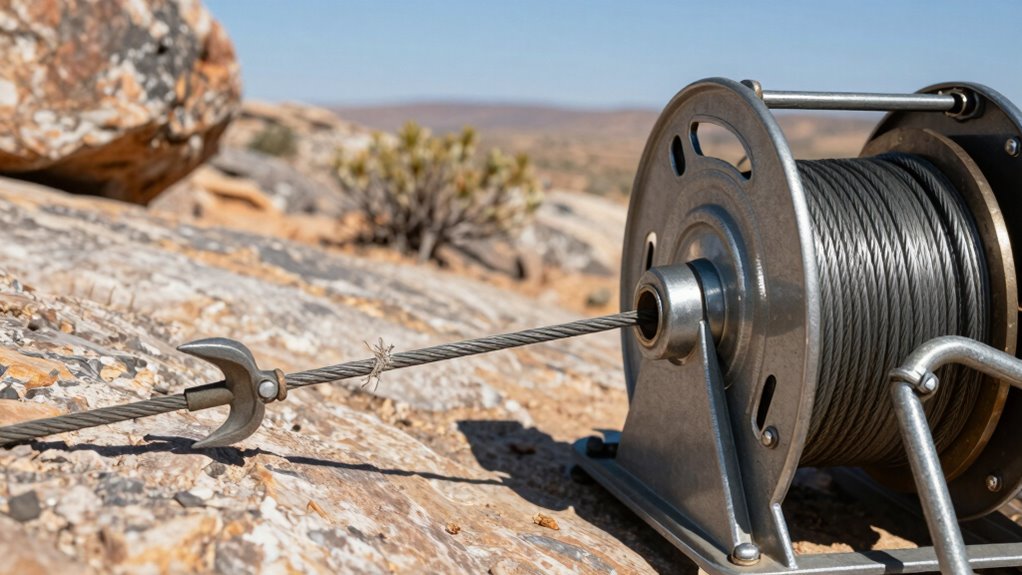
First, think about your anchor points—they’re the foundation of a safe winching setup. When your winch pulls at an angle, instead of directly in line with the load, it creates side loads that put unnecessary stress on your hardware and the line itself. This side pull can cause excessive wear or even failure of parts like hooks, shackles, or the winch drum. To avoid this, you need to position your anchor points carefully. If possible, set them so the line pulls straight and minimizes the angle. This reduces side stress and prolongs the life of your equipment.
Using pulley systems can help you manage line angles more effectively. Pulley blocks or snatch blocks allow you to redirect the line, changing the pull direction and reducing the angle at which your line operates. By incorporating pulleys, you effectively increase mechanical advantage and ensure the load is pulled more in line with the winch. This not only makes your pulling more efficient but also helps prevent side loads that bend or damage hardware. Remember, the goal is to keep the line as straight as possible from the winch to the load, which minimizes side stress.
However, it’s also important to recognize the limits of your hardware. When the line angle exceeds a certain degree—typically around 15 degrees from the straight line—you risk creating a side pull that can bend or break components. Always measure your angles carefully, and if you find yourself pulling at an awkward angle, stop and reassess. Adjust your anchor points or add pulley systems to straighten the line. This way, you distribute the load evenly, reduce hardware strain, and improve your operation’s safety. Additionally, proper maintenance of your equipment can help prevent failures caused by side loads and hardware fatigue.
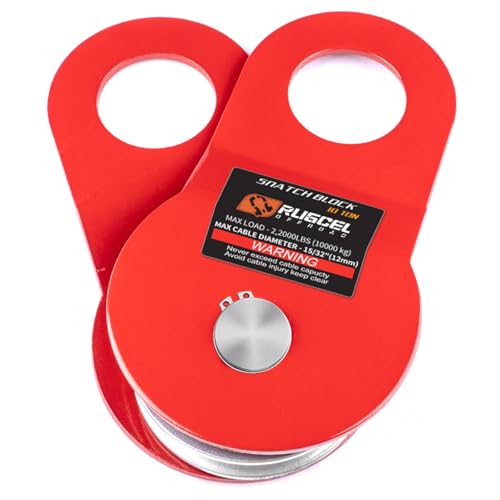
RUGCEL WINCH 10T Heavy Duty Recovery Winch Snatch Block, 22000lb Capacity,Towing Pulley Blocks,Heavy Duty Offroad Recovery Accessory for Truck, Tracto
- Heavy Duty Steel Construction: Supports up to 10 Ton (22,000 lbs)
- Universal Compatibility: Fits all winches with 2/5 inch cable
- Enhanced Recovery Power: Doubles winch pulling capacity for tough recoveries
As an affiliate, we earn on qualifying purchases.
As an affiliate, we earn on qualifying purchases.
Frequently Asked Questions
How Can I Tell if My Winch Line Angle Is Too Steep?
You can tell if your winch line angle is too steep by measuring the angle with an angle measurement tool. If it exceeds 20 degrees, it’s likely too sharp and puts undue stress on hardware. Regular hardware inspection is essential; look for signs of bending or wear, especially on pulleys and hooks. Maintaining the angle within recommended limits helps prevent hardware damage and ensures safer, more efficient winching.
What Are the Signs of Hardware Bending During Side-Pull Setups?
If you notice hardware bending during side-pull setups, it’s a sign of hardware fatigue caused by uneven load distribution. Bending may appear as deformed hooks or shackles, and you might hear creaking or see cracks. These signs indicate that the hardware is under excessive stress, risking failure. Always inspect hardware regularly, especially after a pull, and adjust your setup to make certain of proper load sharing and prevent future damage.
Are There Specific Tools to Measure Winch Line Angles Accurately?
You can use a digital or analog angle measurement tool, like a protractor or inclinometer, to measure winch line angles accurately. These tools are designed for precise readings and help you avoid mistakes with tool accuracy. By checking the angle regularly, you guarantee the setup stays within safe limits, preventing hardware bending. Always select a tool suited for the specific angle range you need, and calibrate it if necessary for best results.
How Often Should I Inspect Hardware for Damage After a Side-Pull?
Think of hardware inspection after a side-pull as tending to a wounded warrior—don’t wait too long. You should inspect your gear immediately after each side-pull, then conduct regular checks based on how often you use it. This routine keeps your equipment in top shape, preventing costly damage. Remember, consistent gear maintenance isn’t just smart; it’s critical to stay safe and ensure your hardware performs when it counts.
Can Custom Equipment Prevent Side-Pull Line Angle Mistakes?
Yes, custom equipment can help prevent side-pull line angle mistakes. You can incorporate hardware modifications like adjustable attachments and angle measurement tools to guarantee the line pulls straight and distributes force evenly. These modifications help you maintain proper angles, reducing hardware stress and bending. Using precise tools and custom setups, you’re better equipped to keep the line aligned, minimizing the risk of damage during lifting operations.

Xpose Safety 3/8" Galvanized Steel Aircraft Cable Wire – Pack of 48, 500 ft Reel, 7×19 Strand, 14,400 lb Break Strength – for Pulley System, Winch, Marine, Deck Railing, Fencing, Zipline
- Cable Diameter: 3/8 inch galvanized steel wire
- Cable Length: 500 ft reel
- Strand Configuration: 7×19 braided strands
As an affiliate, we earn on qualifying purchases.
As an affiliate, we earn on qualifying purchases.
Conclusion
If you ignore the importance of proper winch line angles, you risk more than just hardware damage—you could be setting the stage for unexpected failures. Small mistakes now might lead to costly repairs or dangerous situations later. Are you truly prepared to handle the consequences of overlooked details? Sometimes, the difference between a safe lift and a catastrophic failure lies in understanding what’s hidden beneath the surface. Don’t let a simple mistake catch you off guard.

Robbor Shackles 3/4"(2 Pack) D-Ring Shackle Rugged 28.5 Ton (57,000 Lbs) Maximum Break Strength Heavy Duty Tow Shackles Perfect Shackle work with Tow Strap, Winch, Off-Road Jeep Truck Vehicle Recovery
- Size and Screw Pin: 3/4 inch with 7/8 inch screw pin
- Load Capacity: 9,500 lbs WLL, 28.5 tons break strength
- Durable Coating: Black powder-coated with galvanized protection
As an affiliate, we earn on qualifying purchases.
As an affiliate, we earn on qualifying purchases.

Dutton-Lainson Company – D-L (6294A) Ratchet Repair Kit – Stainless Steel Spring for DLC Pulling Winch Models Only – Heavy-Duty, Zinc Plated TUFFPLATE Finish Complete Hardware Set – Made in USA
- Made in USA: USA-made ratchet repair kit for Dutton-Lainson winches
- Corrosion-Resistant Finish: Zinc-plated TUFFPLATE finish for marine environments
- Complete Hardware Set: Includes bolt, lock nut, lever, spacer, sleeve, spring
As an affiliate, we earn on qualifying purchases.
As an affiliate, we earn on qualifying purchases.
Flea & tick season Picks
flea and tick prevention
As an affiliate, we earn on qualifying purchases.