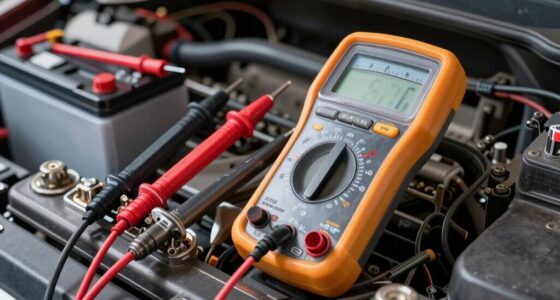
In camp solar setups, voltage drop caused by poor wiring choices often goes unnoticed but can waste energy and reduce system safety. Using thin wires or long cable runs increases resistance, leading to energy loss and overheating risks. Proper cable gauge, secure connections, and smart routing are essential to maintain efficient power flow and protect your batteries. Understanding and addressing these issues helps ensure a safe, reliable system—keep exploring to learn how to prevent these losses effectively.

Get business pricing on garage and car supplies
- Business-only prices and quantity discounts
- Tax-exempt purchasing
- Multiple users, one account, clear invoices
Key Takeaways
- Voltage drop causes energy loss as heat, reducing power efficiency in solar cable runs.
- Proper cable gauge selection minimizes resistance and prevents significant voltage drops over long distances.
- Neglecting voltage drop can lead to incomplete battery charging and decreased system performance.
- Overly thin or long cables increase heat buildup, risking insulation damage and safety hazards.
- Regular inspection and correct wiring practices ensure minimal voltage loss and extend system lifespan.
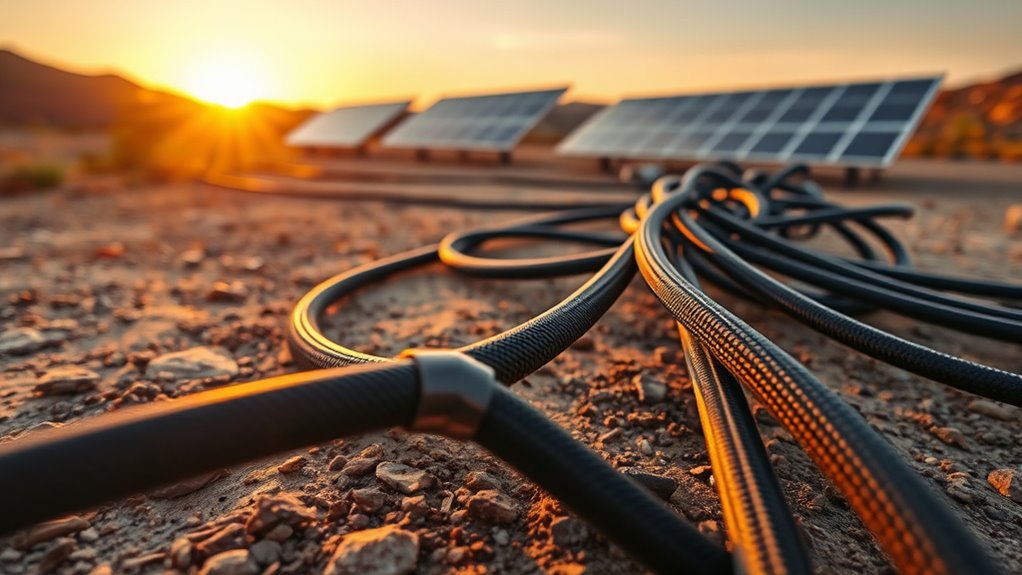
Have you ever wondered how much energy is lost as electricity travels through solar cables? It’s a common concern for anyone relying on solar power, especially when setting up a remote camp or off-grid system. The answer lies in understanding voltage drop, a phenomenon that directly impacts your battery efficiency and wiring safety. When current flows through cables, some energy inevitably dissipates as heat, meaning less power reaches your batteries and appliances. This loss isn’t just about wasted energy; it affects how well your entire system performs. If your cables aren’t chosen or installed properly, your batteries won’t charge fully, and your system’s overall efficiency drops. That’s why paying attention to wiring safety is crucial—using cables with the correct gauge and ensuring secure connections help prevent overheating and potential fire hazards. Additionally, proper cable management and routing can reduce unnecessary length and resistance, further minimizing voltage drop.
Proper cable gauge and secure connections prevent energy loss and boost solar system safety.
The key to minimizing solar cable loss is selecting the right wire size for your setup. Thinner wires have higher resistance, which increases voltage drop, so they waste more energy as heat. Larger gauge cables reduce resistance, ensuring more of the generated energy reaches your batteries. This isn’t just about efficiency; it’s about safety too. Overheating wires can cause insulation melting, short circuits, or even fires, especially when cables run over long distances. Proper wiring safety practices, like avoiding sharp bends, securing cables properly, and using connectors rated for your system’s voltage and current, help prevent these issues. It’s worth investing in quality cables and following installation guidelines to protect your equipment and yourself.
Another important aspect is understanding how wiring safety and battery efficiency are interconnected. When voltage drops due to poor wiring, your batteries don’t receive the maximum charging voltage. Over time, this can degrade battery health and reduce their lifespan. Conversely, if you prioritize wiring safety by using correct-sized cables and secure connections, you maintain a steady voltage, ensuring your batteries charge efficiently and last longer. This balance is essential, especially in off-grid camps where maintenance is limited. Proper cable management, regular inspection for signs of wear or corrosion, and avoiding unnecessary cable runs can further enhance performance and safety. Using appropriate wiring materials that are rated for outdoor use and high current loads can also extend system longevity.
In short, minimizing solar cable loss isn’t just about saving energy; it’s about ensuring a safe, reliable power system. Paying close attention to wiring safety and selecting the appropriate cables directly impacts your battery efficiency and overall system longevity. By understanding the importance of proper wiring and taking proactive measures, you’ll keep your camp powered smoothly and securely, avoiding costly repairs or dangerous situations down the line. Remember, a well-designed system isn’t just more efficient—it’s safer for you and your equipment.
solar cable gauge size for off-grid systems
As an affiliate, we earn on qualifying purchases.
As an affiliate, we earn on qualifying purchases.
Frequently Asked Questions
How Does Cable Type Affect Voltage Drop?
The cable type directly impacts voltage drop because thicker cables with lower resistance reduce loss. High-quality cable insulation helps prevent energy leakage and maintains efficiency, while good connector quality ensures a solid connection, minimizing resistance and voltage drop. You should choose cables with appropriate gauge and insulation for your setup, and make sure connectors are well-made to keep voltage levels stable and optimize your solar system’s performance.
What Are the Signs of Excessive Cable Loss?
You notice your solar setup underperforming unexpectedly. Signs of excessive cable loss include dimmer lights, appliances running slower, or inconsistent power. Check for issues with cable insulation and connection quality—faulty insulation can cause energy leakage, while poor connections increase resistance, heightening voltage drop. If these symptoms appear, it’s time to inspect your cables thoroughly, ensuring they’re properly insulated and securely connected to prevent further energy loss.
Can Cable Loss Impact Overall Solar System Efficiency?
Cable loss can considerably impact your solar system efficiency by reducing power output. When cable insulation isn’t robust or the conductor material isn’t ideal, voltage drops increase, leading to energy loss. You should make certain your cables have high-quality insulation and use conductive materials like copper or aluminum. Properly sized cables minimize resistance, preserving system performance and maximizing energy harvest, so don’t overlook these critical factors.
How to Calculate Acceptable Voltage Drop Levels?
You should aim for a voltage drop below 3%, ensuring your cable insulation remains intact and connection corrosion is minimized. To calculate this, divide the total voltage by the permissible drop percentage, then multiply by the cable length and current. Regularly check your connections and insulations, as they influence acceptable levels. Staying within these limits keeps your system efficient and prolongs your equipment’s lifespan.
What Maintenance Reduces Cable Loss Over Time?
You can reduce cable loss over time by regularly inspecting and maintaining cable insulation to prevent degradation and guarantee safety. Check connector quality, replacing any loose or corroded connections promptly to minimize resistance. Keep cables clean and protected from environmental damage, and avoid unnecessary bending or stress. Proper maintenance of insulation and connectors keeps the system efficient, reducing voltage drop and maximizing your solar power performance over the long term.
solar cable connectors and terminals
As an affiliate, we earn on qualifying purchases.
As an affiliate, we earn on qualifying purchases.
Conclusion
Just like Icarus flying too close to the sun, neglecting cable loss can cause your solar setup to fail, wasting your hard-earned energy and resources. Remember, every wire and connection matters—overlooking voltage drop is like ignoring the cracks in your foundation. Stay vigilant and mindful of these hidden losses, so your solar journey soars, not crashes. Protect your investment, and keep your energy shining bright—because in this race, every detail counts.
solar wiring safety and insulation
As an affiliate, we earn on qualifying purchases.
As an affiliate, we earn on qualifying purchases.
As an affiliate, we earn on qualifying purchases.
Halloween Picks
halloween
As an affiliate, we earn on qualifying purchases.