
TL;DR

Get business pricing on garage and car supplies
- Business-only prices and quantity discounts
- Tax-exempt purchasing
- Multiple users, one account, clear invoices
Ford has built the first Fathom electric pickups on the production line at its Louisville assembly plant, and says validation testing is about 90% complete. The vehicles are for testing, not customer deliveries, which Ford expects in late 2027. The launch will also test a new assembly process and the supply chain needed to build the truck at volume.
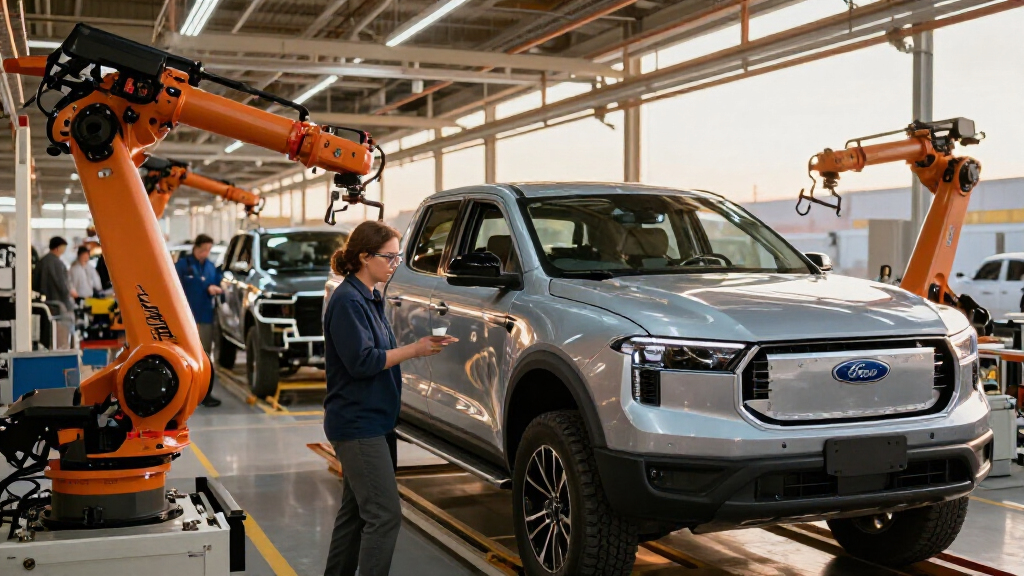
Ford has built its first Fathom electric pickups on the production line at its Louisville Assembly Plant, marking a new stage of testing for the affordable truck and the manufacturing system designed to make it. Ford COO Kumar Galhotra said validation testing is about 90% complete, but the vehicles are not customer-ready production units; deliveries are not slated until late 2027.
Galhotra disclosed the milestone during Ford’s recent quarterly earnings call. He said the company had built its first line vehicles at Louisville, where Ford has invested more than $2 billion to prepare for Fathom production. Building vehicles on the actual line lets Ford test how its production methods and equipment work together, rather than relying only on prototypes or testing individual components.
The pickup is being developed on Ford’s Universal Electric Vehicle (UEV) platform and will use a process the company calls an assembly tree. Instead of moving a vehicle through a conventional sequence of stations as a single body, workers will assemble its front, middle and rear sections at the same time, then join those sections later in the process. Ford says the arrangement is intended to improve speed, efficiency and worker ergonomics.
Testing also includes large castings made at Ford’s Shelbyville Technical Center. Galhotra said Ford had produced 5,000 unicastings, combining 146 separate parts into two large castings. The company says the approach is intended to reduce part count and manufacturing complexity. Galhotra identified the supply base, which must deliver parts at the required speed and quality, as a key task for the months ahead.
A Test of Ford’s EV Production Strategy
The Fathom is a practical test of whether Ford can move from a new EV design to repeatable, high-volume manufacturing at a competitive cost. The company is putting a different vehicle platform, factory layout and parts strategy into operation together. A successful ramp could support Ford’s effort to produce a lower-priced electric pickup; problems with the process or suppliers could delay output or raise costs.
Ford’s claims about faster, more efficient production remain goals, not established results. The early builds and completed validation work are evidence of progress, but they do not show how quickly the factory can produce saleable trucks at scale, or whether it can do so reliably. Ford’s ability to coordinate suppliers with its new production system will be an important part of that test.
Products Worth Considering

Autel Home EV Charger up to 50A, J1772 Hardwired Level 2 Charger, 25ft Cable

DEWALT 20V MAX Cordless Drill and Impact Driver Combo Kit (DCK277D2)

VIOFO A229 Plus Front and Rear Dash Cam with Dual 2K HDR
As an affiliate, we earn on qualifying purchases.
From Factory Investment to Line Builds
Ford has positioned the Fathom as an affordable electric pickup and a central application for its UEV platform. The automaker has opened an invite list ahead of the truck’s launch, but its stated customer-delivery timing remains late 2027. The production-line vehicles now being built are part of the development and validation phase, not evidence that deliveries have begun.
The assembly-tree approach changes how vehicle sections move through the factory, while the large castings aim to simplify the structure and reduce the number of individual components. The method has similarities to manufacturing approaches promoted by other automakers, but Ford’s own results will depend on how its system performs in its Louisville plant and across its supplier network.
“It’s progressing very well. 90% of the validation testing has been completed. We’ve built our first production line vehicles at Louisville assembly plant.”
— Ford COO Kumar Galhotra, on the company’s quarterly earnings call
Volume and Supplier Readiness Remain Open
Ford has not said when it expects to finish validation or reach a specific production rate. The source report says the company is reportedly targeting 100,000 sales in the first year, but the supplied material does not establish that figure as a confirmed Ford forecast. It also does not provide a detailed production schedule or explain how many validation vehicles have been built.
It remains unclear whether the assembly-tree process will deliver the speed, efficiency and cost benefits Ford expects once production scales up. The number of unicastings produced is a reported milestone, but it does not by itself establish that suppliers can sustain the necessary volume and quality across all parts. No final customer-delivery date beyond late 2027, pricing confirmation or independently verified performance results are provided in the source material.
Supplier Ramp and Validation Ahead
Ford says it will spend the next few months working with suppliers to confirm they can provide parts at production rates and meet quality requirements. The company will also need to continue validating the Fathom and refining its Louisville manufacturing process before customer deliveries begin.
The next meaningful indicators will be updates on validation completion, supplier readiness, production timing and Ford’s planned output. Until the automaker reports those milestones, the first line builds show that the process is being tested, not that the Fathom is already in full-scale production.
Key Questions
Has Ford started delivering Fathom pickups to customers?
No. Ford has built validation vehicles on its production line, while customer deliveries are planned for late 2027.
What does Ford mean by an assembly tree?
Ford plans to assemble the pickup’s front, middle and rear sections simultaneously, then join them later in the manufacturing process.
How much validation testing has Ford completed?
COO Kumar Galhotra said about 90% of validation testing was complete during the company’s recent quarterly earnings call. Ford has not provided a completion date in the supplied material.
What are Ford’s unicastings?
They are large castings Ford says combine 146 parts into two castings. Galhotra said Ford had produced 5,000, but that figure alone does not confirm production-scale readiness.
When are Fathom customer deliveries expected?
Ford’s stated schedule is late 2027. The supplied reporting does not give a more specific date.
Source: insideevs.com