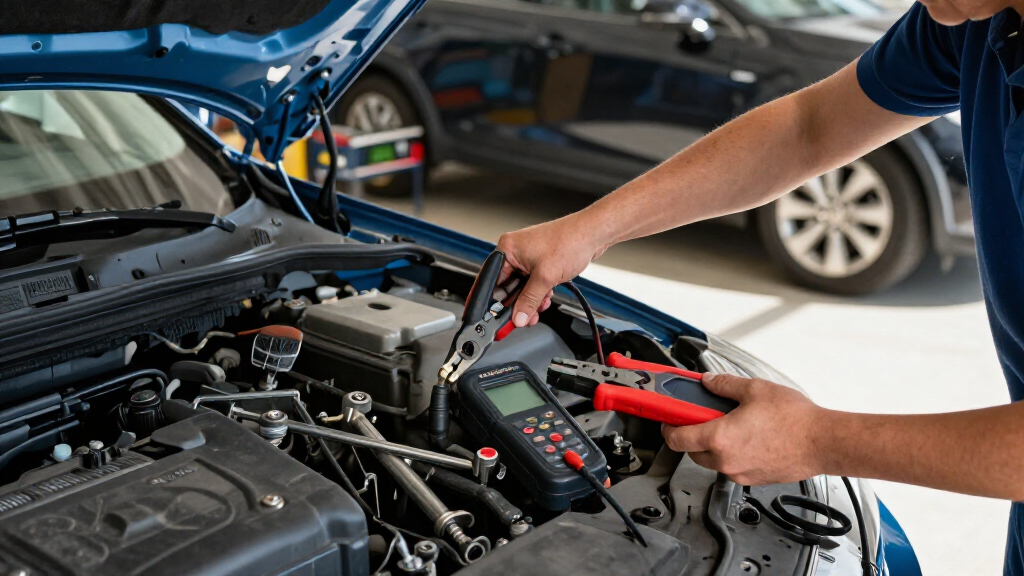
Choosing the right automotive battery testers can mean the difference between a quick fix and a wasted trip to the shop. My top recommendation is the FOXWELL BT705 Plus because it balances professional-grade alternator and cranking tests with a user-friendly interface that doesn’t overwhelm beginners. For those needing portability and basic checks, the TOPDON BT100 remains a standout choice due to its compact size and straightforward operation. The main tradeoff in this category lies between conductive testing accuracy versus the raw power of traditional load testers. While modern conductive testers analyze internal resistance, they may not simulate heavy starting loads as effectively as carbon pile models. Continue reading to see how these tools compare in accuracy, durability, and overall value for your specific diagnostic needs.

Get business pricing on garage and car supplies
- Business-only prices and quantity discounts
- Tax-exempt purchasing
- Multiple users, one account, clear invoices
Complete the kit


Key Takeaways
- Conductive testers dominate this list because they offer safer, faster diagnostics than traditional load testers, though they require clean battery terminals for accurate readings.
- Models with built-in printers, such as the TOPDON BT600 and BT300P, are strictly necessary for shop environments where customer proof of battery health is required.
- Multi-voltage support (6V, 12V, and 24V) is a critical differentiator; 12V-only testers are insufficient for diesel trucks or older vehicles with 6V systems.
- The TOPDC Carbon Pile Load Testers provide a tangible stress test that electronic testers cannot replicate, making them vital for diagnosing intermittent starting issues.
- Screen size and readability significantly impact usability; larger displays on premium models reduce diagnostic errors in low-light garage conditions compared to compact LCDs.
| ANCEL BA101 12V Car Battery Tester |  | Best for Budget-Conscious 12V Diagnostics | Voltage Compatibility: 12V only | CCA Range: 100–2000 CCA | Battery Types: Flooded, AGM, GEL, EFB | VIEW LATEST PRICE | See Our Full Breakdown |
| FOXWELL BT705 Plus 12V/24V Car Battery, Cranking, and Alternator Tester |  | Best for Versatility Across Vehicle Types | Voltage Compatibility: 12V / 24V | Display: 2.8-inch Color LCD | Cable Length: 5.9 ft | VIEW LATEST PRICE | See Our Full Breakdown |
| TOPDON BT200 12V/24V Car Battery Tester, 100–2000 CCA | 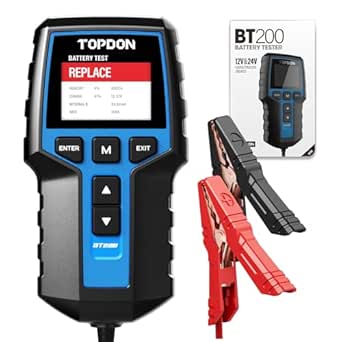 | Best for Cold Climate Durability | Voltage Compatibility: 12V / 24V | CCA Range: 100–2000 CCA | Operating Temp: -20°C to 60°C | VIEW LATEST PRICE | See Our Full Breakdown |
| ANCEL BA101 Plus Car Battery Tester, 6V/12V, 20–2000 CCA |  | Best for Small Battery Compatibility | Voltage Compatibility: 6V / 12V | CCA Range: 20–2000 CCA | Record Capacity: 1,400 records | VIEW LATEST PRICE | See Our Full Breakdown |
| TOPDC 500A Carbon Pile Battery Load Tester, 6V/12V, Up to 1000 CCA |  | Best for Traditional Load Testing | Voltage Compatibility: 6V / 12V | Load Capacity: 0–500A | Max CCA: 1000 CCA | VIEW LATEST PRICE | See Our Full Breakdown |
| VDIAGTOOL BT500 Car Battery Tester |  | Best for Multi-Voltage Systems | Voltage Support: 6V, 12V, 24V | CCA Range: 5–3000 CCA | Battery Types: Flooded, AGM, GEL, EFB | VIEW LATEST PRICE | See Our Full Breakdown |
| Schumacher Electric BT-100 Battery Load Tester | 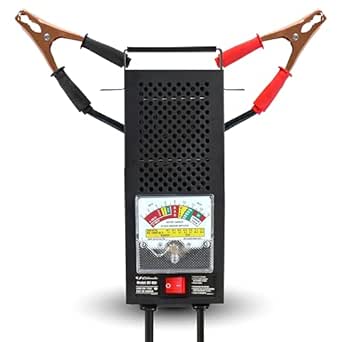 | Best Analog Load Tester | Voltage Support: 6V, 12V | Load Test Current: 50A at 6V, 100A at 12V | Max Battery Capacity: 1,000 Cranking Amps | VIEW LATEST PRICE | See Our Full Breakdown |
| ACCLOPE BT60 PRO Battery Tester |  | Best for Lithium Compatibility | Voltage Support: 6V, 12V, 24V | CCA Range: 100–3000 CCA | Lithium Support: LiFePO4 (Voltage/SOH only) | VIEW LATEST PRICE | See Our Full Breakdown |
| TOPDON BT600 Automotive Battery Tester |  | Best Premium Digital Tester | Voltage Support: 12V, 24V | CCA Range: 100–2000A | Display: 3.5-inch color screen | VIEW LATEST PRICE | See Our Full Breakdown |
| TOPDON BT300P Automotive Battery Tester | 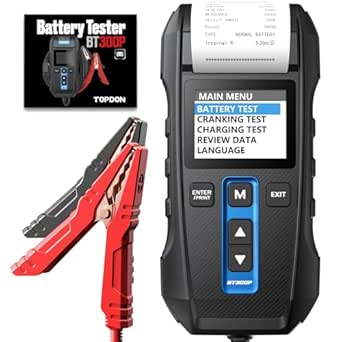 | Best Compact Professional Tester | Battery Voltage: 12V only | System Tests: 12V/24V Cranking & Charging | CCA Range: 100–2000 CCA | VIEW LATEST PRICE | See Our Full Breakdown |
| FOXWELL BT705 12V/24V Car Battery, Alternator, and Load Tester |  | Best for Dual-Voltage Systems | Supported Systems: 12V and 24V | CCA Range: 100–2000 CCA | Compatible Battery Types: Flooded, AGM, GEL, EFB | VIEW LATEST PRICE | See Our Full Breakdown |
| TOPDON BT100 12V Car Battery Tester |  | Best Compact All-Rounder | Model: BT100 | Power Source: Battery powered | Min Operating Voltage: 12 V | VIEW LATEST PRICE | See Our Full Breakdown |
| TOPDC 100A Battery Load Tester for 6V and 12V Batteries, 100–1000 CCA |  | Best Traditional Load Tester | Brand: TOPDC | Model: TD-BLT100A | Battery Compatibility: 6V and 12V | VIEW LATEST PRICE | See Our Full Breakdown |
| KONNWEI KW208 12V Car Battery Tester |  | Best for Component Diagnostics | Compatible Voltage: 12V | Supported Battery Types: Flooded, AGM, Gel | CCA Range: 100–2000 CCA | VIEW LATEST PRICE | See Our Full Breakdown |
| TOPDON AB101 12V Car Battery Tester |  | Best for Quick Results | Power Source: Battery powered | Min Operating Voltage: 12 volts | Compatible Vehicles: Cars, SUVs, Light Trucks | VIEW LATEST PRICE | See Our Full Breakdown |
| automotive battery tester | CCA Range | Weight |
|---|---|---|
| ANCEL BA101 12V Car Battery Te | 100–2000 CCA | — |
| FOXWELL BT705 Plus 12V/24V Car | — | 1.33 kg |
| TOPDON BT200 12V/24V Car Batte | 100–2000 CCA | 15.52 ounces |
| ANCEL BA101 Plus Car Battery T | 20–2000 CCA | — |
| TOPDC 500A Carbon Pile Battery | — | — |
| VDIAGTOOL BT500 Car Battery Te | 5–3000 CCA | — |
| Schumacher Electric BT-100 Bat | — | — |
| ACCLOPE BT60 PRO Battery Teste | 100–3000 CCA | — |
| TOPDON BT600 Automotive Batter | 100–2000A | 1.29 kg |
| TOPDON BT300P Automotive Batte | 100–2000 CCA | 16 ounces |
| FOXWELL BT705 12V/24V Car Batt | 100–2000 CCA | 325 g |
| TOPDON BT100 12V Car Battery T | 100–2000 CCA | 9 ounces |
| TOPDC 100A Battery Load Tester | — | — |
| KONNWEI KW208 12V Car Battery | 100–2000 CCA | 230 g |
| TOPDON AB101 12V Car Battery T | 100–2000 CCA | 7.04 ounces |
More Details on Our Top Picks
ANCEL BA101 12V Car Battery Tester
This tool stands out for its simplicity and affordability, making it a strong contender for users who only need to test standard 12V lead-acid batteries. Compared to the FOXWELL BT705 Plus, it lacks a color screen and 24V support, but it delivers the core diagnostic data—State of Health, State of Charge, and CCA—that most everyday drivers actually need. The backlit monochrome display is functional, though less intuitive than the color interfaces found on pricier models like the TOPDON BT200. Its main limitation is the strict 30Ah minimum battery capacity, which excludes smaller motorcycle batteries. If you drive standard cars or trucks and want a no-nonsense tool without paying for extra features you won’t use, this model offers solid value.
Pros:- Provides essential SOH, SOC, and CCA readings clearly
- Includes cranking and charging system tests for full diagnostics
- Backlit display with adjustable contrast for poor lighting
- Lightweight and portable at just 5 ounces
Cons:- Strictly limited to batteries over 30Ah capacity
- No color display or advanced graphical data visualization
- Accuracy depends heavily on correct manual input of battery type and temperature
Best for: DIY homeowners and casual drivers who only test standard 12V car and truck batteries.
Not ideal for: Motorcycle owners with small batteries under 30Ah, or anyone needing to test 24V commercial vehicles.
- Voltage Compatibility:12V only
- CCA Range:100–2000 CCA
- Battery Types:Flooded, AGM, GEL, EFB
- Minimum Capacity:30Ah
- Display:Backlit Black-and-White
- Protection:Reverse polarity, short circuit, overcurrent
Our verdict“A straightforward, low-cost solution for basic 12V battery health checks in standard vehicles.”
FOXWELL BT705 Plus 12V/24V Car Battery, Cranking, and Alternator Tester
The B0D59V9DFN earns its spot as the most versatile option in this group by supporting both 12V and 24V systems, a significant upgrade over the ANCEL BA101 which is limited to 12V. This dual-voltage capability makes it suitable for everything from compact cars to large trucks and RVs. The 2.8-inch color display provides clearer, more detailed readouts than the monochrome screens on budget models, and the 5.9-foot cables allow for solo testing in tight engine bays. While it lacks the 6V support found in the TOPDC load tester, its ability to handle spiral AGM batteries adds breadth. It is a robust choice for those who service a mixed fleet of vehicles.
Pros:- Supports both 12V and 24V vehicle systems
- Long 5.9-foot cables facilitate easy solo testing
- Clear 2.8-inch color LCD for easy data interpretation
- Tests battery, cranking, and charging systems comprehensively
Cons:- Does not support lithium or LiFePO4 batteries
- No built-in printer or OBD2 scanning capabilities
- Bulkier form factor compared to compact handheld testers
Best for: Enthusiasts and technicians who service both passenger cars and larger 24V trucks or RVs.
Not ideal for: Users who need to test small 6V batteries for motorcycles or golf carts.
- Voltage Compatibility:12V / 24V
- Display:2.8-inch Color LCD
- Cable Length:5.9 ft
- Battery Types:Flooded, AGM, Spiral, GEL
- Weight:1.33 kg
- Power Source:Battery powered
Our verdict“The best all-rounder for users who need to diagnose both standard cars and larger 24V vehicles.”
TOPDON BT200 12V/24V Car Battery Tester, 100–2000 CCA
This model distinguishes itself with a stated operating range of -20°C to 60°C, making it more resilient in extreme conditions than many competitors. While it shares 12V/24V support with the FOXWELL BT705 Plus, the TOPDON BT200 includes a memory function that allows users to review past test results, a feature absent in many entry-level testers. The 2.4-inch color LCD is compact but legible, and the copper clamps ensure solid conductivity. It is a balanced choice for those who want more than just basic pass/fail data but don’t need the extra cable length or spiral battery support of higher-end models. Its compact size makes it easy to store in a glove box.
Pros:- Wide operating temperature range (-20°C to 60°C)
- Memory function allows storage and review of test history
- Supports both 12V and 24V battery systems
- Compact and lightweight design for easy portability
Cons:- Smaller 2.4-inch screen may feel cramped for complex data
- Lacks support for 6V batteries found in small vehicles
- No independent verification of claimed accuracy in description
Best for: Users in regions with harsh winter climates who need reliable testing in cold temperatures.
Not ideal for: Professionals needing high-volume data export or printing capabilities.
- Voltage Compatibility:12V / 24V
- CCA Range:100–2000 CCA
- Operating Temp:-20°C to 60°C
- Display:2.4-inch Color LCD
- Weight:15.52 ounces
- Warranty:1 year
Our verdict“A durable, compact tester ideal for cold-weather diagnostics and occasional home use.”
ANCEL BA101 Plus Car Battery Tester, 6V/12V, 20–2000 CCA
This is the only electronic tester in this batch that supports 6V batteries, filling a gap left by the TOPDON BT200 and FOXWELL BT705 Plus. This makes it the go-to choice for motorcycle, ATV, and golf cart owners. The 2.8-inch color TFT screen displays voltage curves, offering a deeper visual insight into battery performance than simple numerical readouts. With storage for 1,400 test records, it offers significantly better data logging than the ANCEL BA101 or TOPDON BT200. However, it lacks 24V support, so it won’t serve heavy-duty truck owners. It is a specialized tool that excels at covering the low-voltage end of the spectrum with modern digital precision.
Pros:- Unique support for 6V batteries down to 20 CCA
- Stores up to 1,400 test records for history tracking
- Displays voltage curves for detailed performance analysis
- Color TFT screen with clear visual feedback
Cons:- No support for 24V systems
- Printing requires dedicated PC software installation
- Not compatible with lithium or LiFePO4 batteries
Best for: Owners of motorcycles, ATVs, and golf carts who need to test small 6V lead-acid batteries.
Not ideal for: Users who primarily service large commercial trucks requiring 24V diagnostics.
- Voltage Compatibility:6V / 12V
- CCA Range:20–2000 CCA
- Record Capacity:1,400 records
- Display:2.8-inch Color TFT
- Battery Types:Flooded, AGM, GEL, EFB
- Certifications:CE, RoHS, UL
Our verdict“The best digital choice for small vehicle owners who need 6V compatibility and data logging.”
TOPDC 500A Carbon Pile Battery Load Tester, 6V/12V, Up to 1000 CCA
Unlike the digital conductance testers in this list, such as the TOPDON BT200, this unit uses a carbon pile load to physically stress the battery, simulating real-world starting conditions. This method is often trusted by older mechanics who prefer seeing voltage drop under load rather than relying on electronic algorithms. It tests 6V and 12V systems, similar to the ANCEL BA101 Plus, but focuses on raw power output up to 500A. The color-coded meters and built-in timer make it easy to use, though it lacks the data storage and graphical analysis of its digital counterparts. It is a rugged, analog option for those who want a direct, physical assessment of battery strength.
Pros:- Physically loads the battery up to 500A for realistic testing
- Tests starters, alternators, and regulators in one unit
- Built-in 15-second timer ensures consistent test duration
- Heavy-duty clamps provide a secure connection for high current
Cons:- Requires a one-minute cooldown between tests to prevent overheating
- Limited to batteries with 1000 CCA or less
- No digital readouts, data storage, or graphical analysis
Best for: Mechanics and DIYers who prefer traditional analog load testing over digital conductance analysis.
Not ideal for: Users who need to test batteries above 1000 CCA or require digital data logs.
- Voltage Compatibility:6V / 12V
- Load Capacity:0–500A
- Max CCA:1000 CCA
- Test Duration:15 seconds
- Dimensions:10.5 × 4.5 × 10.5 inches
- Clamp Size:3 inches
Our verdict“A classic analog tool for those who trust physical load testing over digital estimates.”
VDIAGTOOL BT500 Car Battery Tester
This unit stands out for its versatility across voltage ranges, handling 6V, 12V, and 24V systems where many competitors like the Schumacher BT-100 stop at 12V. It is ideal for shops servicing everything from motorcycles to heavy trucks. The 5-in-1 protection offers peace of mind against reverse polarity, a critical feature for busy technicians. However, it requires manual input of battery type and CCA, which adds steps compared to more automated testers. Unlike the ACCLOPE BT60 PRO, it lacks lithium battery support, limiting its future-proofing for hybrid vehicles. The shock-resistant body suits rough shop environments, but the lack of a printer means results must be recorded manually.
Pros:- Supports 6V, 12V, and 24V lead-acid systems
- Includes cranking and charging system analysis
- Robust 5-in-1 electrical protection features
- Wide CCA range from 5 to 3000
Cons:- No support for lithium or deep-cycle batteries
- Requires manual selection of battery standards and CCA
- No built-in printer for physical records
Best for: Mechanics who service a wide variety of vehicles including motorcycles (6V) and large trucks (24V).
Not ideal for: Users who need to test lithium-ion or deep-cycle batteries, as these are explicitly excluded.
- Voltage Support:6V, 12V, 24V
- CCA Range:5–3000 CCA
- Battery Types:Flooded, AGM, GEL, EFB
- Tests Included:Battery, Cranking, Charging
- Protections:Reverse polarity, short circuit
- Dimensions:6.45 × 3.35 × 0.96 inches
Our verdict“Choose this if you need a durable, multi-voltage tester for traditional lead-acid batteries in a mixed fleet.”
Schumacher Electric BT-100 Battery Load Tester
The analog meter design of the BT-100 appeals to those who prefer immediate, visual load testing over digital readouts. Unlike the digital VDIAGTOOL BT500, this tool performs a true load test by drawing 100 amps, simulating a real start rather than just measuring conductance. This can reveal weak batteries that digital testers might miss. The steel case is built for abuse, making it a long-term tool for garage use. However, it is limited to 6V and 12V systems, excluding the 24V trucks supported by competitors like the TOPDON BT600. It also lacks the detailed SOH/SOC metrics found in modern digital units, offering a simpler pass/fail approach.
Pros:- True 100-amp load test for accurate under-load diagnosis
- Durable steel case with baked enamel finish
- Simple analog meter for quick interpretation
- Includes voltmeter for charging system checks
Cons:- Limited to 6V and 12V systems only
- No digital storage or printing capabilities
- Bulky compared to handheld digital testers
Best for: Classic car enthusiasts and DIYers who trust analog load testing and want a rugged, no-frills tool.
Not ideal for: Technicians needing digital data logs or those working on 24V commercial vehicles.
- Voltage Support:6V, 12V
- Load Test Current:50A at 6V, 100A at 12V
- Max Battery Capacity:1,000 Cranking Amps
- Meter Type:Analog
- Case Material:Steel with baked enamel
- Included Items:Tester, voltmeter, manual
Our verdict“Pick this for its rugged build and reliable analog load testing if you don’t need digital data logging.”
ACCLOPE BT60 PRO Battery Tester
This tester differentiates itself by supporting LiFePO4 batteries for voltage and health checks, a feature missing in the VDIAGTOOL BT500 and TOPDON BT600. As hybrid and electric vehicles become common, this future-proofing is valuable. The QR code cloud sharing allows technicians to send reports to customers instantly without needing a printer or app download. The 3.2-inch HD screen offers clear visibility, and the built-in LED light is practical for dark engine bays. However, it does not support 48V systems, and LiFePO4 CCA measurements are not guaranteed, meaning it is not a full-service tool for all lithium applications. It remains a conductance tester, not a load tester.
Pros:- Supports LiFePO4 battery voltage and health checks
- QR code result sharing without an app
- Built-in LED light for low-light environments
- Wide voltage support (6V, 12V, 24V)
Cons:- LiFePO4 CCA results are not guaranteed
- No support for 48V battery systems
- Does not read OBD2 trouble codes
Best for: Modern repair shops dealing with hybrid vehicles and needing digital report sharing capabilities.
Not ideal for: Users requiring guaranteed CCA testing for lithium batteries or those working on 48V systems.
- Voltage Support:6V, 12V, 24V
- CCA Range:100–3000 CCA
- Lithium Support:LiFePO4 (Voltage/SOH only)
- Display:3.2-inch HD screen
- Data Sharing:QR code cloud printing
- Battery Capacity:2–120Ah
Our verdict“Ideal for shops transitioning to hybrid vehicles who need digital reporting and basic lithium support.”
TOPDON BT600 Automotive Battery Tester
The built-in thermal printer makes this unit a professional-grade tool, allowing for immediate physical documentation unlike the ACCLOPE BT60 PRO which relies on digital sharing. The 3.5-inch color screen provides detailed graphs for cranking and charging, offering more visual data than the smaller screens on budget models. It supports a wide range of 12V and 24V lead-acid types. However, the Windows-only software update requirement is a significant friction point for Mac or Linux users. It lacks the lithium battery support found in the ACCLOPE BT60 PRO and does not handle 6V systems, unlike the VDIAGTOOL BT500. It is a robust choice for traditional automotive shops.
Pros:- Built-in thermal printer for instant reports
- Large 3.5-inch color display with graphs
- Supports 12V and 24V lead-acid systems
- Includes test playback for comparison
Cons:- Software updates require Windows OS
- No support for lithium batteries
- Does not test 6V batteries
Best for: Professional auto shops that require printed customer receipts and detailed graphical analysis.
Not ideal for: Technicians who use Mac computers for updates or those needing to test 6V motorcycle batteries.
- Voltage Support:12V, 24V
- CCA Range:100–2000A
- Display:3.5-inch color screen
- Printer:Built-in thermal
- Weight:1.29 kg
- Software Compatibility:Windows only
Our verdict“A strong choice for traditional shops needing printed records and detailed graphical data for 12V/24V systems.”
TOPDON BT300P Automotive Battery Tester
Weighing just 16 ounces, this tool is significantly lighter and more portable than the TOPDON BT600, making it easier to carry around a garage. It retains the built-in thermal printer, a feature often sacrificed in compact models like the Schumacher BT-100. It tests 12V batteries but can check cranking/charging on 24V vehicles, a clever compromise for mixed fleets. However, it only tests 12V batteries themselves, meaning you cannot diagnose a dead 24V truck battery directly. The 2.4-inch screen is smaller than the BT600’s, which might feel cramped for detailed graph analysis. It is an excellent balance of portability and professional features.
Pros:- Ultra-lightweight at 16 ounces
- Built-in thermal printer for receipts
- Fast 3-second test results
- Reverse-polarity protection and spark-free clamps
Cons:- Only tests 12V batteries (not 24V or 6V)
- Smaller 2.4-inch screen limits data visibility
- Requires continuous thermal paper supply
Best for: Mobile mechanics and technicians who need a lightweight, printable tester for 12V passenger vehicles.
Not ideal for: Users who need to test 6V batteries or diagnose 24V battery health directly.
- Battery Voltage:12V only
- System Tests:12V/24V Cranking & Charging
- CCA Range:100–2000 CCA
- Display:2.4-inch color screen
- Weight:16 ounces
- Cable Length:31.5 inches
Our verdict“Perfect for mobile technicians who prioritize portability and printed reports for 12V vehicles.”
FOXWELL BT705 12V/24V Car Battery, Alternator, and Load Tester
The FOXWELL BT705 stands out as the most versatile option in this lineup for those who service both standard cars and heavy-duty vehicles. Unlike the TOPDON BT100, which is strictly limited to 12V systems, this tester handles 12V and 24V batteries, making it suitable for commercial trucks and boats. The guided interface simplifies complex diagnostics by summarizing results as GOOD, RECHARGE, or REPLACE, reducing the chance of misinterpretation for less experienced mechanics. While the 5.9-foot cable allows for convenient one-person testing from the driver’s seat, the device is corded, which limits mobility compared to battery-powered units. It is an excellent choice for garages that need to cover a wider range of vehicle voltages without buying multiple tools.
Pros:- Supports both 12V and 24V battery systems
- Guided screen simplifies results into clear action items
- Long cable enables testing from inside the vehicle
- Includes a durable hard carrying case
Cons:- Corded power source limits portability
- Only compatible with lead-acid battery chemistries
Best for: Professional mechanics and fleet maintenance staff who service both passenger cars and 24V commercial vehicles.
Not ideal for: Homeowners with only standard 12V cars who prefer a completely cordless, ultra-portable tool.
- Supported Systems:12V and 24V
- CCA Range:100–2000 CCA
- Compatible Battery Types:Flooded, AGM, GEL, EFB
- Screen Size:2.8-inch LCD
- Cable Length:5.9 ft
- Weight:325 g
- Power Source:Corded electric
Our verdict“Choose the FOXWELL BT705 if you need a single tool that reliably handles both 12V and 24V systems with clear, guided diagnostics.”
TOPDON BT100 12V Car Battery Tester
The TOPDON BT100 is a streamlined solution for users who want essential diagnostics without the bulk. It covers battery health, cranking, and charging systems, offering a similar scope to the FOXWELL BT705 but in a much smaller, 9-ounce package. The menu-based interface and LED indicators provide quick visual feedback, though it lacks the detailed text summaries found on larger screens. A notable limitation is that it must be attached to a battery to power on, unlike some standalone units. However, its reverse-polarity protection adds a layer of safety for DIYers. This model is ideal for those who prioritize portability and basic 12V diagnostics over advanced features or multi-voltage support.
Pros:- Extremely lightweight at just 9 ounces
- Includes spark-resistant reverse-polarity protection
- Covers battery, cranking, and charging tests
- Compatible with a wide variety of 12V vehicles
Cons:- Limited strictly to 12V battery systems
- Requires battery connection to boot up
Best for: DIY car owners and mobile mechanics who need a lightweight, pocketable tool for quick 12V checks.
Not ideal for: Users who need to test 6V or 24V batteries, or those who require a standalone device that powers on without battery connection.
- Model:BT100
- Power Source:Battery powered
- Min Operating Voltage:12 V
- Compatible Battery Types:Flooded, AGM, EFB, GEL
- CCA Range:100–2000 CCA
- Supported Tests:Battery, Cranking, Charging
- Weight:9 ounces
- Dimensions:5.3 x 3 x 1 inches
Our verdict“The TOPDON BT100 is the best pick for those who value extreme portability and simple, reliable 12V diagnostics.”
TOPDC 100A Battery Load Tester for 6V and 12V Batteries, 100–1000 CCA
The TOPDC 100A offers a classic approach to battery testing, distinct from the digital microprocessors used in the TOPDON BT100. It uses an analog display to measure actual load capacity, which some technicians prefer for its immediacy and lack of software lag. It supports 6V and 12V systems, making it suitable for older classic cars, motorcycles, and standard vehicles. The heavy-duty alligator clips and cooling vents suggest robust build quality for high-current applications. However, the analog meter can be harder to read precisely in poor lighting compared to backlit digital screens. This tool is for those who trust mechanical load testing and want to verify a battery’s ability to deliver current under stress.
Pros:- Supports both 6V and 12V battery systems
- Heavy-duty clips and cooling vents for durability
- Provides direct load testing results
- Portable design with insulated handles
Cons:- Analog display is less precise than digital alternatives
- Limited to 1000 CCA maximum testing range
Best for: Classic car enthusiasts and hobbyists who want to perform traditional load tests on 6V and 12V batteries.
Not ideal for: Users who prefer digital readouts and automated pass/fail judgments over manual analog interpretation.
- Brand:TOPDC
- Model:TD-BLT100A
- Battery Compatibility:6V and 12V
- CCA Testing Range:100–1000 CCA
- Load Capacity:50A (6V) / 100A (12V)
- Display Type:Analog
- Item Weight:2 pounds
- Dimensions:11.8 x 6.7 x 3.2 inches
Our verdict“Select the TOPDC 100A if you prefer the reliability of analog load testing for both 6V and 12V applications.”
KONNWEI KW208 12V Car Battery Tester
The KONNWEI KW208 goes beyond basic battery health by explicitly testing the starter and alternator as distinct components. While the TOPDON AB101 also checks charging systems, the KW208 provides specific performance data for the starter, which is valuable when diagnosing no-start conditions. It supports in-vehicle and out-of-vehicle testing, offering flexibility that the fixed-cable FOXWELL BT705 lacks. The device reports internal resistance and AH capacity, giving a deeper view of battery chemistry health. At 230 grams, it is compact and lightweight, though it remains limited to 12V systems. This tool is best for users who want to isolate whether a starting issue is due to the battery, the starter, or the charging system.
Pros:- Specifically tests starter and alternator performance
- Supports both in-vehicle and out-of-vehicle testing
- Measures internal resistance and AH capacity
- Lightweight at 230 grams with multi-language support
Cons:- Limited to 12V battery systems only
- No built-in printer for record-keeping
Best for: Technicians and advanced DIYers who need to diagnose starter and alternator issues separately from battery health.
Not ideal for: Users who work on 6V or 24V vehicles, as this unit is strictly for 12V applications.
- Compatible Voltage:12V
- Supported Battery Types:Flooded, AGM, Gel
- CCA Range:100–2000 CCA
- Tests Performed:Battery, Cranking, Charging, Starter, Alternator
- Measurement Outputs:Voltage, Internal Resistance, CCA, AH, Health
- Weight:230 g
- Dimensions:0.79 × 3.07 × 5 inches
- Languages:8
Our verdict“The KONNWEI KW208 is the ideal choice for diagnosing complex starting issues by isolating starter and alternator performance.”
TOPDON AB101 12V Car Battery Tester
The TOPDON AB101 is designed for speed and simplicity, displaying results in approximately 3 seconds. This makes it faster to use than the KONNWEI KW208, which may require more menu navigation for specific component tests. The backlit screen ensures visibility in dim garages, a feature that can be lacking in older digital models. It supports flooded, AGM, and gel batteries, covering the vast majority of passenger vehicles. The rubber-covered clips add a safety layer against accidental shorts. While it lacks the multi-voltage support of the FOXWELL BT705, its 7-ounce weight makes it exceptionally easy to store in a glovebox. This tester is perfect for users who want a fast, no-nonsense check of battery and charging health.
Pros:- Displays results in about 3 seconds
- Backlit screen for low-light visibility
- Rubber-covered clips enhance safety
- Ultra-lightweight at 7.04 ounces
Cons:- Compatible with 12V batteries only
- Limited feature set compared to multi-component testers
Best for: Everyday drivers who need a fast, easy-to-read battery check for cars, SUVs, and light trucks.
Not ideal for: Professionals who need to test 6V or 24V systems, or those requiring detailed starter diagnostics.
- Power Source:Battery powered
- Min Operating Voltage:12 volts
- Compatible Vehicles:Cars, SUVs, Light Trucks
- Compatible Battery Types:Flooded, AGM, Gel
- CCA Range:100–2000 CCA
- Weight:7.04 ounces
- Dimensions:4.9 × 2.6 × 0.7 inches
- Warranty:1 year
Our verdict“The TOPDON AB101 is the best option for those who prioritize speed and simplicity in 12V battery diagnostics.”

How We Picked
I evaluated these automotive battery testers based on diagnostic accuracy, range of supported battery chemistries, and ease of interpretation for non-professionals. A key factor was whether the device could distinguish between a bad battery and a bad alternator, a common pain point for DIYers. I also prioritized build quality and interface clarity, ensuring that the results were actionable rather than cryptic error codes.
The ranking logic favors versatility for the top spots, giving preference to units that handle 6V, 12V, and 24V systems while offering cranking and charging system tests. Basic 12V-only testers were ranked lower unless they offered exceptional simplicity or value for beginners. Traditional load testers were evaluated on their ability to deliver consistent amperage under load, a metric where electronic testers often fall short.
Factors to Consider When Choosing Automotive Battery Testers
Selecting a battery tester requires matching the tool’s capabilities to your vehicle fleet and diagnostic confidence level. Here are the critical factors that separate a useful diagnostic tool from an expensive brick.
Conductive Testing vs. Load Testing
Most modern handheld testers use conductive technology to measure internal resistance, which is safe and quick but can be fooled by sulfation or loose connections. Traditional carbon pile load testers physically drain the battery to see if it holds voltage under stress, providing a definitive answer for starting issues. If you frequently deal with cars that crank slowly but test as ‘good’ on a multimeter, a load tester is the only way to confirm the battery’s failure. However, conductive testers are better for daily maintenance and checking alternator output without discharging the battery.
Voltage Range and Battery Chemistry Support
Never buy a 12V-only tester if you own a diesel truck or work on older vehicles, as these often use 24V or 6V systems. Beyond voltage, check if the device supports AGM, Gel, and EFB batteries, which are common in modern cars with start-stop technology. Using a lead-acid test mode on an AGM battery can yield false failure readings, leading to unnecessary replacements. A robust tester should allow you to select the specific battery type to calibrate its internal algorithms correctly.
Cranking and Charging System Analysis
A battery is rarely the sole culprit in starting problems; the starter motor and alternator play major roles. High-end testers include Cranking Analysis to measure voltage drop during engine start and Charging System Analysis to verify alternator output. Without these features, you might replace a healthy battery only to find the car still won’t start. If you are a novice, a tester that clearly labels ‘Good,’ ‘Replace,’ or ‘Charge’ is more valuable than one that dumps raw voltage data on you.
Portability vs. Screen Readability
There is a direct tradeoff between compact size and screen utility. Pocket-sized testers are easy to store in a glovebox but often feature cramped displays that are hard to read in dim garages. Larger units with color screens or built-in printers offer better visibility and record-keeping but require a dedicated toolbox space. Consider where you will use the tool most; if it is for roadside emergencies, size matters more than screen real estate.
CCA Range and Accuracy Tolerances
Check the Cold Cranking Amps (CCA) range supported by the tester. A device rated for 100–2000 CCA may struggle with small motorcycle batteries or large commercial truck batteries. Accuracy tolerances of ±1% are standard for premium units, while budget models may vary by ±5%. For most passenger cars, a mid-range tester covers the necessary CCA spectrum, but if you work on diverse vehicles, a wider range prevents the need for multiple tools.
Frequently Asked Questions
Can a conductive battery tester give false positives for a bad battery?
Yes, conductive testers can sometimes report a battery as ‘Good’ even if it has high internal resistance due to sulfation that doesn’t show up in a quick scan. This happens because the test uses a low-current signal that may not replicate the heavy load of starting the engine. If your car has starting issues but the tester says the battery is fine, you should perform a load test or check the cranking voltage. Always verify suspicious results with a multimeter or a professional load tester before purchasing a new battery.
Do I really need a printer feature on a battery tester?
For a home DIYer, a printer is largely unnecessary and adds bulk to the device. However, for professional mechanics or roadside assistance providers, printed receipts are vital for proving to customers that a battery replacement was needed. If you work in a shop where liability or customer disputes are concerns, a model like the TOPDON BT600 with a built-in printer saves time and provides documentation. Without it, you rely on verbal explanations or photos of a screen, which are less formal and harder to archive.
Why does my battery tester show different results than my multimeter?
A multimeter measures open-circuit voltage, which tells you the battery’s state of charge but not its ability to deliver current. A dedicated battery tester measures internal resistance and CCA, which indicates the battery’s health and capacity. A battery can show 12.6 volts on a multimeter (fully charged) but fail a battery tester because it cannot sustain the required amperage to start the engine. This discrepancy is normal and highlights why specialized testers are superior for health diagnostics.
Are expensive battery testers more accurate than cheap ones?
Generally, yes, but the jump in accuracy is diminishing after the mid-tier price point. Budget testers often use cheaper sensors and slower processors, which can lead to inconsistent readings on older or deeply discharged batteries. Premium models like the FOXWELL BT705 Plus use better calibration algorithms and support more battery chemistries, reducing false diagnostics. For occasional personal use, a mid-range tester is sufficient; for professional use, the cost of a misdiagnosis outweighs the price difference of a premium tool.
Can I use a battery tester to check my alternator?
Only testers with Charging System Analysis capabilities can reliably check an alternator. Basic testers only assess the battery’s ability to hold and deliver charge. To test an alternator, the device must measure voltage while the engine is running and often under load to see if the voltage stays within the 13.5–14.5 volt range. If you suspect an alternator issue, choose a model like the FOXWELL BT705 Plus or TOPDON BT600 that explicitly includes this function to avoid buying a battery that wasn’t the problem.
Conclusion
Choosing the right automotive battery testers depends on your diagnostic depth and budget. For the Best Overall balance of features and price, the FOXWELL BT705 Plus stands out for its comprehensive alternator and cranking tests. If you need a Best Value option for basic 12V checks, the TOPDON BT100 is hard to beat for its simplicity and portability. Professionals or those who need Best Premium reliability and documentation should look at the TOPDON BT600 with its large screen and printer. For beginners, the ANCEL BA101 offers a gentle learning curve with clear pass/fail results. Finally, if you need to stress-test batteries physically, the TOPDC Carbon Pile Load Tester remains the Best for Specific Needs regarding definitive load verification.