TL;DR

Get business pricing on garage and car supplies
- Business-only prices and quantity discounts
- Tax-exempt purchasing
- Multiple users, one account, clear invoices
Ford CEO Jim Farley said on the company’s third-quarter earnings call that motors, gearbox and inverters on its new Universal Electric Vehicle platform are about 30% more efficient than BYD’s. Ford says the efficiency allows it to use a smaller, lower-cost battery for the Fathom pickup, but has not disclosed the battery size or specified which BYD powertrain it used as a comparison.
Ford CEO Jim Farley said the motors, gearbox and inverters in the company’s new Universal Electric Vehicle platform are about 30% more efficient than BYD’s, a comparison he made during Ford’s third-quarter earnings call. Ford says the claimed efficiency lets it fit a smaller, less costly battery in its upcoming Fathom pickup, though it has not specified the BYD system used for comparison or published the Fathom’s battery capacity.
Farley described drivetrain efficiency as an area where Ford had found an advantage over BYD. “There’s another area that we really found to be quite advantaged relative to a BYD. And that is the efficiency of our motors, gearbox and inverters, which are about 30% more efficient than theirs and allows us to design a battery that’s much less,” he said on the call. He added: “I think that’s really critical.” The remarks are Ford’s claim; the report did not cite independent testing or a published comparison supporting the percentage.
The platform, called Universal Electric Vehicle (UEV), is set to debut in the $28,350 Fathom pickup. Ford is presenting it as a way to build electric vehicles at lower cost than earlier models such as the Mustang Mach-E and F-150 Lightning. The company says the architecture uses fewer parts, improves efficiency and changes how vehicles are manufactured. A smaller battery could reduce costs because the battery is the largest single cost in an electric vehicle, according to the source report.
Ford has not disclosed the Fathom’s battery capacity. Earlier reports cited in the InsideEVs story estimated a pack in the 50-to-60-kilowatt-hour range, but that figure is not confirmed by Ford. The report also says a usable range above 200 miles would make efficiency important to getting the most out of a relatively small pack. Ford has not provided a confirmed range figure in the material available for this report.
Efficiency Could Lower Fathom Costs
If Ford’s efficiency claim is borne out in production, it could allow the company to reduce battery size while meeting its intended range target. Battery capacity affects vehicle cost, and Ford says a smaller pack could help lower the Fathom’s production costs.
The comparison places Ford’s UEV platform in the context of competition from Chinese automakers. Ford says its approach combines more efficient components with fewer parts and revised manufacturing processes. The Fathom’s final price, range and performance will provide information about how those design choices translate into a production vehicle.
The 30% figure is a company executive’s comparison, not a verified measure applicable across BYD vehicles. Ford has not disclosed the test conditions or the specific BYD model or powertrain, so the comparison cannot be assessed against a particular vehicle available to consumers.
Products Worth Considering
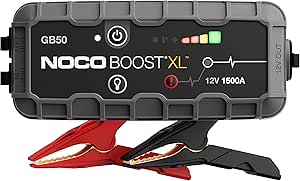
NOCO Boost GB50 1500A UltraSafe Jump Starter, 12V Lithium Battery Booster

NOCO Boost GB150 3000A UltraSafe Jump Starter, 12V Lithium Battery Booster

NOCO Boost GBX45 12V Lithium Jump Starter, 1,250A
As an affiliate, we earn on qualifying purchases.
Ford’s UEV Platform Strategy
Ford has described the UEV platform as a foundation for lower-cost EVs. Its first named vehicle on the architecture is the Fathom pickup, priced at $28,350 in the source report. Ford’s pitch rests on a combination of engineering and manufacturing changes rather than on a single component: fewer parts, drivetrain efficiency and an overhauled production process.
The company is also looking to Chinese automakers for lessons beyond the efficiency comparison. The report says Ford executives discussed learning from a partnership with Geely in Europe, including ways to reduce vehicle costs and speed product development. Farley’s BYD remarks place that effort against a competitive backdrop: the report says BYD surpassed Ford in global sales the previous year, while attributing much of the Chinese automaker’s success to vertical integration.
Ford Chief Operating Officer Kumar Galhotra said efficiency improvements developed for UEV could also benefit the company’s hybrids. That suggests the engineering work may extend beyond the first electric pickup, although Ford has not detailed which hybrid models or components would receive the gains.
““There’s another area that we really found to be quite advantaged relative to a BYD. And that is the efficiency of our motors, gearbox and inverters, which are about 30% more efficient than theirs and allows us to design a battery that’s much less.””
— Jim Farley, Ford CEO, on the third-quarter earnings call
Comparison Details Are Missing
The source material does not identify which BYD vehicle or powertrain Farley used as the benchmark, or how Ford measured the claimed efficiency difference. It also provides no independent test results, methodology, driving conditions or component-level figures. The 30% figure should therefore be treated as Ford’s stated comparison, not an independently established result.
Other key specifications remain undisclosed in the report. Ford has not confirmed the Fathom’s battery capacity or its final range, and the 50-to-60-kWh estimate comes from earlier reporting rather than a company specification. The report also does not establish how much, if any, cost reduction would be reflected in the final vehicle price or how the Fathom will perform under real-world conditions.
Fathom Specifications Will Test Claim
The next useful evidence will be Ford’s confirmed battery capacity, range and production specifications for the Fathom, alongside further details about the UEV platform. Those figures will help show whether a smaller battery can support the range and price Ford is targeting.
Ford has also not supplied the comparison data needed to evaluate the 30% claim directly. Details about the BYD benchmark and test method would make the statement easier to assess. Until then, the announced vehicle specifications and independent testing will provide additional information about the platform.
Key Questions
What does Ford say is 30% more efficient?
CEO Jim Farley said the motors, gearbox and inverters in Ford’s UEV platform are about 30% more efficient than BYD’s. Ford has not published the test method or detailed results in the source material.
Which BYD vehicle did Ford compare against?
The source report does not identify a specific BYD model or powertrain. That limits how directly the claim can be compared with a particular vehicle.
What is the Ford Fathom’s battery size?
Ford has not confirmed the battery capacity. Earlier reports cited by InsideEVs estimated a pack of about 50 to 60 kWh, but that remains an estimate rather than a Ford specification.
How could drivetrain efficiency reduce the Fathom’s price?
Ford says greater efficiency allows it to use a smaller battery. Because batteries are a major EV cost, a smaller pack could lower manufacturing costs, although Ford has not said how much savings the Fathom will pass on to buyers.
Will the UEV efficiency work affect Ford hybrids?
Ford COO Kumar Galhotra said the company’s hybrids are expected to benefit from efficiency gains developed for the UEV platform. Ford has not named specific hybrid models or provided a schedule for those changes.
Source: insideevs.com