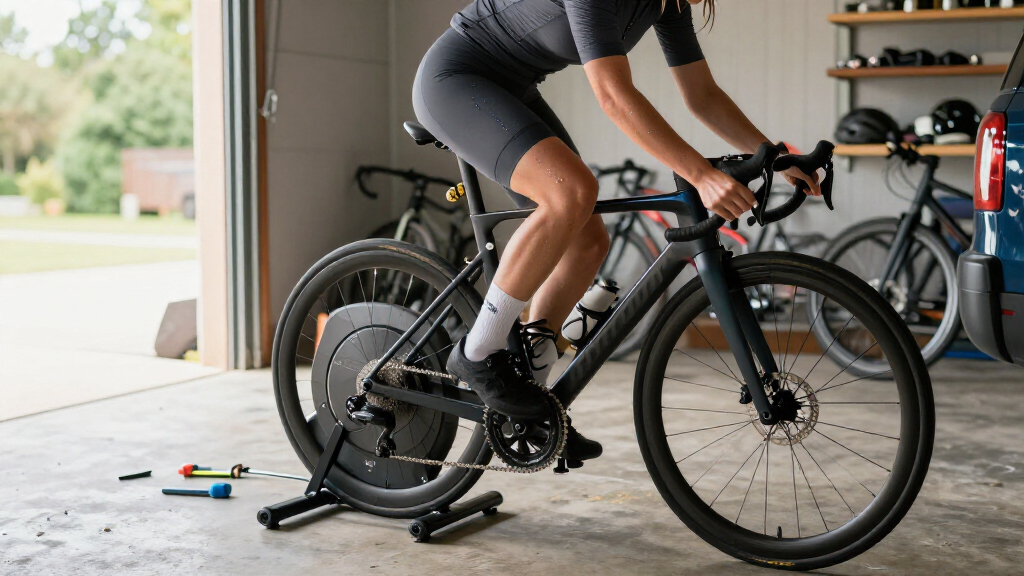
The best turbo trainers balance ride feel, setup, compatibility, and the kind of training you actually plan to do. For most riders seeking connected workouts, the Wahoo KICKR V6 is the strongest all-round choice, while the Garmin Tacx NEO 2T stands out for its premium smart-training features. If you want a simpler, lower-tech setup, the Saris Fluid2 offers a more straightforward route to indoor riding. The main tradeoffs are smart control versus simplicity, direct-drive convenience versus wheel-on compatibility, and performance features versus storage needs. Read on for the full breakdown of all 13 options and how to choose between them.

Get business pricing on garage and car supplies
- Business-only prices and quantity discounts
- Tax-exempt purchasing
- Multiple users, one account, clear invoices
Complete the kit


Key Takeaways
- Direct-drive smart trainers lead for connected training: The Wahoo KICKR V6, Garmin Tacx NEO 2T, ThinkRider models, and CYCPLUS R200 offer app-based resistance control, unlike the basic magnetic and fluid wheel-on stands.
- The Wahoo KICKR V6 is the most balanced smart pick: It combines a connected training setup with a more conventional trainer format, while the Wahoo KICKR Bike PRO is a larger, dedicated indoor-cycling investment.
- Wheel-on trainers suit simpler setups, but bring compromises: The Saris Fluid2, Alpcour Fluid, Sportneer Fluid, and magnetic models keep your rear wheel in place, though tire contact can affect noise, wear, and consistency.
- High power and gradient figures are not the whole story: The CYCPLUS R200 and ThinkRider X2Max advertise substantial capacity, but buyers should also check bike compatibility, app support, calibration needs, and available space.
- Portability is a separate priority from smart performance: The Feedback Sports Omnium Over-Drive is the distinct travel-friendly choice, while foldable wheel-on stands are better suited to occasional home storage than fully connected training.
| Yaheetech Magnetic Steel Indoor Bike Trainer Stand for 26–28 in and 700C Wheels |  | Best Budget-Style Wheel-On Pick | Resistance mechanism: Magnetic | Resistance settings: 1 | Wheel compatibility: 26–28 inches and 700C | VIEW LATEST PRICE | See Our Full Breakdown |
| Saris Fluid2 Indoor Bike Trainer |  | Best for a Road-Like Wheel-On Ride | Resistance mechanism: Fluid | Bike compatibility: Hybrid, mountain, and road bikes | App compatibility: Zwift and Rouvy with a separately sold speed or cadence sensor | VIEW LATEST PRICE | See Our Full Breakdown |
| ThinkRider X2Max Smart Bike Trainer, 2000 W |  | Best Value Smart Direct-Drive Pick | Resistance mechanism: Electromagnetic | Maximum power: 2,000 W | Power accuracy: ±2% | VIEW LATEST PRICE | See Our Full Breakdown |
| Garmin Tacx NEO 2T Smart Trainer |  | Best Premium Direct-Drive Trainer | Resistance: Magnetic, 32 neodymium magnets | Wireless connectivity: ANT+ and Bluetooth | Compatible operating systems: iOS, Android, macOS, Windows | VIEW LATEST PRICE | See Our Full Breakdown |
| Wahoo Fitness KICKR Bike PRO Indoor Trainer |  | Best Complete Indoor Bike Experience | Resistance mechanism: Magnetic | Maximum power output: 2,500 W | Power accuracy: ±1% | VIEW LATEST PRICE | See Our Full Breakdown |
| Sportneer Fluid Bike Trainer for 26–29-Inch and 700C Wheels |  | Best Fluid Trainer for Stable, Compact Storage | Resistance mechanism: Fluid | Compatible wheel sizes: 26–29 inches and 700C | Frame material: Alloy steel | VIEW LATEST PRICE | See Our Full Breakdown |
| ThinkRider XXPRO Smart Bike Trainer |  | Best for Steep, App-Connected Workouts | Resistance mechanism: Electromagnetic | Maximum power: 2,500 W | Maximum simulated gradient: 25% | VIEW LATEST PRICE | See Our Full Breakdown |
| Alpcour Fluid Indoor Bike Trainer Stand |  | Best Fluid Trainer for Portable Storage | Resistance mechanism: Fluid | Compatible wheel sizes: 26–29 inches and 700C | Frame material: Stainless steel | VIEW LATEST PRICE | See Our Full Breakdown |
| Feedback Sports Omnium Over-Drive Portable Bike Trainer |  | Best Portable Trainer for Travel | Resistance mechanism: Eddy current | Wheel compatibility: 16–29 inches | Axle compatibility: 12 mm and 15 mm thru-axle; quick-release | VIEW LATEST PRICE | See Our Full Breakdown |
| Alpcour Foldable Magnetic Indoor Bike Trainer Stand |  | Best for Adjustable Manual Resistance | Resistance mechanism: Magnetic | Resistance settings: 6 | Compatible wheel sizes: 26–28 inches and 700C; 29 inches also listed | VIEW LATEST PRICE | See Our Full Breakdown |
| Sportneer Magnetic Indoor Bike Trainer for 26–28-Inch and 700C Wheels |  | Best Budget-Friendly Magnetic Trainer | Resistance mechanism: Magnetic | Resistance levels: 6 | Wheel compatibility: 26–28 inches and 700C | VIEW LATEST PRICE | See Our Full Breakdown |
| CYCPLUS R200 Smart Bike Trainer, 2200 W, 19% Gradient |  | Best for Gradient Simulation | Peak power: 2,200 W | Maximum torque: 80 N·m | Maximum simulated gradient: 19% | VIEW LATEST PRICE | See Our Full Breakdown |
| Wahoo KICKR V6 Smart Indoor Trainer |  | Best Premium Smart Trainer | Maximum resistance: 2,200 watts | Power accuracy: ±1% | Connectivity: 2.4 GHz Wi-Fi | VIEW LATEST PRICE | See Our Full Breakdown |
| turbo trainer | Resistance mechanism | Load capacity | Warranty | Frame material |
|---|---|---|---|---|
| Yaheetech Magnetic Steel Indoo | Magnetic | 265 pounds | — | Alloy steel |
| Saris Fluid2 Indoor Bike Train | Fluid | — | Limited lifetime | Aluminum |
| ThinkRider X2Max Smart Bike Tr | Electromagnetic | — | 1 year | — |
| Garmin Tacx NEO 2T Smart Train | — | — | — | — |
| Wahoo Fitness KICKR Bike PRO I | Magnetic | 250 pounds | 1 year manufacturer | — |
| Sportneer Fluid Bike Trainer f | Fluid | 300 pounds | — | Alloy steel |
| ThinkRider XXPRO Smart Bike Tr | Electromagnetic | 242 pounds | 1 year | — |
| Alpcour Fluid Indoor Bike Trai | Fluid | 300 pounds | 2 years | Stainless steel |
| Feedback Sports Omnium Over-Dr | Eddy current | 225 pounds | 3 years | Aluminum |
| Alpcour Foldable Magnetic Indo | Magnetic | 150–250 pounds | — | Stainless steel |
| Sportneer Magnetic Indoor Bike | Magnetic | 300 pounds | 1 year | — |
| CYCPLUS R200 Smart Bike Traine | Magnetic | 250 pounds | 2 years | — |
| Wahoo KICKR V6 Smart Indoor Tr | Electromagnetic | 250 kg | 1 year | Alloy steel |
More Details on Our Top Picks
Yaheetech Magnetic Steel Indoor Bike Trainer Stand for 26–28 in and 700C Wheels
The Yaheetech is a straightforward choice for riders who want an indoor setup without a smart-trainer feature set. Its magnetic resistance has just one setting, so effort changes come from your bike’s gearing and cadence rather than app-controlled resistance. That makes it simpler than the Saris Fluid2, whose progressive resistance changes with your speed, but less suited to structured virtual workouts. Adjustable feet and shock-absorbing fittings help steady the steel frame and limit vibration; they cannot eliminate the tire-on-roller hum, so a slick tire and mat can help. It fits common 26–28-inch and 700C wheels, but requires a rear quick-release axle. Unlike the direct-drive Tacx NEO 2T, it does not include thru-axle adapters or remove the rear tire from the equation.
Pros:- Fits 26–28-inch and 700C wheels
- Adjustable non-slip feet help level the trainer on uneven floors
- Shock-absorbing fittings help limit frame resonance
- Includes a quick-release skewer
Cons:- Requires a rear quick-release axle; thru-axle adapters are not included
- Single resistance setting offers less control than the Saris Fluid2’s progressive resistance
- Tire-to-roller contact can create noticeable noise and wear
Best for: Riders with a quick-release road, hybrid, or mountain bike who want a basic wheel-on trainer for casual indoor rides.
Not ideal for: Thru-axle bike owners, riders seeking quiet direct-drive training, or anyone who needs app-controlled resistance and multiple resistance levels.
- Resistance mechanism:Magnetic
- Resistance settings:1
- Wheel compatibility:26–28 inches and 700C
- Frame material:Alloy steel
- Load capacity:265 pounds
- Item weight:13.8 pounds
- Dimensions:23.8 × 21.5 × 14.8 inches
- Included components:Trainer, instruction, quick-release skewer
Our verdict“Choose the Yaheetech for basic wheel-on riding with a quick-release bike, but pick the Saris Fluid2 for a smoother-feeling resistance curve.”
Saris Fluid2 Indoor Bike Trainer
The Saris Fluid2 suits riders who want a more natural-feeling wheel-on trainer without moving to a direct-drive smart model. Its progressive fluid resistance rises as you pedal faster, giving efforts a smoother build than the Yaheetech’s single magnetic setting. A balanced flywheel is designed to keep the ride quiet and steady, though wheel-on contact still means tire noise is part of the setup. The foldable frame also makes it easier to put away than the heavier ThinkRider X2Max. For virtual riding, the Fluid2 can work with Zwift and Rouvy when paired with a separately sold speed or cadence sensor; it does not provide the same integrated power and gradient simulation as the ThinkRider. I’d choose it for flexible indoor mileage, not for riders who want app-controlled resistance out of the box.
Pros:- Progressive fluid resistance creates a gradual, road-like effort
- Balanced flywheel supports smooth operation
- Foldable frame is practical for storage
- Works with Zwift and Rouvy when paired with a compatible sensor
Cons:- Speed or cadence sensor is sold separately
- Wheel-on design retains tire noise and requires tire-to-roller contact
- Does not offer the integrated power and gradient simulation of the ThinkRider X2Max
Best for: Road, hybrid, and mountain-bike riders who want smooth, progressive resistance and a foldable trainer for general indoor riding.
Not ideal for: Riders who want built-in smart resistance, direct-drive performance, or app data without buying a separate sensor.
- Resistance mechanism:Fluid
- Bike compatibility:Hybrid, mountain, and road bikes
- App compatibility:Zwift and Rouvy with a separately sold speed or cadence sensor
- Frame material:Aluminum
- Foldable:Yes
- Item weight:7.3 pounds
- Dimensions:22 × 7 × 20 inches
- Warranty:Limited lifetime
Our verdict“Pick the Saris Fluid2 for a foldable wheel-on trainer with progressive resistance, and look to the ThinkRider X2Max for connected, electronically controlled workouts.”
ThinkRider X2Max Smart Bike Trainer, 2000 W
The ThinkRider X2Max brings app-connected resistance and gradient simulation to a trainer that is more focused on core smart-training features than the premium Garmin Tacx NEO 2T. Its electromagnetic system supports up to 2,000 W, an 18% simulated gradient, and stated power accuracy of ±2%, giving structured workouts and virtual climbs more useful feedback than the wheel-on Saris Fluid2. BLE and ANT+ support widen its connection options, while the iron I-beam frame is built for stability. The tradeoffs are practical: a cassette is not included, its listed wheel support is limited to 26 inches, and the one-year warranty is shorter than the Tacx’s broader adapter package. At about 58 dB at 30 km/h, it is not silent, either. Check bike fit and cassette needs before choosing it.
Pros:- Electromagnetic resistance supports up to 2,000 W
- Simulates gradients up to 18%
- BLE and ANT+ connect to cycling software such as Zwift
- Stated power accuracy is ±2%
Cons:- Cassette is not included
- Supported wheel size is listed as 26 inches
- About 58 dB at 30 km/h and a one-year warranty are less compelling than the Tacx NEO 2T for premium setups
Best for: App-based riders who want direct-drive power and virtual gradient training, and whose bike and cassette setup match the trainer’s compatibility.
Not ideal for: Riders with wheels outside the listed 26-inch support, those who need a cassette included, or buyers prioritizing a quieter, adapter-rich premium setup.
- Resistance mechanism:Electromagnetic
- Maximum power:2,000 W
- Power accuracy:±2%
- Maximum simulated gradient:18%
- Connectivity:BLE and ANT+
- Noise level:About 58 dB at 30 km/h
- Supported wheel size:26 inches
- Cassette:Not included
- Warranty:1 year
Our verdict“Choose the X2Max for smart direct-drive training and virtual climbs if your bike fits its wheel specification and you already have a compatible cassette.”
Garmin Tacx NEO 2T Smart Trainer
The Tacx NEO 2T is the premium direct-drive choice for riders who want a connected trainer with broad bike and software support. Its 32 neodymium magnets and redesigned magnetic system are intended to deliver strong torque and responsive resistance, while the direct-drive format avoids the tire-on-roller noise of the Yaheetech and Saris Fluid2. ANT+ and Bluetooth support cover a wide range of devices and training platforms, and the included quick-release and thru-axle hardware reduces setup friction compared with the ThinkRider X2Max, which arrives without a cassette. The package also includes a Shimano/SRAM free hub and a month of Tacx Premium software. The main compromise is portability: at 47.4 pounds, this foldable trainer is still a substantial piece of equipment to move, and it needs a compatible bike and dedicated indoor space.
Pros:- Direct-drive design avoids tire-to-roller noise
- ANT+ and Bluetooth support broad device connectivity
- Includes quick-release and thru-axle skewers and axle adapters
- Includes a Shimano/SRAM free hub and one month of Tacx Premium software
Cons:- Heavy at 47.4 pounds, despite its foldable design
- Requires a compatible bike and a suitable indoor setup
- More involved to move and store than the wheel-on Saris Fluid2
Best for: Dedicated indoor cyclists who want a quiet direct-drive smart trainer, broad connectivity, and included axle adapters for different bikes.
Not ideal for: Riders who need a lightweight trainer to move or store frequently, or buyers seeking a complete standalone indoor bike rather than a bike-mounted trainer.
- Resistance:Magnetic, 32 neodymium magnets
- Wireless connectivity:ANT+ and Bluetooth
- Compatible operating systems:iOS, Android, macOS, Windows
- Foldable:Yes
- Weight:47.4 pounds
- Included axle hardware:Quick-release and thru-axle skewers, axle adapters
- Included free hub:Shimano/SRAM
- Included software:One month of Tacx Premium
Our verdict“Choose the Tacx NEO 2T for a well-equipped, quiet direct-drive setup, but opt for the Saris Fluid2 if easy storage matters more than smart resistance.”
Wahoo Fitness KICKR Bike PRO Indoor Trainer
The Wahoo KICKR Bike PRO is not a conventional trainer that holds your own bike; it is a complete indoor cycling setup built around simulated resistance and shifting. Its integrated motor recreates gradients, descents, and gear changes, while virtual shifting lets riders map gears to their training preferences. That makes it a different proposition from the Garmin Tacx NEO 2T, which provides smart direct-drive resistance but still requires a compatible bike. The Wahoo’s stated 2,500 W output and ±1% power accuracy support demanding structured sessions, and Wi-Fi firmware updates plus app connectivity add flexibility. The significant tradeoff is its scale: at 42 kg and 47 × 37 × 29 inches, it needs a dedicated footprint and is not a trainer to move casually. Firmware updates also rely on Wi-Fi.
Pros:- Simulates gradients, descents, and gear changes
- Virtual shifting supports custom gear mapping
- Up to 2,500 W output with stated ±1% power accuracy
- Connects to major training apps and supports Wi-Fi firmware updates
Cons:- At 42 kg, it is difficult to move regularly
- Large footprint requires dedicated indoor space
- Wi-Fi is required for firmware updates
Best for: Committed indoor cyclists who want an integrated training bike with adjustable virtual gearing, simulated descents, and high-precision workout data.
Not ideal for: Riders who want to train on their own outdoor bike, need a portable trainer, or cannot dedicate substantial floor space to a fixed indoor setup.
- Resistance mechanism:Magnetic
- Maximum power output:2,500 W
- Power accuracy:±1%
- Connectivity:Wi-Fi; compatible with major training apps
- Weight:42 kg
- Dimensions:47 × 37 × 29 inches
- Load capacity:250 pounds
- Warranty:1 year manufacturer
Our verdict“Choose the KICKR Bike PRO if you want a feature-rich indoor bike with virtual shifting, and choose the Tacx NEO 2T if you prefer to train on your own bicycle.”
Sportneer Fluid Bike Trainer for 26–29-Inch and 700C Wheels
The Sportneer F1 makes sense for riders who want fluid resistance without a smart trainer’s electronics or app setup. Resistance rises with pedaling speed, giving steady indoor efforts a more natural feel than fixed magnetic settings; compared with the Alpcour Foldable Magnetic Indoor Bike Trainer Stand, it offers progressive resistance rather than handlebar-controlled levels. Its dual locking system, wide frame, and front wheel riser help keep a compatible bike steady, while the foldable design makes storage more manageable. The tradeoff is that it depends on a wheel-on bike fit: the listed sizes cover common 26–29-inch and 700C wheels, not every setup. At 24.3 pounds, it folds down but is still a substantial item to carry, so it suits home storage better than frequent transport.
Pros:- Fluid resistance increases with pedaling speed for a more progressive ride feel.
- Dual locking system and wide frame support a stable setup.
- Folds to a compact form for home storage.
- Compatible with several common wheel sizes, including 700C.
Cons:- Does not offer smart connectivity or app-controlled training.
- At 24.3 pounds, it may be cumbersome to carry regularly.
- Bike fit is limited to the listed wheel sizes.
Best for: Road-bike riders with 26–29-inch or 700C wheels who want progressive fluid resistance and a trainer that folds away between sessions.
Not ideal for: Riders seeking app-connected workouts, direct-drive convenience, or a lightweight trainer to carry often; wheel compatibility is also limited to the listed sizes.
- Resistance mechanism:Fluid
- Compatible wheel sizes:26–29 inches and 700C
- Frame material:Alloy steel
- Item weight:24.3 pounds
- Load capacity:300 pounds
- Folded dimensions:24 × 7.9 × 25.2 inches
- Model:F1
Our verdict“Choose the Sportneer F1 if you want a stable, foldable fluid trainer for a compatible bike and do not need smart features.”
ThinkRider XXPRO Smart Bike Trainer
For riders who want demanding virtual climbs without manual calibration, the ThinkRider XXPRO brings the strongest climbing specification in this group: it simulates gradients up to 25% and supports up to 2,500 W. Its ±1% data accuracy and Bluetooth and ANT+ connections make it a more training-focused choice than the wheel-on Sportneer F1, which offers no listed app connectivity or power accuracy. The XXPRO can connect to bike computers, PCs, and Zwift, and can run on self-generated power or its included adapter. Those capabilities come with fit questions: the product data lists a 26-inch wheel size, so buyers should verify compatibility before ordering. It also weighs more than a portable roller-style option such as the Feedback Sports Omnium Over-Drive, and the claimed quiet operation is not backed by a noise measurement.
Pros:- Simulates gradients up to 25%, including downhill routes.
- Listed data accuracy is ±1% with no calibration required.
- Bluetooth and ANT+ support connections to Zwift, PCs, and bike computers.
- Can operate on self-generated power or the included power adapter.
Cons:- Product data lists only a 26-inch wheel size, leaving compatibility unclear for other bikes.
- No measured noise level is provided.
- Less suited to frequent transport than the 14-pound Feedback Sports Omnium Over-Drive.
Best for: Zwift and virtual-climb riders who want accurate power data, steep gradient simulation, and Bluetooth or ANT+ connections.
Not ideal for: Riders who need a clearly documented fit for multiple wheel sizes, or who prioritize portability and independently specified noise performance.
- Resistance mechanism:Electromagnetic
- Maximum power:2,500 W
- Maximum simulated gradient:25%
- Data accuracy:±1%
- Connectivity:Bluetooth and ANT+
- Listed wheel size:26 inches
- Load capacity:242 pounds
- Warranty:1 year
Our verdict“Pick the XXPRO for connected training and steep virtual climbs, provided its listed wheel fit matches your bike.”
Alpcour Fluid Indoor Bike Trainer Stand
The Alpcour Fluid Indoor Bike Trainer Stand is a practical match for riders who want a straightforward fluid trainer with the extras needed to pack it away. Like the Sportneer F1, it uses progressive fluid resistance and fits 26–29-inch and 700C wheels; the Alpcour adds a carrying bag, making it the more travel-friendly package on paper. Its foldable stainless-steel frame, dual-lock system, anti-slip pads, and front wheel riser support a stable wheel-on setup. The simpler design also means one resistance setting, rather than the six handlebar-controlled levels on the Alpcour magnetic model. That is not a limitation for riders who prefer resistance to follow cadence, but it offers less direct adjustment. This trainer still requires a compatible bicycle and does not provide smart connectivity, so app-based workout control points toward the ThinkRider XXPRO instead.
Pros:- Fluid resistance responds progressively as pedaling speed increases.
- Folding stainless-steel frame and included carrying bag aid storage and transport.
- Fits 26–29-inch and 700C wheels.
- Dual-lock system and anti-slip pads help steady the setup.
Cons:- One resistance setting offers less direct adjustment than the Alpcour magnetic model’s six levels.
- Requires a compatible road or mountain bike.
- No app connectivity or smart workout control is listed.
Best for: Riders who want progressive fluid resistance, a carrying bag, and a foldable trainer for occasional storage or transport.
Not ideal for: Cyclists who want multiple manually selected resistance levels, smart training connections, or a setup that works without a compatible bicycle.
- Resistance mechanism:Fluid
- Compatible wheel sizes:26–29 inches and 700C
- Frame material:Stainless steel
- Dimensions:19 × 19 × 18 inches
- Load capacity:300 pounds
- Resistance settings:1
- Included components:Trainer, front wheel riser block, carrying bag
- Warranty:2 years
Our verdict“Choose this Alpcour if you want progressive fluid resistance with a bag for storage, not app-driven training or manual resistance steps.”
Feedback Sports Omnium Over-Drive Portable Bike Trainer
The Feedback Sports Omnium Over-Drive stands apart from the wheel-on trainers here because it mounts at the fork and uses rollers, rather than clamping the rear wheel against a resistance unit. At 14 pounds with a travel bag, it is the clearest fit for riders who need to train away from home; it is much easier to carry than the 24.3-pound Sportneer F1. Its broad wheel, axle, and disc-brake compatibility gives it more setup flexibility than the XXPRO’s listed 26-inch wheel fit, though buyers still need to confirm their fork and axle configuration. Progressive eddy-current resistance and machined aluminum rollers are designed for smooth riding, but the trainer has one resistance setting and a 225-pound load capacity. Riders seeking app-connected gradients or a high-capacity home setup should look to the ThinkRider XXPRO instead.
Pros:- 14-pound design and included travel bag suit transport and storage.
- Supports 16–29-inch wheels, quick-release, and 12 mm or 15 mm thru-axles.
- Compatible with post-mount and flat-mount disc brakes.
- Progressive eddy-current resistance and machined aluminum rollers are designed for smooth operation.
Cons:- Requires a compatible fork and axle setup rather than a standard rear-wheel clamp.
- One resistance setting limits direct adjustment.
- 225-pound load capacity is lower than the 300-pound ratings listed for the Sportneer F1 and Alpcour fluid trainer.
Best for: Traveling cyclists and racers who want a relatively light fork-mount trainer that accommodates several wheel and axle configurations.
Not ideal for: Riders who want a stationary-bike feel, multiple resistance settings, smart app control, or a load capacity above 225 pounds.
- Resistance mechanism:Eddy current
- Wheel compatibility:16–29 inches
- Axle compatibility:12 mm and 15 mm thru-axle; quick-release
- Brake compatibility:Post-mount and flat-mount disc brakes
- Weight:14 pounds (6.35 kg)
- Load capacity:225 pounds
- Frame material:Aluminum
- Warranty:3 years
Our verdict“Choose the Omnium Over-Drive if portability and broad fork compatibility matter more than app control or a conventional rear-wheel trainer setup.”
Alpcour Foldable Magnetic Indoor Bike Trainer Stand
The Alpcour Foldable Magnetic Indoor Bike Trainer Stand is the practical pick for riders who want to change resistance without relying on an app. Its six magnetic settings are controlled from the handlebar, so effort can be adjusted mid-ride; by contrast, the fluid Alpcour model has one setting and varies resistance with pedaling speed. The foldable stainless-steel frame, carrying bag, and front wheel riser make this a useful basic setup for home storage, while its listed road- and mountain-bike fit covers several common wheel sizes. The tradeoff is that magnetic resistance is stepped rather than progressive, and the product data gives inconsistent wheel information: it lists 26–28 inches and 700C, plus a separate 29-inch entry. That uncertainty deserves a fit check before purchase. Its stated load range also tops out below the 300-pound fluid models.
Pros:- Six resistance settings can be adjusted using the handlebar controller.
- Foldable frame and included carrying bag help with storage.
- Includes a front wheel riser block.
- Listed for road and mountain bikes across several common wheel sizes.
Cons:- Magnetic resistance uses fixed steps rather than the speed-responsive feel of the Alpcour fluid model.
- Wheel compatibility details are inconsistent, including the separate 29-inch listing.
- Listed load capacity is 150–250 pounds, below the 300-pound rating of the Alpcour fluid trainer.
Best for: Road and mountain-bike riders who want handlebar-controlled resistance changes and a foldable wheel-on trainer for indoor sessions.
Not ideal for: Riders who want progressive fluid resistance, a clearly specified 29-inch fit, or a trainer rated for loads above 250 pounds.
- Resistance mechanism:Magnetic
- Resistance settings:6
- Compatible wheel sizes:26–28 inches and 700C; 29 inches also listed
- Bike types:Mountain bike and road bike
- Frame material:Stainless steel
- Item weight:9.34 kg
- Load capacity:150–250 pounds
- Included accessories:Front wheel riser block and carrying bag
Our verdict“Pick this Alpcour for convenient manual resistance changes, but verify wheel fit and load capacity before buying.”
Sportneer Magnetic Indoor Bike Trainer for 26–28-Inch and 700C Wheels
The Sportneer is the straightforward choice for riders who want indoor sessions without the setup or connected features of a smart trainer. Its six resistance levels adjust from a handlebar remote, so I can change effort without stopping to reach the frame. The included quick-release skewer and front wheel block also cover two common setup needs. Compared with the CYCPLUS R200 or Wahoo KICKR V6, this is a simpler wheel-on stand: it does not offer app connectivity, measured power, or simulated gradients, but it avoids relying on those features for basic training. The tradeoff is that tire noise varies, and slick road tires are the better match. Riders with thru-axle bikes should check compatibility carefully, since they need a separate version and adapter.
Pros:- Six resistance levels can be changed using a handlebar-mounted remote.
- Fits common 26–28-inch and 700C wheel sizes.
- Includes a quick-release skewer and front wheel riser block.
- Wide base and adjustable anti-slip feet support a stable setup.
Cons:- Noise depends on the tire, with slick road tires recommended.
- Thru-axle bikes require a separate non-standard version with an adapter.
- Lacks smart connectivity and power measurement available on the CYCPLUS R200 and Wahoo KICKR V6.
Best for: Road and mountain bike owners with compatible quick-release wheels who want adjustable indoor resistance for basic workouts.
Not ideal for: Riders who want app-controlled workouts, power data, or gradient simulation, and thru-axle bike owners without the required separate version and adapter.
- Resistance mechanism:Magnetic
- Resistance levels:6
- Wheel compatibility:26–28 inches and 700C
- Bike type:Road bike
- Load capacity:300 pounds
- Item weight:19.3 pounds
- Dimensions:22 × 22 × 15.5 inches
- Included components:Trainer stand, resistance remote, front wheel block, quick-release skewer
- Warranty:1 year
Our verdict“Choose the Sportneer if you want a basic, adjustable wheel-on trainer and do not need smart features or thru-axle compatibility out of the box.”
CYCPLUS R200 Smart Bike Trainer, 2200 W, 19% Gradient
The CYCPLUS R200 suits riders who want a smart trainer focused on steep virtual terrain. It pairs with cycling apps over BLE or ANT+ and simulates gradients up to 19%, giving structured climbs more resistance variation than the basic Sportneer magnetic stand can provide. Its stated ±1% power accuracy supports training where measured output matters, while the built-in fan can help during longer sessions. The 2,200 W peak rating and 80 N·m torque put it in a demanding-training class, though that capacity is not the same as a guarantee of a particular ride feel. There are setup and feature caveats: the cassette is not included, and virtual shifting needs the separately sold BC2 shifter and cannot be used with ERG mode. The Wahoo KICKR V6 also offers 2,200 W and ±1% accuracy, making the R200’s gradient simulation its clearest distinction.
Pros:- Pairs with cycling apps through BLE and ANT+.
- Simulates gradients up to 19% for virtual climbing sessions.
- Lists power accuracy of ±1%.
- Built-in cooling fan supports extended indoor rides.
Cons:- Cassette is not included.
- Virtual shifting requires a separately sold BC2 shifter.
- Virtual shifting is not compatible with ERG mode.
Best for: App-connected cyclists who prioritize steep virtual climbs, accurate power data, and BLE or ANT+ pairing.
Not ideal for: Buyers seeking a ready-to-ride setup without extra components, or riders who rely on ERG workouts while using virtual shifting.
- Peak power:2,200 W
- Maximum torque:80 N·m
- Maximum simulated gradient:19%
- Power accuracy:±1%
- Connectivity:BLE and ANT+
- Resistance mechanism:Magnetic
- Wheel size:29 inches
- Load capacity:250 pounds
- Warranty:2 years
Our verdict“Pick the R200 if app-based climbing and gradient simulation matter more to you than a complete out-of-box setup or ERG-compatible virtual shifting.”
Wahoo KICKR V6 Smart Indoor Trainer
The KICKR V6 is the premium smart pick for riders who want high resistance, accurate power readings, and fewer manual calibration steps. It delivers up to 2,200 watts at ±1% accuracy, matching the CYCPLUS R200 on those headline figures, while automatic calibration reduces a routine setup task. Its 2.4 GHz Wi-Fi connection transfers ride data to compatible devices, and AXIS feet allow side-to-side movement intended to make the trainer feel less rigid than a fixed stand such as the Sportneer. A high-inertia flywheel adds to the outdoor-riding feel. The tradeoffs are its substantial 22 kg weight and a one-year warranty. Unlike the R200, the listed specs do not state a maximum simulated gradient, so riders choosing mainly for steep virtual climbs may prefer that CYCPLUS option.
Pros:- Provides up to 2,200 watts of resistance with ±1% power accuracy.
- Automatic calibration reduces manual setup steps.
- 2.4 GHz Wi-Fi transfers ride data to compatible devices.
- AXIS feet allow side-to-side movement during training.
Cons:- At 22 kg, it is a substantial unit to move or store.
- The warranty is limited to one year.
- Unlike the CYCPLUS R200, the provided specs do not list a maximum simulated gradient.
Best for: Committed indoor cyclists who want accurate power, automatic calibration, Wi-Fi data transfer, and some lateral movement under the bike.
Not ideal for: Riders who need a light, frequently moved trainer, or who are choosing primarily for a specified steep-gradient simulation.
- Maximum resistance:2,200 watts
- Power accuracy:±1%
- Connectivity:2.4 GHz Wi-Fi
- Resistance mechanism:Electromagnetic
- Calibration:Automatic
- Item weight:22 kg
- Load capacity:250 kg
- Frame material:Alloy steel
- Warranty:1 year
Our verdict“Choose the KICKR V6 for a premium, accurate smart-training setup with automatic calibration and lateral movement, rather than for portability or specified gradient simulation.”
How We Picked
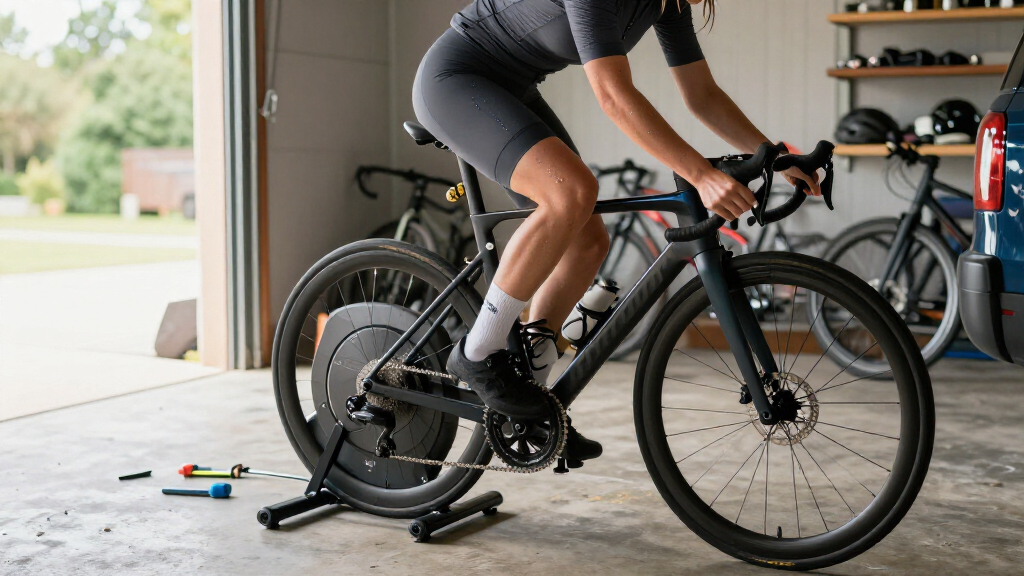
I compared these 13 turbo trainers by the decisions that most affect everyday ownership: trainer type, compatibility with common bikes and wheel sizes, resistance control, setup effort, storage, likely maintenance, and how well each option suits structured indoor workouts. I also separated connected direct-drive systems from wheel-on fluid and magnetic stands, because they solve different problems rather than competing on the same terms.
The ranking favors versatility and a clear fit for a defined buyer, not headline power claims alone. Connected models rank higher for riders who want app-controlled sessions and repeatable resistance; wheel-on trainers remain compelling when simplicity, bike compatibility, or a lower-complexity setup matters more. The Wahoo KICKR V6 leads as a balanced smart trainer, the Tacx NEO 2T earns a premium position, and the KICKR Bike PRO is best for riders who want a dedicated indoor bike. Portable and basic options rank for their particular use cases, not as substitutes for a full smart setup.
| turbo trainer | Resistance mechanism | Frame material |
|---|---|---|
| Yaheetech Magnetic Steel Indoo | Magnetic | Alloy steel |
| Saris Fluid2 Indoor Bike Train | Fluid | Aluminum |
| ThinkRider X2Max Smart Bike Tr | Electromagnetic | — |
| Garmin Tacx NEO 2T Smart Train | — | — |
| Wahoo Fitness KICKR Bike PRO I | Magnetic | — |
| Sportneer Fluid Bike Trainer f | Fluid | Alloy steel |
| ThinkRider XXPRO Smart Bike Tr | Electromagnetic | — |
| Alpcour Fluid Indoor Bike Trai | Fluid | Stainless steel |
| Feedback Sports Omnium Over-Dr | Eddy current | Aluminum |
| Alpcour Foldable Magnetic Indo | Magnetic | Stainless steel |
| Sportneer Magnetic Indoor Bike | Magnetic | — |
| CYCPLUS R200 Smart Bike Traine | Magnetic | — |
| Wahoo KICKR V6 Smart Indoor Tr | Electromagnetic | Alloy steel |
Factors to Consider When Choosing Best Turbo Trainers
Before choosing a trainer, decide what kind of indoor riding you want to do and what you are willing to set up around it. A model that suits occasional easy rides may frustrate a cyclist following structured workouts, while a feature-rich smart trainer can be unnecessary if you mainly need a stable place to pedal.
Choose Between Wheel-On and Direct-Drive
A wheel-on trainer clamps your rear tire against a resistance unit, so you can usually keep the bike close to its outdoor configuration. That convenience comes with a contact point that can add tire noise and wear, and consistent tire pressure and roller tension matter for repeatable readings. Direct-drive models replace the rear wheel connection with the trainer, which usually makes app-controlled training more straightforward but requires checking cassette, axle, and drivetrain compatibility. A common mistake is buying direct-drive hardware before confirming the bike’s axle standard or cassette needs. If you share one bike between indoor and outdoor riding, weigh the time and tools needed for each swap. If you want a quick setup for occasional sessions, wheel-on may be the less fussy choice.
Match Smart Features to Your Training
Smart resistance matters most when you want an app or training platform to adjust effort during a workout. For free rides or steady endurance sessions, a basic fluid or magnetic trainer may do the job without adding connectivity to manage. Check which devices and platforms a smart trainer supports, and distinguish wireless connection options from actual compatibility with your preferred training software. Power measurement and automatic resistance control are related but not interchangeable features. Buyers sometimes focus on a trainer’s maximum power or simulated gradient even when their planned sessions will never approach those limits. Pay for those capabilities when your workout style can use them, not just because they appear in a specification list.
Check Bike, Drivetrain, and Wheel Compatibility
Compatibility involves more than wheel diameter: axle type, cassette, drivetrain speed, frame clearance, and the bike’s construction can all affect fit. Wheel-on products in this roundup list support for several common wheel sizes, but that does not confirm every tire or frame combination will work well. For a direct-drive trainer, verify whether the cassette is included or needs to be supplied separately and whether your bike’s gearing matches it. An adapter or cassette purchase can add work even when the trainer itself fits. If you ride an unusual frame, use a thru-axle, or switch among bikes, check the manufacturer’s compatibility information before choosing. A little checking can prevent a trainer that arrives but cannot be used with your bike as configured.
Plan for Noise, Vibration, and Neighbors
Noise comes from both the trainer and the bike, including tire contact, drivetrain condition, floor construction, and pedaling cadence. A fluid or magnetic wheel-on design can sound different from a direct-drive unit, but no trainer can make a poorly maintained drivetrain silent. In an apartment, vibration through the floor may matter more than the sound heard beside the bike. A mat and careful bike maintenance can help, though they do not change a trainer’s underlying design. If you ride early or late, prioritize the whole indoor setup rather than relying on a single noise claim. Also check whether your training space allows enough clearance to mount, dismount, and move the bike safely.
Decide How Much Storage and Portability Matter
A compact or folding stand can be easier to store between rides, but folding hardware does not automatically make a trainer convenient to carry or quick to set up. The Feedback Sports Omnium Over-Drive has a distinct portable role, while the foldable Alpcour magnetic model addresses home storage more directly. If the trainer will stay in one dedicated room, stability and fit may matter more than folded dimensions. Riders who train in a shared space should measure the stored footprint, not just the trainer’s operating size. For travel, check the complete packing needs, including any necessary bike parts and accessories. Do not assume a lightweight-looking frame will offer the same ride feel as a larger direct-drive model.
Think About Long-Term Setup and Upkeep
A trainer is only one part of an indoor cycling setup; you may also need a fan, mat, device mount, and a way to monitor workouts. Wheel-on systems make tire condition and consistent roller pressure part of routine use, while direct-drive setups call for drivetrain and cassette checks. Smart models add software, firmware, and connection questions that basic stands avoid. If you plan to move between multiple bikes, consider how often you will change the trainer configuration and whether each bike can remain ready to ride. A simple trainer can be the better long-term choice if you value fewer setup steps over automatic workout control. Paying more makes sense when the extra features will change how often or how effectively you train.
Frequently Asked Questions
Do I need a smart trainer to follow online cycling workouts?
No. You can follow a workout on a phone, tablet, or computer while riding a basic fluid or magnetic trainer, but you will adjust effort yourself. A smart trainer can change resistance in response to a supported app, which is useful for structured intervals and simulated climbs. Check that the trainer and your chosen platform work together before buying; wireless connectivity alone does not guarantee every feature is supported. If you mainly ride at a steady pace, manual resistance may be enough. If you want the workout to control the trainer, choose a compatible smart model.
Can I use my regular road bike on a turbo trainer?
Often, but you need to check the trainer’s fit requirements against your bike. Wheel-on models require a supported wheel size and suitable tire contact, while direct-drive trainers need a compatible axle connection and cassette arrangement. Some bikes may require adapters or additional components, and unusual frame or drivetrain setups deserve extra checking. Do not assume a listed wheel size confirms axle compatibility. Compare the bike’s specifications with the trainer manufacturer’s current compatibility guidance before ordering.
Is a direct-drive trainer worth choosing over a wheel-on model?
It can be, if you want app-controlled resistance, a setup without rear-tire contact, or a dedicated indoor-training routine. Direct-drive trainers also require you to remove the rear wheel and confirm cassette and axle fit, so they are not automatically the simpler option. Wheel-on models keep the bike assembled and can make sense for occasional rides or riders who want a straightforward stand. Think about how often you will train and whether automatic resistance will change your workouts. If it will not, the extra setup and compatibility demands of direct drive may bring little benefit.
What should I check before buying a trainer for an apartment?
Look beyond the trainer’s advertised noise level and think about vibration through your floor, tire contact, drivetrain condition, and when you plan to ride. A mat may reduce floor vibration but will not eliminate mechanical noise. Wheel-on trainers can produce tire and roller sounds, while direct-drive models still generate noise from the bike and the trainer itself. If possible, check the manufacturer’s noise guidance and consider your building’s quiet hours. A smooth-running drivetrain and a stable setup can help whichever trainer type you choose.
Should I choose a trainer with more power or a higher gradient rating?
Only if those limits match the way you train. High power capacity and steep simulated gradients can matter for hard intervals or virtual climbing, but they do not by themselves guarantee better fit, connectivity, or day-to-day usability. The CYCPLUS R200 and ThinkRider X2Max highlight high performance figures, yet compatibility and app support still deserve equal attention. For steady endurance rides, a more modest trainer may cover your needs. Choose based on your workout demands rather than treating the largest specification as the best buying signal.
Conclusion
For the broadest mix of connected training and everyday versatility, I recommend the Wahoo KICKR V6 as best overall. Riders looking for a feature-rich premium experience should compare the Garmin Tacx NEO 2T, while the Wahoo KICKR Bike PRO makes more sense for someone who wants a dedicated indoor bike rather than a trainer for an outdoor bicycle. For beginners who prefer a simple wheel-on setup, the Saris Fluid2 is the clearest fit; the basic magnetic stands are worth a look when straightforward use and storage matter more than app control. For portable training, choose the Feedback Sports Omnium Over-Drive; for a smart trainer with high stated power capacity, examine the CYCPLUS R200 alongside the ThinkRider options. My final advice: confirm bike compatibility first, then choose the training features you will genuinely use.
Halloween Picks
halloween
As an affiliate, we earn on qualifying purchases.