

Securing your cargo improperly is the fastest way to lose a load and cause accidents. Overloading, uneven weight distribution, and worn or loose straps increase the risk of failure during transit. Vibrations, bumps, and improper tension weaken securement, making loads shift or fall. To prevent this, choose straps suited to your load, inspect them regularly, and make certain proper tension and attachment points. Keep these tips in mind to avoid mishaps — more details follow.
Listen free for 30 days with Audible
Thousands of audiobooks and originals — cancel anytime.
As an affiliate, we earn on qualifying purchases.
Key Takeaways
- Overloading or improper tensioning weakens straps, increasing the risk of load loss during transit.
- Inspect straps regularly for damage, fraying, or corrosion to prevent failure.
- Use the correct type and number of straps with appropriate load ratings for securement.
- Ensure secure attachment points and proper load distribution to minimize shifting and movement.
- Avoid slack or loose straps, as vibrations and bumps can loosen them quickly, causing load loss.

USANOOKS Microfiber Cleaning Cloth Grey - 12 Pcs (12.5"x12.5") - High Performance - 1200 Washes, Ultra Absorbent Microfiber Towel Weave Grime & Liquid for Streak-Free Mirror Shine - Car Washing Cloth
- High Absorbency Grip Root Weave: Locks in 8-10x weight in liquids
- Lint-Free and Scratch-Resistant: Ensures streak-free, mirror shine
- Durable for 1200+ Washes: Long-lasting reusable microfiber cloths
As an affiliate, we earn on qualifying purchases.
Understanding the Risks of Unsecured Loads

Unsecured loads pose serious dangers on the road, increasing the risk of accidents, injuries, and fatalities. When your cargo isn’t properly secured, it can shift or fall during transit, causing drivers to swerve or lose control. Debris from falling or loose items can hit other vehicles, leading to multi-car crashes. Road debris scattered across lanes creates hazards for all drivers, especially at high speeds on highways. Instability from an unsecured load also raises the chances of rollovers, which can be catastrophic. Additionally, collapsing cargo can injure workers during loading or unloading. The statistics are alarming: thousands of accidents, injuries, and deaths each year are linked to unsecured loads. Recognizing these risks emphasizes the importance of proper cargo securement to keep everyone safe on the road.

Amazon Basics Microfiber Car Drying Towels, Highly Absorbent, Lint Free, Scratch Free, Ultra-Soft, Car Detailing, Buffing and Polishing, 16" x 16", Yellow, 12-Pack
- Product Quantity: 12-pack of towels
- Size: 16 x 16 inches
- Material: Microfiber for drying and polishing
As an affiliate, we earn on qualifying purchases.
Common Causes of Cargo Strap Failures
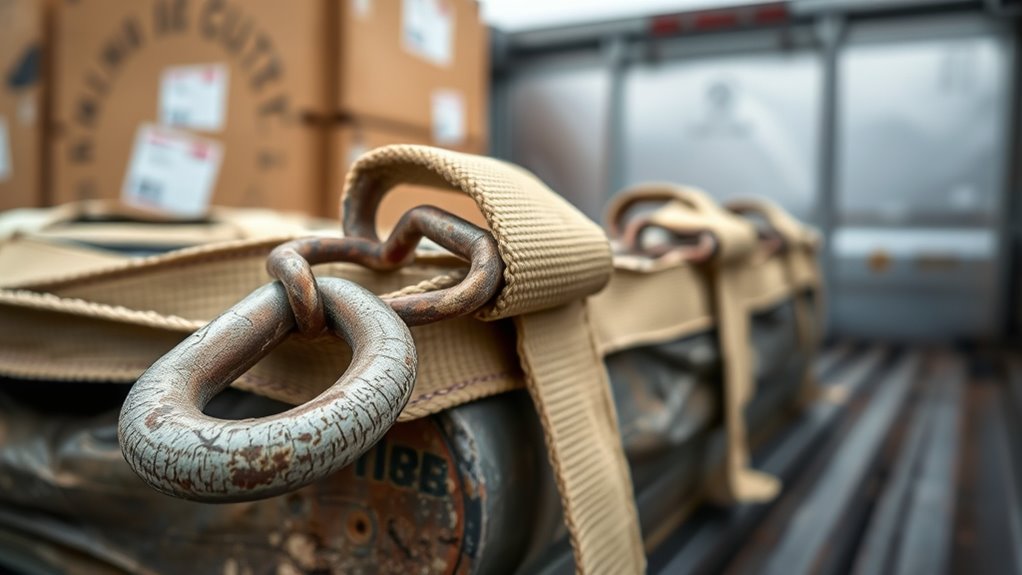
Many cargo strap failures occur because of vibrations and movement during transit, which can loosen straps over time. Road bumps, uneven surfaces, and constant motion cause straps to shift or slacken, reducing their hold. Overloading or improper tensioning worsens this issue, leading to potential failure. Straps also degrade due to wear, exposure to sunlight, and corrosion, weakening their strength. If attachments aren’t secure or if you use incorrect strap types, failure risks increase. Here’s a quick overview:
| Cause | Effect | Prevention |
|---|---|---|
| Vibration & movement | Loosening straps | Tighten straps properly, inspect regularly |
| Wear & degradation | Reduced strap strength | Replace worn straps promptly |
| Incorrect strap type | Poor load retention | Use straps rated for your cargo |
| Improper attachment | Increased failure risk | Ensure secure, correct anchor points |
Additionally, choosing straps with appropriate load ratings can help prevent unexpected failures during transit. Regularly inspecting straps for signs of wear and tear is crucial to maintaining safe loads. Proper training and techniques for securing cargo also play a vital role in minimizing strap failures. Using correct tensioning methods ensures the load remains secure and reduces the risk of accidents.

HOMEXCEL Microfiber Cleaning Cloth 12 Pack, 12.5 x 12.5 inch Microfiber Towels for Cars, Ultra Absorbent Washing Cloth, Lint Free Streak Free Cleaning Rags for Car, Kitchen, and Window (Grey)
- High Water Absorption: Outstanding absorption for dirt and liquids
- Scratch-Free Cleaning: Soft fabric gently wipes without scratching
- Fast Drying: Rapidly absorbs water for quick drying
As an affiliate, we earn on qualifying purchases.
Recognizing the Impact of Improper Loading
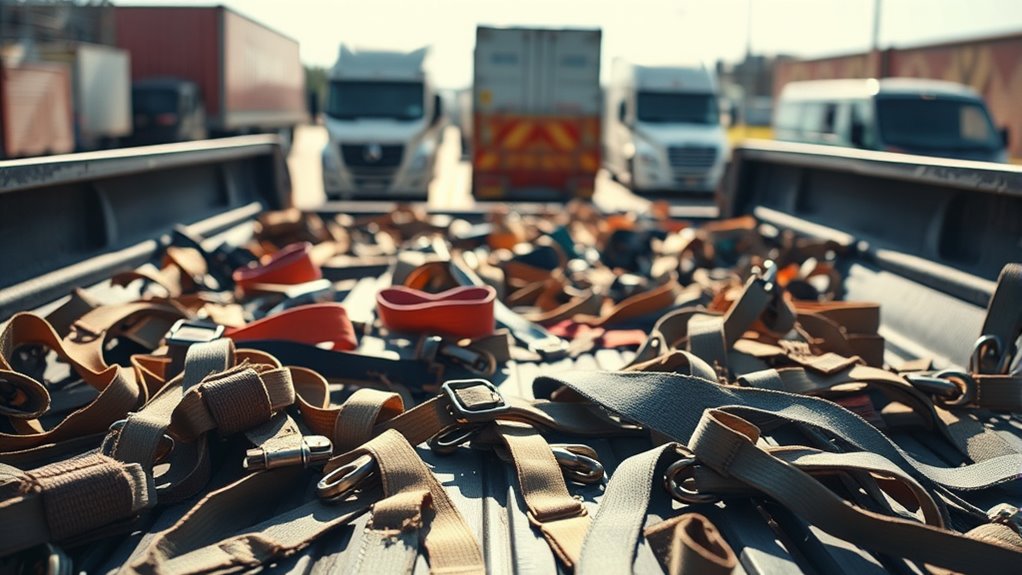
Improper loading directly impacts the security of your cargo and increases the risk of strap failure. When you load unevenly or without proper distribution, your straps face unnecessary stress, making them more likely to fail. Cargo that shifts during transit can cause straps to loosen or break, leading to dangerous road debris or accidents. To recognize the impact:
- Cargo that isn’t evenly distributed causes unstable loads.
- Insufficient securing points allow cargo to move or settle.
- Overloaded or poorly balanced loads increase strain on straps.
- Live music at some restaurants can also attract larger crowds, leading to increased safety considerations during loading and unloading.
- Proper load distribution is essential to minimize stress on straps and maintain load stability throughout transit.
- Additionally, connected equipment such as load sensors can help monitor and ensure proper weight distribution in real time.
- Regular inspection and maintenance of straps and equipment can prevent unexpected failures and prolong their lifespan.
- Understanding loading guidelines can further improve safety and prevent costly mistakes.
These issues compromise load stability, risking accidents and injuries. Proper loading guarantees your cargo stays in place, reducing stress on straps and preventing failures. Recognizing these signs helps you take action before straps give out, keeping everyone safe on the road.
Essential Regulations and Standards to Follow

Following essential regulations and standards is crucial to guarantee your cargo remains secure and compliant during transit. You must ensure loads are properly tied down to prevent shifting, dropping, or leaking, or face penalties up to $5,000. The FMCSA mandates loads be firmly immobilized with adequate tie-downs, and flatbed drivers need to check securement regularly and adjust as necessary. Compliance with BS-EN 12195-2:2001 standards ensures straps meet safety requirements for strength and durability. The top violation is failing to prevent load shifting or loss, which can cause accidents and injuries. Always select straps that match your load’s weight and size, inspect them periodically for wear, and confirm attachment points are secure. Proper adherence to these regulations helps prevent dangerous incidents and keeps your cargo safe. Regularly reviewing safety standards ensures ongoing compliance and optimal load securement practices. Incorporating smart load monitoring devices can also enhance safety by providing real-time alerts about load integrity. Additionally, understanding load capacity ratings is essential to prevent overloading straps and compromising safety. Staying updated on regulatory changes can further help you adapt to new safety requirements and avoid violations.
Best Practices for Effective Cargo Securement

To guarantee your cargo stays secure during transit, you should follow best practices that maximize the effectiveness of your tie-downs. Proper securement prevents load shifting, reduces debris risks, and ensures safety on the road. First, select straps with the right width and strength for your cargo’s weight. Always inspect straps for wear, fraying, or damage before use. Use enough straps to evenly distribute tension across the load, and tighten them firmly but avoid over-tightening that could damage the cargo. Additionally, ensuring your securement methods align with Free Floating principles can help adapt to varying load conditions. Proper securement also involves understanding load distribution to prevent tipping or shifting during transit. Another key aspect is choosing the appropriate securement devices that suit your specific cargo and transport conditions. Regularly inspecting anchor points for integrity and wear can prevent sudden failures during transit. Finally, verify attachment points are sturdy and capable of handling the load. Remember these key points:
Secure your cargo with proper straps, regular inspections, and sturdy attachment points for safe transit.
- Choose appropriate straps and securement devices
- Regularly inspect and maintain straps and anchoring points
- Use supplementary restraints like ropes or netting when needed
- Proper securement is essential for preventing accidents and legal issues on the road.
Frequently Asked Questions
How Often Should I Inspect Cargo Straps During Transit?
You should inspect your cargo straps regularly throughout the transit, ideally every 1-2 hours or after every significant stop. This guarantees they remain tight and secure, preventing load shifting or loosening caused by vibrations, road conditions, or cargo movement. Frequent checks help identify wear or damage early, so you can tighten or replace straps as needed, ultimately reducing the risk of accidents and debris falling onto the road.
What Are the Most Durable Materials for Cargo Straps?
When choosing the most durable materials for cargo straps, you need to know your options. Steel is incredibly strong and resistant to wear, but it’s heavy and prone to rust if not coated. Polyester offers excellent elasticity, UV resistance, and high strength without added weight. Polypropylene is lightweight and resistant to chemicals but less durable under tension. For maximum safety, opt for polyester straps with reinforced webbing and corrosion-resistant hardware.
Can Improper Loading Cause Legal Penalties?
Yes, improper loading can lead to legal penalties. If you don’t secure your cargo correctly, you risk violating regulations like FMCSA rules and BS-EN 12195-2:2001 standards. This can result in hefty fines, inspection failures, or even license suspension. To avoid penalties, guarantee loads are evenly distributed, firmly tied down, and checked regularly during transit. Proper loading not only keeps you legal but also promotes safety on the road.
How Do I Choose the Right Strap for My Load?
Pick the perfect, powerful strap by considering its width, strength, and compliance. You want a strap that suits your specific load size and weight, ensuring secure, steadfast support. Look for straps with proper webbing, ratchet mechanisms, and safety standards like BS-EN 12195-2:2001. Regularly inspect for wear and tear, and when in doubt, opt for sturdier straps to confidently secure your cargo, preventing potential problems on the road.
What Signs Indicate a Cargo Strap Is Failing?
You’ll notice signs like frayed or cut webbing, rusted or damaged ratchet mechanisms, and stretched or deformed straps. If straps are slipping or unable to tighten securely, it’s a red flag. Also, check for worn or cracked attachment points and any signs of fraying or discoloration. Regularly inspecting your straps before and during transit helps catch these issues early, preventing load failure and accidents.
Conclusion
Now that you know the risks and how cargo straps can fail, the real question is—are you doing enough to secure your loads? One overlooked mistake could lead to disaster on the road, costing you more than just time. Stay vigilant, follow the standards, and double-check your work. Because in the end, the safest load is the one you prevent from coming loose—before it’s too late. Are you ready to keep your cargo secure?
Baby shower & registry season Picks
baby registry must-haves
As an affiliate, we earn on qualifying purchases.