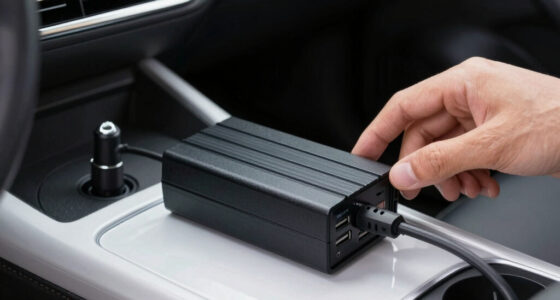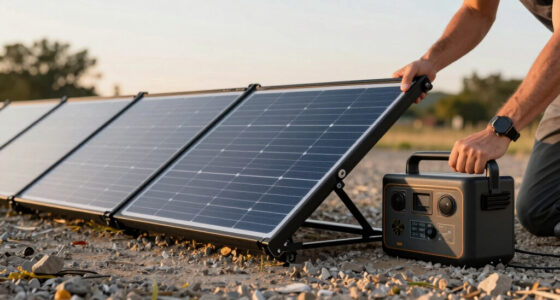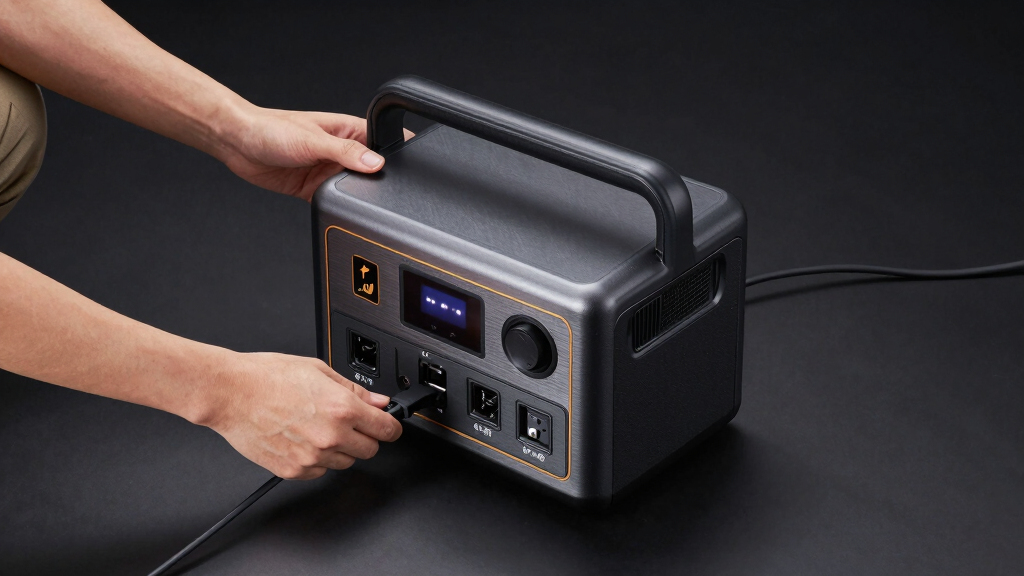
Finding the best portable power station for overlanding involves balancing capacity, portability, and durability since you need reliable power on rugged adventures. The Anker SOLIX C2000 Gen 2 stands out as the overall best choice for its high capacity and robust build, while the BLUETTI Elite 100 V2 offers exceptional value with its large battery and versatile ports. For those new to overlanding, the Jackery Explorer 300 provides a straightforward, lightweight option. The main tradeoffs involve size versus power output, as larger units often sacrifice portability, and higher capacity typically comes at a higher price. Continue reading to see how these options compare and which might best suit your overlanding needs.
Key Takeaways
- Higher capacity power stations generally offer longer runtime but tend to be bulkier and heavier, impacting portability for overlanding.
- LiFePO4 batteries provide better longevity and safety, which is critical for rugged off-grid use, making them a preferred choice among top models.
- Versatility in charging options, such as multiple AC, USB-C, and solar inputs, significantly enhances usability in remote environments.
- Price varies widely, with premium units offering more capacity and durability, but budget-friendly options still meet basic overlanding needs.
- Built-in features like UPS modes and fast charging can add convenience but may increase the overall cost and complexity.


More Details on Our Top Picks
Anker Portable Power Station SOLIX C300, 288Wh LiFePO4 Battery, 300W (600W Surge) Solar Generator with 8 Charging Ports
The Anker SOLIX C300 stands out for its compact size and robust feature set, making it the top choice for overlanders who need reliable power without bulk. Compared to the BLUETTI Elite 100 V2, it offers less capacity but excels in portability and fast recharging through multiple methods, including solar, wall, and car. While it may not match the capacity of larger units, its 288Wh LiFePO4 battery provides enough juice for essentials during spontaneous trips. Its multiple charging ports—USB-C, USB-A, and AC outlets—cover most device needs, and the long cycle life ensures durability over many adventures. The main tradeoff is its limited solar compatibility—some panels, like the BLUETTI models, won’t connect—and the lack of explicit weight details, which could influence packing decisions.
Pros:- Compact and lightweight design, ideal for travel
- Multiple versatile charging options including fast USB-C
- Fast recharge via wall, solar, or car
- Long-lasting LiFePO4 battery with 3000 cycles
Cons:- Incompatibility with some solar panels like Anker SOLIX PS30
- Weight and dimensions are not specified, affecting portability assessment
Best for: Overlanding enthusiasts seeking a lightweight, portable power source for quick trips and small device loads
Not ideal for: Long-term off-grid living or powering high-demand appliances, due to its limited capacity
- Battery Capacity:288Wh
- Battery Type:LiFePO4
- Power Output:300W (600W surge)
- Charging Ports:3x AC, 1x car, 2x USB-C, USB-A
- Fast Charging:Yes, 140W two-way USB-C
- Recharging Methods:Wall, solar, car
Bottom line: Best suited for overlanders who prioritize portability and versatile charging over high capacity.
BLUETTI Elite 100 V2 Portable Power Station, 1024Wh LFP Battery Backup with 4 AC Ports (3600W Surge)
The BLUETTI Elite 100 V2 offers a respectable 1024Wh capacity in a lightweight 25-pound frame, making it ideal for campers and overlanders who need dependable backup power. Unlike the Anker SOLIX C300, it provides nearly four times the capacity, enabling longer operation for multiple devices simultaneously, which is crucial during extended overland trips or emergencies. Its fast charging time of 70 minutes is a plus, but the limited detail on port variety suggests it’s primarily designed for powering several essential appliances rather than a large array of gadgets. The slightly higher weight could be a consideration for those who prioritize ultra-light gear, yet its increased capacity makes it more suitable for moderate demands. The tradeoff is less clarity on solar input options, which could impact off-grid recharging flexibility.
Pros:- Lightweight at 25 lbs, easy to carry
- Fast 70-minute recharge
- Reliable backup power for multiple devices
- Good balance of capacity and portability
Cons:- Limited detailed info on USB and DC ports
- Capacity may not suffice for high-energy appliances on long trips
Best for: Overlanders who need a balance of portability and higher capacity for moderate device loads and backup power
Not ideal for: High-demand appliances or extended off-grid stays without additional solar capacity, due to limited input info
- Capacity:1024Wh
- AC Output:1800W (2700W surge)
- Ports:4 AC, USB and DC
- Weight:25 lbs
- Charging Time:70 minutes
- Battery Type:LFP
Bottom line: A solid choice for overlanders seeking reliable backup power with manageable weight and decent capacity.
Anker SOLIX C2000 Gen 2 Portable Power Station, 2,400W (Peak 4,000W) Solar Generator, 2048Wh LiFePO4 Battery
The Anker SOLIX C2000 Gen 2 is tailored for overlanders who face demanding power requirements, thanks to its 2048Wh capacity and peak power of 4,000W. Compared with the smaller SOLIX C300, this unit handles multiple high-power devices simultaneously, making it suitable for longer trips or emergency setups. Its 58-minute recharge time is impressive given its size and power output, providing rapid turnaround between uses. Despite its weight of 41.7 lbs, it remains relatively portable for its capacity and offers expandability options for extended use. The main limitation concerns limited details on solar panel compatibility, which could restrict off-grid recharging options. Also, the higher price and weight may be barriers for some overlanders who prefer lighter gear.
Pros:- High capacity of 2048Wh for extended use
- Fast recharge in 58 minutes
- Peak power of 4,000W supports heavy appliances
- Expandable for longer runtime
Cons:- Relatively heavy at 41.7 lbs
- Limited info on solar panel compatibility
Best for: Overlanders with high power demands needing reliable, heavy-duty energy for multiple appliances and long durations
Not ideal for: Casual travelers or those with minimal power needs, due to weight and cost
- Battery Capacity:2048Wh
- Peak Power:4,000W
- Rated Power:2,400W
- Recharge Time:58 minutes
- Weight:41.7 lbs
- Recharge Methods:AC, solar, car
Bottom line: Ideal for overlanders requiring substantial power capacity and quick recharging, despite added weight.
Anker SOLIX C1000 Gen 2 Portable Power Station, 2000W (Peak 3000W), 1024Wh LiFePO4 Battery, Solar Generator
The Anker SOLIX C1000 Gen 2 combines a 1024Wh capacity with an impressive 2000W continuous power and a peak of 3000W, making it well-suited for overlanders who need quick, reliable energy for multiple devices or critical appliances. Its rapid 49-minute recharge via AC and 1.8 hours with solar surpasses many competitors, providing flexibility for quick turnaround on extended trips. Its 10 outlets support diverse device needs, and the rugged build offers durability. However, the higher price point and the limited solar input capacity—capped at 600W—may restrict its off-grid capabilities for some. Despite this, it’s a strong choice for users who prioritize power and speed of recharge over weight and cost.
Pros:- Fast recharging in just 49 minutes
- High capacity and high continuous wattage
- Supports multiple devices with 10 outlets
- Durable, portable design
Cons:- Relatively high cost
- Limited solar input capacity (600W max)
Best for: Overlanders who need a high-power, fast-recharging station capable of supporting multiple devices during demanding trips
Not ideal for: Budget-conscious travelers or those with minimal power needs, due to its premium price and weight
- Wattage:2000W
- Peak Wattage:3000W
- Battery Capacity:1024Wh
- Recharge Time (AC):49 minutes
- Recharge Time (Solar):1.8 hours
- Number of Outlets:10
Bottom line: Best suited for overlanders with high power demands and the need for rapid recharge times, despite higher cost and weight.
Jackery Explorer 1000 v2 Portable Power Station, 1070Wh LiFePO4 Battery, 1500W AC/100W USB-C, Fast 1-Hour Charge, Solar Generator for Camping, Emergency, RV, Off-Grid
The Jackery Explorer 1000 v2 stands out for its impressive balance of power and portability, offering a substantial 1070Wh LiFePO4 battery and 1500W AC output capable of running multiple devices simultaneously. Compared to the EcoFlow DELTA 3, it provides a similar capacity but with a slightly lower surge capacity of 3000W versus the DELTA’s 1800W, making it more versatile for high-demand appliances. The fast one-hour recharge is a major advantage over the Explorer 300’s 2-hour recharge, though it relies solely on Jackery’s solar panels for solar input, which could limit flexibility. Its lightweight design at 23.8 lbs makes it easier to carry in remote overlanding scenarios, and the long lifespan of over 10 years (4,000+ cycles) promises durability. The main tradeoff is its dependence on Jackery-branded solar panels, which might not be ideal if you prefer third-party options or have existing panels. Overall, this pick makes the most sense for those seeking reliable, high-capacity power with quick recharge times and a proven long lifespan.Pros:- High 1070Wh capacity supports multiple devices for extended periods
- Fast 1-hour recharge with advanced charging tech
- Lightweight for its capacity, easing transport during overland trips
- Long lifespan over 10 years and 4,000+ cycles
Cons:- Requires Jackery’s solar panels for solar charging, limiting flexibility
- No compatibility with third-party solar options or PO Box delivery
Best for: Overlanders who need a powerful, reliable, and quick-charging station capable of running multiple devices and appliances in remote locations.
Not ideal for: Users who rely on third-party solar panels or need a more expandable system without proprietary limitations.
- Battery Capacity:1070Wh
- Battery Type:LiFePO4
- AC Output:1500W
- USB-C Ports:2
- Weight:23.8 lbs
- Fast Charge Time:1 hour
Bottom line: This model is ideal for overlanders who prioritize power, speed, and durability without sacrificing portability.
BLUETTI Elite 30 V2 Portable Power Station 600W, 288Wh LiFePO4 Battery with UPS for Emergency Backup and Outdoor Use
The BLUETTI Elite 30 V2 is a standout for its portability, weighing just 9.4 lbs, making it a strong choice for quick trips, camping, or as an emergency backup. While its capacity of 288Wh is significantly lower than the Jackery Explorer 1000 v2 or EcoFlow DELTA 3, it provides a solid 600W continuous power and a surge capacity of 1500W, making it suitable for charging phones, small appliances, and medical devices. Its multiple charging modes—including solar, car, and AC—offer flexibility, but the limited capacity means it can’t run larger appliances for long, especially compared to larger units. The UPS function adds a layer of security for critical devices during outages, which is valuable in emergency overlanding situations. However, its small capacity and higher price relative to its size make it less suitable for extended off-grid use. This pick makes the most sense for quick, lightweight power needs and emergency backup scenarios rather than prolonged use.Pros:- Extremely lightweight at just 9.4 lbs for easy transport
- Supports multiple charging methods including solar, car, and wall
- High surge capacity of 1500W suitable for short-term heavy loads
- Integrated UPS for critical device safety
Cons:- Limited capacity of 288Wh restricts runtime for larger devices
- Relatively high cost for its small size and capacity
Best for: Overlanders who need a highly portable power station for short trips, quick recharges, and emergency backup of essential devices.
Not ideal for: Those planning to power larger appliances or extended off-grid stays, as capacity and runtime are limited.
- Capacity:288Wh
- Weight:9.4 lbs
- Continuous Power:600W
- Surge Power:1500W
- Charging Modes:AC, solar, car
- Battery Type:LiFePO4
Bottom line: This compact power station is perfect for quick, lightweight power needs during overlanding or as a backup device in emergencies.
Jackery Explorer 300 Portable Power Station, 293Wh Lithium Battery, Solar Generator for Camping and Outdoors
The Jackery Explorer 300 offers a lightweight and highly portable option with 293Wh of capacity, making it ideal for quick charging of phones, small gadgets, and light camping needs. Its 2 pure sine wave AC outlets and USB-C port support multiple devices simultaneously, though its 300W power limit restricts usage to smaller appliances. Compared with the EcoFlow DELTA 3, the Explorer 300’s portability is a major advantage, but its capacity falls short for powering larger devices or extended overlanding adventures. The fast recharge time of about 2 hours to 80% makes it convenient for frequent use in remote areas. However, the lack of included solar panels and limited capacity mean it’s best suited for short trips or backup rather than long-term off-grid power. This pick makes the most sense for overlanders prioritizing ultra-lightweight gear with quick recharges for small electronics.Pros:- Very lightweight at just 7.1 pounds for easy carrying
- Fast recharging via wall, car, or solar (solar panel not included)
- Multiple device charging options including USB-C and AC outlets
- Simple, user-friendly design
Cons:- Limited to 300W output, unsuitable for larger appliances
- Battery capacity may not sustain high-demand devices over long periods
Best for: Backcountry travelers who need a super-light, portable power source for small devices and short outings.
Not ideal for: Those requiring higher power output or extended power for larger appliances and longer overland trips.
- Battery Capacity:293Wh
- Weight:7.1 pounds
- AC Outlets:2
- USB-C Port:60W PD
- Recharge Time:2 hours to 80%
- Battery Type:Lithium
Bottom line: This ultra-portable power station suits overlanders who need quick, reliable charging for small gadgets on short trips.
EF ECOFLOW DELTA 3 Portable Power Station, 1024Wh LiFePO4 Battery, Fast Charging, 1800W AC/100W USB-C, Solar Generator for Home Backup, Camping & RVs
The EcoFlow DELTA 3 is a clear choice for overlanders who need substantial power and future scalability, featuring a 1024Wh LiFePO4 battery and an impressive 1800W AC output capable of handling multiple appliances simultaneously. Unlike the Jackery Explorer 1000 v2, the DELTA 3 offers a faster 56-minute full recharge and supports expansion up to 5kWh, making it suitable for longer off-grid stays or powering higher-demand devices. Its durability rating of IP65 and a 10-year lifespan provide confidence for rugged outdoor use. The device’s modular design allows adding additional batteries, a feature absent in the others, making it a future-proof option. The main tradeoff involves its higher initial price and the need for solar panels for full independence, which could be a barrier for budget-conscious users. Overall, this pick excels for those wanting a robust, expandable system that can grow with their overlanding needs.Pros:- Fast charge in just 56 minutes for quick turnaround
- Supports multiple appliances with 1800W AC output
- Expandable capacity up to 5kWh for long-term use
- Durable, splash-proof design with a 10-year lifespan
Cons:- High initial cost compared to smaller or less expandable options
- Requires solar panels for optimal use, increasing overall investment
Best for: Overlanders seeking a high-capacity, expandable power station capable of supporting multiple appliances and long-term use.
Not ideal for: Travelers with tight budgets or those who don’t plan to expand capacity beyond the base unit.
- Battery Capacity:1024Wh
- Battery Type:LiFePO4
- Charge Time:56 minutes
- AC Output:1800W
- Expansion Capacity:up to 5kWh
- Protection Rating:IP65
Bottom line: This versatile, expandable system is best suited for overlanders who need substantial, reliable power with room to grow.

How We Picked
Products were selected based on their power capacity, portability, build quality, and suitability for overland conditions. Emphasis was placed on battery technology, such as LiFePO4, for longevity and safety, and on the variety of charging options—solar, AC, and USB—to ensure versatility in remote settings. We also considered user feedback about durability and ease of use, particularly for off-road environments where ruggedness matters most. The ranking reflects a balance of performance, value, and suitability for overlanding adventures, with top picks excelling in these areas while also highlighting meaningful tradeoffs like size and cost.
Factors to Consider When Choosing Best Portable Power Station For Overlanding
Choosing the best portable power station for overlanding requires understanding several key factors beyond just battery capacity. The right unit depends on your specific power needs, how much weight you can carry, and the types of devices you intend to power. Considering these factors can prevent common mistakes, such as overpaying for capacity you don’t need or choosing a unit that’s too bulky to carry comfortably. Here are the main considerations to keep in mind:Capacity and Runtime
Capacity, measured in watt-hours (Wh), determines how long your devices can run. For overlanding, aim for at least 300Wh for minimal needs, but larger units like 1,000Wh or more provide extended power for multiple devices or higher power appliances. Remember, higher capacity means more weight and size, so balance your needs with portability. Also, consider the efficiency of your devices and whether you’ll need continuous or intermittent power, as that impacts the runtime you can expect.
Portability and Size
Overlanding demands a portable power station that can be easily transported. Look for units with handles, lightweight construction, and compact form factors. Larger capacity models often weigh over 20 pounds, which can be cumbersome during off-road treks. Prioritize units that strike a balance between capacity and weight, and consider how you’ll store and carry the power station in your vehicle or gear setup.
Battery Chemistry and Durability
LiFePO4 batteries are increasingly popular for overlanding because they last longer and are safer than traditional lithium-ion cells. They withstand more charge cycles and operate better in extreme temperatures, making them ideal for rugged environments. Investing in a unit with LiFePO4 can extend your power station’s lifespan, but these tend to be slightly more expensive upfront. Consider your expected usage and whether durability justifies the initial cost.
Charging Options and Speed
Versatile charging options, including solar, AC, and car adapters, maximize flexibility when off-grid. Fast charging capabilities reduce downtime, especially if you’re relying on solar or grid power during stops. Solar input is a major advantage for overlanding, allowing you to recharge during the day without access to outlets. Be cautious of units that only support slow charging, as that can limit your ability to quickly replenish power between excursions.
Price and Value
While premium models offer higher capacity, faster charging, and better durability, they come with a higher price tag. Budget options may suffice for light use but could fall short in demanding conditions. Evaluate what features are most critical for your adventures—such as capacity, portability, or durability—and choose a model that offers the best value for that balance. Remember, investing a bit more upfront can save money and frustration later by avoiding frequent replacements or upgrades.
Frequently Asked Questions
How do I determine the right capacity for my overlanding needs?
Start by listing the devices you plan to power, noting their wattage and how long you’ll need to run each. Add up total watt-hours required for your essential gear, then select a power station with at least 20-30% more capacity to account for inefficiencies and future needs. For most overlanders, a unit between 500Wh and 1,500Wh covers basic needs, but larger capacities are better if you plan to run higher wattage appliances or multiple devices over extended trips.
Is solar charging really practical for overlanding?
Solar charging can be highly practical if you select a power station with sufficient input wattage and compatible solar panel options. It allows for off-grid recharging without relying on external power sources. However, solar efficiency depends on weather, sunlight hours, and panel size. For consistent off-grid power, pairing a solar panel with your station is recommended, but always have backup charging methods like AC or car adapters to avoid power gaps.
What should I prioritize: capacity or weight?
This depends on your vehicle setup and travel style. If you have ample space and prioritize longer trips with multiple devices, higher capacity makes sense, even if it adds weight. Conversely, if portability and ease of transport are critical, opt for a smaller, lighter unit with enough capacity to meet your minimal needs. Balancing these factors ensures you don’t sacrifice convenience for capacity or vice versa.
Are more expensive power stations worth the investment?
Premium models often feature longer lifespans, faster charging, better build quality, and enhanced safety features. If your overlanding involves frequent trips or powering sensitive or high-wattage devices, investing in a higher-end unit can provide peace of mind and reliability. Cheaper models may suffice for occasional or light use but could require replacement sooner if subjected to rugged conditions or high demand.
Can I rely solely on a portable power station for all my overlanding power needs?
While a high-capacity portable power station can cover most needs, relying solely on it may not be ideal for all situations. Combining it with solar panels and backup charging methods ensures greater redundancy, especially during extended trips without access to grid power. Additionally, managing power consumption is key; using energy-efficient devices and smart usage prolongs your power station’s runtime and prevents unexpected outages.
Conclusion
For general overlanding, the Anker SOLIX C2000 Gen 2 offers a compelling mix of capacity and durability, making it the best overall choice. If you prioritize value without sacrificing too much power, the BLUETTI Elite 100 V2 delivers exceptional battery capacity at a competitive price. Beginners or those new to off-grid adventures will find the Jackery Explorer 300 straightforward and lightweight, perfect for light power needs. For high-demand setups or extended off-grid stays, investing in premium models like the EF ECOFLOW DELTA 3 or Anker SOLIX C1000 can provide peace of mind. Ultimately, your choice should reflect your trip length, device needs, and how much weight you’re willing to carry.