
To estimate your power station’s runtime, divide its capacity in watt-hours (Wh) by your device’s power draw in watts (W). For example, a 500Wh station powering a 50W device lasts about 10 hours, but actual time can vary due to efficiency losses, startup surges, and battery age. Managing your device’s power use and choosing lower-surge options helps stretch that runtime. Keep in mind, knowing these calculations and factors will help you stay prepared—so explore more for smarter off-grid planning.
Key Takeaways
- Calculate theoretical runtime by dividing power station capacity (Wh) by device power draw (W).
- Account for efficiency losses, startup surges, and battery degradation for accurate runtime estimates.
- Use high-efficiency batteries and manage device power consumption to extend operational time.
- Ensure solar panel compatibility and optimal sunlight conditions for effective recharging.
- Regularly monitor battery health and choose low-surge devices to maximize power station usefulness.
Understanding how long your power station can run on a given amount of fuel or battery charge is essential for effective planning and usage. When you’re counting on your gear, whether for camping, emergency backup, or outdoor work, knowing the runtime helps prevent surprises. The key factors that influence runtime are your power station’s battery efficiency and its solar compatibility. Battery efficiency determines how effectively the stored energy is used to power your devices, impacting how long your station can keep running. Some batteries lose energy during charge and discharge cycles, so choosing a model with high efficiency means you get the most out of every charge. Solar compatibility is equally important if you plan to recharge with solar panels. A power station with good solar compatibility can harness sunlight directly, extending your usage time in remote locations without access to grid power.
To estimate how long your power station will last, start by knowing its capacity, usually measured in watt-hours (Wh). For example, if your station has a 500Wh capacity, it theoretically can power a device drawing 50W for about 10 hours (500Wh divided by 50W). However, actual runtime often differs due to factors like battery efficiency and device startup surges. Devices with high startup power demands, such as refrigerators or power tools, may drain your station faster than their rated consumption suggests. When considering your power station, look for models with high battery efficiency ratings, as these will deliver closer to the theoretical runtime. High-efficiency batteries minimize energy loss during conversion, ensuring you get maximum runtime from your stored energy. Additionally, understanding your station’s battery capacity helps in accurately estimating usage duration based on your device’s power draw. Knowing the battery management system of your station can also influence overall performance and longevity. Being aware of battery degradation over time can help you plan for replacements or upgrades to maintain optimal runtime. In addition, selecting a station with features like smart charging can optimize energy use and extend runtime even further. Properly managing power consumption and selecting devices with lower startup surges can also contribute significantly to extending your station’s runtime.
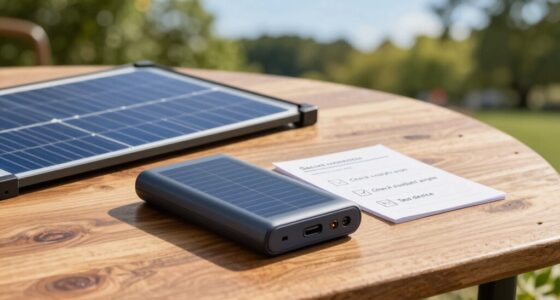
If you’re planning to use solar panels, check the station’s solar compatibility. Not all power stations are compatible with the same panels, and some can accept higher wattage input, allowing faster recharging. The solar input rating indicates how many watts your panels can supply, influencing how quickly you can replenish your station’s battery during sunlight hours. A station with good solar compatibility and efficient energy conversion lets you extend your operational time significantly, especially in off-grid scenarios. Keep in mind that weather, panel angle, and sunlight hours also affect solar charging efficiency.

DARAN Portable Power Station 600W(1200W Surge) – 288Wh Solar Generator LiFePO4 Battery with AC DC Outlets, 8.3LB Portable Charging Station for Camping, RV, Home, Emergency (Solar Optional)
- High Power Output: 600W continuous, 1200W surge capacity
- Ample Capacity: 288Wh for various devices
- Supports High-Watt Appliances: Ideal for refrigerators and CPAPs
As an affiliate, we earn on qualifying purchases.
As an affiliate, we earn on qualifying purchases.
Frequently Asked Questions
How Does Temperature Affect Power Station Runtime?
Temperature impacts your power station’s runtime through thermal effects, where higher temperatures reduce efficiency and cause overheating, leading to shorter operation times. Conversely, cooler ambient conditions help maintain ideal performance, extending runtime. When it’s hot, your device works harder to cool itself, draining the battery faster. In cold environments, batteries may perform less efficiently initially but can stabilize, so understanding these thermal effects helps you manage your power station better for longer use.
Can I Extend Runtime by Reducing Device Power Consumption?
Yes, you can extend runtime by reducing device power consumption through device optimization and power management. Turn off unnecessary features, dim screens, and disconnect unused peripherals. Use energy-efficient settings and enable power-saving modes to minimize energy drain. Managing how your devices use power helps conserve energy, making your power station last longer. Effective power management is essential for maximizing runtime during critical moments or extended use.
What’s the Impact of Battery Age on Runtime Accuracy?
Battery age causes capacity loss, which impacts runtime accuracy. As your battery experiences degradation over time, it can’t hold as much charge, leading to shorter actual runtimes compared to initial estimates. You might notice your power station’s runtime decreasing even if usage remains the same. Regularly monitoring battery health and understanding capacity loss helps you better predict real-world performance, ensuring you don’t overestimate how long your gear will last.
How Do Different Charging Methods Influence Power Station Longevity?
Different charging methods greatly influence your power station’s longevity. Frequent full charging cycles can wear out the battery faster, reducing overall lifespan. Choosing partial charges and avoiding deep discharges helps preserve battery health. Regular battery calibration ensures accurate runtime readings, preventing over- or underestimations. Using slow, steady charging methods minimizes stress on the battery, extending its life and maintaining ideal performance over time.
Are There Shortcuts to Quickly Estimate Runtime for Multiple Devices?
You can quickly estimate runtime for multiple devices by applying efficiency enhancement and good battery management. First, note each device’s wattage and the power station’s total capacity. Divide the power station’s watt-hours by each device’s wattage to get approximate runtime. To save time, prioritize devices with higher efficiency, and manage your power consumption by turning off unused devices, ensuring longer overall runtime and ideal battery health.

Portable Solar Generator, 300W Portable Power Station with Foldable 60W Solar Panel,110V Pure Sine Wave 280Wh Battery Power Pack with USB DC AC Outlet for Camping Smart Devices RV Van Outdoor-Orange
- Portable power station with solar panel: Includes 60W foldable solar panel
- High-capacity battery: 280Wh battery for multiple device charging
- Multiple outlets for devices: 2 AC, 1 DC, 4 USB ports including quick charge
As an affiliate, we earn on qualifying purchases.
As an affiliate, we earn on qualifying purchases.
Conclusion
Now that you’ve got the math down, you can confidently plan your power station usage. Think of it like a secret recipe—you’ll know exactly how long your gear will run without guesswork. But remember, real-world factors like temperature and device efficiency can tweak those numbers. So, treat this guide as a solid starting point, and stay flexible. With practice, you’ll master your power station’s runtime and keep your adventures running smoothly—no surprises!

LIBRIDS Portable Power Station C600, 640Wh LiFePO4 Battery, 600W (Peak 1200W) Solar Generator, 1.5H Fast Charge, 10ms UPS, 8 Ports(4 AC) for Camping, Home Backup & Outages
- Reliable UPS Backup: Automatically switches during outages
- 640Wh Capacity: Power essentials with 600W output
- Fast Charging: Full charge in 1.5 hours
As an affiliate, we earn on qualifying purchases.
As an affiliate, we earn on qualifying purchases.

Portable Charger 56800mAh, 22.5W Fast Charging Power Bank with LED Display
- High Capacity Battery: 56800mAh for multi-day use
- Universal Device Compatibility: Compatible with smartphones, tablets, earbuds
- Triple Device Charging: Two USB-A and one USB-C ports
As an affiliate, we earn on qualifying purchases.
As an affiliate, we earn on qualifying purchases.